
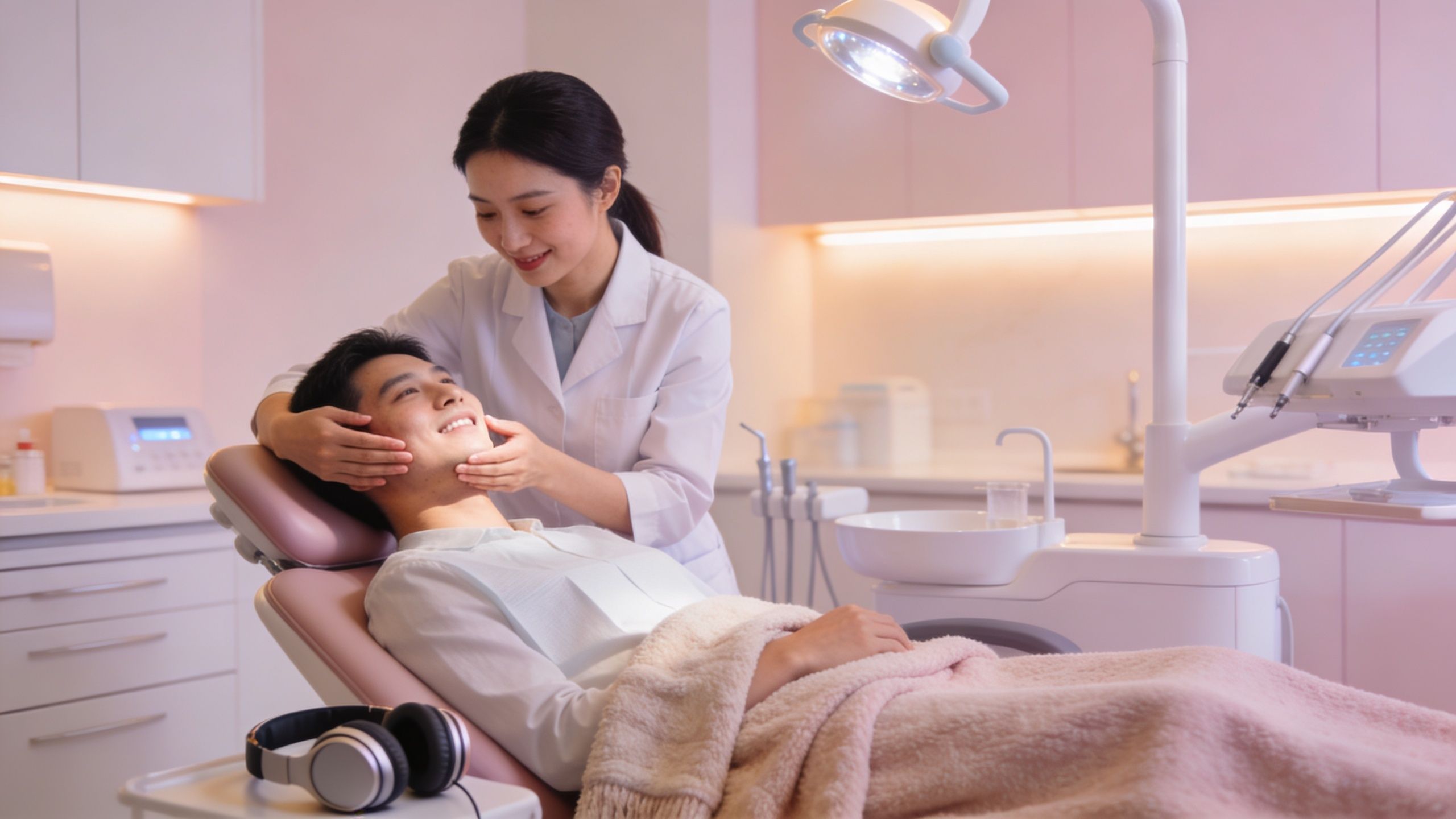
You may be searching “painless dentist near me” because you’ve put this off for months, or even years. Maybe a past appointment hurt. Maybe the sounds, the numb feeling, or the loss of control makes your shoulders tense before you even pick up the phone. That reaction is common, and it doesn’t mean you’re difficult or overreacting.
Many adults delay care because of fear, and the American Dental Association recognizes dental anxiety as a real barrier to treatment. Sedation dentistry has become an important way to help patients relax, stay conscious, and get care more comfortably, often with little memory of the procedure itself, as explained by Oakland Smiles on sedation dentistry.
If you live in Bellaire, TX, West University, or Houston, the good news is that “painless” dentistry doesn’t mean pushing through discomfort. It means finding a dentist who plans every part of your visit around comfort, communication, and trust. That includes cleanings and exams, cosmetic dentistry, restorative dentistry, tooth extraction, and even emergency dentist visits when you need help quickly.
- Finding a Dentist in Bellaire Who Understands Your Fears
- What Modern Painless Dentistry Really Means
- Your Checklist for Finding a Comfort-Focused Dentist
- Key Questions to Ask During Your Consultation
- Your First Visit at Our Bellaire Dental Practice
- Beyond the Visit Lasting Comfort and Overall Health
Finding a Dentist in Bellaire Who Understands Your Fears
A lot of people don’t search for a dentist in Bellaire, TX until something starts to hurt. Before that, they tell themselves they’ll go later. They chew on one side, avoid cold drinks, or stop smiling in photos because they know a tooth needs attention but don’t want to face the appointment.
Fear usually isn’t about one thing. Sometimes it starts with a painful memory. Sometimes it’s embarrassment about how long it’s been. Sometimes it’s the worry that a routine visit will turn into a long list of treatment you weren’t expecting.
What anxious patients often need first
The first kind of relief is emotional, not clinical. You need to know the office will listen before doing anything. You need to feel that saying “I’m nervous” won’t be awkward.
That matters because nervous patients often assume they have to be brave before they schedule. In reality, the right office expects anxiety and plans for it.
You don’t need to arrive calm. You need a dental team that knows how to help you become calm.
In Bellaire, that means looking for a provider who treats anxiety as part of dental care, not as an inconvenience. If you want practical ideas before your appointment, this guide on how to overcome dental anxiety can help you think through your concerns and put them into words.
Why local trust matters
When you’re looking for a cosmetic dentist near me, an emergency dentist, or a dentist near me for a long-overdue exam, comfort starts before you ever sit in the chair. A clear website, easy scheduling, and plain-language explanations all make a difference. That’s one reason resources on SEO marketing for dentists are useful to patients too. They show how dental practices present information online, which can make it easier to identify offices that communicate clearly and make access to care less stressful.
For patients considering care in Bellaire and nearby Houston communities, Dr. Boren’s practice is built around that kind of patient-focused experience. The goal is more than “getting through” a visit. It’s to make dental care feel manageable again.
What Modern Painless Dentistry Really Means
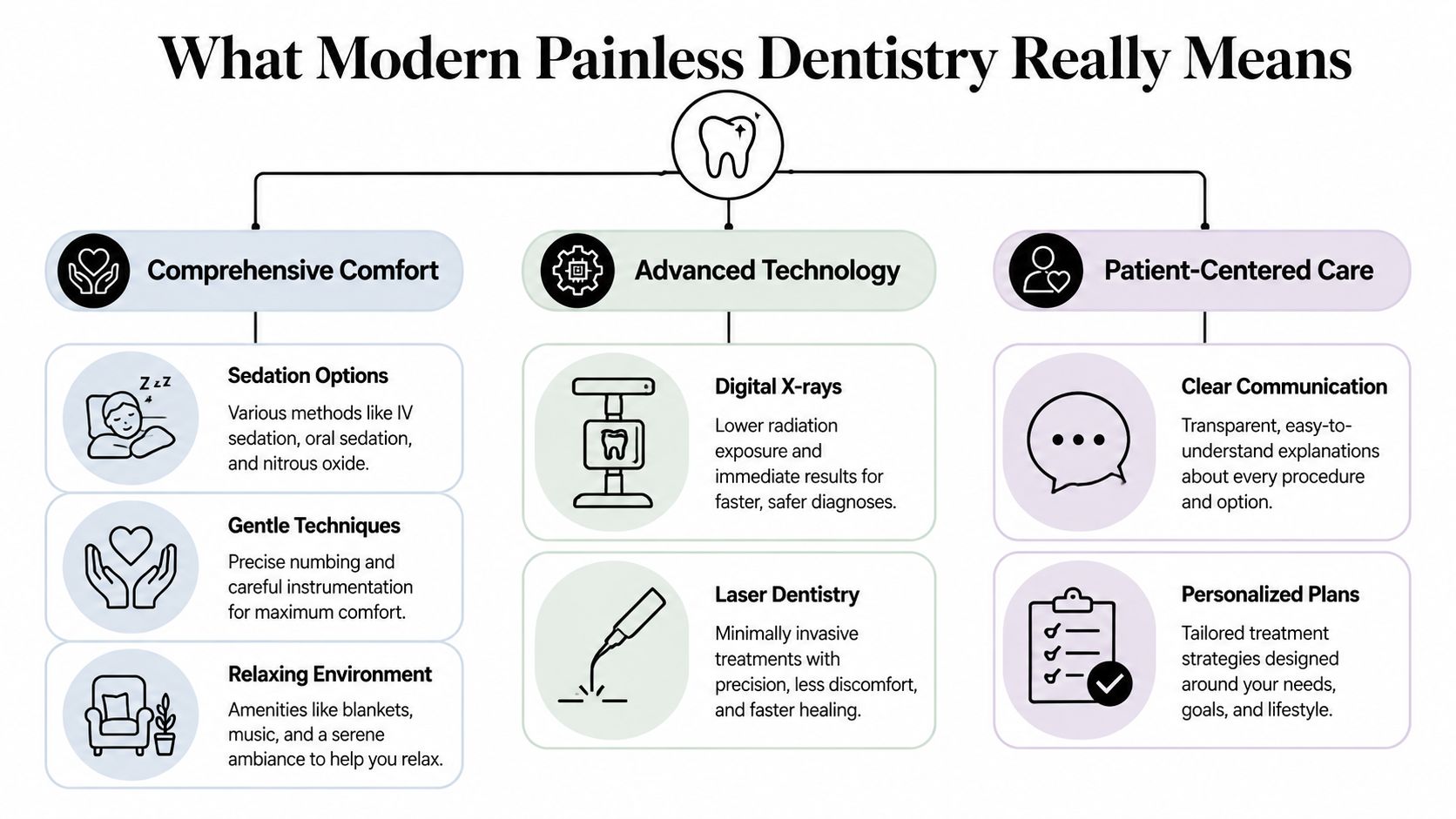
“Painless dentistry” sounds like it means one thing. It is often thought that it only refers to sedation. Sedation can help, but modern comfort-focused dentistry is broader than that. It includes how the dentist diagnoses, numbs, treats, and communicates.
A comfortable visit often comes from many small decisions working together. Better imaging can reduce guesswork. Gentler tools can reduce vibration. Better planning can shorten appointments and avoid unnecessary steps.
Comfort starts with how treatment is delivered
Modern painless dentistry uses local anesthetics, careful technique, and technology that reduces common triggers for anxious patients. According to DuPont Family Dentistry’s overview of painless and patient-friendly dentistry, contemporary care can include advanced local anesthetics that last up to 8 hours, computerized delivery systems, digital impression scanning that helps eliminate gagging, and electric handpieces that reduce vibration.
That matters in plain, everyday ways:
- Less vibration: Many patients don’t just fear pain. They fear the sensation and sound of dental work. Tools that reduce vibration can make treatment feel less intense.
- Less gagging: Traditional impressions can be one of the most uncomfortable parts of a visit. Digital scanning is often easier for patients with a sensitive gag reflex.
- Longer-lasting numbness: After certain procedures, post-treatment soreness can be easier to manage when numbness lasts into the period when discomfort usually begins.
Minimally invasive care changes the experience
For many patients, “painless” also means the dentist removes as little healthy tooth structure as possible. Minimally invasive approaches focus on precision. When the dentist can see more clearly and target treatment more accurately, the experience often feels easier on the patient.
At Charles E. Boren, that comfort-focused approach may include tools and techniques such as:
| Approach | What it means for you |
|---|---|
| Digital X-rays | Faster images and a smoother diagnostic visit |
| Magnification and fiber optics | Better visibility, which supports precise treatment |
| Micro air abrasion | A gentler option in situations where less drilling may be possible |
| Adhesive bonding techniques | Conservative treatment that helps preserve tooth structure |
Painless also means patient-centered
Technology helps, but the human side matters just as much. A calm explanation before treatment. Breaks when you need them. A clear plan for what you’ll feel and what you won’t. Those details are part of modern painless dentistry too.
Practical rule: If a dental office talks about comfort, look for evidence that comfort is built into the whole visit, not just one sedation option.
That’s especially important if you’re searching for a dentist near me for cosmetic dentistry, a new patient exam, dental X-rays, or restorative care. Comfort shouldn’t be treated as an add-on. It should shape the entire appointment.
Your Checklist for Finding a Comfort-Focused Dentist
You don’t have to guess whether a dental office takes comfort seriously. You can look for specific signs. A good checklist helps you compare options in Bellaire, West University, and Houston without feeling overwhelmed.

Start with sedation choices
Not every anxious patient needs the same kind of help. Some people want something light enough to take the edge off. Others need deeper relaxation for longer appointments, cosmetic work, or a tooth extraction.
Research summarized in the National Library of Medicine reports that procedural sedation improves treatment completion. General anesthesia has a 95% success rate for complex procedures, nitrous oxide has an 85% success rate for routine work, and practices with diverse sedation options may see case acceptance rise by up to 15% among anxious patients, according to this review of sedation outcomes and practice impact.
That doesn’t mean every patient needs the deepest option. It means choice matters.
Look for these signs on your short list
- Sedation range: Ask whether the office offers nitrous oxide, oral sedation, or other options for anxiety management.
- Comfort technology: Notice whether the practice mentions digital imaging, gentle numbing methods, reduced-vibration tools, or minimally invasive techniques.
- Support for longer appointments: This matters if you need dental implants near me, cosmetic dentist near me services, or extensive restorative dentistry.
- Calm communication: The office should explain things clearly without rushing you.
- Care for urgent needs: If you ever need an emergency dentist or tooth extraction, you want a team that can stay calm when you’re uncomfortable.
A practice can say it’s gentle. A better sign is when it explains exactly how it makes care easier.
Read reviews with the right filter
Reviews are useful, but many patients read them too quickly. Don’t only look for comments about results. Look for language from people who sound like you.
Search for mentions of:
- Anxiety or fear
- Feeling listened to
- Gentle treatment
- Clear explanations
- Comfort during procedures
If several patients describe feeling at ease after being nervous, that tells you more than a generic “great office” review.
For some people, even booking is stressful. If that part tends to stop you before you begin, tools and advice that help practices choose the right scheduling tool can give you a sense of what a smoother scheduling experience should look like from the patient side too.
A short video can also help you think through what matters most before you call.
Compare offices by feel, not just services
Two dental offices may both offer cleanings and exams, teeth whitening, dental implants, and emergency care. The difference is often how they deliver it. One may treat nervous patients as routine. Another may expect you to adapt to them.
That’s why your checklist should include both technical factors and emotional ones. Comfort-focused dentistry is a combination of skill, tools, and attitude.
Key Questions to Ask During Your Consultation
A consultation can feel intimidating if you’re already nervous. Having a few questions ready gives you something steady to hold onto. It also helps you find out quickly whether the office’s idea of “comfortable care” matches yours.
You don’t need to ask everything at once. Pick the questions that fit your situation. If you’re considering cosmetic dentistry, dental implants, restorative treatment, or an emergency visit after pain starts, the right questions can save you from surprises later.
Questions that reveal how the office handles anxiety
Try asking:
What do you do differently for nervous patients?
This invites a real answer, not a generic promise.What sedation options might fit my level of anxiety and the treatment I need?
A thoughtful response should sound personalized, not automatic.How do you make injections, numbing, and treatment more comfortable?
This helps you learn whether the office uses comfort-focused techniques consistently.Can you explain the appointment step by step before we begin?
Fear often gets worse when patients don’t know what’s coming.
If a dentist answers your questions patiently before treatment starts, that’s often a strong sign of how you’ll be treated during the procedure too.
Questions about cost without feeling awkward
Many patients hesitate here, but it’s an important part of choosing care. One of the biggest gaps in online information is the lack of clear discussion about sedation cost and value. As noted by Broadway Family Dental’s discussion of pain-free dentistry content gaps, patients often want to know what sedation adds to the bill and whether it’s worth it.
Ask questions like:
- Can you break down the cost of each sedation option?
- Is sedation recommended, or available if I want it?
- How might comfort-focused treatment help me complete care I’ve been delaying?
- What are my options if I need treatment in phases?
These questions are especially helpful if you’ve been postponing work that may become more urgent later. The goal isn’t to spend more. It’s to understand whether comfort makes it easier to get necessary care before the problem gets larger.
Questions for cosmetic and restorative treatment
If you’re searching for a cosmetic dentist near me or dental implants near me, ask:
| Question | Why it helps |
|---|---|
| How long will the visit feel from my side? | It helps anxious patients prepare for the experience, not just the procedure |
| Will I need digital scans or impressions? | Some patients worry about gagging or discomfort |
| Can treatment be planned in a way that reduces stress? | Comfort often improves when appointments are organized thoughtfully |
A good consultation should leave you feeling clearer, not more confused.
Your First Visit at Our Bellaire Dental Practice
The first appointment usually feels hardest before it begins. Once you’re in the office, many fears settle because uncertainty starts to fade. Knowing the flow can make that first step easier.
When you arrive at the Bellaire office, the visit begins with conversation. You’re not expected to jump straight into treatment. The team gathers your health history, listens to what’s bothering you, and asks about past dental experiences, including anxiety, gag reflex issues, jaw tension, headaches, or concerns about pain.
What the visit often looks like
For a new patient exam, the focus is understanding before deciding. That may include digital imaging and a close look at your teeth, gums, bite, and any problem areas you’ve noticed. If you came in because of a broken tooth, discomfort, cosmetic concerns, or possible restorative needs, the dentist explains what’s happening in plain language.

That matters because anxious patients often fear being talked at instead of talked with. A calm consultation gives you room to ask questions, pause, and understand your options.
A treatment plan built around comfort
If treatment is recommended, the next step is deciding how to make it manageable. For some patients, that means planning shorter visits. For others, it means discussing sedation support, reduced-vibration tools, minimally invasive techniques, or the order of care so the most urgent problem is handled first.
For patients interested in lighter sedation, nitrous oxide sedation dentistry may be part of that conversation. Nitrous oxide is commonly used to help patients relax while remaining awake and able to respond.
Some patients feel better once they hear, “You don’t have to do everything today.” A comfort-focused visit respects that pacing.
Dr. Boren’s office also brings together tools like magnification, fiber optics, digital X-ray imaging, micro air abrasion, and adhesive bonding when appropriate. Used thoughtfully, those technologies support precision and can make treatment feel less physically demanding.
What you should expect from the team
You should expect clear explanations, practical next steps, and follow-up that doesn’t leave you guessing. That applies whether you came in for a cleaning and exam, cosmetic planning, a restorative concern, or urgent pain.
If you’ve been searching for a dentist in Bellaire, TX because you want skilled care without the old-school dental experience, the first visit should feel more like a conversation with a plan than a test of endurance.
Beyond the Visit Lasting Comfort and Overall Health
A comfortable dental visit does more than fix one tooth. It changes what happens next. When appointments feel manageable, patients are more likely to come back before a small issue becomes a painful one.
That matters for overall health too. A major gap in online dental information is the missing connection between dental fear and related health problems. As discussed by Brooklyn Sedation Dentists in their review of this content gap, patients who avoid dentists may also live with undiagnosed sleep apnea or TMJ disorders, and a painless dental visit can become the gateway to identifying those concerns.
Why this matters beyond your teeth
Some patients put off care because they think the problem is only a cavity, a chipped tooth, or overdue cleaning. But avoidance can also delay conversations about snoring, poor sleep, jaw pain, migraines, or morning headaches. Those issues don’t always feel “dental” at first, even when the dentist is an important part of finding answers.
If you’ve been delaying care, the win isn’t only getting through one visit. The bigger win is reopening the door to routine dental care, cosmetic improvements you’ve been thinking about, restorative treatment you need, and evaluation for issues like TMJ strain or sleep-disordered breathing that may be affecting daily life.
If you’re ready to stop postponing care, schedule a consultation with Charles E. Boren. Patients in Bellaire, West University, and Houston can get a clearer understanding of their dental needs, talk openly about anxiety, and explore a more comfortable path forward for everything from routine exams to cosmetic, restorative, TMJ, and sleep-related dental care.