
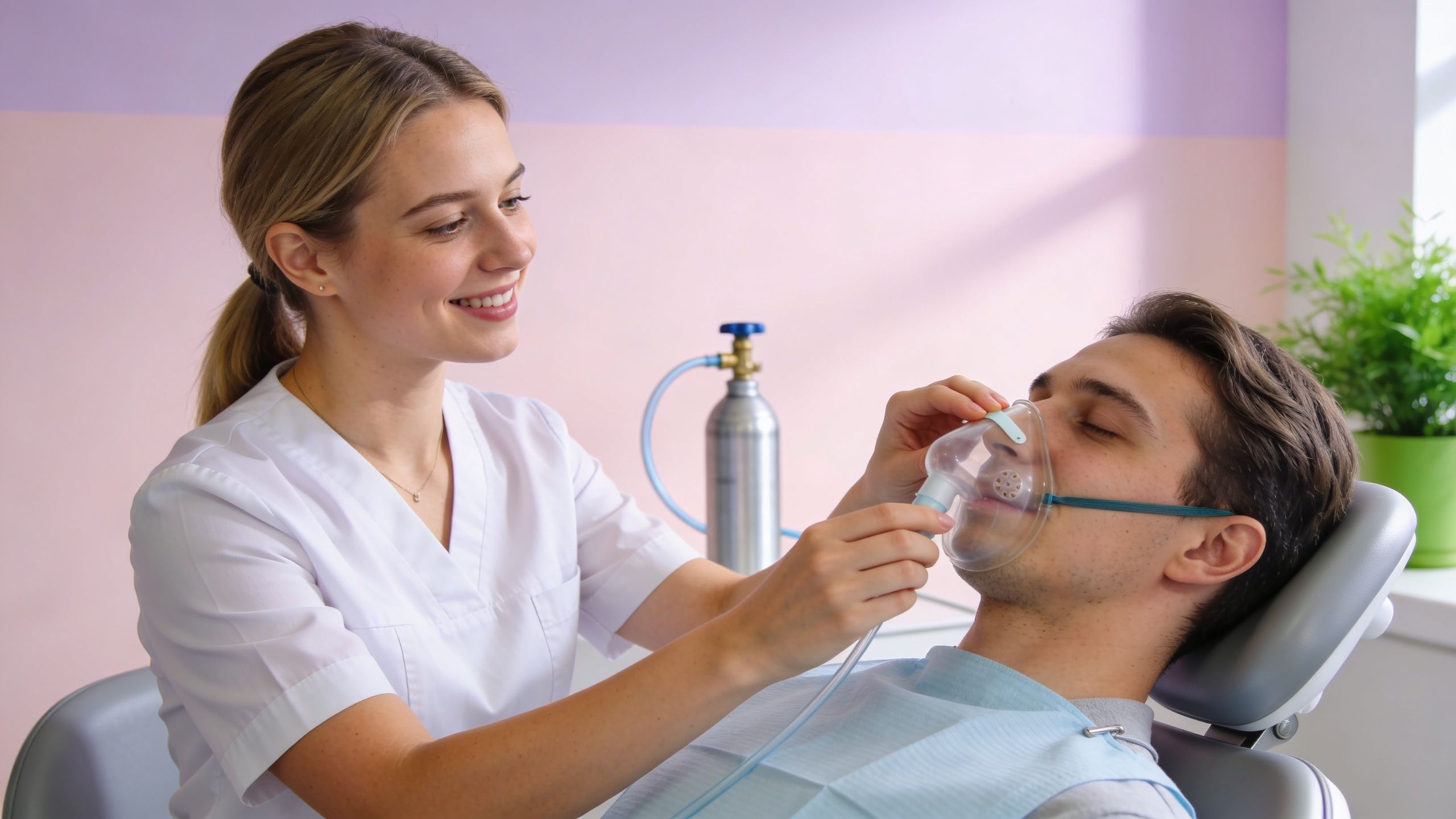
If you're reading this, there's a good chance the dental part isn't what worries you most. It's the feeling before the visit. The sounds, the numbness, the loss of control, or the memory of a bad appointment years ago. Many patients in Bellaire, West University, and Houston delay cleanings, tooth extraction treatment, cosmetic dentistry, or even emergency dentist visits for exactly that reason.
Nitrous oxide sedation dentistry is one of the gentlest ways to make care feel manageable again. It helps anxious patients relax without putting them fully to sleep, and it can make everything from new patient exams and dental x-rays to restorative dentistry and smile improvements feel much easier.
- Your Guide to Anxiety-Free Dentistry in Bellaire TX
- Understanding Nitrous Oxide or Laughing Gas
- Is Nitrous Oxide Sedation Right for You
- Safety Profile and Important Considerations
- Your Nitrous Sedation Visit at Our Bellaire Office
- How Laughing Gas Compares to Other Sedation Options
- Frequently Asked Questions About Nitrous Oxide
Your Guide to Anxiety-Free Dentistry in Bellaire TX
A lot of anxious patients describe the same pattern. They search for a dentist near me or a dentist in Bellaire, TX, they mean to book, and then they put it off one more week. Sometimes that turns into months. A small issue becomes a larger one, or a cosmetic goal like teeth whitening, veneers, or ClearCorrect keeps getting pushed aside because the visit itself feels harder than the treatment.
That fear is real. It can come from the sound of instruments, worry about injections, trouble with a sensitive gag reflex, or not liking the feeling of being in the chair. Nitrous oxide often changes that experience in a very practical way. Instead of white-knuckling through an appointment, you breathe through a small nasal mask and begin to feel calmer while staying awake and able to communicate.

Why patients often feel relieved once they learn more
For many people, the fear gets worse in the unknown. They imagine sedation as something heavy or risky. Nitrous oxide isn't that kind of experience. It's commonly used to take the edge off while keeping the visit simple, controlled, and focused on comfort.
Some patients don't need more courage. They need a calmer way to get through care they've already wanted for a long time.
If dental anxiety has been keeping you from scheduling, this guide can help you understand the option more clearly. You can also read more about ways to overcome dental anxiety if you'd like a broader look at comfort-focused care.
For readers interested in how dental practices communicate comfort and trust online, this article on attracting dental patients in Scottsdale offers an interesting marketing perspective on what anxious patients often look for before they ever call an office.
Understanding Nitrous Oxide or Laughing Gas
Nitrous oxide, often called laughing gas, is a sedation option you breathe in through a small mask placed over your nose. It doesn't knock you out. Instead, it helps your body settle down so dental care feels less intense and more manageable.
Many patients describe the feeling in simple terms. You may feel lighter, warmer, less tense, or less bothered by the little things that usually trigger anxiety. A useful way to think about it is this: your mind is still present, but the alarm system gets quieter.
What it's doing in your body
Nitrous oxide works by increasing the release of inhibitory neurotransmitters that suppress neural activity, according to this explanation of laughing gas for dental work. In plain language, that means it helps slow the stress response that can make a dental visit feel overwhelming.
It also has another important role. On its own, nitrous oxide provides only mild pain relief, but it raises your pain threshold and helps local anesthetic work more effectively. That matters during procedures where numbness is important. It can also help reduce or eliminate the gag reflex, which is helpful for dental x-rays, impressions, restorative work, and other treatment that involves instruments inside the mouth.
What it does not do
Nitrous oxide doesn't make you unconscious. You're still able to answer questions, ask for a break, and let the team know how you're feeling. That level of communication is one reason many nervous patients prefer it over deeper forms of sedation.
A few things patients often want clarified:
- You're awake the whole time. You can respond normally and stay involved in your care.
- It works quickly. The calming effect begins fast after you start breathing it.
- It fades quickly too. Once the gas is stopped, the effects wear off within minutes.
- It pairs with local anesthetic. For procedures that need numbness, nitrous oxide supports comfort but doesn't replace local anesthesia.
If your biggest fear is feeling trapped or out of control, nitrous oxide is often reassuring because you remain aware and can communicate throughout the visit.
That's why many people choose it for nitrous oxide sedation dentistry. It offers help where they need it most, without turning the appointment into a full recovery-day event.
Is Nitrous Oxide Sedation Right for You
The best candidates for nitrous oxide usually aren't looking to be "put under." They're looking for a way to get through dental care without dread. If that sounds familiar, this option may be worth discussing.
Dental anxiety is very common. This overview of dental anxiety and sedation dentistry statistics reports that 30 to 80% of adults experience dental anxiety, with up to 16% having a severe phobia. The same source notes that 70% of U.S. dental practices that use sedation employ nitrous oxide-oxygen, making it the most utilized gaseous anesthetic worldwide for managing patient fear.
Situations where it often helps
Nitrous oxide can be a strong fit if any of these sound like you:
- You get nervous before even simple visits. Cleanings and exams, new patient exams, or dental x-rays may feel more doable when the edge is taken off.
- You hate injections. Many patients find it easier to receive local anesthetic once they're relaxed.
- Your gag reflex gets in the way. This can make imaging, crowns, impressions, and other restorative care more difficult than it needs to be.
- You want to complete more care in one visit. If you're planning cosmetic dentistry, restorative dentistry, or treatment after a broken tooth, comfort matters.
- You've avoided an emergency dentist visit because of fear. Sedation can make urgent care feel less intimidating.
Procedures people often ask about
Patients considering a cosmetic dentist near me or dental implants near me often ask whether sedation is available for longer appointments. Nitrous oxide can be helpful for many visits that require concentration, patience, or steady relaxation, including:
| Procedure type | Why nitrous oxide may help |
|---|---|
| Cosmetic treatments | Helps anxious patients stay comfortable during smile-focused care |
| Restorative dentistry | Makes longer visits feel easier to tolerate |
| Tooth extraction | Reduces tension and helps patients stay calm |
| Emergency dental care | Supports comfort when you're already stressed |
| Family dental visits | Can help both adults and some children handle treatment more smoothly |
Not everyone needs it, and not every procedure requires it. But if fear has become the main obstacle between you and a healthy mouth, choosing sedation isn't overreacting. It's a practical way to get the care you need.
Safety Profile and Important Considerations
You may be sitting in the chair wondering, "Will I still know what's going on, and is this safe for me?" That is the right question to ask.
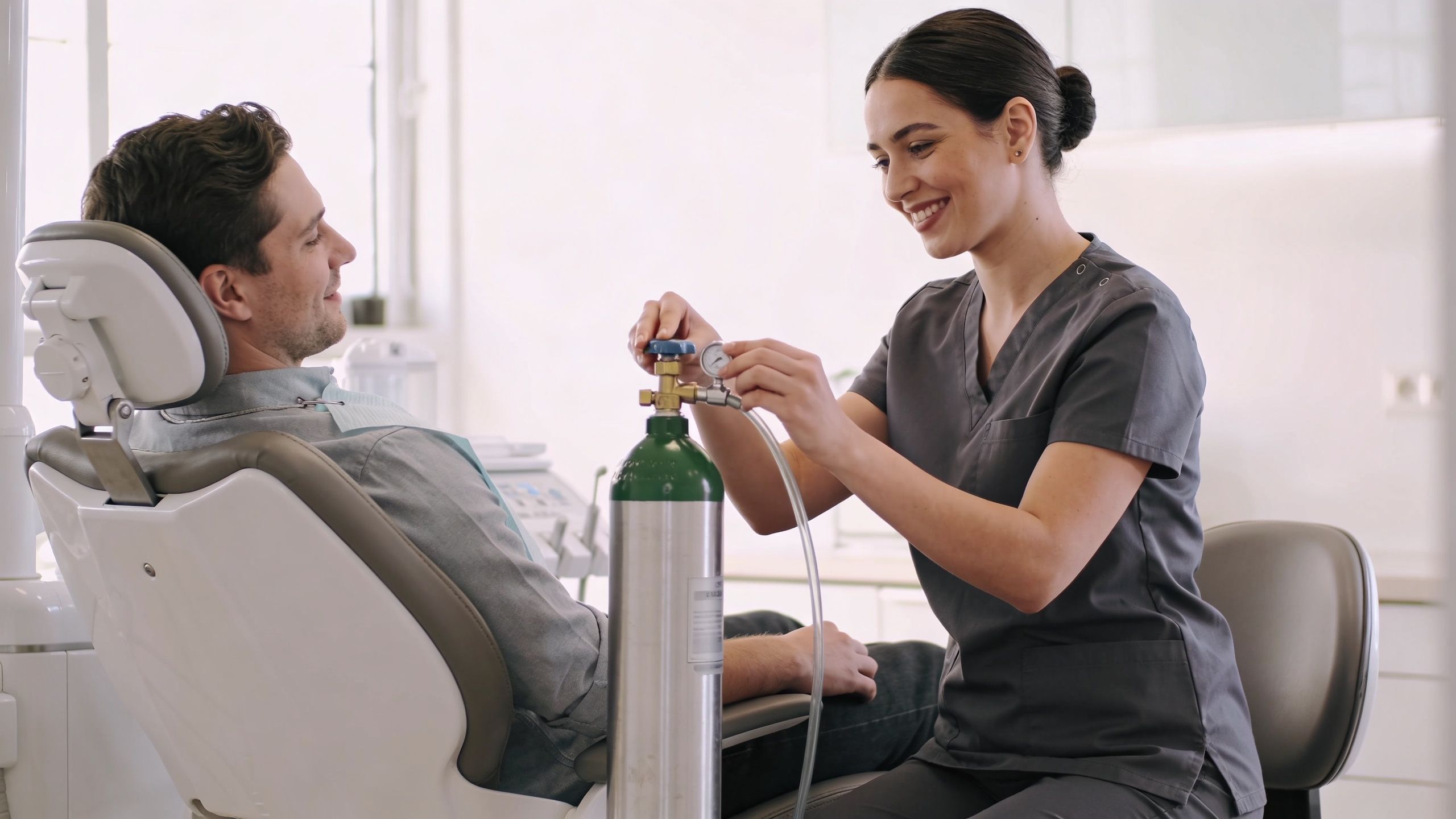
For many healthy patients, nitrous oxide has a long history of safe use in dentistry because the effects are mild, adjustable, and wear off quickly once the gas is stopped. It works a bit like a dimmer switch rather than an on off switch. Dr. Boren can raise or lower the level gradually based on how you feel during the appointment, which is one reason anxious patients in Bellaire, West University, and Houston often prefer it for routine dental care.
Why the safety profile is reassuring
Nitrous oxide is considered conscious sedation. That means you stay awake, you can respond, and you can let us know if something feels too strong or not strong enough. Many patients are relieved to hear that, because they do not want to feel disconnected or out of control.
Safety starts before the mask goes on. Dr. Boren reviews your medical history, current medications, past reactions to sedation, and the type of treatment you need. That careful screening matters just as much as the gas itself. If you want a fuller overview written for patients, this guide on whether sedation dentistry is safe explains the bigger picture.
Our office also focuses on comfort in practical ways, not just reassuring words. Careful planning, close observation, and modern technology help us keep the experience steady and predictable, which is often what nervous patients need most.
Side effects and screening
Most side effects are mild and short lived. A patient may feel lightheaded, mildly nauseated, or "off" if the level is not the right fit at first. Because nitrous oxide can be adjusted in real time, Dr. Boren can fine tune it while checking on your comfort.
Some people need extra screening before using nitrous oxide. That includes patients with certain breathing problems, pregnancy concerns, vitamin B12 deficiency, or a history that suggests sedation should be approached with more caution.
One point deserves special attention. According to the ADA's guidance on nitrous oxide and oral health topics, nitrous oxide is generally very safe for short term use, but it can affect Vitamin B12 metabolism. That matters if you already have a known deficiency, certain nerve related symptoms, or expect to use sedation repeatedly over several visits.
Practical rule: The safest sedation plan matches your health history and your procedure, not a one size fits all routine.
Here is a brief video that helps patients visualize what sedation can look like in practice.
Questions worth asking before treatment
Before choosing nitrous oxide sedation dentistry, ask about:
- Your medical history. Mention breathing issues, pregnancy, vitamin deficiencies, and all current medications.
- How screening is done. A careful office reviews your health details instead of treating sedation like a routine add on.
- How comfort is monitored during treatment. You should know who is checking on you and how adjustments are made.
- Whether you may need sedation more than once. If several visits are planned, it helps to talk through repeated exposure ahead of time.
Clear answers help people feel calmer. That is part of Dr. Boren's approach. The goal is not just to offer sedation, but to offer it thoughtfully, with the kind of attention that helps anxious patients feel safe enough to come back for care.
Your Nitrous Sedation Visit at Our Bellaire Office
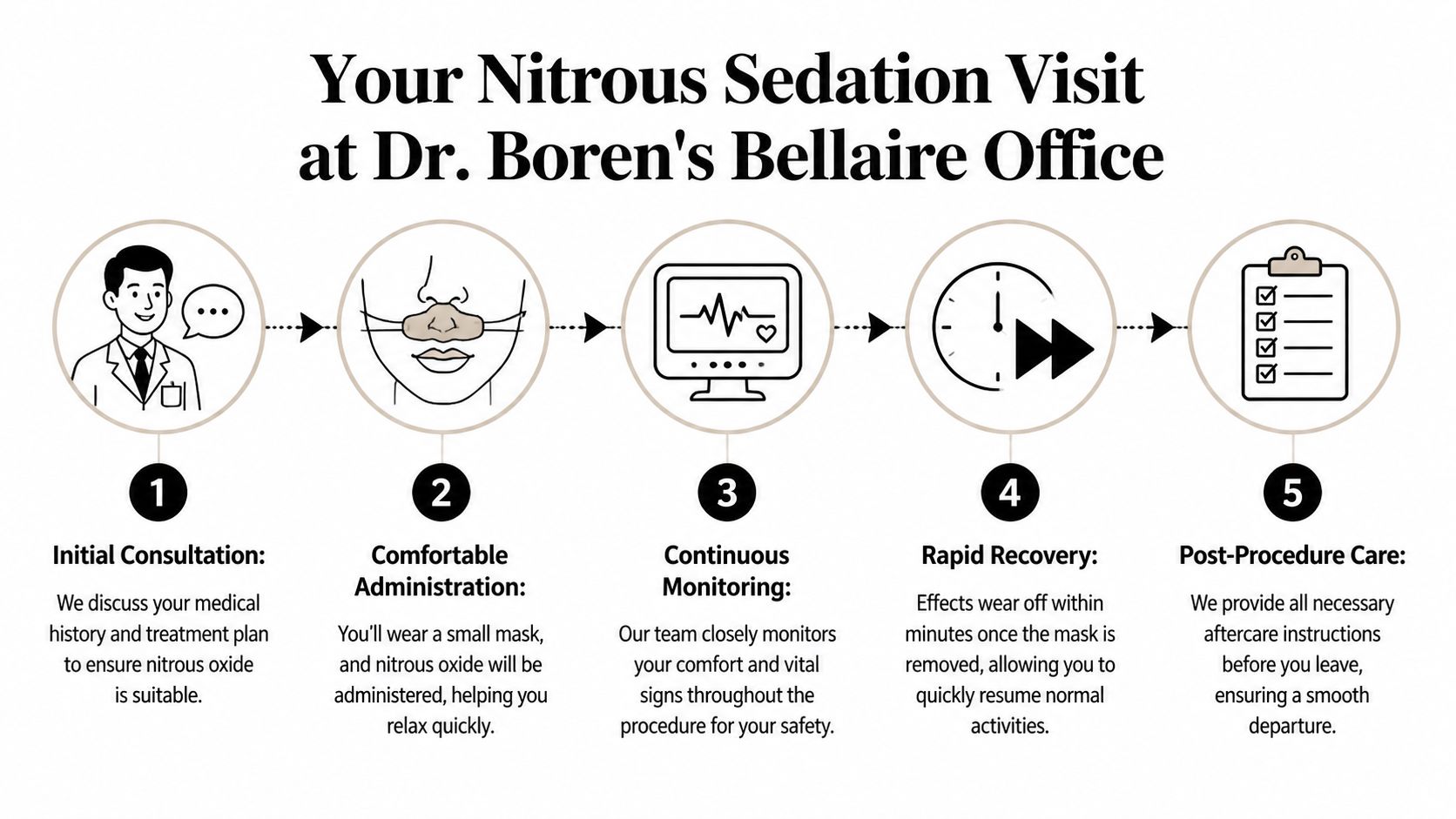
Most anxious patients relax once they know the sequence. The visit is straightforward, and every step is designed to keep you informed and comfortable.
Before treatment begins
The appointment usually starts with conversation, not equipment. You'll review your health history, discuss the planned treatment, and talk through any concerns. If you're coming in for tooth extraction, restorative dentistry, cosmetic work, or even a stressful cleaning and exam, the goal is the same. Remove surprises before treatment starts.
Then the team places a small mask over your nose. You breathe normally. There is no need to do anything special, and you can keep talking if you want to.
How the gas is introduced
The administration process is highly controlled. According to this clinical overview of nitrous oxide concentration titration and therapeutic range, the process begins with 100% oxygen, then nitrous oxide is increased in 10% increments, typically within a 30 to 40% therapeutic range, and never exceeding 50%. That precision allows the dentist to adjust your level in real time throughout the procedure.
That matters because comfort isn't static. A patient may need less support during a quieter part of the appointment and more during a moment that usually causes stress, such as receiving local anesthetic or sitting through a longer procedure.
You shouldn't feel knocked out. You should feel settled, cooperative, and much less bothered by the appointment.
What the procedure feels like
Once you're comfortable, treatment begins. You're still awake, and you're still able to respond. Many people feel pleasantly detached from the things that would usually trigger tension. The noise seems less irritating. Time may feel like it's moving faster. Your shoulders and jaw may feel less clenched.
During the visit, the team continues monitoring how you're doing. If anything feels too strong, too light, or unfamiliar, you can say so. That's one of the strengths of nitrous oxide sedation dentistry. It can be adjusted while you're in the chair.
Recovery is usually quick
At the end, the nitrous oxide is stopped and oxygen is given again for several minutes. Because the effects wear off quickly, many patients feel back to normal soon after the mask is removed.
A typical flow looks like this:
- Health review and questions answered
- Nasal mask placed comfortably
- Oxygen first, then careful titration
- Treatment completed while you remain awake
- Oxygen at the end and a short recovery period
For patients in Bellaire, West University, and Houston, that predictability is often what makes the first appointment possible. Once they know what to expect, they stop imagining the worst.
How Laughing Gas Compares to Other Sedation Options
Patients often want to compare nitrous oxide with oral conscious sedation before they decide. That's a smart question, because the "best" option depends on what you want the visit to feel like and what your schedule allows afterward.
Nitrous oxide is usually the lighter, more adjustable option. Oral sedation, which is typically taken as a pill before the appointment, tends to create a deeper sense of drowsiness and lasts longer. Both can help anxious patients, but they fit different situations.
Side by side differences
| Factor | Nitrous oxide | Oral conscious sedation |
|---|---|---|
| Awareness | You stay awake and responsive | You may feel more deeply relaxed and drowsy |
| Adjustment during visit | Can be changed in real time | Can't be fine-tuned once the medication is taken |
| Recovery | Usually fast after treatment ends | Usually slower, with more lingering effects |
| Transportation | Many patients can return to normal activities after recovery | Patients often need someone to drive them |
| Best for | Mild to moderate anxiety, gag reflex issues, shorter or flexible appointments | Patients who need a stronger calming effect |
What many patients choose
If your main goal is to stay calm during a cleaning, crown, filling, cosmetic visit, or many routine procedures without losing the rest of your day, nitrous oxide often makes sense.
If your anxiety is heavier and you want a stronger level of sedation, oral medication may be the better fit. That choice usually comes with more planning. You may need transportation help, and you should expect a longer recovery window.
The practical question is this. Do you want a calming aid that wears off quickly, or do you want a stronger sedative effect that may leave you groggy afterward? For many adults searching for a dentist near me because they've delayed care, the simplicity of nitrous oxide is what finally gets them through the door.
Frequently Asked Questions About Nitrous Oxide
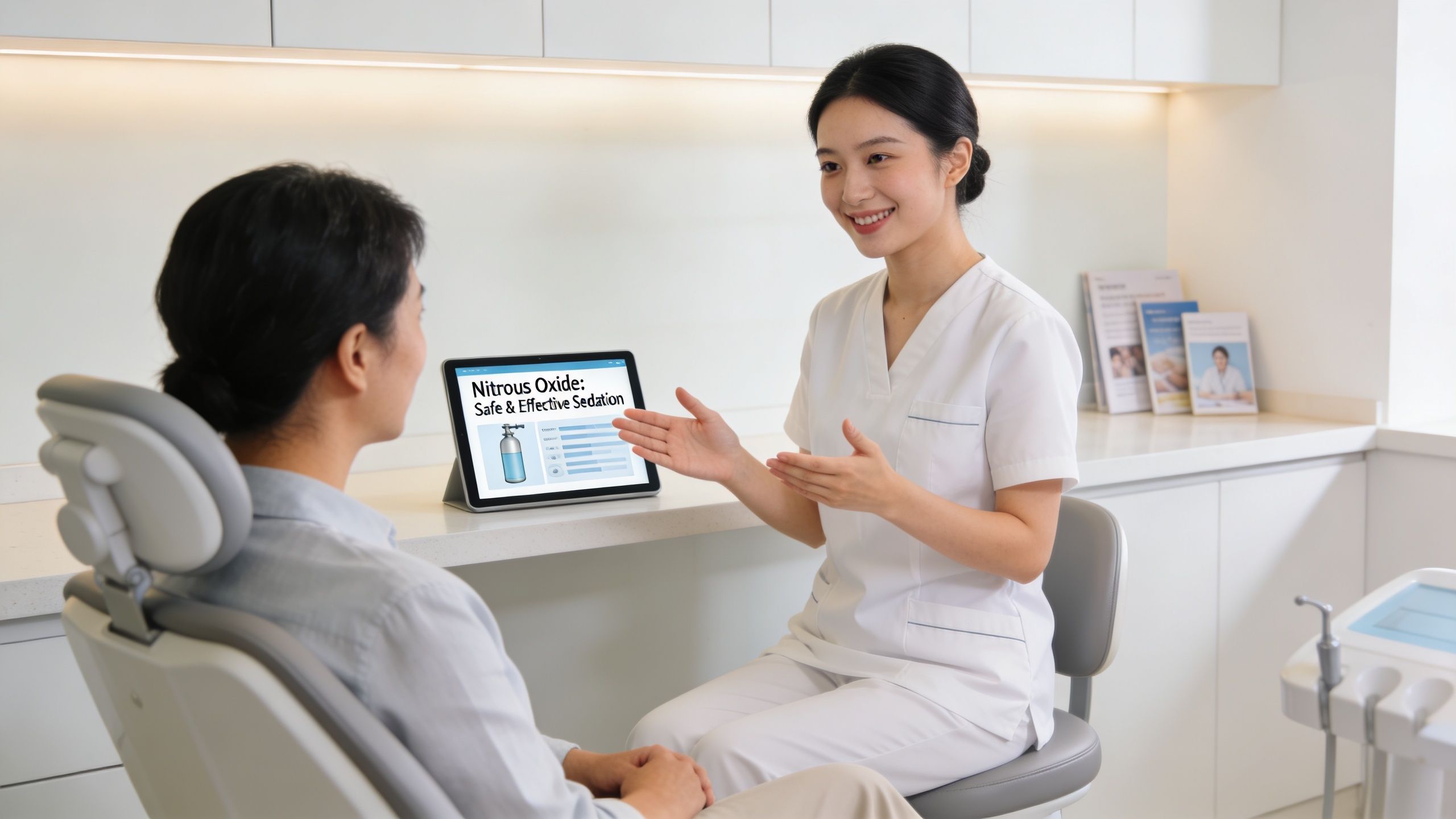
You finally decide to schedule the visit you have been putting off. Then the practical questions show up. Will this calm me enough? Can I drive home? What if my child needs it?
Those are the right questions to ask, and they come up often in our Bellaire office.
Will it really work for me
For many patients, yes. Nitrous oxide does not put you to sleep. It takes the edge off so your body is not reacting to every sound, sensation, or step of the appointment.
A simple way to understand it is this. If dental anxiety feels like your stress response is stuck on high, nitrous helps turn that setting down to a more manageable level. You stay aware, you can answer questions, and Dr. Boren can adjust the level during the visit based on how you are feeling. That real-time control is one reason many anxious patients in Bellaire, West University, and Houston find it easier to tolerate than options that cannot be adjusted once treatment starts.
Will I be able to drive myself home
Many adults can return to normal activities after a short recovery period. Nitrous wears off quickly once the mask is removed, which is part of why it fits busy schedules.
That said, your safety comes first. Our team checks that you feel clear, steady, and ready before you leave. If you are someone who feels better having a backup plan, arrange a ride ahead of time. Peace of mind helps too.
Is it safe for children
Nitrous oxide has been used in dentistry for many years for both children and adults. The key is proper screening, the right dose, and careful monitoring throughout the visit.
Children also need the right setting. A calm explanation, gentle pacing, and a team that knows how to read a nervous child make a real difference. That comfort-focused approach is a big part of how Dr. Boren helps families feel confident about care instead of rushed into it.
Is it covered by dental insurance
Sometimes yes, sometimes no. Coverage depends on your dental plan and on why sedation is being used.
Some plans treat nitrous as part of a medically necessary visit. Others consider it an added comfort option and do not cover it. Our office can help review your benefits before treatment so you have a clearer picture of your expected cost.
How much does it cost
The cost depends on the procedure, how long the appointment is expected to last, and whether sedation is billed as a separate fee.
That is why a personalized estimate is more useful than a generic price range. Ask two specific questions before you book. Is nitrous billed separately, and what would my total estimate look like with treatment included?
If anxiety has kept you from making an appointment, small details like these matter. Clear answers, modern technology, and a team that plans around your comfort can make dental care feel much more approachable.
If you're ready to explore a more comfortable approach to dental care in Bellaire, West University, or Houston, schedule a consultation with Charles E. Boren. Whether you need routine dental care, cosmetic dentistry, restorative treatment, or help getting past dental anxiety, the next step is starting the conversation.