
Waking up with a sore jaw, a dull headache, or sensitive teeth is a frustrating way to start your day in Bellaire. If this sounds familiar, you're not alone. To stop grinding your teeth, the best approach is a combination of at-home stress reduction and professional dental treatments from a trusted dentist, like a custom-fit night guard.
These strategies do more than just silence the noise; they protect your teeth from serious damage and address the root cause of the habit itself. At Charles E. Boren, DDS, we are the dentist in Bellaire, TX, that residents trust to relieve pain and restore their smiles.
Finding Relief from Jaw Pain and Headaches in Bellaire
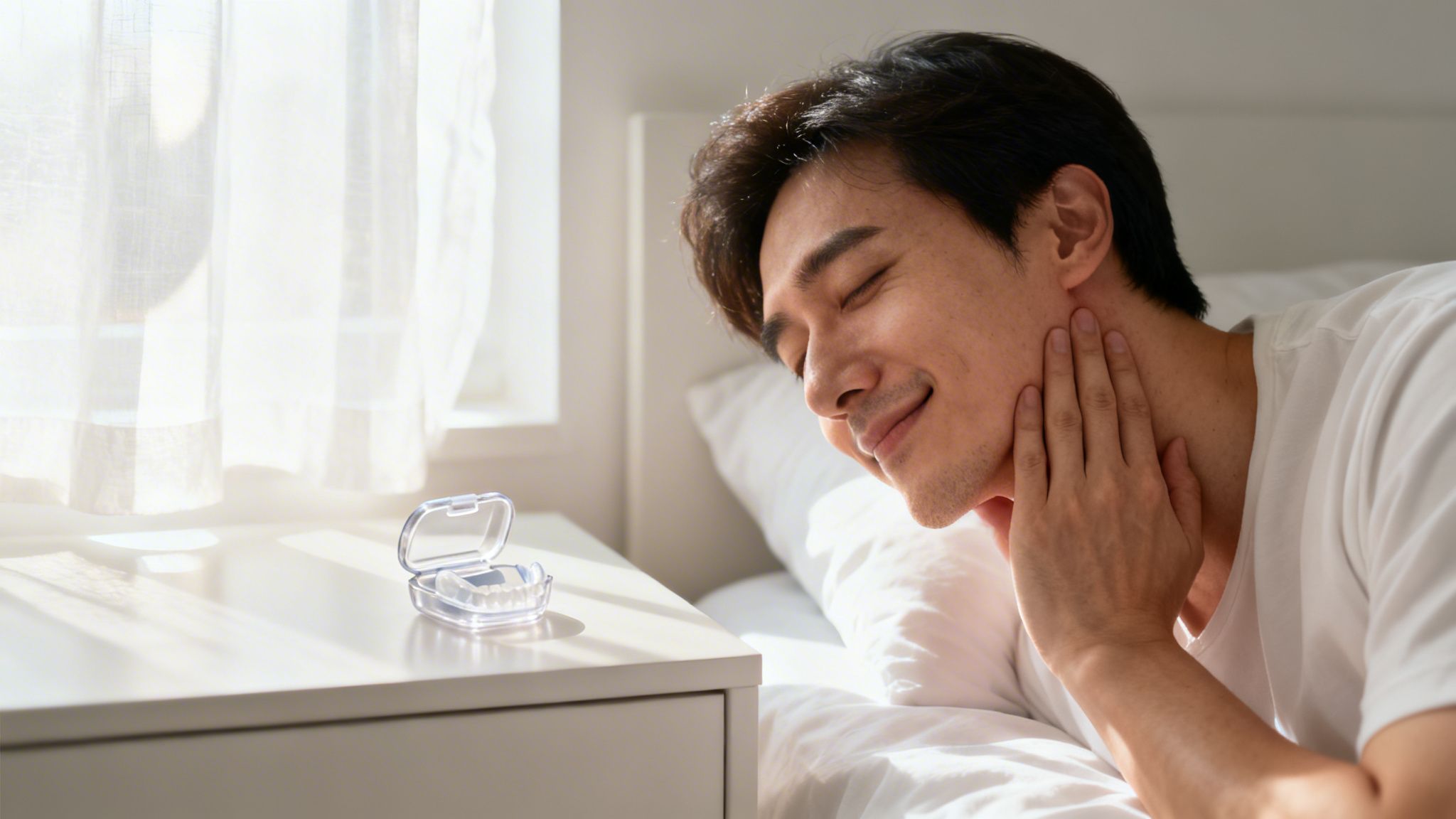
For many people right here in Bellaire and West University, this discomfort is a daily reality caused by unconsciously grinding your teeth—a condition called bruxism. But you don't have to live with the pain. Lasting relief is achievable, and it starts with a mix of practical at-home strategies and professional dental care that addresses the core of the problem.
At Charles E. Boren, DDS, we bring over 30 years of experience to our community. As your local Bellaire dentist, we use modern diagnostics to figure out why you're grinding, allowing us to create a personalized plan to protect your smile and finally put an end to the pain. Whether you need an emergency dentist for a cracked tooth or a cosmetic dentist to discuss teeth whitening, our team is here to help.
The Widespread Impact of Teeth Grinding (Bruxism)
If you grind your teeth, you are in good company. Did you know that bruxism affects a staggering 22.22% of people worldwide, counting both sleep and awake forms? That’s nearly one out of every five people.
Here in North America, the rate of sleep bruxism is the highest in the world, hitting 31%. It's a clear sign of how common this condition is in our local Bellaire community.
This constant pressure from clenching and grinding doesn't just wear down your teeth; it sends stress through your entire jaw system. The muscles work overtime, leading to fatigue, soreness, and often, pain that shows up as tension headaches or even migraines. If left untreated, severe grinding can lead to the need for restorative dentistry services like dental implants or even a tooth extraction.
At our Bellaire practice, we see the effects of bruxism every single day. Patients often come to us complaining about a persistent headache, completely unaware that nighttime teeth grinding is the real culprit. A comprehensive new patient exam is often the key to unlocking the true source of their pain.
Your Quick Guide to Managing Teeth Grinding
To get a handle on teeth grinding, a multi-faceted approach combining immediate protection with long-term habit management is key. Lasting relief starts here.
Here's a simple breakdown of the core strategies we use to help patients at our Bellaire dental office find relief.
| Strategy Type | Examples of Actions | Primary Goal |
|---|---|---|
| At-Home Care | Jaw relaxation exercises, avoiding hard foods, creating a calm bedtime routine. | To reduce muscle tension and minimize grinding triggers in your daily life. |
| Stress Reduction | Mindfulness, deep breathing exercises, reducing caffeine and alcohol intake. | To lower the stress and anxiety levels that often fuel unconscious clenching. |
| Professional Dental Care | Custom night guards from a cosmetic dentist near me, bite analysis, NTI-tss device for migraines. | To protect teeth from damage, correct alignment issues, and provide lasting relief. |
By combining these approaches, you can build a strong defense against the effects of bruxism and improve your overall mouth health.
Alongside jaw pain, many people who deal with bruxism also suffer from tension headaches. For more comprehensive relief, you might find it helpful to explore strategies for relieving tension headaches naturally.
For those dealing with persistent symptoms, getting professional guidance from a dentist in Bellaire, TX is crucial. You can learn more about our specific approach to TMJ and headache therapy here.
So, Why Are You Actually Grinding Your Teeth?
To stop teeth grinding for good, we must first understand its cause. Bruxism isn't just a random habit—it's your body's reaction to something else. Figuring out the "why" behind your clenching and grinding is the most important step toward finding real, lasting relief.
Many of our patients from right here in Bellaire and across Houston are surprised when they learn the source of their jaw pain isn't just one thing. It's often a mix of factors, from daily stress to the alignment of your teeth.
Stress and Anxiety: The Common Culprits
For many people, the main driver is stress. When you're dealing with pressure from work or navigating personal challenges, that tension needs an outlet. Unfortunately, while you’re asleep, your jaw muscles often take the hit. This leads to powerful, unconscious clenching known as sleep bruxism.
It also happens during the day. Awake bruxism, or daytime clenching, is often a subconscious reaction to moments of intense focus or stress. You might catch yourself clenching while stuck in traffic, concentrating on a tough project, or worrying about a family issue.
Physical Causes: Bite Issues and Sleep Disorders
While stress is a huge piece of the puzzle, physical and medical conditions are also common culprits. One of the most frequent causes we see in our Bellaire practice is a misaligned bite, or malocclusion. When your top and bottom teeth don't fit together correctly, your jaw muscles work overtime to find a comfortable resting position, which can trigger grinding.
When we're looking at a new patient's dental x-rays, one of the first things we check for is an unbalanced bite. It’s a key clue that helps us understand if your grinding is a response to stress, a structural problem, or a bit of both.
Underlying medical conditions, especially sleep disorders, are also tightly linked to bruxism.
- Sleep Apnea: This is a serious condition where you repeatedly stop and start breathing during sleep. As a reflex, the body can trigger jaw-clenching to try and reopen the airway. For many, bruxism is one of the first signs of sleep apnea.
- Genetics and Other Factors: Research shows that sleep bruxism often runs in families, with about half of sufferers having family members who also grind their teeth. Its prevalence changes with age, affecting around 15% of adolescents, dropping to 8% in middle-aged adults, and just 3% in older adults. Some studies, however, show rates in children as high as 50%. You can learn more about these findings from this in-depth study on bruxism.
Putting the Pieces Together for Effective Treatment
Finding the root cause of your teeth grinding is the foundation of any successful treatment. This is exactly why a generic, over-the-counter mouthguard often falls short. While it might put a layer of plastic between your teeth, it does nothing to address what’s causing the grinding in the first place.
At our Bellaire dental office, Dr. Boren takes the time to connect all these dots. During your new patient exam, we'll talk about your lifestyle, stress levels, and any symptoms you're noticing, like morning headaches or a sore jaw. By combining that conversation with a thorough dental exam and modern tools like digital x-rays, we can pinpoint whether your bruxism is tied to stress, your bite, or a potential sleep disorder. This careful approach ensures your treatment plan is precise, effective, and gets you the relief you deserve.
At-Home Strategies You Can Start Today
While getting a professional evaluation from a Bellaire dentist like Dr. Boren is the best way to tackle the root causes of teeth grinding, there are powerful things you can do at home for immediate relief. These simple actions can help reduce muscle tension, make you more aware of daytime clenching, and create a calmer state that discourages grinding at night.
Think of these strategies as your first line of defense. They can significantly ease the strain on your jaw and work hand-in-hand with any professional dental care plan we create for you.
Gentle Jaw Relaxation Exercises
Just like the muscles in your back or neck, your jaw muscles can hold a lot of tension. Doing a few simple, gentle exercises throughout the day can release that stored stress and keep the muscles from getting overworked.
Here are a few easy ones to try:
- The "N" Position: Gently rest your tongue on the roof of your mouth, right behind your front teeth, as if you're about to say "N." This naturally separates your teeth and helps your jaw muscles relax. Try to hold this position whenever you catch yourself clenching.
- Slow Jaw Opening: Slowly open your mouth as wide as you comfortably can and hold it for five seconds. Then, slowly close it. Repeating this 5-10 times will give your jaw a nice, gentle stretch.
- Jaw Massage: Use your fingertips to gently massage the sore muscles in your cheeks, temples, and in front of your ears. A slow, circular motion can help release knots and reduce tenderness.
These exercises only take a minute or two, but they can make a real difference in how you feel, especially if you clench during the day.
This decision tree gives you a great visual of the common triggers for teeth grinding, whether it's stress, a misaligned bite, or sleep-related issues.
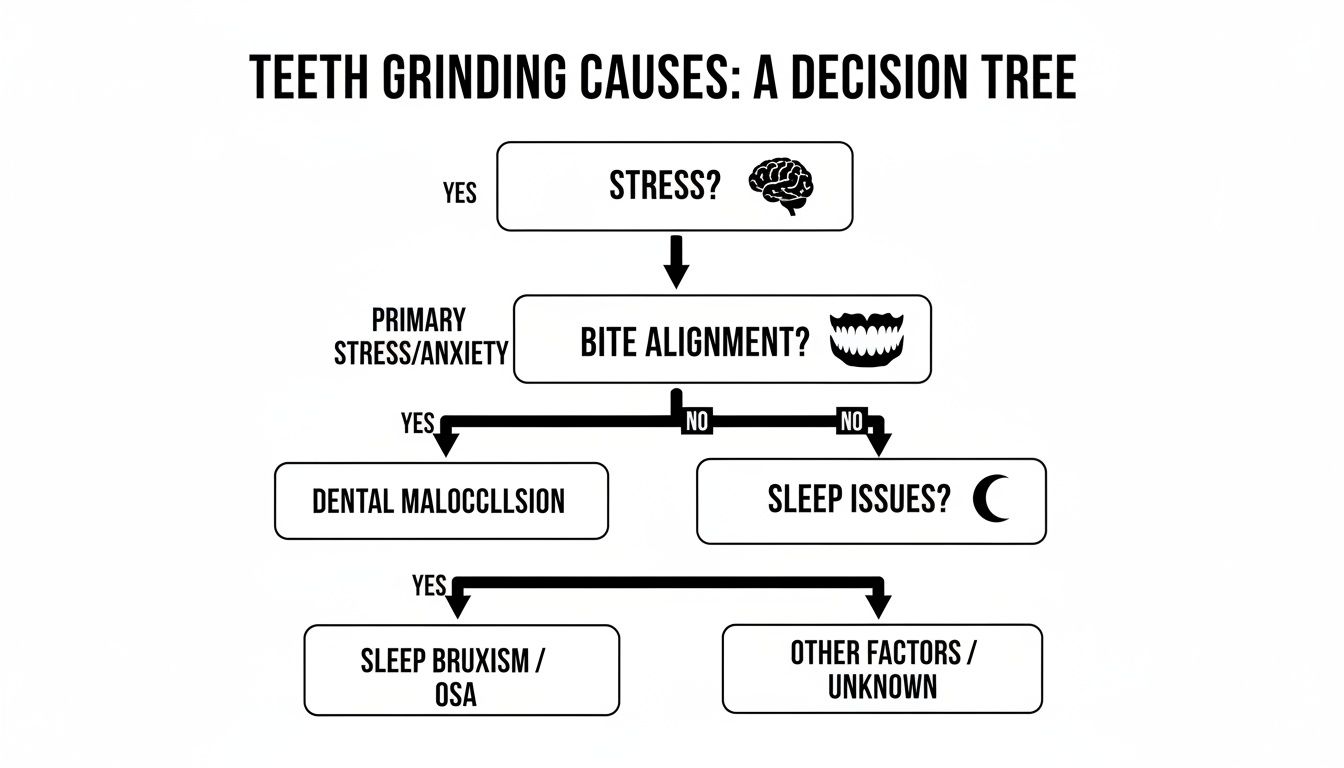
As you can see, figuring out if your grinding is from daily stress, a physical bite problem, or a sleep disorder is the first step toward finding the right solution with your dentist.
Mindful Diet and Lifestyle Adjustments
What you eat and drink can directly affect muscle tension and sleep quality—both of which are closely linked to bruxism. A few conscious adjustments can go a long way in calming your jaw.
Try to avoid hard, chewy foods like tough steaks, nuts, and hard candies that make your jaw muscles work overtime. When your jaw is already sore, it's best to opt for softer foods.
It's also a good idea to cut back on stimulants, especially in the afternoon and evening. Caffeine and alcohol can increase muscle activity and disrupt deep, restorative sleep. Limiting these can help settle your nervous system and, in turn, relax your jaw.
Here's a simple but effective trick for daytime clenchers: use a visual cue. Stick a small note on your computer monitor that says, "Relax Jaw." Every time you see it, you'll get a reminder to check your posture and let go of any tension you're holding.
Create a Calming Bedtime Routine
If you grind your teeth in your sleep, preparing your mind and body for rest is crucial. The goal is to signal to your nervous system that it's time to wind down, which reduces the odds of stress-induced grinding.
A good routine could include:
- Disconnecting From Screens: The blue light from phones and tablets can disrupt your natural sleep rhythm. Put all devices away at least an hour before you plan to sleep.
- Warmth and Relaxation: A warm bath is great, but even applying a warm, moist compress to the sides of your face for 15 minutes before bed can help your jaw muscles relax significantly.
- Mindfulness or Meditation: Taking just a few minutes for deep breathing exercises or a guided meditation can lower stress hormones and make it easier to fall asleep.
These at-home strategies are fantastic for managing symptoms, but they are most effective when paired with a professional diagnosis. If you’re in Bellaire or the surrounding Houston area and struggling with jaw pain or headaches, these tips are a great place to start while you schedule a consultation with us.
When It's Time for Professional Dental Care
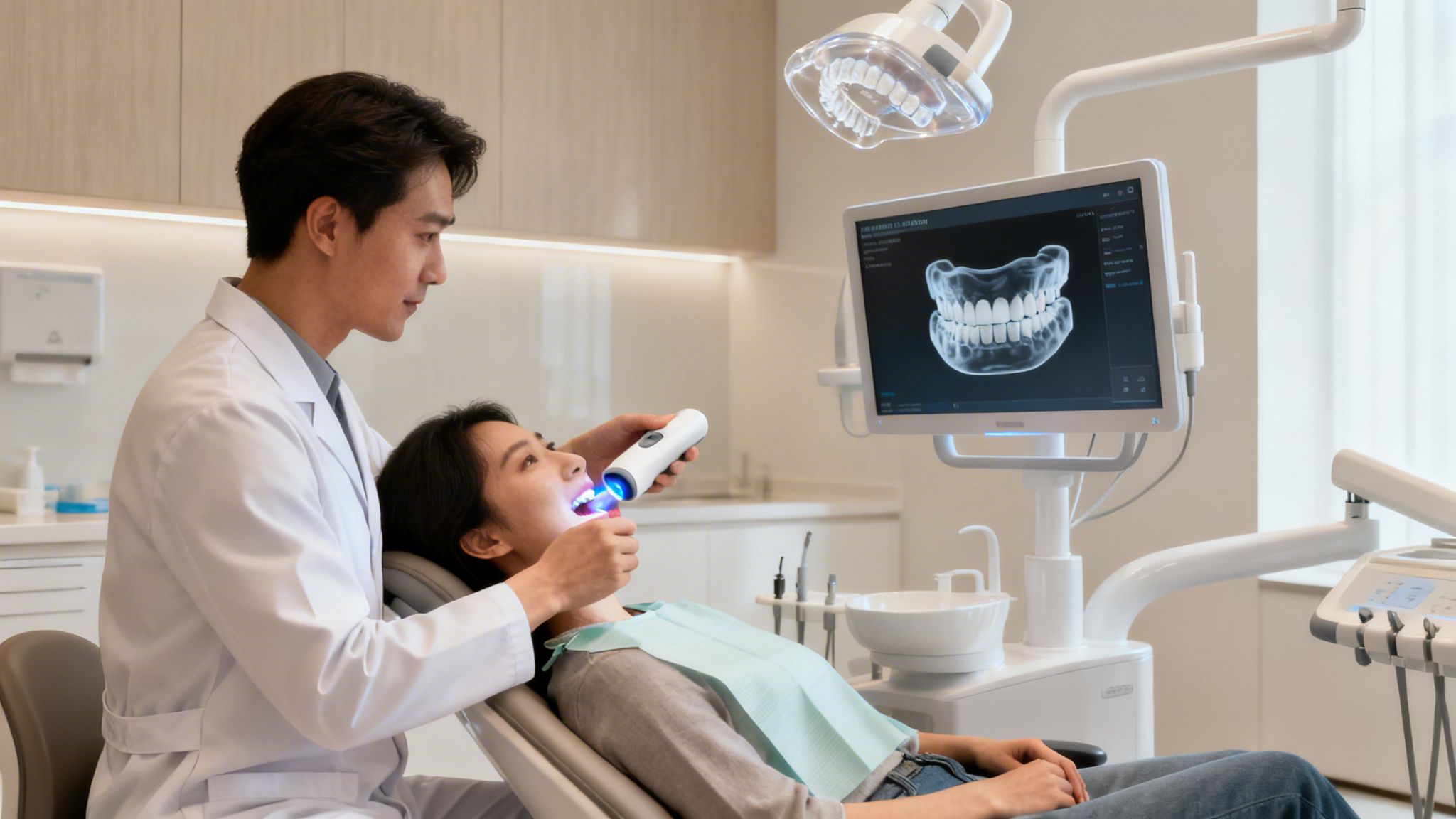
While at-home strategies are a great starting point, sometimes they aren't enough to stop the cycle. If you're still waking up with a sore jaw or noticing wear on your teeth, it's a clear sign you need a more robust, professional solution from your local dentist.
An over-the-counter guard might seem like a quick fix, but it's really just a temporary buffer. It can't correct the specific bite issues that are likely causing the problem. This is where Dr. Boren's expertise as a leading cosmetic dentist in Bellaire truly makes a difference. We move beyond simply shielding your teeth to find a solution that brings your entire jaw system back into harmony.
Custom Oral Appliances: The Gold Standard in Protection
A custom-fit oral appliance, often called a night guard, is one of the most effective tools we have against the damage of sleep bruxism. Unlike flimsy, one-size-fits-all guards, a professional appliance is crafted with incredible precision just for you.
Here in our Bellaire office, we start with precise digital scans—no messy impressions. This technology gives us a perfect 3D model of your teeth, ensuring your appliance fits perfectly without feeling bulky or uncomfortable.
That perfect fit is critical for a few reasons:
- Superior Protection: The tough, durable material absorbs the immense forces of nighttime grinding, preventing wear, chips, and fractures that could lead to a need for an emergency dentist.
- Jaw Repositioning: A custom guard guides your jaw into a more relaxed and natural position, which can dramatically reduce the intensity of jaw muscle contractions.
- Real Comfort: Because it’s made for your mouth, a custom appliance stays securely in place all night for a more restful sleep.
For a deeper dive into how we create these, you can learn more about our specific approach to making a mouth guard for teeth grinding.
To help you understand the crucial differences, here's a direct comparison between a custom appliance from our office and a store-bought guard.
Professional Dental Solutions vs Over-the-Counter Guards
| Feature | Custom Appliance (From a Dentist in Bellaire, TX) | Over-the-Counter Guard |
|---|---|---|
| Fit & Comfort | Precision-fit from a digital scan. Secure, comfortable, and low-profile. | Boil-and-bite or one-size-fits-all. Often bulky, loose, and uncomfortable. |
| Material & Durability | Made from high-quality, durable acrylic designed to withstand heavy forces. | Softer, less durable plastic that can be chewed through quickly. |
| Protection Level | Excellent. Absorbs grinding forces and protects teeth and jaw joints. | Minimal. Provides a thin cushion but may not prevent jaw strain or tooth damage. |
| Effect on Bite | Designed to maintain or improve bite alignment. Will not cause teeth to shift. | Can potentially alter your bite or cause teeth to shift over time, creating new problems. |
| Longevity | Lasts for many years with proper care. A long-term investment in your health. | Needs frequent replacement, often every few months. |
| Professional Oversight | Prescribed and monitored by Dr. Boren to ensure it's working correctly. | No professional guidance, leaving you to guess if it's helping or hurting. |
The takeaway is clear: while an OTC guard might seem like a budget-friendly option, it often fails to provide the real, long-term protection your smile needs. Professional dental care is the best investment.
NTI-tss Device for Migraine and Headache Sufferers
For patients whose grinding is directly tied to chronic tension headaches or migraines, we might recommend a specialized device called the NTI-tss. This is a much smaller, discreet appliance that fits only over your front teeth.
Its purpose is very specific: it prevents your powerful back molars from ever making contact while you sleep. Since the main clenching muscles are at the back of the jaw, the NTI-tss keeps them from contracting with full force. This can lead to a dramatic decrease in the frequency and severity of morning headaches.
By getting to the source of the muscle tension, the NTI-tss device can be a life-changing solution for people who have struggled for years with headache pain, never realizing it was connected to their dental health.
Getting to the Root Cause: A Comprehensive Bite Analysis
Protecting your teeth is priority one, but we are equally focused on why you're grinding in the first place. A common physical trigger is a misaligned bite (malocclusion). When your teeth don't meet correctly, your jaw muscles are in a constant state of tension.
That's why a comprehensive bite analysis is a cornerstone of our bruxism treatment. Using advanced diagnostic tools, Dr. Boren will carefully map out how your upper and lower teeth come together. We're looking for tiny interferences or high spots that can trigger the grinding reflex.
If we find alignment issues, we can recommend corrective treatments. Sometimes this involves minor adjustments to the tooth surfaces. In other cases, we might recommend restorative dentistry or ClearCorrect aligners. By fixing the underlying structural problem, we can often stop the grinding trigger for good.
Connecting Bruxism to Your Overall Health
Teeth grinding doesn't happen in a vacuum. It's often linked to other serious health conditions, particularly Temporomandibular Joint (TMJ) disorders and obstructive sleep apnea. We are trained to recognize these connections and can serve as a central hub for your care in Bellaire.
The impact of bruxism on health is significant, with a prevalence in adults ranging from 8-31% worldwide. This constant clenching can spark TMJ disorders, which co-occur in 17% of cases, and lead to costly dental damage requiring services like dental implants.
If we suspect a connection to sleep apnea, we will coordinate directly with your physician or a sleep specialist to ensure you get the right diagnosis and treatment. By looking at the bigger picture, our dental care supports your total well-being.
Your First Consultation for Teeth Grinding in Bellaire, TX
Taking that first step to address teeth grinding can feel like the hardest part. Many of our patients from Bellaire and West University arrive feeling frustrated and unsure what to expect. From the moment you walk into our office, your comfort and understanding are our only priorities.
This initial visit is a collaborative strategy session. It’s dedicated time for you to share what you've been experiencing, for us to get a clear picture of the problem, and for us to map out a path to relief—together.
What to Expect When Visiting Our Bellaire Dental Office
Your consultation starts with a warm welcome from our team. We’ve designed our Bellaire practice to feel calm and inviting because we know that just talking about pain can be stressful. We’re here to support you.
Once you’re settled, we’ll begin with a comprehensive new patient exam. This is a critical first step in understanding your jaw and bite.
- Advanced Digital X-Rays: We use modern digital dental x-rays to get a detailed view of your teeth, jawbone, and joints. This lets us spot signs of wear, check for alignment issues, and rule out other potential problems with total precision.
- Thorough Physical Examination: Dr. Boren will gently examine your teeth, gums, and the muscles in your jaw and neck. He’ll look for the telltale signs of bruxism, like flattened tooth surfaces, microfractures, or tenderness in your facial muscles.
This diagnostic process is painless and gives us the essential information we need to determine the next steps in your dental care.
A Dedicated Conversation with Your Dentist
After the exam, you’ll sit down for a one-on-one conversation with Dr. Boren. This is your time. We want you to talk openly about what you've been experiencing—whether it’s waking up with headaches, a clicking jaw, or sensitive teeth.
Your personal experience is one of the most important diagnostic tools we have. By listening carefully to your story, we can connect the dots between your daily life, your symptoms, and the physical evidence from the exam.
During this chat, we’ll explore potential triggers. We’ll talk about your stress levels, sleep habits, and any previous dental work you’ve had done. The more we understand your unique situation, the more effective your treatment plan will be.
Creating Your Personalized Dental Care Plan
With a complete picture of your oral health, Dr. Boren will walk you through his findings in plain, easy-to-understand language. He’ll show you your x-rays and point out exactly what he sees, so you're fully included in the decision-making process.
Based on this evaluation, we will outline your personalized treatment options. This plan might include a custom-fit night guard, recommendations for bite correction, cosmetic dentistry services like teeth whitening, or coordinating with a specialist if we suspect sleep apnea. We'll go over the pros and cons of each option so you feel confident in your choice.
Finally, our friendly team will cover scheduling, follow-up care, and any insurance or financial questions. You’ll leave our Bellaire office with a clear plan, a full understanding of the next steps, and the confidence that you’re finally on the right path to lasting relief.
Your Teeth Grinding Questions, Answered
When it comes to something like teeth grinding, patients in Bellaire and West University always ask fantastic questions. Understanding bruxism is the first step toward finding a solution, so we've answered the inquiries we hear most often. Our goal is to give you clear, straightforward information so you can feel confident about your dental care.
Can Teeth Grinding Go Away on Its Own?
Sometimes, but it’s rare. If your grinding is tied to a specific, short-lived stressor, it might fade away once things calm down.
But for most people, chronic bruxism is a symptom of a deeper issue. If the grinding is triggered by something persistent, like a misaligned bite or a sleep disorder, it won’t go away until that root cause is properly diagnosed and treated by a dentist. Delaying treatment can lead to permanent tooth damage, receding gums, and chronic jaw pain, potentially requiring a tooth extraction or dental implants. A consultation is the surest way to build a plan for real relief.
Will a Custom Night Guard Stop Me from Grinding?
A custom night guard's primary job is to act as a protective barrier. It absorbs the immense forces from grinding to shield your enamel from wear, chips, and fractures.
But a professionally made guard from a dentist does more than just play defense. Its precise design helps guide your jaw into a more relaxed, stable position, which often reduces the intensity of the muscle activity itself. For some patients, particularly those with tension headaches, we might recommend a specialized device like an NTI-tss appliance, which is designed to actively suppress the clenching reflex. Dr. Boren will determine the right type of appliance to both protect your smile and ease your symptoms.
One of the biggest misconceptions is that all mouth guards are created equal. A custom appliance is a therapeutic tool designed for your unique bite—not just a piece of plastic. Its perfect fit is what allows it to reduce muscle strain, something an over-the-counter guard simply can’t achieve.
How Do I Know if My Headaches Are from Grinding?
There are a few telltale signs that connect morning headaches to nighttime grinding. The most obvious clue is waking up with a dull, persistent headache, often felt in your temples. You might also notice soreness or fatigue in your facial muscles.
If you’re experiencing these headaches alongside other bruxism symptoms—like sensitive teeth, worn-down enamel, or a clicking jaw—it's highly probable they're connected. During a comprehensive new patient exam at our Bellaire office, a simple bite analysis can confirm if grinding is the source of your pain.
Is Bruxism Treatment Covered by Dental Insurance?
Coverage for bruxism treatments, including custom night guards, varies from one insurance plan to the next. The good news is that many dental insurance providers do offer partial or even full coverage, especially when the treatment is deemed medically necessary to prevent further damage or manage a related TMJ disorder.
Our Bellaire team is fantastic at navigating dental insurance. We’ll work with you to understand and maximize your benefits, ensuring you have total clarity on any out-of-pocket costs before we begin any dental care.
If you are tired of waking up with jaw pain or headaches, it’s time to find a solution. At Charles E. Boren, DDS, we are the dentist near me that Bellaire residents trust. We combine decades of experience with a patient-first approach to help you stop grinding your teeth and protect your smile for years to come. Schedule your consultation today and take the first step toward lasting relief.