
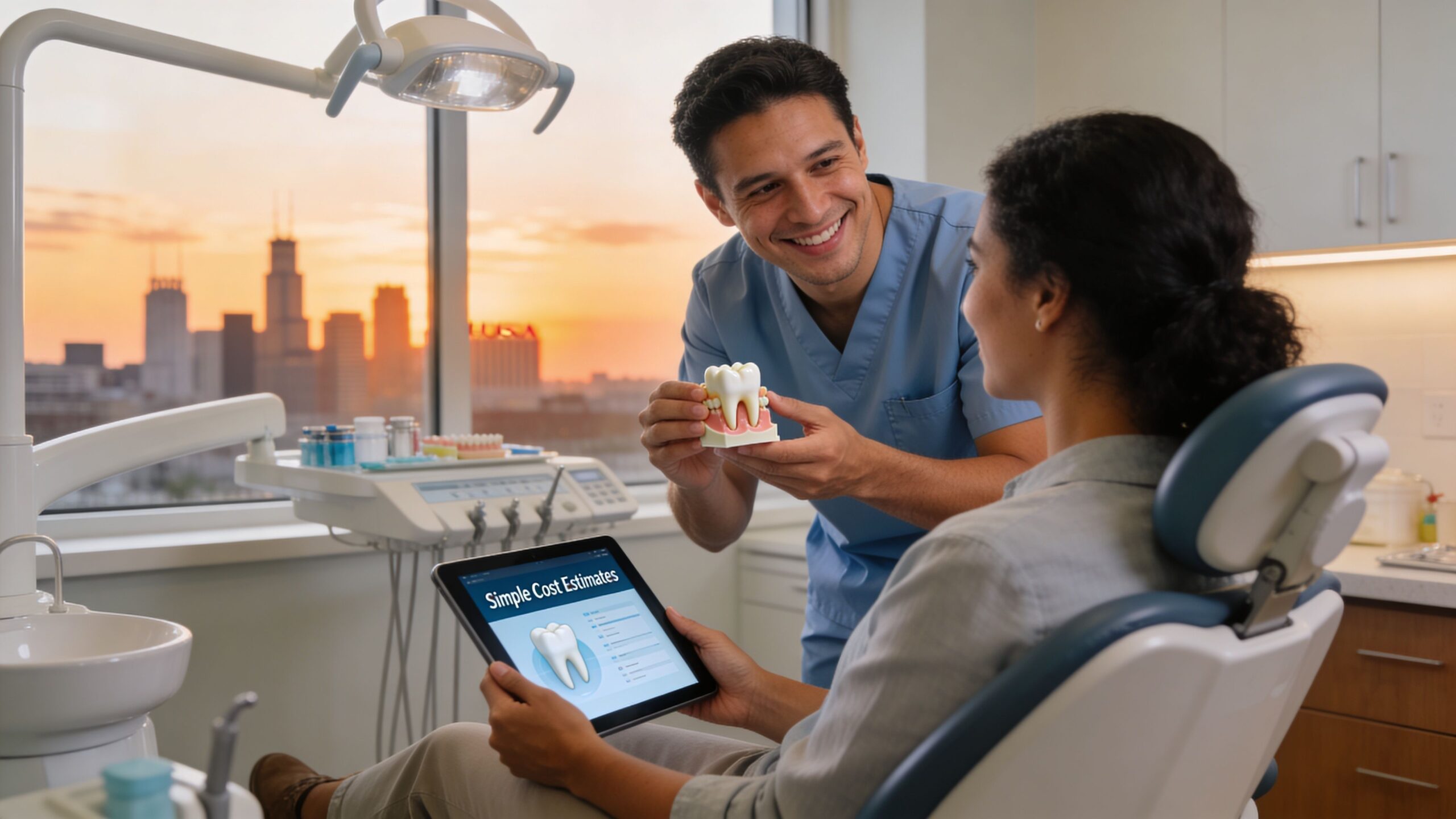
A toothache rarely arrives at a convenient time. For many Houston families, the pain is only half the problem. The other half is the mental math that starts right away. Can this wait, what will it cost, and is there a way to get good treatment without turning one dental visit into months of financial stress?
That question comes up often in Bellaire, West University, and across Houston. Some people need a simple cleaning and exam. Others are trying to compare the cost of a tooth extraction, a root canal, cosmetic dentistry, or an emergency dentist visit after something suddenly breaks. Many are insured but still surprised by out-of-pocket costs. Many more have no dental insurance at all.
Affordable care isn’t just about finding the lowest number on a website. It’s about finding treatment that solves the problem, lasts, and fits your real budget. That’s especially true for the “missing middle” in Houston: working adults and families who don’t qualify for low-cost public programs but still need practical options for high-quality care.
- Your Guide to Finding Affordable Dental Care in Houston
- Understanding Dental Service Costs in the Houston Area
- Navigating Dental Insurance and Payment Options
- Quality Dental Care Without Insurance in Houston
- Patient-Focused Strategies to Lower Your Dental Bills
- Dr Boren A Bellaire Dentist for High-Value Affordable Care
- What to Expect at Your First Appointment
- Schedule Your Consultation for Affordable Care in Houston Today
Your Guide to Finding Affordable Dental Care in Houston
A common Houston scenario goes like this. A back tooth starts throbbing on a Thursday night. By Friday morning, you’re searching for a dentist near me, an emergency dentist, and anything that looks like affordable dental care in Houston TX. Then the cost fear kicks in. You don’t want to ignore it, but you also don’t want to walk into an office and feel blindsided.
That stress is understandable. Dental costs can feel confusing because every patient starts from a different place. One person needs a small filling. Another needs a cracked tooth evaluated with dental x-rays. Someone else wants relief now, but also wants to ask about longer-term options like restorative dentistry, cosmetic dentistry, or dental implants near me after the immediate issue is under control.
Patients often feel better once they can compare experiences from a real practice setting. If you want that kind of perspective before booking, the Testimonial collection for 4squares shows the kinds of details people notice, such as communication, comfort, clarity, and whether a team made the financial side easier to understand.
A useful first step is choosing a dentist who explains treatment and fees clearly before anything starts. The guidance in how to choose a dentist can help you sort through that decision with more confidence.
Affordable care starts with clarity. If you understand the diagnosis, the treatment choices, and the financial path, the situation gets easier to manage.
Good dentistry should feel like that. Calm. Plainspoken. Local. If you’re looking for a dentist in Bellaire, TX or nearby Houston neighborhoods, it helps to know what services usually cost and what options can make those costs easier to handle.
Understanding Dental Service Costs in the Houston Area
Dental fees vary in Houston, but they aren’t completely unpredictable. Once you understand the common ranges for basic services and the reasons prices change from case to case, it becomes much easier to budget and ask smart questions.
Private practices in Houston often use transparent pricing to reduce surprises. According to Houston affordable dentist pricing information, many offices offer new patient specials for exams and x-rays from $39 to $99, routine fillings from $200 to $800, simple extractions from $150 to $350, and single-canal root canals from $600 to $900.
Estimated costs for common dental services in Houston TX
| Dental Service | Estimated Cost Range |
|---|---|
| New patient exam and x-rays | $39 to $99 |
| Routine filling | $200 to $800 |
| Simple tooth extraction | $150 to $350 |
| Single-canal root canal | $600 to $900 |
Those numbers are useful starting points, not guarantees. A filling on a small front tooth isn’t the same as a larger restoration on a molar that handles heavy bite pressure. A tooth extraction can stay simple, or it can become more involved if the tooth is fractured, infected, or difficult to access.
Why prices don’t always match from one visit to another
Three things usually drive the final cost.
- Diagnosis first: A patient may walk in thinking they need a filling, but the exam and dental x-rays show a deeper problem that needs restorative dentistry instead.
- Complexity matters: A straightforward tooth extraction costs less than treatment that involves infection, broken tooth structure, or careful planning for replacement later.
- Materials and technology affect value: Digital x-rays, magnification, adhesive bonding, and minimally invasive techniques can improve precision and comfort, but they also reflect a different level of care than a bare-bones exam.
That’s why it helps to think beyond the cheapest number in a search result. A lower fee up front can still become expensive if the diagnosis is rushed or the treatment doesn’t last.
What patients should ask before agreeing to treatment
A good financial conversation in dentistry isn’t awkward. It’s part of good care.
Ask questions like these:
- What problem are you treating today
- Are there more than one treatment options
- What is the immediate cost, and what could come later
- Is this urgent, or can treatment be phased over time
- Will I need follow-up restorative or cosmetic work afterward
If you want a more focused breakdown of visit costs and common pricing questions, the page on dentist appointment price details is a practical place to start.
Practical rule: Don’t compare dental prices the way you compare gas stations. Compare diagnosis, materials, longevity, and whether the office explains the full picture before treatment begins.
For patients searching tooth extraction, cleaning and exams, new patient exams, or cosmetic dentist near me, that kind of transparency matters more than any one advertisement.
Navigating Dental Insurance and Payment Options
Insurance can help, but it also creates confusion because many patients assume it works like a simple discount card. It doesn’t. Most dental plans have their own rules, timing limits, and categories of coverage, which means the same treatment can feel affordable for one patient and frustrating for another.
The terms that matter most
A deductible is the amount you pay before certain benefits begin. A copayment is your share of the cost after the plan applies its rules. An annual maximum is the limit many plans will pay within a benefit period. Once that maximum is reached, the remaining cost usually becomes the patient’s responsibility.
In-network and out-of-network add another layer. In a PPO arrangement, an in-network dentist agrees to the plan’s fee schedule. That can lower some costs, but it can also limit how fees are structured. An out-of-network office may still work with your plan, but your portion can differ depending on reimbursement rules.
Where patients get tripped up
The most common insurance mistake is assuming coverage equals full payment. It usually doesn’t. Plans often handle preventive services differently from restorative or cosmetic dentistry, and advanced treatment may involve restrictions, exclusions, or paperwork that slows things down.
Another issue is timing. A patient may need treatment now, but the plan’s benefit year, waiting rules, or remaining maximum may not line up with that need. That can make the financial side feel random when it’s really just plan design.
Insurance is a financing tool, not a treatment plan. Your mouth doesn’t organize problems by calendar year.
Smart ways to use your benefits better
Patients generally do best when they approach insurance strategically rather than passively. These habits usually help:
- Verify before the visit: Ask what preventive services, dental x-rays, and basic restorative services are typically covered under your specific plan.
- Use the calendar wisely: If treatment can safely be staged, some patients spread care across benefit periods.
- Separate urgency from insurance timing: Pain, infection, or a cracked tooth may need immediate care even if your benefits aren’t ideal that month.
- Ask for a written estimate: A treatment outline helps you see what the plan may contribute and what you may still owe.
- Review alternatives: In some situations, there may be more than one clinically sound option with different fee structures.
Other payment paths patients often use
Not every patient wants or needs to pay in full at one appointment. Depending on the practice, patients may use third-party financing, Health Savings Accounts, Flexible Spending Accounts, or office-arranged payment planning. These options can be especially helpful when you need more than a basic cleaning and exam, such as restorative dentistry, cosmetic treatment, or care after an emergency dentist visit.
The key is to discuss money early, not after the work is already underway. Patients usually feel most in control when financial choices are presented the same way treatment choices are presented: clearly, respectfully, and without pressure.
For adults searching for a dentist near me in Houston, a good office won’t make you decode the business side on your own. They’ll explain what the insurance may do, what it won’t do, and what realistic next steps look like if there’s a gap.
Quality Dental Care Without Insurance in Houston
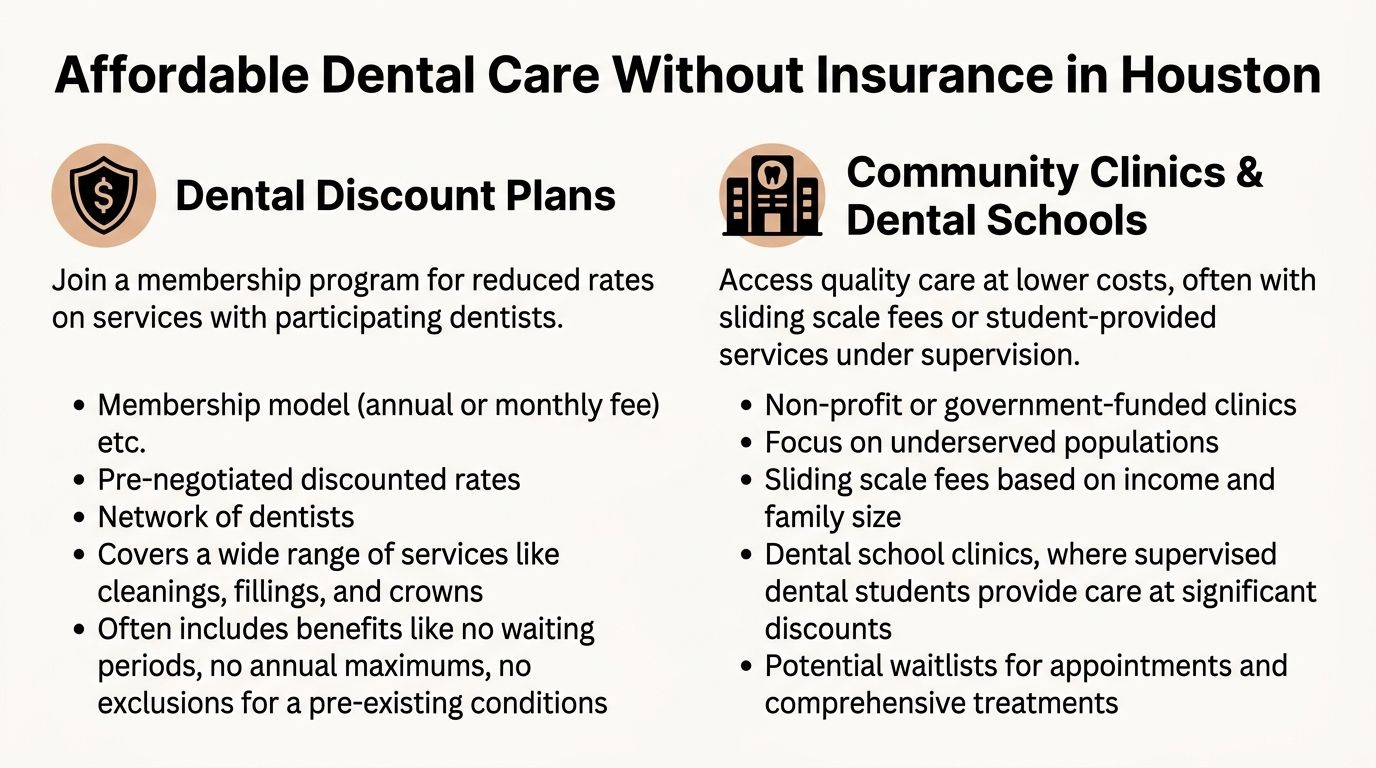
Being uninsured doesn’t mean you’re out of options. It does mean you need to choose carefully, because “low cost” and “good fit” are not always the same thing. In Houston, patients without insurance generally look at two broad paths: community-based low-cost care, or private practice arrangements that reduce costs in a more flexible way.
Community clinics and public options
Houston does have an important public health safety net. According to low-cost dental clinic information for Houston and Harris County, the Houston Health Department operates at least three dental clinics, including La Nueva Casa de Amigos, Sharpstown Health Services, and Sunnyside. These clinics provide exams, x-rays, fillings, extractions, and cleanings for adults and children who qualify for Medicaid or CHP coverage. Harris County Public Health also operates the Humble Health Clinic, which serves children and expectant mothers through Medicaid, CHIP, and sliding-scale payment options without requiring insurance.
That system matters. It helps reduce financial barriers for many residents, especially for basic care. But it may not meet every need.
Public and community-based settings are often a strong fit when:
- You qualify for Medicaid, CHIP, or sliding-scale care
- Your needs are basic and urgent
- You can work within clinic scheduling and eligibility rules
They may be less ideal when you want advanced cosmetic treatment, a highly personalized restorative plan, or a faster and more flexible path for ongoing care.
The appeal of a dental savings plan
A different option is a dental savings plan. This isn’t traditional insurance. It’s a membership arrangement where the patient pays a fee and receives discounted access to services through the practice.
As explained in Aventura Dental’s discussion of care without insurance, a dental savings plan can bypass waiting periods, pre-approvals, and annual caps. That structure can be especially useful for services that insurance often handles poorly or doesn’t prioritize, including ClearCorrect aligners and TMJ therapy.
Which path fits which patient
The “missing middle” applies to many Bellaire and West University patients. They don’t qualify for subsidized care, but they also don’t want to pay full fee without a strategy. They need quality, speed, and a way to budget treatment over time.
A community clinic may be the right answer if your priority is the lowest available cost for basic care and you meet the program requirements.
A private savings-plan model may fit better if you want:
- Consistent access: One office that can follow your case over time
- Broader service choices: Cosmetic dentistry, restorative work, TMJ care, and other non-basic services
- Fewer insurance-style restrictions: No waiting around for approvals or plan limitations
The cheapest door into dentistry isn’t always the most affordable path over a full year of care. Continuity, speed, and scope matter.
For uninsured patients searching affordable dental care in Houston TX, the best option often depends on whether you need short-term relief only or an ongoing relationship with a practice that can handle preventive, restorative, and cosmetic needs in one place.
Patient-Focused Strategies to Lower Your Dental Bills
Patients have more control over dental costs than they think. The biggest savings usually don’t come from chasing the lowest advertised special. They come from timing, prevention, and honest conversations before small issues turn into larger treatment.

Prevention costs less than delay
A routine cleaning and exam may not feel urgent. A painful cracked tooth always does. That’s the difference.
When patients keep up with preventive visits, dentists can catch decay, wear, gum inflammation, and bite problems earlier. Earlier treatment is often simpler, more conservative, and easier to budget. Delaying care tends to push people toward emergency dentist visits, more extensive restorative dentistry, and time-sensitive decisions they’d rather make calmly.
Use phased treatment plans when needed
Not every treatment plan has to happen all at once. If your mouth has multiple concerns, many cases can be sequenced in a sensible way. Urgent problems come first. Functional needs come next. Cosmetic goals can follow on a timeline that respects your budget.
That kind of planning helps patients avoid the feeling that they must choose between “do everything today” and “do nothing.” In real life, there’s often a middle path.
A conversation about phased care is easier when you ask directly:
- What needs immediate attention
- What can safely wait
- Which step protects me from bigger costs later
- Are there treatment alternatives with different fee levels
Ask better questions at the consultation
Good financial decisions in dentistry usually come from good clinical questions. Patients who ask thoughtful questions often end up with more practical plans.
Try questions like these:
- If this were your tooth, what would you do first
- Is there a conservative option before a larger procedure
- What result should I expect from each choice
- How long is this likely to hold up if I maintain it well
This short video gives a helpful perspective on thinking through care decisions and oral health priorities before costs spiral.
Value is different from price
A lower price for a filling or tooth extraction isn’t always the better deal if the diagnosis was rushed or the follow-up is poor. The goal is care that solves the problem, preserves tooth structure when possible, and reduces the chance that you’ll be back soon with a more expensive version of the same issue.
A good dental budget isn’t built around avoiding treatment. It’s built around preventing emergencies and making careful choices early.
That’s true whether you’re searching for dentist in Bellaire, TX, teeth whitening, tooth extraction, or a long-term home for family dental care.
Dr Boren A Bellaire Dentist for High-Value Affordable Care
Much of the conversation about affordability in Houston centers on either low-cost public clinics or discount entry offers. That leaves out a large group of patients. They earn too much to qualify for subsidized programs, but they still need treatment to be financially manageable. Existing guidance on Houston dental affordability often overlooks these middle-income families and working adults, especially those seeking cosmetic or therapeutic services in areas like Bellaire. That gap is described in this discussion of low-income and overlooked patient needs in Houston dentistry.
Why the missing middle needs a different kind of dental office
A patient in this group often isn’t looking for the absolute cheapest visit. They’re looking for value. They want treatment that’s precise, durable, and clearly explained. They may need cosmetic dentistry, clear aligners, help with jaw pain, or a custom oral appliance for sleep-related breathing concerns. They also want to know that cost conversations won’t feel rushed or vague.
That’s where experience and technology can improve affordability in a practical sense. Better diagnostics and more conservative techniques can help preserve healthy tooth structure and reduce avoidable re-treatment. In day-to-day practice, that often matters more than a flashy introductory special.
What high-value care looks like in Bellaire
Charles E. Boren is one local option for patients who want that kind of care. The practice in Bellaire uses tools and techniques such as magnification, fiber optics, digital x-ray imaging, micro air abrasion, and adhesive bonding, along with a patient-centered approach that includes clear communication, sedation when appropriate, and treatment planning customized to each person’s goals and budget.
This matters for more than general dentistry. It affects cases involving:
- Cosmetic dentistry: Veneers, Lumineers, all-porcelain crowns, professional whitening, and ClearCorrect aligners
- Restorative concerns: Conservative repairs that protect function and appearance
- Dental sleep medicine: Custom oral appliances coordinated with sleep specialists
- TMJ and headache therapy: Bite analysis, oral appliances, muscle relaxation techniques, and NTI-tss care
Affordability isn’t only about the first appointment
For the missing middle, affordability often means avoiding wasted motion. Patients don’t want to bounce between temporary fixes, repeat exams, and unclear next steps. They want one office that can diagnose accurately, explain trade-offs clearly, and build a treatment path that matches both health priorities and household reality.
That kind of approach may include:
- Prioritizing the essentials first: Address pain, infection, broken teeth, or function before elective upgrades.
- Sequencing larger goals: If you want both restorative work and cosmetic improvement, those steps can often be organized logically instead of compressed into one expensive phase.
- Supporting anxious patients: Sedation-supported care can help people who’ve been putting treatment off because fear and cost built up together.
Patients usually don’t call treatment “affordable” because it was cheap. They call it affordable when it solved the problem, fit the budget, and felt worth doing.
A practical fit for Bellaire and nearby Houston neighborhoods
For patients searching dentist near me, cosmetic dentist near me, dental implants near me, or a dependable office for family care, the key question isn’t just “What does this cost today?” It’s “Will this plan make sense for me over time?”
In Bellaire and West University, many adults want a relationship with a practice that can handle routine care, smile improvements, and more specialized concerns without sending them into a maze of separate referrals and financial uncertainty. That’s often where a private office with broad service scope and individualized planning becomes the better value.
What to Expect at Your First Appointment
The first visit should lower stress, not add to it. Most patients arrive with two concerns at once. They want to know what’s wrong, and they want to know what dealing with it will involve financially.
At a first appointment, the experience should begin with a real conversation. You explain what brought you in, whether that’s pain, a broken tooth, overdue cleaning and exams, interest in teeth whitening, concern about jaw tension, or the need to find a new dentist in Bellaire, TX. That conversation matters because treatment should match your goals, not just a chart.
The visit usually includes three parts
Listening first
Your symptoms, priorities, and history shape the exam.A thorough evaluation
This may include dental x-rays and a close clinical exam to identify decay, wear, bite issues, gum concerns, or signs that a tooth extraction or restorative treatment may be needed.A calm review of options
You should leave understanding the diagnosis, the reasonable treatment choices, and which issues are urgent versus elective.
Financial discussions should happen in that same spirit. Clear. Respectful. No surprises. If treatment can be phased, that should be discussed. If there are alternatives, you should hear them plainly.
The right first appointment gives you a plan, not pressure.
That’s especially important for patients who’ve delayed care because they were worried about cost, embarrassment, or dental anxiety. A good office understands that those concerns often travel together.
Schedule Your Consultation for Affordable Care in Houston Today
A healthy smile in Houston shouldn’t feel out of reach just because the financial side seems confusing. Whether you need a basic exam, help with a painful tooth, cosmetic dentistry, TMJ support, or a long-term dentist near you for your family, the right next step is getting clear answers.
Affordable dental care in Houston TX usually comes down to three things. An accurate diagnosis. A treatment plan that respects your priorities. A financial conversation that happens openly, before surprises have a chance to happen.
If you live in Bellaire, West University, or the greater Houston area, it helps to work with a dental office that understands the missing middle. You may not need subsidized care, but you still deserve practical options, modern treatment, and a plan that makes sense for your budget.
If you’ve been putting off care because you weren’t sure where to start, start with a consultation. One visit can give you clarity on the problem, the timeline, and the realistic ways to move forward.
If you're ready to talk through your options with a local office that provides personalized dental care in Bellaire and nearby Houston communities, schedule a visit with Charles E. Boren.