
If you're a parent in Bellaire, West University, or nearby Houston, you may be in that familiar stage of trying to do everything right. Your child is growing fast, the first teeth are coming in, and suddenly you're searching for answers about bellaire pediatric dentistry, first visits, cleanings, X-rays, cavities, and what kind of dentist should guide your child over the years.
That choice can feel bigger than it looks. You're not only looking for someone to check tiny teeth. You're choosing a dental home, a place where your child can learn that dental care is normal, safe, and part of staying healthy for life. Many parents begin by looking for a "dentist near me" or a "dentist in Bellaire, TX," but what matters most is finding a practice that can support your child now and continue supporting them as their needs change.
Your Child's Smile A Guide for Bellaire Parents
A new parent often starts with simple questions. Is thumb-sucking still okay? Should a baby tooth with a small spot be checked right away? Is a family dentist enough, or should we only look for pediatric care?
Those are good questions because children's dental care isn't just about fixing problems. It's about creating habits, spotting changes early, and helping a child feel comfortable in a dental office before they ever need more involved treatment.

Why a dental home matters
Think of a dental home the way you think of a trusted pediatrician. You don't want to start from scratch every time your child has a question, a sore tooth, or a change in development. You want a team that knows your family, notices patterns, and can guide you calmly.
That long-term relationship is one reason early care matters so much. The American Academy of Pediatric Dentistry reports that regular pediatric dental visits can reduce a child's rate of cavities by up to 40%, which shows how powerful consistent preventive care can be for growing smiles, as noted by Bellaire Smiles and its summary of AAPD guidance.
Practical rule: The best children's dental visit is often the one that happens before anything hurts.
The advantage of comprehensive family care
Parents sometimes assume they need one office for kids, another for teens, and another for adults. In reality, many families prefer the continuity of an experienced family practice. A dentist who sees children can also watch how the bite develops, how habits affect alignment, and how early concerns may connect to future smile or jaw issues.
That matters in real life. A child who starts with routine cleaning and exams may later need monitoring for crowding, support after a sports injury, cosmetic guidance as a teen, or restorative care as an adult. When one trusted office can follow that journey, communication gets easier and care feels more connected.
For Bellaire families, that can mean fewer surprises and more confidence in each step.
Your Child's First Dental Visit and Beyond
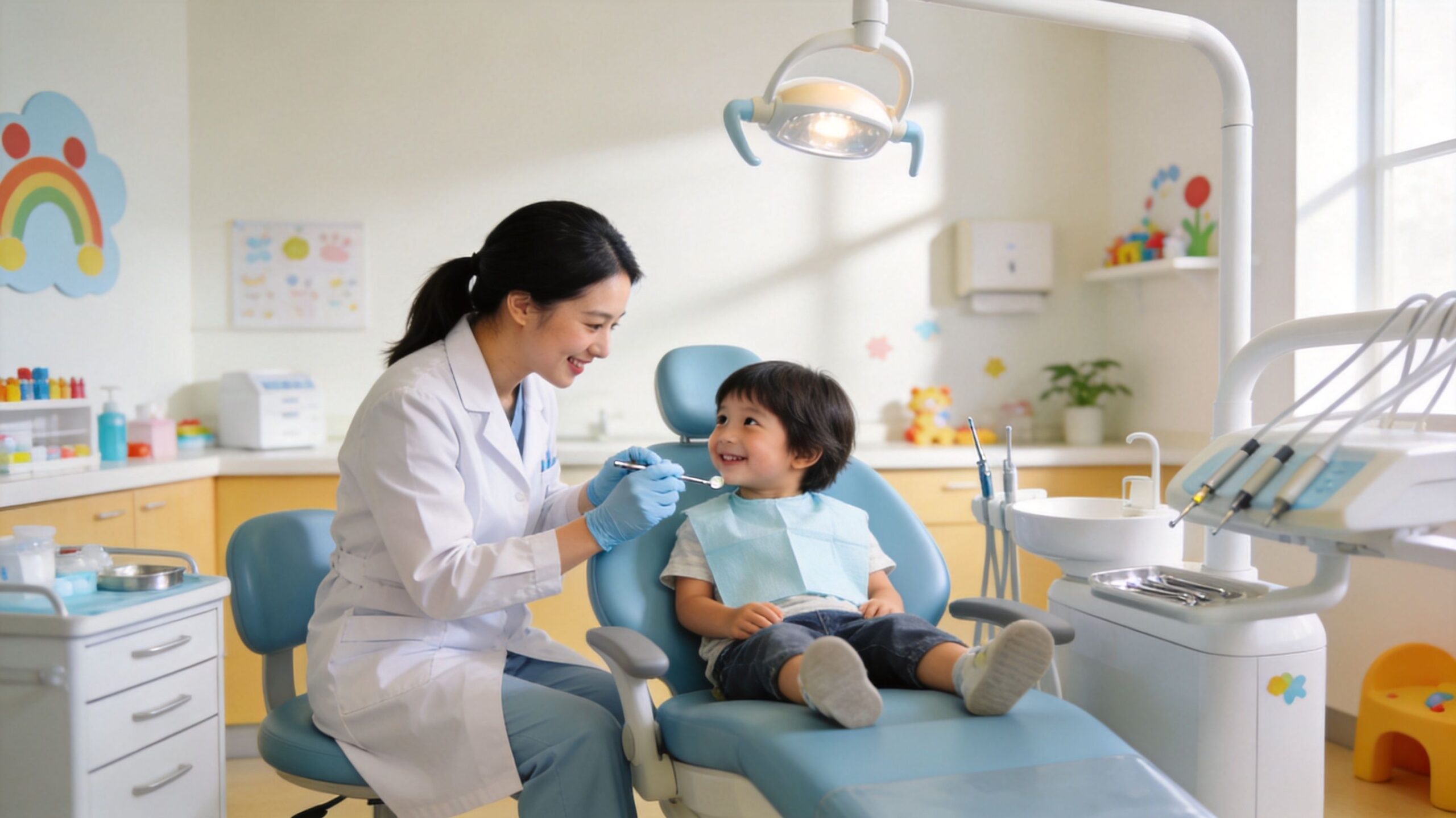
The first visit is usually much simpler than parents expect. It isn't a big procedure day. It's more like an introduction, a chance for your child to meet the team, sit in the chair, and begin seeing dental care as something familiar.
What happens at an early visit
If your child is very young, the appointment may involve more coaching for you than treatment for them. A dentist will usually look at how the teeth are coming in, how the gums look, whether there are signs of early decay, and whether habits like bottle use or thumb-sucking may affect the mouth.
Parents are often surprised by how educational these visits are. You may talk about:
- Brushing technique: How to clean small teeth well without turning it into a battle.
- Feeding habits: Which drinks and snacks raise cavity risk and which routines protect enamel.
- Home routines: When to floss, how to help at bedtime, and what changes to expect as your child grows.
For a more detailed look at timing, many parents find this guide on what age a child should go to the dentist helpful.
Why the first appointments feel gentle
A good first visit often has a "happy visit" feel. The goal is trust. The dentist may count teeth out loud, show your child a mirror, or let them watch a parent get a quick look first. That step matters because children do better when they know what's coming.
You can help by talking about the visit in simple, neutral language. Avoid saying things like "don't worry" or "it won't hurt" before anyone has mentioned pain. It's better to say, "They're going to count your teeth and help keep them strong."
This short video gives parents a useful picture of how early dental visits can feel:
How care changes as your child grows
As children get older, visits become a steady rhythm of observation, prevention, and coaching. A cleaning and exam may seem routine, but these regular appointments are where a dentist tracks eruption patterns, checks the bite, watches for wear, and decides when dental X-rays may be useful.
A simple way to think about it is this:
| Stage | What the visit usually focuses on |
|---|---|
| Baby and toddler years | Getting comfortable, checking eruption, teaching parents home care |
| Preschool years | Monitoring for early decay, cleaning, habit guidance, building cooperation |
| School-age years | Tracking bite development, discussing sealants, reviewing hygiene independence |
| Teen years | Watching alignment, sports protection, appearance concerns, long-term planning |
Early visits work best when they're ordinary. When a child only sees the dentist during pain, the office can start to feel like a place for bad surprises.
Core Dental Services for Growing Children
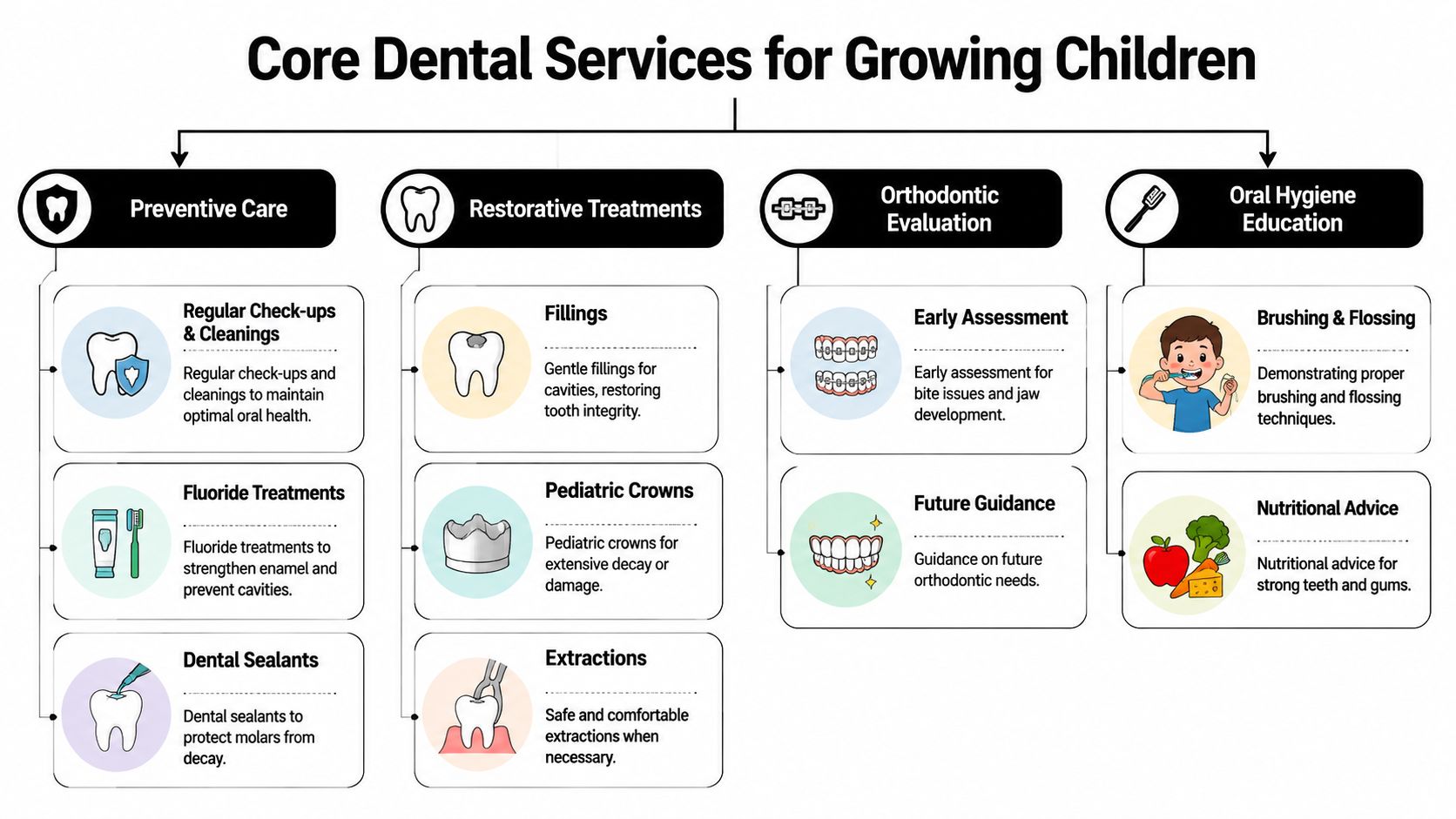
Children's dentistry isn't one single treatment. It's a set of tools used at the right time. Some visits are preventive. Some are diagnostic. Some are restorative. The point is always the same: protect the tooth if possible, treat gently when needed, and keep development on track.
Preventive care that stops trouble early
Preventive care is the quiet work that makes a big difference over time. It includes regular cleaning and exams, home hygiene coaching, and treatments that strengthen or shield teeth before decay begins.
Fluoride treatments are a common example. Parents sometimes hear the word and aren't sure what it means. In plain terms, fluoride helps strengthen enamel so teeth are more resistant to acid and daily wear.
Sealants are another helpful option, especially once molars come in. A lot of cavities start in the deep grooves on the chewing surfaces of back teeth. Sealants cover those grooves like a thin protective coat, making them easier to keep clean.
Diagnostic tools that guide smarter decisions
Not every child needs the same imaging at the same time. That's why good diagnostic care is thoughtful, not automatic. Dentists use exams and, when appropriate, digital dental X-rays to see areas that can't be checked with the eye alone, such as between teeth or under the gumline.
For parents, clarity is important. You should expect an explanation of why an X-ray is recommended, what it's meant to show, and how it changes the treatment decision.
A child's mouth changes quickly. Teeth erupt, roots develop, spacing shifts, and hidden decay can start in places that look normal from the outside. Diagnostic care helps catch those changes before they turn into pain or more complex restorative dentistry.
Restorative options that stay gentle
If a cavity does develop, treatment doesn't always mean a dramatic experience. Modern pediatric treatment usually aims to preserve as much natural tooth structure as possible while keeping the child comfortable.
Tooth-colored fillings are often used for small to moderate cavities. They're designed to repair the damaged part of the tooth while blending in naturally. In some cases, when a baby tooth is badly broken down or weakened, a crown may be the more durable option.
There are also times when a child isn't ready for traditional treatment, or the decay pattern makes a less invasive approach preferable.
Some of the best pediatric treatment plans are the least aggressive ones that still protect the tooth well.
Where Silver Diamine Fluoride fits
One of the most useful modern options for certain cavities is Silver Diamine Fluoride, often shortened to SDF. For children with active cavities, SDF can halt the progression of decay in 80% to 90% of cases, offering a gentle alternative to drilling and filling, according to Scuba Dental's pediatric dentistry overview.
Parents often like SDF because it's quick and non-invasive. Dentists often like it because it can buy time, stabilize a problem tooth, and reduce stress for children who would struggle with traditional restorative care. It isn't right for every situation, but it's a strong example of how bellaire pediatric dentistry has become more conservative and child-focused.
Ensuring a Safe and Positive Experience for Every Child
A child can have healthy teeth and still dread the dentist. That's more common than many parents realize. With over 30% of young children experiencing dental anxiety, comfort isn't a side issue. It's part of good clinical care. Safe sedation methods can also reduce treatment interruptions by 70%, allowing care to be completed more smoothly and effectively, as noted in Wildflower Pediatric Dentistry's sedation overview.
How dentists lower fear before treatment starts
The first step is usually behavior guidance, not sedation. Children do best when adults slow down, explain what will happen, and make each step predictable. One of the most common approaches is often called Tell-Show-Do.
That looks like this in practice:
- Tell: The dentist explains in simple words what will happen.
- Show: The child sees the mirror, brush, or suction tool before it's used.
- Do: The step happens just as described, with no surprises.
That method works because it gives children a sense of control. They aren't guessing. They can connect the words they heard with the sensation they feel.
When sedation can help
Some children are very young, highly anxious, have special healthcare needs, or need more treatment than they can comfortably manage while awake and tense. In those cases, sedation may be part of a safe, thoughtful treatment plan.
Nitrous oxide is one option many parents know as laughing gas. It helps some children relax while remaining responsive and able to recover quickly after the visit. Parents who want a better understanding of this approach can review nitrous oxide sedation dentistry.
A good sedation conversation should cover more than the name of the method. Parents should feel free to ask:
- Why it's recommended: Is the issue anxiety, age, treatment length, or complexity?
- What the child will experience: Will they feel sleepy, calm, or less worried?
- How to prepare: Whether eating, medications, or arrival time need to be adjusted.
- What recovery looks like: What to expect after the appointment and when normal routines can resume.
A calm child isn't just easier to treat. That child is also more likely to leave with trust intact and come back without fear.
Positive visits shape future health
This is the part many families underestimate. A positive dental experience in childhood changes what comes next. Children who feel heard and safe are more likely to cooperate during cleanings, accept preventive care, and speak up when something feels off.
That emotional foundation can matter as much as any single treatment. It helps turn dental care from a stressful event into a normal part of staying healthy.
Emergency Care and Proactive Long-Term Health
Most parents don't think about emergency dentistry until a child slips, collides on a playground, or bites down and suddenly cries. In those moments, having an established dental office matters. You're not starting a search for an emergency dentist while your child is upset. You already know where to call.

What counts as a dental emergency for a child
Parents often wait too long because they aren't sure whether the situation is urgent. If your child has swelling, persistent bleeding, facial injury, a broken tooth, a knocked-out tooth, or significant pain, it's smart to contact a dentist promptly.
A few practical examples help:
- Chipped tooth: Even a small fracture can leave a rough edge or expose a sensitive area.
- Knocked-out baby or permanent tooth: These situations need quick guidance because the next step depends on which tooth was lost.
- Toothache with swelling: This can point to infection and should not be brushed off as "just a cavity."
- Sports injury: A hit to the mouth can affect the tooth root or jaw even if the tooth doesn't look badly damaged.
If you're searching online for "tooth extraction," "emergency dentist," or "dentist near me" during one of these moments, that usually means your child needs a professional evaluation, not home guessing.
Why long-term observation matters too
Emergency care is only one side of pediatric dentistry. The other side is watching how the face, jaws, and bite develop over time. Recent data shows that 15% to 20% of children ages 6 to 12 show early signs of malocclusion, and untreated cases can increase later TMJ disorder risk by 40%, according to Bellaire Kids Dental's summary of current findings.
That doesn't mean every crooked tooth leads to jaw problems. It does mean early signs deserve attention. A family dentist who watches a child over time can notice changes in bite alignment, crowding, clenching, uneven wear, or jaw habits before they become harder to manage.
The family dentistry advantage
Full-scale care offers significant value in this setting. A dentist who treats both children and adults sees the entire progression of oral health. They do not only notice today's baby tooth or today's cavity. They also think about the teenage bite, the adult smile, the risk of headaches, and the role of jaw balance over many years.
Small childhood habits can echo into adulthood. Early guidance often matters more than dramatic treatment later.
For families in Bellaire, TX, that broader view can make routine visits feel more meaningful. The same office that helps with cleanings and exams can also monitor development, guide restorative decisions, support cosmetic concerns later on, and respond when urgent care is needed.
Choose a Lifetime of Health with Your Bellaire Dentist
Parents usually begin the search for bellaire pediatric dentistry because they want help with one immediate need. Maybe it's a first visit. Maybe it's a cleaning. Maybe it's concern about a cavity, anxiety, or a dental injury.
What matters most is choosing care that doesn't stop at the immediate issue. A strong dental relationship helps your child learn healthy routines, feel safe asking questions, and grow up with a better understanding of what oral health looks like. This is the value of complete family care in Bellaire, West University, and nearby Houston.
A good dental home should make life easier for parents too. You want clear explanations, thoughtful use of dental X-rays, practical guidance about prevention, and a plan that still makes sense as your child becomes a teen and then an adult. You may also want a practice that can support broader needs over time, whether that means restorative dentistry, cosmetic dentistry, or help during a dental emergency.
If you've been searching for a dentist in Bellaire, TX who can support your family beyond the next appointment, that long-view approach is worth prioritizing. Children's dentistry works best when it's connected to lifelong care, not isolated from it.
If you're ready to find a trusted dental home for your child and your whole family, schedule a visit with Charles E. Boren. Families in Bellaire, West University, and Houston choose the practice for experienced, personalized care, advanced technology, and a calm approach that supports everything from early pediatric visits to long-term smile, bite, and comfort goals.