
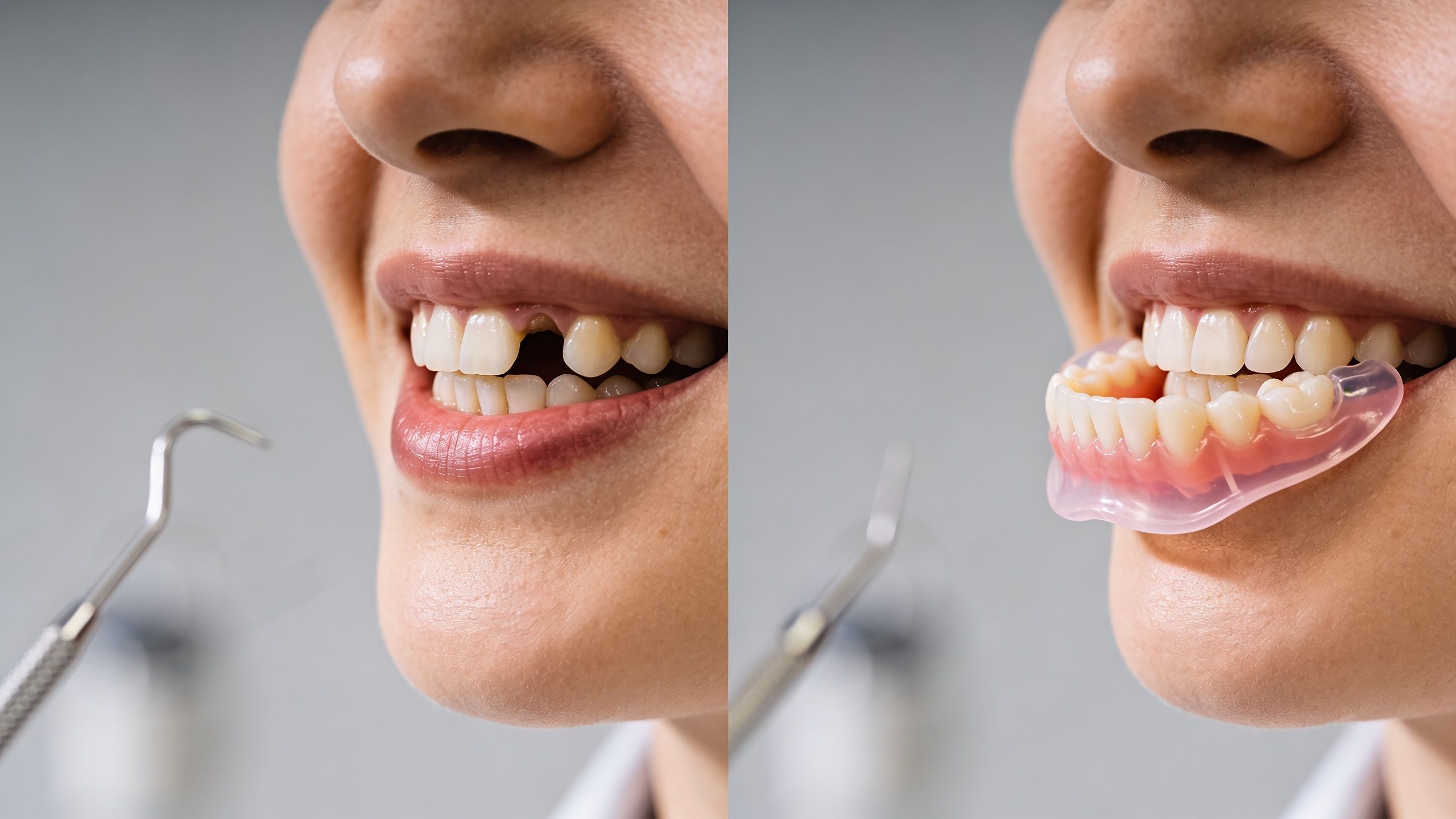
A missing tooth usually becomes a daily issue before it becomes a dental appointment. You notice it when you laugh, when you order dinner, or when you try to smile without thinking about the gap. Patients in Bellaire often tell me the same thing. They want a replacement that looks natural, feels light, and does not draw attention every time they speak.
A before and after Valplast partial denture gallery helps in that situation. It gives you something more useful than marketing language. You can see how a flexible partial changes the smile line, supports facial balance, and blends against the gum tissue in real patients. Valplast partials are known for their flexible nylon base and for avoiding the visible metal clasps that make some removable appliances look obvious. That cosmetic advantage matters, but so does fit, bite stability, and whether the case was planned well from the start.
If you are in Bellaire, West University, or the Houston area and want a tooth replacement that does not feel bulky, reviewing real cases is a smart first step. This article is not just a gallery roundup. It is a visual guide that helps you understand what Valplast partials do well, where their limits are, and what questions lead to a more productive consultation. We will look at each example with the same practical lens I use in the operatory, appearance, function, comfort, and long term maintenance.
That context matters because no partial denture is right for every mouth. Some patients are strong candidates for Valplast. Others do better with a different type of restorative dentistry treatment plan based on bite forces, missing tooth position, or the condition of the surrounding teeth and gums. The value of before and after photos is not just seeing a nice result. It is learning how to judge whether a similar result is realistic for your smile and how Dr. Boren’s Bellaire practice can work toward it.
If you want to make your own smile photos easier to compare, this guide on how to animate photos can help you view changes more clearly.
- 1. Before and After Gallery – Charles E. Boren, DDS
- 2. Valplast International Before and After Slideshow
- 3. Stomadent Dental Laboratory Before and After Valplast Partial Denture
- 4. Morris Plains Center for Dentistry Valplast Flexible and Esthetic Partial Denture
- 5. J.D. Robinette and Associates Before and After Gallery
- 6. Hyannis Family Dentistry Before and After
- 7. HSD Dental / SmileDoctor HSD Full and Partial Dentures Gallery
- Before & After: 7 Valplast Partial Denture Cases
- Your Next Step to a Confident Smile in Bellaire, TX
1. Before and After Gallery – Charles E. Boren, DDS
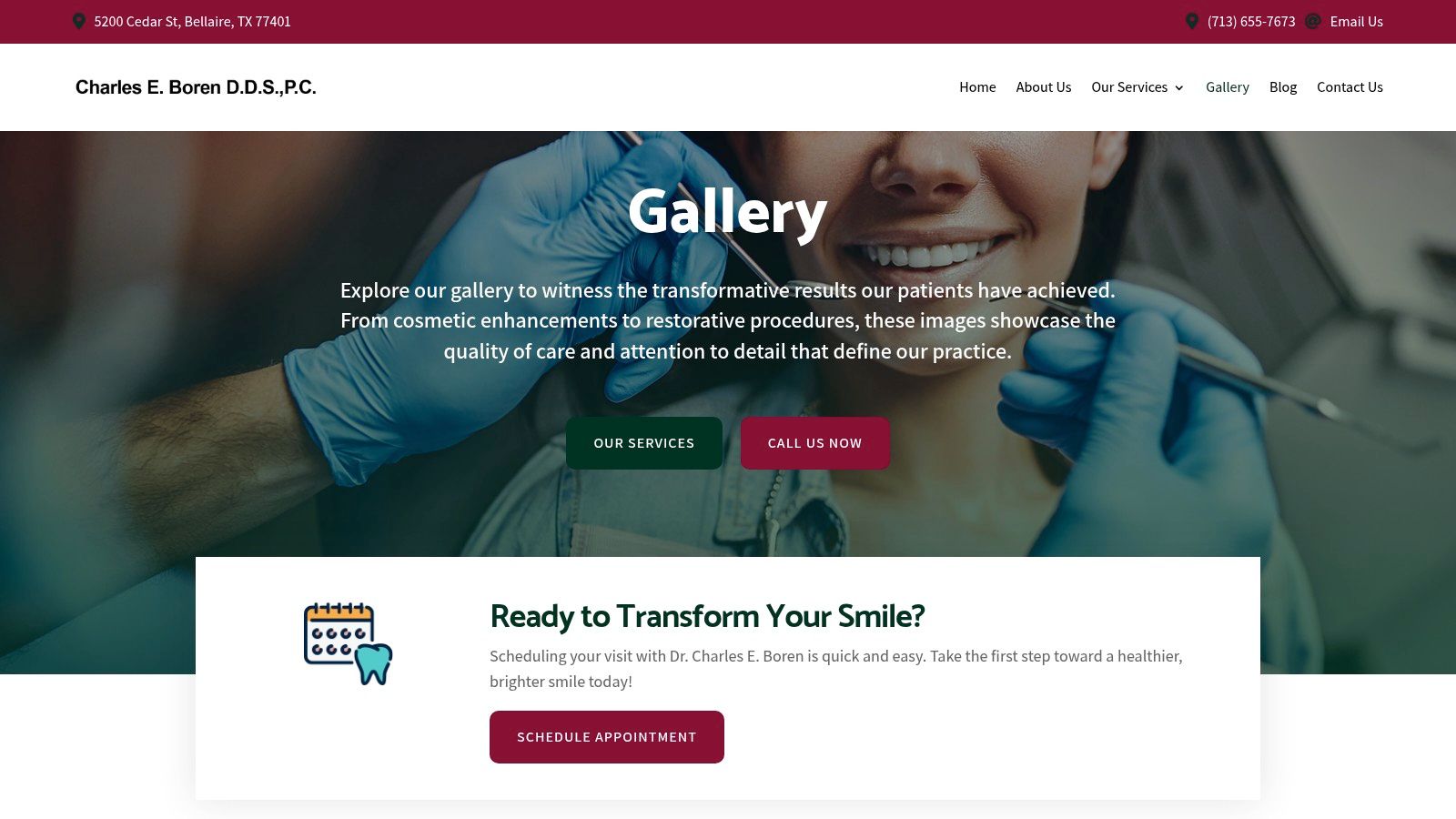
If you live in Bellaire and want the most practical place to start, the Charles E. Boren before and after gallery is the strongest local reference point. It shows real treatment outcomes from a dentist in Bellaire, TX, not a manufacturer or lab. That matters because patients usually want to know one thing first. Can someone nearby deliver a result that looks natural in an everyday smile?
Dr. Boren’s gallery is helpful because it reflects the kind of conservative restorative planning many adults need. Instead of pushing every patient toward the same treatment, the visual examples support a more individualized approach that fits cosmetic goals, bite function, and long-term oral health.
Why this gallery stands out locally
A lot of online galleries show attractive end results, but they don’t always help you understand what changed. This one does a better job of showing how missing teeth, worn teeth, and uneven smile lines affect the whole appearance of the mouth. When patients compare the before and after Valplast partial denture style of transformation with other restorative cases, they can see that replacing teeth isn’t only about “filling a space.” It’s also about support, symmetry, and comfort.
That’s especially important if you’ve been searching for a cosmetic dentist near me or restorative dentistry in Bellaire, TX and you’re unsure whether a flexible partial is too small to make a meaningful difference. In many smiles, it makes a visible difference right away.
Practical rule: Don’t judge a denture photo only by the teeth. Look at the gum line, the way the appliance blends near the tissue, and whether the smile looks relaxed instead of forced.
What works and what doesn’t
What works well here is the gallery’s realism. These are actual patient outcomes, and that gives you a more grounded expectation than a generic stock-style presentation. It also pairs well with the kind of diagnostic approach patients want from a long-established local practice that uses modern tools and minimally invasive methods.
A second strength is context. If your needs extend beyond a flexible partial, Dr. Boren also provides a broader view of restorative dentistry options in Bellaire, which helps when a patient may need a bridge, implant planning, or a phased treatment approach instead of one removable appliance.
There are limits, and they’re worth saying plainly. A gallery can’t show your bone levels, bite forces, gum condition, or whether your remaining teeth provide the right support. Photos also don’t explain timelines, maintenance, or whether another option would be more stable for your case.
Best fit for Bellaire patients
This is the best starting point for patients who want local proof and a realistic consultation path. It’s especially useful if you want a dentist near me who can explain not just what looks good in a photo, but what will hold up in your mouth.
A gallery should build confidence, not make promises. That’s what this one does well. It shows possibility, but it still leaves room for proper examination, digital x-rays, and honest case selection.
2. Valplast International Before and After Slideshow
A patient in Bellaire loses a tooth near the front, smiles carefully for a few months, then starts searching for photos that answer one question fast. Will a partial denture show when I talk or laugh? The Valplast International slideshow helps with that first visual question better than many office galleries because it shows the product the way the manufacturer intends it to look.
That makes this slideshow useful as a study tool, not just a set of polished before and after images. If you are comparing options before a consultation, this gallery makes it easier to spot the features that set Valplast apart, especially the gum-colored flexible base and the less noticeable clasping. For patients replacing teeth in the smile zone, those details often drive the conversation early.
What patients can learn from the brand gallery
Patients often ask me whether a flexible partial will look bulky, shiny, or easy to notice up close. A manufacturer gallery can help answer that specific concern because the photos highlight the esthetic strengths Valplast is known for. You can see how the material blends more naturally with gum tissue than older designs that rely on metal clasps across visible teeth.
That is the value here. The slideshow teaches you what a well-made Valplast partial is trying to achieve visually.
It also helps you prepare for a better consultation. Instead of saying, "I want something that looks nice," you can point to the traits you prefer, such as less metal display, softer contours near the gums, or a lighter look around the front teeth. That leads to a more productive conversation in our Bellaire office because we can compare those goals against your bite, support teeth, and long-term needs.
A manufacturer gallery helps you learn what to ask for. Your exam determines whether that result is realistic in your mouth.
Trade-offs to keep in mind
The limitation is clear. This slideshow shows ideal presentation, but it does not show the clinical work behind case selection. Photos cannot tell you whether your remaining teeth have enough support, whether your tissue can tolerate movement, or whether a flexible partial will stay comfortable through daily chewing.
It also will not answer the practical questions patients usually care about after the first impression wears off. How stable will it feel? Will food trap underneath it? Will adjustments be simple if the fit changes later? Those are the questions that matter in real life, and they only get answered chairside.
The slideshow still has practical value:
- Clear esthetic reference: You can quickly see why patients who dislike visible metal are drawn to Valplast.
- Better consultation prep: The photos help you identify the look you want, which makes your appointment more specific and more useful.
- Realistic product comparison: It is easier to compare flexible partials with traditional removable options once you have seen the visual differences clearly.
For Bellaire patients, this gallery works best as visual homework. It helps you understand what may be possible, and it gives us something concrete to discuss. Then we examine whether Dr. Boren can achieve a similar result in a way that also feels stable, functions well, and makes sense for your mouth.
3. Stomadent Dental Laboratory Before and After Valplast Partial Denture
A patient often sees a before-and-after photo and focuses on one thing first: whether the replacement tooth blends in. A lab page helps answer a different question. How was that result designed, and what had to be true for it to work well?
The Stomadent Dental Laboratory Valplast page is useful for that reason. It comes from the fabrication side, so the presentation tends to be less polished and more practical. That gives this section a different kind of value in our visual guide. You are not just looking at a smile change. You are seeing the type of case that may suit a flexible partial and the kind that may need another approach.
That distinction matters in practice. Valplast can look very natural, especially when a patient wants to avoid visible metal clasps in the smile zone. It also has limits. If support is poor, bite forces are heavy, or the design needs more rigidity, a flexible partial may not be the best long-term answer. Those trade-offs do not show up clearly in a simple gallery thumbnail, but a lab-focused page gets you closer to the actual conversation.
This is why I like patients to use galleries like this as preparation, not proof. The photos show what may be possible. The consultation determines whether the same type of result is likely to feel secure, stay comfortable, and protect the teeth that remain.
What this example adds to the article
Stomadent helps patients see that fabrication and diagnosis are different parts of the same process. A skilled lab can produce an attractive appliance, but the dentist still has to decide whether Valplast is the right material, where the partial will rest, and how the bite will affect it over time.
That makes this page more useful than a simple marketing gallery. It encourages better questions, such as:
- Will this design stay stable when I chew?
- Are my remaining teeth strong enough to support a flexible partial?
- Would a more rigid partial or another tooth replacement option hold up better in my mouth?
- How easy will future adjustments be if my fit changes?
Those are the questions that lead to a productive consultation in Bellaire.
Strengths and limitations of the lab perspective
Here is what this source does well:
- Shows the technical side of esthetics: You can study how a flexible partial can improve appearance without obvious metal.
- Introduces case selection: It points patients toward the idea that Valplast works best in selected situations.
- Improves consultation quality: Patients come in with clearer expectations and better questions.
Its limits are just as important:
- It cannot examine your mouth: A lab page cannot assess gum support, bite pressure, or tooth mobility.
- It does not show local follow-up care: Adjustments, sore spots, and long-term maintenance happen in the dental office, not on the webpage.
- It cannot tell you whether the same result is durable for your habits: Clenching, uneven bite forces, and tissue changes all affect success.
A flexible partial can look excellent in a photo and still be the wrong choice if the foundation underneath it is weak.
For Bellaire patients, that is the key takeaway from this example. Use the Stomadent page to train your eye. Notice the cosmetic improvement, but also notice that every good result depends on design, support, and case selection. That is exactly how Dr. Boren approaches these conversations in our office. We study what you want the denture to look like, then we examine whether we can achieve a similar result in a way that also functions well day after day.
4. Morris Plains Center for Dentistry Valplast Flexible and Esthetic Partial Denture
The Morris Plains Valplast smile gallery case keeps things simple. One case. One visual comparison. A draggable slider that lets you see the change without hunting through multiple photos.
That simplicity makes it effective for patients who feel overwhelmed by technical information. If you just want to understand the cosmetic effect of a Valplast partial in a real-world dental office setting, this format works well.
Why a single-case slider can be useful
Not every patient wants a deep clinical explanation at the start. Some want a fast answer to a practical concern: if I replace a visible missing tooth with a flexible partial, will my smile look more complete and less obvious? A slider comparison helps answer that question immediately.
This format also reduces confusion. You’re looking at the same smile area before and after, from a very direct visual angle. That can be easier to interpret than scattered gallery thumbnails.
There’s also a patient-education benefit. A lot of people assume all removable dentures look thick or artificial. A labeled Valplast case helps challenge that assumption by showing a more discreet option.
The limitation is also the strength
A single-case page is clean, but it doesn’t show variety. It won’t teach you how Valplast looks in different arch shapes, different gum tones, or more complex combinations of missing teeth. It gives you a narrow but useful snapshot.
That’s still worthwhile if you use it correctly:
- Best for visual clarity: You can quickly spot the esthetic difference.
- Less useful for planning: It doesn’t provide broad clinical comparison.
- Good for first impressions: It helps nervous patients picture what a removable option might look like.
For someone in Bellaire, this type of page shouldn’t be the final word. It should be one image reference among several. In a consultation, the key task is matching a cosmetic goal to the condition of your gums, supporting teeth, and bite.
5. J.D. Robinette and Associates Before and After Gallery
The J.D. Robinette before and after gallery is helpful because it shows more than one Valplast-related scenario. That broader mix matters. Patients rarely present with a perfectly isolated textbook case, and a gallery with multiple labeled examples better reflects that reality.
One of the strengths here is context. You can see how a Valplast partial may fit into a larger restorative plan rather than being treated as a stand-alone cosmetic fix.
Why multiple case types matter
When patients look up before and after Valplast partial denture examples, they often don’t realize how often treatment overlaps. A patient may need a partial plus crown work. Another may need replacement in one area while stabilizing nearby teeth. A broader gallery makes that easier to understand.
This is useful because it mirrors the way treatment is planned in real practice. Dentists don’t restore teeth in isolation. They think about the whole mouth, especially when function and appearance both matter.
That’s also where a gallery like this becomes more practical than a one-off image. You can compare how the appliance fits different needs, and that tends to produce better questions during a consultation.
“The most natural-looking removable work usually comes from good case selection and good surrounding dentistry, not from the material alone.”
The main trade-off
The downside is limited detail. Gallery entries may be labeled clearly, but they usually don’t explain why that treatment was chosen, what alternatives were considered, or how the patient adapted after delivery. Without that information, patients can overfocus on the photo and underfocus on suitability.
Still, this gallery has solid value for comparison:
- Broader scenario range: You can see Valplast used in more than one restorative context.
- Good for pattern recognition: It helps you notice where flexible partials are most visually appealing.
- Helpful for mixed-treatment patients: Especially relevant if you suspect you’ll need more than one service.
For patients searching for a dentist in Bellaire, TX, this kind of multi-case viewing supports a better conversation. It reminds people that removable esthetic treatment often works best when it’s part of a full restorative plan, not a rushed patch.
6. Hyannis Family Dentistry Before and After
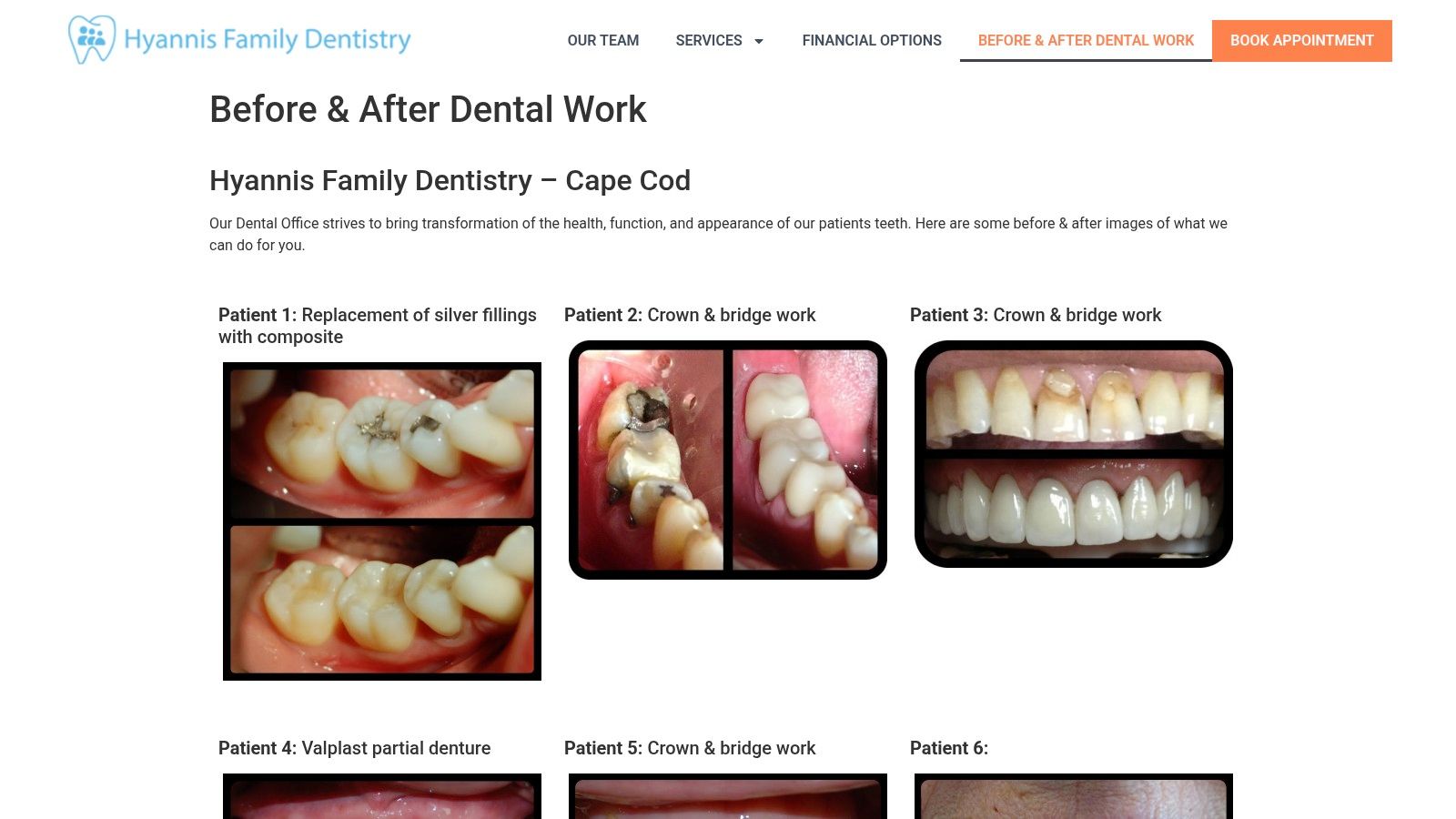
The Hyannis Family Dentistry before and after page includes a clearly identified Valplast partial denture example within a wider restorative gallery. That gives it a different kind of usefulness. It places Valplast among other treatment types instead of making it look like the answer to every missing-tooth problem.
That is good for patient judgment. Many people searching for dental implants near me, cosmetic dentist near me, or even tooth extraction follow-up options are comparing several treatment paths at once. A mixed gallery better reflects that decision process.
A realistic consumer-facing example
This page isn’t heavy on technical commentary, but it does what many patients need. It shows a named Valplast case in a familiar general-practice style setting. That can help patients who don’t want a polished manufacturer look and prefer to see how this appliance appears in ordinary restorative care.
The broader page context also helps patients understand where Valplast sits among crowns, dentures, and other tooth-replacement solutions. That matters because the right answer depends on what’s missing, what remains, and what kind of long-term plan makes sense.
In one documented case described by a patient-facing dental source, a Valplast partial restored an upper smile in one visit with invisible gingival clasps and no tooth preparation, emphasizing how immediate and esthetic the result can be in selected situations, according to Caring Dentists’ Valplast discussion. That kind of practical benefit is why patients remain interested in flexible partials even when they’re also considering implants or bridgework.
Where this page helps most
This is a good reference for patients who want a straightforward visual example without a lot of branding. It’s less useful for anyone who wants deep case notes or fee information.
A practical way to use it is to ask yourself three questions while viewing the image:
- Smile visibility: Is the restored area one that shows when you talk and smile?
- Cosmetic priority: Would avoiding visible metal matter a lot to you?
- Treatment flexibility: Are you looking for a removable solution now while you consider more permanent treatment later?
For Bellaire patients, that last question often matters most. Valplast can be an esthetic step forward, but the best long-term plan sometimes involves implant evaluation, bridge planning, or staged restorative care.
7. HSD Dental / SmileDoctor HSD Full and Partial Dentures Gallery
The SmileDoctor HSD denture gallery is most useful for one specific reason. It highlights an anterior esthetic case labeled with Valplast. When a missing tooth sits near the front, appearance becomes the first concern for most patients.
That makes this gallery relevant for anyone who feels fine chewing but hates the way the gap looks when speaking or smiling. In those situations, Valplast often gets attention because it can avoid the telltale look of metal clasping.
Why front-tooth examples matter
Front-of-mouth replacements create a different type of anxiety. Patients usually aren’t asking whether the appliance is technically removable. They’re asking whether other people will notice it. A gallery focused on the smile zone answers that concern more directly than a back-tooth case ever could.
This is also where discussing alternatives becomes important. If you’ve had a recent extraction or know a front tooth may need removal, a removable partial might be one phase of treatment, but it may not be the last. Patients in that position often benefit from learning about tooth replacement options after extraction before deciding whether Valplast, a bridge, or a dental implant fits best.
Real trade-offs in smile-zone cases
Valplast’s visual advantage is clear in anterior cases, but clinicians still have to be selective. Flexible materials can look excellent while still requiring careful attention to support and retention. In a comparative clinical study involving 24 patients over 6 months, Valplast showed 15% base discoloration versus 25% in acrylic, according to the Archives of the Serbian Medical Journal study on flexible partial dentures. That’s relevant in visible areas because color stability affects how natural the appliance continues to look over time.
The page itself remains mostly visual, so it doesn’t answer deeper clinical questions. But for patients who are worried about the appearance of a front missing tooth, it offers exactly the kind of image reference they tend to seek first.
What patients usually care about in front-tooth cases is simple: Will the replacement disappear into the smile, or will it announce itself every time I talk?
Before & After: 7 Valplast Partial Denture Cases
| Source / Title | Implementation complexity | Resource requirements | Expected outcomes | Ideal use cases | Key advantages |
|---|---|---|---|---|---|
| Before & After Gallery – Charles E. Boren, DDS | Moderate, clinical evaluation and restorative workflow needed | Experienced restorative dentist, modern diagnostics (digital x‑rays, magnification), lab support | Improved esthetics and bite function; durable, natural-appearing results | Local patients considering partials/removable prosthetics who want realistic examples | High-quality real patient photos; conservative, tech-driven approach; local credibility |
| Valplast International, Before/After Slideshow | Low, manufacturer-curated visuals; patients must contact providers to proceed | Manufacturer resources, brand documentation, provider locator tool | Accurate material-specific esthetic expectations (translucent base, no-metal clasps) | Patients researching Valplast material and locating certified providers | Brand-authentic images; links to clinical/care resources and provider finder |
| Stomadent Dental Laboratory, Before and After Valplast Partial Denture | Moderate, lab-centered workflow that still requires a treating dentist | Certified Valplast lab, DMD-authored guidance, pricing context | Realistic pros/cons and cost-range context; clear case-selection guidance | Consumers comparing benefits/trade-offs and typical U.S. pricing | Step-by-step perspective, candid limitations, consumer-friendly pricing info |
| Morris Plains Center for Dentistry, Valplast Flexible & Esthetic Partial Denture | Low, single clinical example with interactive slider | Single-practice case photos and page-level contact/scheduling | Clear visual esthetic expectation for a Valplast case | Patients wanting a quick, interactive visual of a typical Valplast outcome | Interactive draggable slider; office contact and scheduling on the same page |
| J.D. Robinette & Associates, Before & After Gallery (multiple Valplast cases) | Moderate, multiple-case gallery illustrating varied clinical integrations | Practice gallery with several Valplast-tagged cases and clinician oversight | Demonstrates Valplast alone and with other restorations (crowns/bridges) | Patients comparing different clinical scenarios and combined restorative plans | Broad variety of clinical examples; easy gallery navigation |
| Hyannis Family Dentistry, Before & After (Patient 4: Valplast Partial Denture) | Low, single labeled example within multi-case page | Regional practice photos and basic contact information | Simple confirmation of Valplast use and a straightforward visual outcome | Local/regional patients seeking quick confirmation of Valplast results | Easy-to-reference example; regional practice context for local patients |
| HSD Dental / SmileDoctor HSD, Full & Partial Dentures Gallery (Anterior Case with Valplast) | Low to moderate, focused anterior esthetic case | Practice gallery showing multiple removable options and labeled Valplast case | Emphasizes anterior cosmetic benefits and no-metal appearance | Patients prioritizing anterior esthetics and comparing removable options | Focus on smile zone esthetics; side-by-side comparison and related denture options |
Your Next Step to a Confident Smile in Bellaire, TX
You notice the gap every time you smile in a photo, and online before-and-after galleries make Valplast look like a simple answer. Those images are helpful, but they are only useful if they lead to the right questions. The primary value of this gallery is not just seeing nicer smile photos. It is learning what a flexible partial can and cannot do, so your consultation in Bellaire is more productive.
A well-made Valplast partial can improve appearance quickly and help many patients feel more comfortable speaking, smiling, and eating around other people. That part is real. In my experience, the best results come when patients understand the trade-offs before treatment starts, not after delivery.
Valplast appeals to patients who want to avoid visible metal and the heavier feel of some traditional removable appliances. Patient-reported outcomes in a PMC-published clinical trial on acrylic versus flexible partial dentures also showed stronger improvement in several comfort and quality-of-life measures with flexible dentures than with acrylic designs. That said, flexibility alone does not make it the right choice for every mouth.
Case selection matters. The condition of the supporting teeth, the health of the gums, the way your upper and lower teeth meet, and the location of the missing teeth all affect whether a Valplast partial is likely to serve you well. Some patients do very well with a flexible partial as a conservative, esthetic solution. Others are better served by a bridge, an implant, or a different removable design that offers more support or easier future modification.
At Charles E. Boren, DDS, the process begins with a full new-patient exam and digital x-rays. Patients who search for a dentist in Bellaire, TX, or for dental implants near them usually need the same first step. A clear diagnosis. Dr. Boren checks the supporting teeth and tissue, evaluates how the appliance will function in your bite, and explains what result is realistic for your smile, your speech, and your day-to-day comfort.
Some patients adapt to Valplast quickly. Others need a short adjustment period, especially with speech and insertion technique. As noted earlier, published clinical discussions of flexible partials also describe occasional early discomfort or pronunciation changes even when overall satisfaction is good. That is why the consultation matters so much. The goal is not just to deliver a removable tooth replacement. The goal is to recommend the option you are still happy with after the novelty wears off.
For many patients in Bellaire and West University, this discussion also ties into a larger treatment plan. A failing tooth may need to be removed first. A patient who wants more long-term stability may prefer implants. A patient focused on the smile zone may combine tooth replacement with cosmetic treatment so the final result looks natural and intentional instead of pieced together.
If you have been reviewing before and after Valplast partial denture photos and trying to decide what applies to your own case, the next step is an in-person evaluation with a local dentist who can examine your mouth and explain the options plainly. Online galleries can help patients start asking better questions. Careful treatment planning is what turns those examples into a result that fits your mouth.
If you're ready to stop hiding your smile and find out whether a Valplast partial, bridge, or dental implant is the right fit, schedule a consultation with Charles E. Boren. Dr. Boren serves Bellaire, West University, and Houston with personalized cosmetic and restorative dental care designed to look natural, feel comfortable, and support your long-term oral health.