
A tooth that hurts when you chew. A filling that keeps catching on floss. A cracked tooth you can see every time you smile in the mirror. Those are the moments when many people start searching for a dentist near me, an emergency dentist, or a dentist in Bellaire, TX and realize they do not just want pain relief. They want their mouth to feel normal again.
That is where restorative dentistry comes in. It is the part of dental care focused on repairing damage, replacing what is missing, and helping your teeth work comfortably again. For patients in Bellaire, West University, and Houston, that often means: being able to eat without wincing, speak without feeling self-conscious, and smile without trying to hide one side of the mouth.
Restorative care is common because dental problems are common. According to the Global Burden of Disease Study 2019, untreated dental caries affect 3.5 billion people worldwide. In North America, CDC data from May 2024 indicates that 57% of adolescents ages 12 to 19 have had a cavity in their permanent teeth, highlighting how often people need care to repair teeth and protect long-term oral health (restorative dentistry market data).
Many patients think restorative treatment only means “fixing a cavity.” It can be much more than that. A crown may protect a weakened tooth. A bridge may replace a missing tooth. Dental implants may rebuild a smile after tooth loss. In some cases, restoring the bite also supports comfort in the jaw and helps create a healthier foundation for sleep-related oral appliance treatment.
The good news is that modern restorative dentistry is not about aggressive drilling and one-size-fits-all treatment. Done well, it is careful, conservative, and designed around your comfort. If you have been putting off treatment because you feel anxious, unsure, or worried that the problem has gone too far. This guide will help you understand what restorative dentistry is and how it can help.
- Your Guide to Restorative Dentistry in Bellaire TX
- What Is Restorative Dentistry and Who Needs It
- Common Restorative Treatments to Repair and Replace Teeth
- Restorative vs Cosmetic Dentistry What Is the Difference
- Dr Boren’s Minimally Invasive and Technology-Driven Care
- What to Expect at Your Restorative Dentistry Appointment
- Answers to Your Questions About Restorative Dental Care
Your Guide to Restorative Dentistry in Bellaire TX
A lot of people arrive at this topic the same way. They bite into something ordinary, feel a sharp zing, then spend the rest of the day chewing on the other side. Or they notice an old filling looks dark around the edges. Or they have a gap from a missing tooth and are tired of avoiding photos.
These problems can seem separate, but they often point to the same need. The tooth structure is no longer doing its job well. It may be weakened by decay, worn down, fractured, or missing. Restorative dentistry is the branch of care that focuses on rebuilding that support.
The everyday problems restorative care solves
Restorative treatment is often recommended when a tooth is:
- Decayed and needs a filling or crown
- Cracked or chipped and at risk of getting worse
- Worn down from grinding or years of use
- Missing and affecting chewing, speech, or bite balance
- Previously treated with older dental work that is failing
For many people, the first concern is pain. The second is appearance. The third is function. They want to eat, speak, and smile normally again. Good restorative care addresses all three.
Why patients often wait too long
Dental problems do not always start with severe pain. A tiny crack may only bother you with cold drinks. A cavity may not hurt at all until it reaches a deeper layer of the tooth. A missing back tooth may seem manageable until other teeth start shifting or the bite begins to feel off.
Tip: If a tooth feels “different” when you bite, floss, or drink something cold, that change matters. Small symptoms often lead to simpler treatment than delayed symptoms.
People also delay care because they worry treatment will be uncomfortable or complicated. That fear is understandable. But modern restorative care is often gentler than patients expect, especially when it is planned early and done with digital imaging and minimally invasive techniques.
Why local care matters
If you are looking for a dentist in Bellaire, TX, convenience matters, but so does continuity. Restorative care works best when your dentist knows your history, your bite, your past dental work, and your long-term goals. That is especially important when treatment needs to do more than patch a tooth and instead support a stable, healthy mouth over time.
Whether you need a simple repair or are exploring options like dental implants near me, restorative dentistry gives damaged teeth and incomplete smiles a path forward.
What Is Restorative Dentistry and Who Needs It
Restorative dentistry repairs damaged teeth and replaces missing teeth so your mouth can work the way it should. The goal is simple: help you chew comfortably, speak clearly, protect the teeth you still have, and keep your bite stable over time.
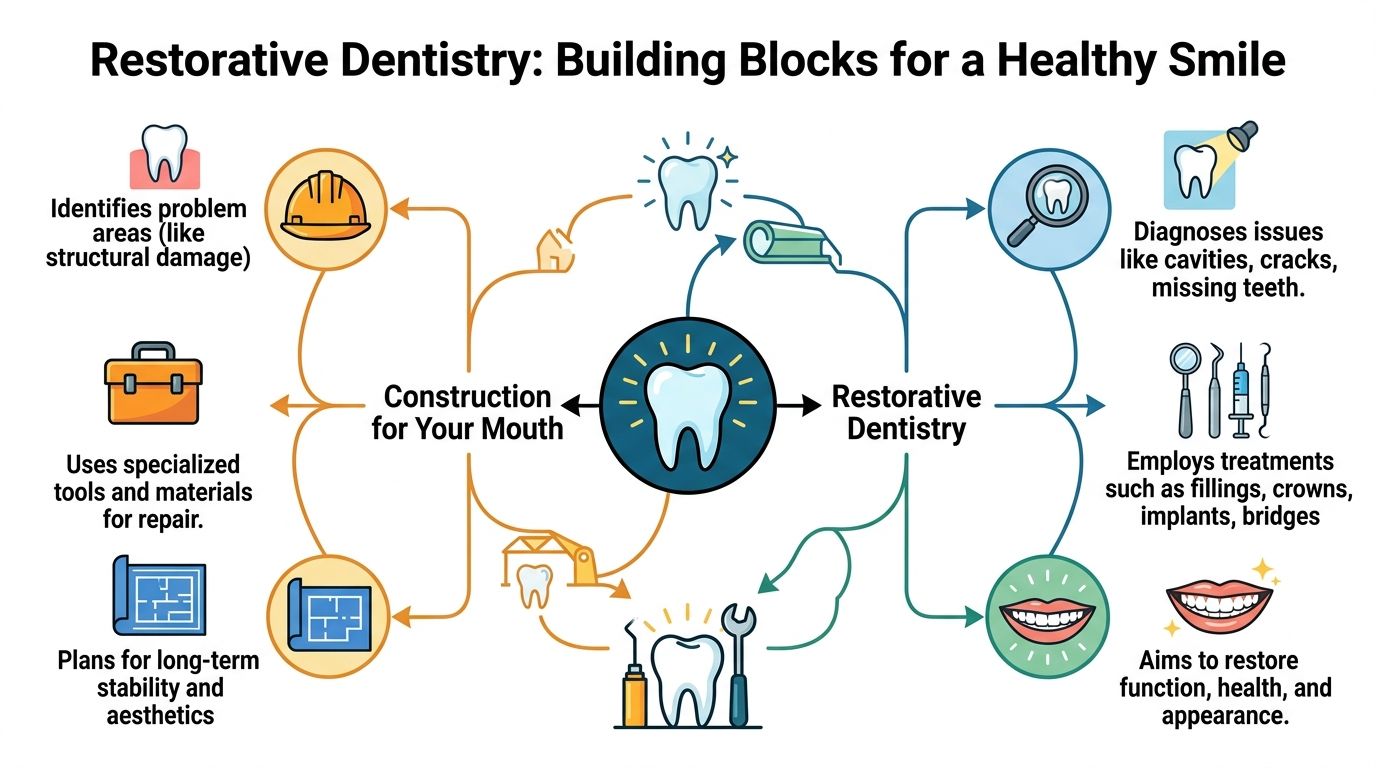
If you have ever wondered whether restorative care is just about fixing a cavity, the answer is no. It often plays a bigger role. A damaged or missing tooth can change how your teeth meet, how your jaw muscles work, and even whether treatment for TMJ pain or sleep apnea has a stable foundation. Before a bite can be adjusted well or an oral appliance can fit and function properly, the teeth supporting that plan often need to be healthy and strong.
That is why restorative dentistry matters beyond the tooth itself. In many cases, it is part of whole-body care.
What restorative dentistry is designed to do
A restoration should do more than fill space. It should rebuild support.
Good restorative treatment is designed to:
- Repair damage from decay, cracks, fractures, and worn dental work
- Replace missing teeth so nearby teeth do not drift or carry extra force
- Rebuild a stable bite that supports comfortable chewing and jaw function
- Preserve healthy tooth structure whenever possible
- Create a healthy base for future care, including TMJ treatment and sleep apnea appliances when needed
Patients are often surprised to learn that small bite changes can affect more than comfort. When one tooth breaks down or goes missing, the pressure has to go somewhere else. Over time, that can contribute to uneven wear, muscle strain, and a bite that feels off.
Who may need restorative dentistry
You may need restorative care if a tooth is damaged, weakened, missing, or no longer working well in your bite. Some people come in because something hurts. Others come in because chewing feels different, food keeps catching in one spot, or an old crown no longer feels smooth or secure.
Common signs include:
- Tooth pain or lingering sensitivity
- A chipped, cracked, or worn tooth
- A cavity or failing filling
- A missing tooth
- Trouble chewing certain foods
- A bite that suddenly feels uneven
- Dental work that looks loose, rough, or broken
Sometimes the need is obvious. Sometimes it is quieter. A back tooth that cracked years ago may not hurt much, but it can still throw off the bite and place extra stress on the jaw.
Age can play a role because teeth go through years of chewing, clenching, grinding, and old dental work that eventually needs maintenance. That does not mean major problems are inevitable. It means many adults need repairs at some point, and early care is usually simpler than delayed care.
If a tooth has already been removed, replacement matters for more than appearance. Restoring that space can help protect bite balance and long-term function. Learn more about your options for replacing an extracted tooth.
A simple way to remember it is this: restorative dentistry helps rebuild the parts of your mouth that carry force every day. When those parts are healthy and properly supported, everything else works better, including treatment aimed at jaw comfort, sleep, and long-term oral health.
Common Restorative Treatments to Repair and Replace Teeth
Most restorative treatment plans are built from a few core options. Each one solves a different kind of problem. The right choice depends on how much tooth structure remains, where the tooth is located, how you bite, and what will give you the most stable result.
Dental fillings
A filling repairs a tooth damaged by decay or a small fracture. The dentist removes the weakened area and seals the space with a restorative material.
Fillings are often the simplest restorative treatment. They work best when the damage is limited and the remaining tooth is still strong.
Patients usually choose fillings when they have:
- A cavity found on an exam
- Mild sensitivity from early decay
- A small chipped area
- An older filling that needs replacement
The main benefit is preservation. A filling lets the dentist treat the problem while keeping most of the natural tooth.
Dental crowns
A crown covers and protects a tooth that is too damaged or weak for a filling alone. It is shaped to fit over the prepared tooth like a custom cap.
Crowns are commonly recommended when a tooth has a large cavity, a fracture, heavy wear, or has already had substantial dental work. A crown can also restore strength after root canal treatment.
Bridges for missing teeth
A bridge replaces one or more missing teeth by anchoring an artificial tooth to support on neighboring teeth. It “bridges” the space.
A bridge may be a practical choice when:
- You are missing a tooth and want a fixed option
- The teeth beside the gap already need crowns
- You want to restore chewing without a removable appliance
The biggest everyday benefit is stability. Patients often notice food no longer catches in the space and chewing feels more balanced.
Dental implants
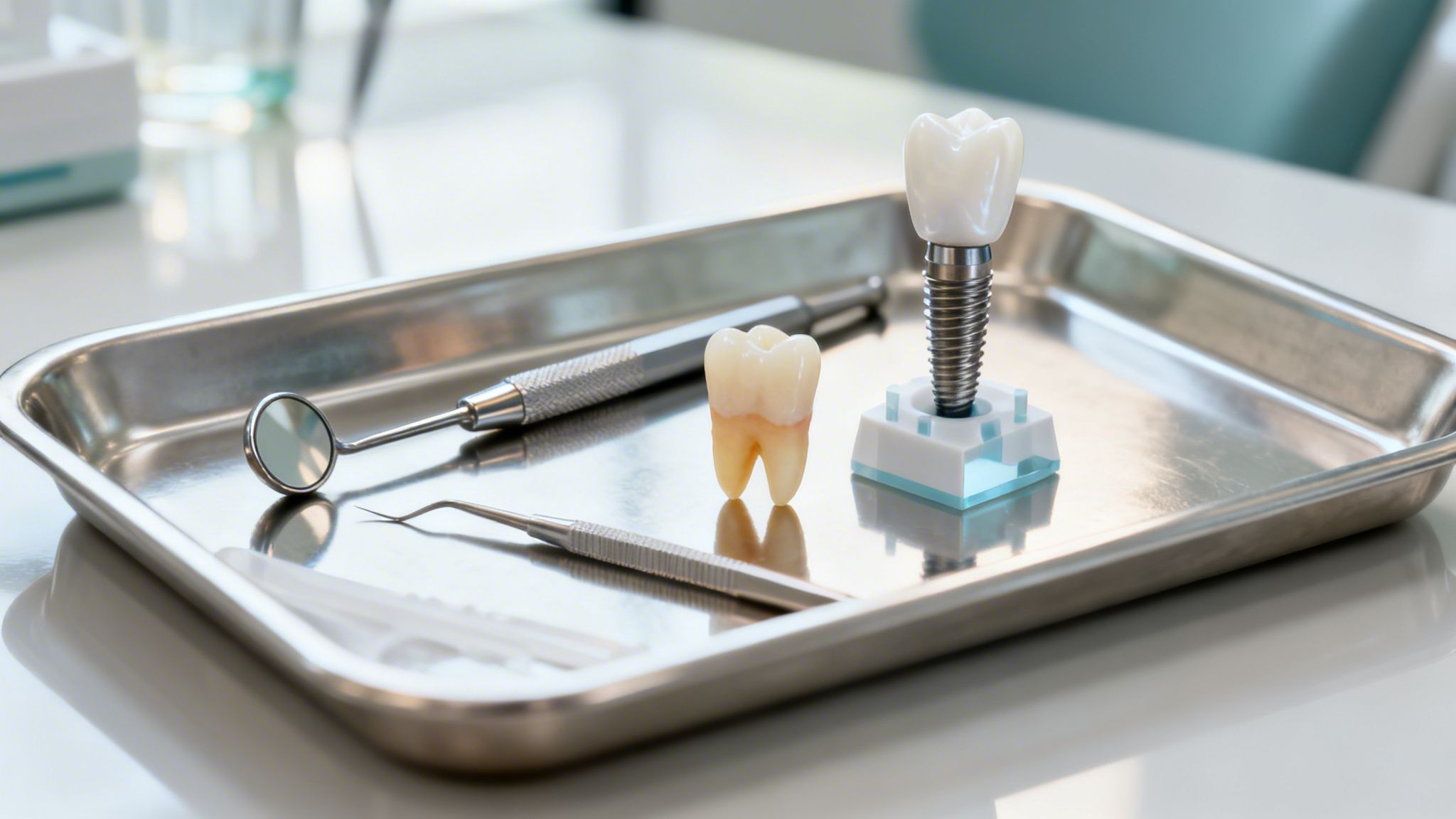
For many adults, implants are the most complete way to replace a missing tooth. A dental implant replaces the root support beneath the gums and then supports a crown above it.
That is why many patients searching for dental implants near me are looking for more than cosmetics. They want a replacement that feels secure and helps preserve normal function.
Implants may be used for one missing tooth, several missing teeth, or to help support other forms of tooth replacement. If a badly damaged tooth cannot be saved, tooth extraction may sometimes come before implant planning. If you want to understand your options after removal, this guide to replacing an extracted tooth is a helpful next step.
Other restorative options you may hear about
Not every restorative need fits neatly into one category. Your dentist may also discuss:
- Bonding for small chips or shape defects
- Inlays or onlays when a tooth needs more than a filling but less than a full crown
- Dentures or partial dentures when multiple teeth are missing
Tip: The “best” treatment is not the most complex one. It is the one that protects your long-term oral health while matching your bite, goals, and the amount of healthy tooth that remains.
Restorative vs Cosmetic Dentistry What Is the Difference
Patients often mix these two terms together, and that is understandable. Many treatments improve both health and appearance. The difference is in the primary goal.
Restorative dentistry focuses first on repairing damage and restoring function. Cosmetic dentistry focuses first on improving appearance. In modern dentistry, the two often overlap.
Restorative vs Cosmetic Dentistry at a Glance
| Aspect | Restorative Dentistry | Cosmetic Dentistry |
|---|---|---|
| Main purpose | Repair damaged or missing teeth | Improve the appearance of the smile |
| Common concerns | Decay, cracks, broken teeth, missing teeth, failing dental work | Stains, uneven shape, minor spacing, smile symmetry |
| Typical treatments | Fillings, crowns, bridges, implants, bonding | Veneers, whitening, contouring, smile design |
| Priority | Function, strength, comfort, oral health | Aesthetics and visual enhancement |
| Insurance potential | May be covered when medically necessary | Often more limited because treatment may be elective |
| Overlap | Can look beautiful while restoring health | May support confidence but not always fix structural problems |
Where patients get confused
A tooth-colored crown can look cosmetic because it blends in beautifully. But if that crown is protecting a cracked molar, it is restorative treatment.
A veneer can improve shape and color. That is usually cosmetic. But if a tooth has damage that needs structural protection, a crown or another restorative option may be more appropriate.
The key question is this: Are we mainly repairing function, or mainly improving appearance?
Why the overlap matters
Today’s restorative materials are designed to look natural. That means a filling, crown, bridge, or implant restoration can help you eat more comfortably and smile more confidently at the same time.
Patients often appreciate that they do not have to choose between health and appearance. For example:
- A broken front tooth may need bonding or a crown that restores both structure and appearance.
- A missing tooth may be replaced in a way that improves chewing and fills a visible gap.
- Worn teeth may be rebuilt to support the bite and create a more even smile.
Key takeaway: Restorative dentistry repairs what is damaged. Cosmetic dentistry enhances what is already healthy. Many of the best outcomes do both.
When you may need both
Some people start with restorative treatment and later add cosmetic care such as whitening. Others begin by asking about cosmetic changes but discover they need foundational repairs first.
That is common. A beautiful smile lasts longer when it is built on healthy, stable teeth and a balanced bite.
Dr Boren’s Minimally Invasive and Technology-Driven Care
You may come in thinking the problem is one broken tooth, one old filling, or one sore spot when you chew. Often, the bigger goal is to repair that damage in a way that protects the rest of the system, your bite, your jaw joints, and even your ability to succeed with sleep apnea treatment later.
That is why minimally invasive restorative care matters. Healthy tooth structure is like sound framing in a house. If the foundation is still strong, a careful repair makes more sense than tearing away more than you need. Once natural tooth structure is removed, it cannot be replaced in the same original form, so conservative treatment focuses on keeping what is healthy and restoring only what is damaged.
Precision changes the patient experience
Good technology supports careful decision-making.
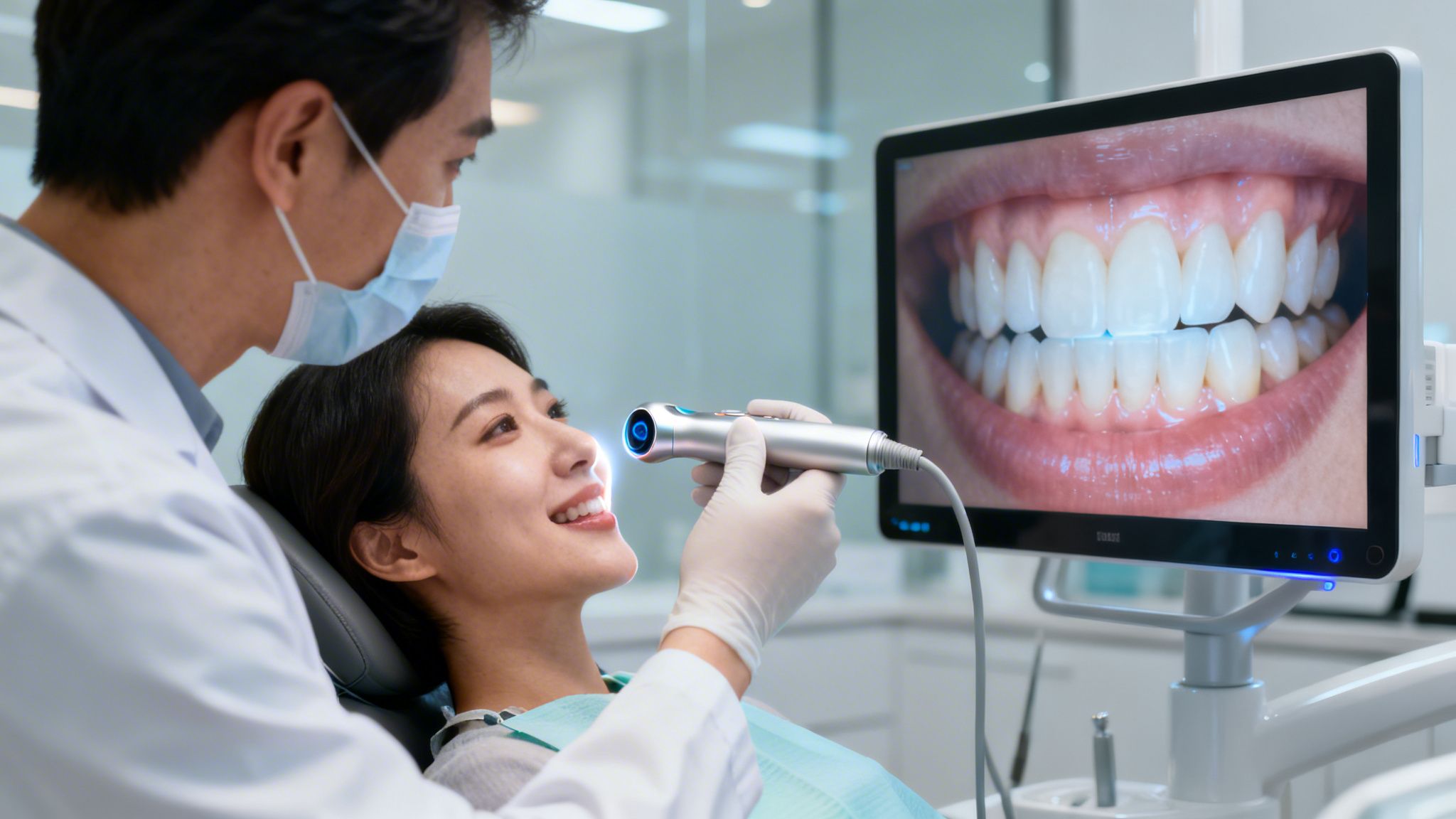
Magnification, fiber optics, digital imaging, and intraoral scanning help the dentist see cracks, decay, wear, and bite changes more clearly. That added detail often leads to smaller, more precise repairs and a better fit for restorations. It also helps patients understand what is happening, because the problem is easier to see and explain in plain language.
Patients often appreciate a few practical benefits:
- Earlier diagnosis before a small problem turns into a larger repair
- More conservative treatment because healthy areas can be preserved more confidently
- Clearer communication through images and scans you can review with the dentist
- More accurate restorations that fit more smoothly and feel more natural
If you want to see how these tools support diagnosis and treatment planning, this page on advanced dental technology for precise restorative care explains the process in more detail.
Why micro air abrasion matters
Some patients hear "restorative dentistry" and immediately think "drill." In certain early cases, treatment can be gentler than that expectation.
Micro air abrasion is one example. It uses a fine stream of particles to remove very small areas of early decay or prepare the surface for bonding in selected situations. A 2014 clinical review in the International Journal of Dentistry noted that air abrasion can support adhesive dentistry by conserving tooth structure and improving surface preparation for bonded restorations (2014 clinical review of adhesive and restorative techniques).
The patient benefit is simple. Preserving more natural tooth often gives you more options over time.
Restorative dentistry as a foundation for TMJ care
Teeth do not work alone. They meet thousands of times a day, and that contact helps guide the muscles and joints of the jaw. If teeth are worn flat, broken, shifting, or missing, the bite can become less stable. Some patients then notice muscle fatigue, uneven pressure, or tenderness around the jaw.
Restorative treatment can help rebuild the shape and support the bite has lost. That does not mean every TMJ problem starts with the teeth, and it does not mean crowns or bridges are the answer for everyone. It does mean the condition of the teeth and bite deserves careful attention when jaw symptoms are part of the picture.
A review published in the Journal of Oral Rehabilitation examined how occlusion and temporomandibular disorders relate and concluded that the connection is complex, with bite factors playing a role in selected patients rather than serving as a simple one-cause explanation for all TMD cases (review of occlusion and temporomandibular disorders). That careful perspective matters. It supports a thoughtful approach, not a one-size-fits-all one.
Restorative dentistry and sleep apnea treatment
This whole-body connection becomes even more important in sleep apnea care.
Oral appliance therapy depends on stable teeth, a healthy bite, and restorations that can handle the forces of nightly wear. If teeth are loose, fractured, heavily worn, or missing key support, the appliance may not fit as predictably or function as well over time. In those cases, restorative dentistry often comes first because it creates the structure that sleep apnea treatment relies on.
That is one reason this type of care is about more than fixing cavities or replacing broken dental work. It can help create a stable, comfortable mouth that supports chewing, jaw comfort, and successful treatment for related conditions.
What to Expect at Your Restorative Dentistry Appointment
You crack a tooth at dinner, or you wake up with a dull ache that has been building for weeks. The part that unsettles many patients is not only the pain. It is the uncertainty. What will the visit feel like, what will the dentist find, and will the answer be simple or more involved?
A restorative appointment is designed to replace that uncertainty with a clear plan. In most cases, the visit follows a steady sequence, whether you are coming in for a small cavity, a broken tooth, or an urgent problem that needs an emergency dentist.
The first conversation
Your appointment often starts with a phone call. The team may ask where the pain is, when it started, whether you have swelling or sensitivity, and if anything feels broken or loose.
For a new patient, they may also explain what to bring, how the first exam works, and whether updated dental x-rays are likely to help. That early conversation matters because it helps the office prepare for what you need instead of treating every visit the same way.
Your exam and digital diagnostics
At the visit, the dentist checks more than the sore tooth. They also look at your gums, existing dental work, how your teeth come together, and whether there are signs of wear, fracture, infection, or missing support.
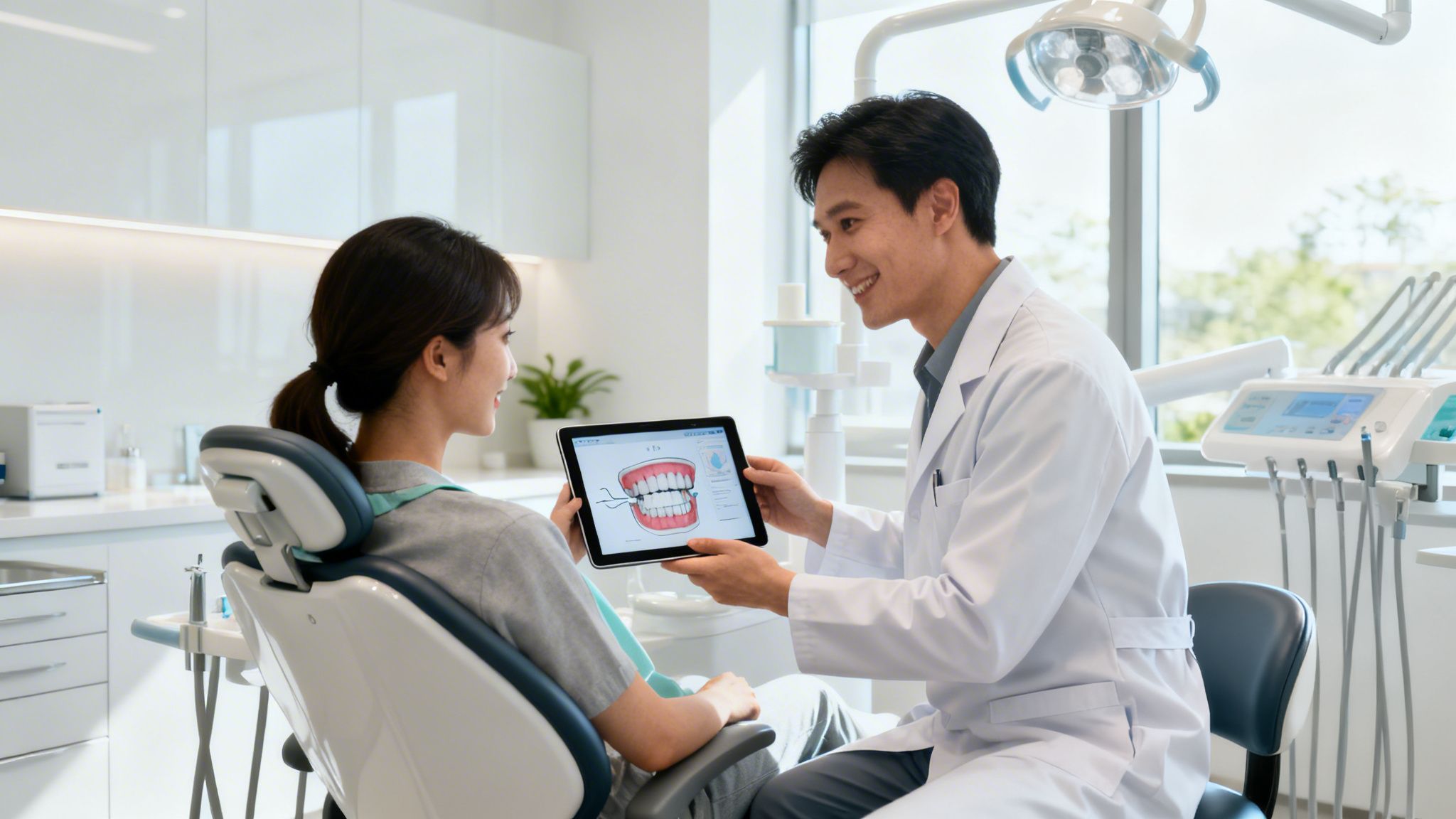
Digital imaging helps make hidden problems visible. It works like turning on a light in a dim room. A crack under an old filling, bone changes around a tooth, or bite stress on a worn area becomes easier to spot and easier to explain.
Many patients relax once they can see the problem on a screen and hear it described in plain language.
Building a treatment plan that fits your mouth and your health
The next step is deciding what the tooth, and the rest of your mouth, need to stay healthy and comfortable over time. Some people need one filling. Others need a crown, a bridge, or planning for implants. The choice depends on how much healthy tooth remains, what forces the area handles when you chew, and how the repair will affect the rest of your bite.
Your dentist may talk through:
- Whether the tooth can be saved predictably
- Which treatment options make sense for that location
- How the restoration will affect chewing, comfort, and appearance
- What should be done soon and what can be scheduled in phases
- What insurance and payment details may look like
This discussion should feel personal, not rushed.
That matters even more for patients dealing with jaw symptoms or sleep-disordered breathing. A stable bite is like a level foundation under a house. If the support is weak, everything built on top of it is harder to keep comfortable and steady. Restorative care can help create the support that TMJ treatment or oral appliance therapy often depends on, especially when teeth are worn, broken, shifting, or missing. Your dentist should explain that connection carefully, without assuming every jaw or sleep problem starts with the teeth.
A short video can make the process feel more familiar before you come in.
Treatment day
What happens on treatment day depends on the procedure, but the goals stay the same. Keep you comfortable. Protect as much healthy tooth structure as possible. Explain each step so you are not left guessing.
If you need numbing, the team should make sure it is working before starting. If you are anxious, say that early. Many patients are, especially if they have had a difficult dental visit in the past. Simple adjustments such as breaks, gentler pacing, and clearer communication can make the experience much easier.
Tip: If something feels unclear, ask the dentist to show you the problem and explain why they recommend that option. Good restorative care should make sense to you.
Aftercare and follow-up
Before you leave, you should know what is normal, what is temporary, and what deserves a call. That may include short-term sensitivity, what to eat, how to clean around the area, and whether you will need a second visit.
Restorative work usually lasts longer when daily habits support it:
- Brush and floss consistently
- Keep routine cleanings and exams
- Report new sensitivity or changes in your bite
- Wear a nightguard if clenching or grinding is part of the problem
That follow-up phase is not just maintenance. It is part of protecting the repair, your comfort, and in some cases the stability needed for future TMJ or sleep apnea treatment. A good appointment should leave you with fewer questions, less worry, and a clear sense of what comes next.
Answers to Your Questions About Restorative Dental Care
Patients usually have a few practical questions left after learning the basics. These are some of the most common ones.
Is restorative dentistry painful
Most restorative procedures are more comfortable than patients expect. Local anesthetic keeps the area numb during treatment, and modern techniques help reduce unnecessary irritation to the tooth.
Afterward, some tenderness or sensitivity can happen, depending on the treatment. That is usually manageable and temporary. If discomfort increases instead of improving, call your dentist.
How do I know if I need a filling or a crown
That depends on how much healthy tooth remains. A filling works best when the damage is small and the tooth is still strong enough to support itself.
A crown may be the better option when the tooth is cracked, heavily filled, weakened, or missing too much structure. The decision is based on strength, not just size.
Can a missing tooth really affect the rest of my mouth
Yes. Even one missing tooth can change how you chew. Nearby teeth may drift, and the bite can become less balanced over time.
That is one reason many patients look into bridges, implants, or other replacement options instead of leaving a gap untreated.
Are tooth-colored restorations strong enough
In many situations, yes. Modern materials can provide a natural appearance and durable function when they are chosen carefully for the tooth and the bite.
Not every material fits every case. Back teeth under heavy force may need a different approach than a small repair on a front tooth.
What if I have old dental work that seems fine
Old dental work can look fine from the outside and still have wear, leakage, or hidden decay around it. That does not mean every old filling or crown needs replacement. It means regular exams matter.
If a restoration is still sealed, stable, and doing its job, your dentist may monitor it.
When is it an emergency
You should call promptly if you have strong tooth pain, swelling, a broken tooth, a lost crown with pain, trauma, or signs of infection. In those moments, searching for an emergency dentist is appropriate.
Even if the pain comes and goes, do not ignore it. Intermittent symptoms can still point to a problem that needs care.
Can restorative treatment improve confidence too
Absolutely. The first purpose is function and health, but many patients feel a major emotional lift after treatment. When you can chew without pain and smile without worrying about a damaged tooth, daily life feels easier.
Final takeaway: Restorative dentistry is about getting your mouth back. Back to comfort, back to strength, and back to confidence.
If you are ready to talk through your options with a trusted local team, Charles E. Boren provides personalized restorative, cosmetic, TMJ, and dental sleep care for patients in Bellaire, West University, and Houston. Whether you need help with a painful tooth, are exploring dental implants, or want a clear plan for rebuilding your smile, the next step is simple. Schedule a consultation and get answers matching your mouth, your comfort, and your goals.