
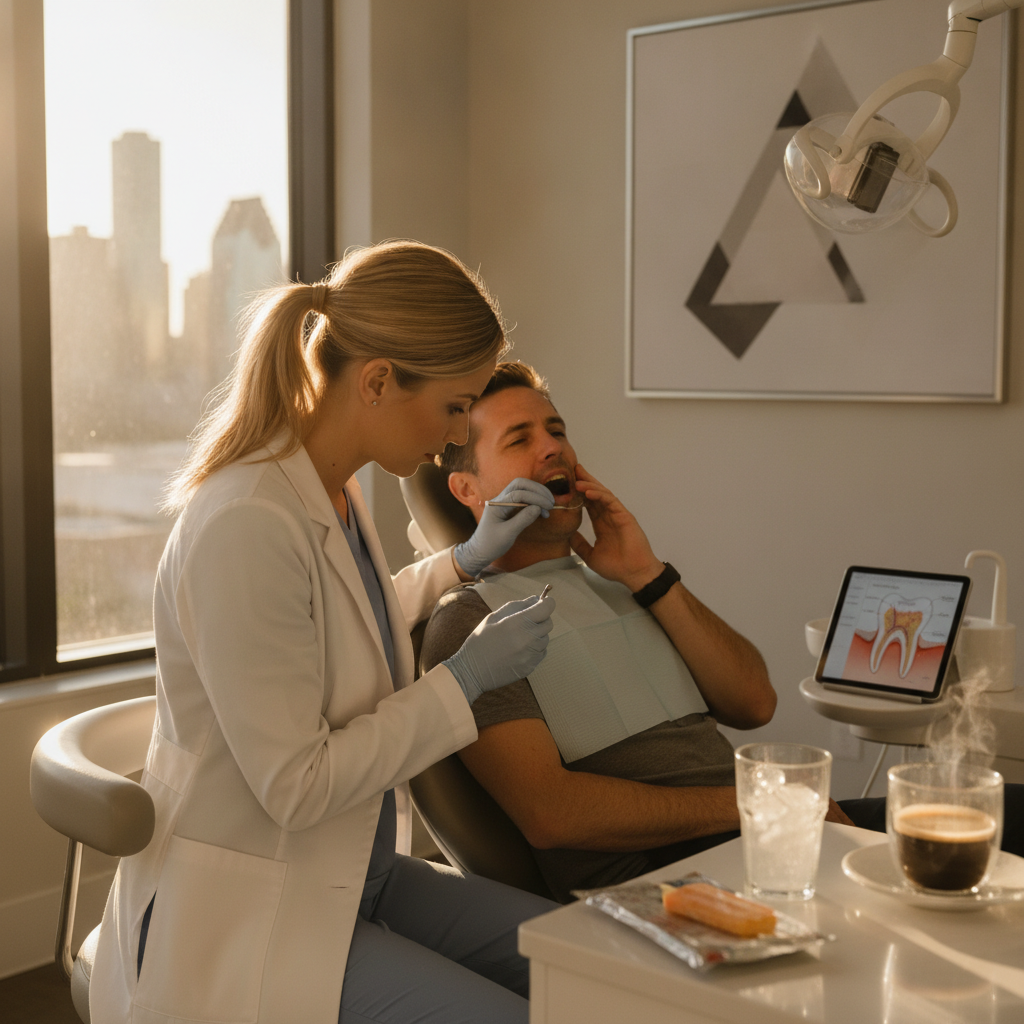
Why Do My Teeth Hurt When I Eat — and What Are Bellaire Patients Actually Missing When They Ignore Tooth Sensitivity?
If your teeth have ever screamed at you when you bit into something cold, sipped hot coffee, or swallowed something sweet, you know the feeling. That sharp, electric jolt isn’t something you should just push through — and it definitely isn’t something to write off as “normal.” For many patients in Bellaire and the surrounding Houston area, tooth sensitivity is a daily annoyance they’ve quietly accepted. But sensitivity is almost always a symptom of something specific, and ignoring it often turns a manageable situation into a much bigger problem.
Here’s what’s actually happening when your teeth hurt — and what you can do about it.
- What Is Tooth Sensitivity, Really?
- The Most Common Reasons Your Teeth Are Hurting
- Why Sensitivity Deserves More Attention Than Most Patients Give It
- What a Proper Sensitivity Evaluation Looks Like
- Treatment Options Depend on the Cause
- A Note for Patients Who've Been Cross-Shopping Cosmetic Dentistry
- Frequently Asked Questions About Tooth Sensitivity in Bellaire
- You Shouldn't Have to Choose Foods Based on What Your Teeth Can Handle
What Is Tooth Sensitivity, Really?
Tooth sensitivity — clinically called dentin hypersensitivity — happens when the inner layer of your tooth, called dentin, becomes exposed. Dentin is full of tiny tubules that connect to the nerve inside the tooth. When heat, cold, pressure, or acidic foods reach those tubules, signals travel straight to the nerve, and you feel it immediately.
Healthy teeth have two natural protections against this: a hard outer layer of enamel above the gumline, and a substance called cementum covering the root surface below it. When either of those protective layers wears down or recedes, the dentin underneath is left vulnerable — and that’s when eating becomes uncomfortable.
The sensation itself can range from a mild twinge to a sharp, lingering ache, depending on how much exposure exists and what’s triggering it. Some people only feel it with temperature changes. Others feel it with sweet foods, acidic drinks, or even brushing their teeth.
The Most Common Reasons Your Teeth Are Hurting
There’s no single cause of tooth sensitivity — it can come from several different directions, and sometimes more than one at the same time. Here are the causes we see most often in our Bellaire patients:
Enamel Erosion From Acidic Foods and Drinks
Houston’s food culture is wonderful, but it’s not always gentle on enamel. Citrus, tomato-based sauces, vinegar-heavy dishes, carbonated drinks, and even sparkling water can gradually erode the outer enamel layer over time. Once enamel is gone, it doesn’t grow back. The more it erodes, the more sensitive your teeth become — and the more vulnerable they are to cavities.
Gum Recession
When the gum tissue pulls back from the tooth, it exposes the root surface, which has no enamel protecting it. Gum recession can happen from aggressive brushing, gum disease, or simply genetics. It’s extremely common — and extremely underdiagnosed, because it progresses slowly and doesn’t always hurt at first. By the time sensitivity develops, the recession has often been building for years.
Cracked or Fractured Teeth
A crack in a tooth — even a hairline crack too small to see on an X-ray — can cause sharp, unpredictable sensitivity when you bite or chew. This is one of the trickier causes to diagnose because the pain often comes and goes. If you notice sensitivity specifically when you bite down on one tooth, a crack is worth ruling out.
A Worn or Failing Old Restoration
Older fillings — especially metal amalgam — can eventually shrink, crack, or pull away from the tooth margin slightly. When that happens, the seal between the filling and tooth breaks down, leaving a small gap where bacteria and temperature changes can reach the dentin underneath. If you have older restorations and your sensitivity is localized to one or two teeth, this is a common culprit.
Recent Dental Work
It’s also worth noting that temporary sensitivity after a cleaning, whitening treatment, or new restoration is completely normal. This kind of sensitivity typically fades within a few days to a couple of weeks. If it persists longer than that, it’s worth mentioning to your dentist.
Why Sensitivity Deserves More Attention Than Most Patients Give It
Many people manage tooth sensitivity the same way: they switch to a sensitive-formula toothpaste, avoid the foods that trigger it, and move on. And while sensitivity toothpaste can offer real relief for mild cases — it works by blocking the dentin tubules over time — it doesn’t fix whatever caused the sensitivity in the first place.
If gum recession is the issue, it will continue to progress. If a cracked tooth goes unaddressed, the crack can deepen until the tooth breaks or the nerve becomes infected — which means a root canal or extraction where a simple crown might have been enough earlier. If enamel erosion is ongoing because of diet or acid reflux, sensitivity will worsen no matter how many tubes of special toothpaste you go through.
Sensitivity is your mouth’s way of flagging a problem. It’s rarely an emergency on day one — but it almost always becomes a bigger issue if ignored over months or years. The range of solutions available depends entirely on what’s causing the sensitivity, which is why an actual diagnosis matters so much more than a blanket product fix.
What a Proper Sensitivity Evaluation Looks Like
When patients from West University Place, Meyerland, and Southside Place come in describing tooth sensitivity, we don’t just hand them a sample of toothpaste and send them home. A thorough sensitivity evaluation involves looking at:
- Which teeth are affected, and whether the sensitivity is widespread or localized
- Whether the pain comes with temperature, pressure, sweets, or all of the above
- The condition of the gumline and root surfaces
- The status of existing restorations
- Signs of enamel wear, acid erosion, or grinding habits
- Any evidence of cracks, fractures, or early decay
The goal is to identify whether the sensitivity is coming from a structural problem — something that needs treatment — or from exposed dentin that can be managed conservatively. Often, it’s a combination.
Treatment Options Depend on the Cause
Once the cause is clear, there are several ways to address it, depending on severity:
- Fluoride application: Professional-strength fluoride can help remineralize and strengthen weakened enamel and provide meaningful relief for mild sensitivity.
- Bonding or desensitizing agents: Applied directly to exposed root surfaces, these seal the dentin and reduce nerve response significantly.
- Laser gum therapy: For recession caused by gum disease or tissue breakdown, laser treatment can address the underlying tissue problem with less discomfort and faster healing than traditional methods.
- Replacing old restorations: If a worn or cracked filling is the culprit, replacing it — often with an all-porcelain restoration — can eliminate the sensitivity entirely.
- Addressing bruxism: If nighttime grinding is wearing down your enamel, protecting your teeth while you sleep is one of the most important steps you can take.
- Dietary guidance: Sometimes small changes in eating and drinking habits — especially around highly acidic foods or beverages — make a measurable difference in how quickly sensitivity progresses.
A Note for Patients Who’ve Been Cross-Shopping Cosmetic Dentistry
If you’ve been exploring cosmetic options like teeth whitening or veneers and you currently have sensitivity, this is something to discuss before treatment begins. Whitening products can temporarily increase sensitivity in teeth that are already reactive. And if recession or structural issues are present, they need to be addressed before cosmetic work so that your results are both beautiful and lasting. A good cosmetic dentist doesn’t skip this step — and if one does, that’s worth paying attention to.
Frequently Asked Questions About Tooth Sensitivity in Bellaire
Can sensitivity toothpaste actually fix the problem?
Sensitivity toothpaste can reduce discomfort by temporarily blocking the tubules in exposed dentin, and for mild cases, it’s a reasonable first step. But it doesn’t address the underlying cause. If your sensitivity is moderate, persistent, or getting worse, you need more than a product — you need to know why it’s happening.
Is tooth sensitivity a sign of a cavity?
Sometimes, yes. Decay can expose dentin and cause sensitivity — particularly to sweets and temperature. But many cases of sensitivity have nothing to do with cavities. A clinical exam is the only way to know for sure.
My sensitivity comes and goes. Does that mean it’s not serious?
Intermittent sensitivity can actually be harder to diagnose, because it often points to a cracked tooth or early decay rather than widespread erosion. Don’t dismiss it just because it isn’t constant. If it’s been recurring for more than a few weeks, it’s worth having it evaluated.
I brush twice a day. Why are my gums receding?
Brushing too aggressively — especially with a firm-bristled brush — is one of the most common causes of gum recession we see in Houston-area patients. It’s counterintuitive, but brushing harder doesn’t clean better. A soft brush used with gentle, circular strokes is far kinder to your gum tissue and just as effective at plaque removal.
Will my insurance cover treatment for sensitivity?
It depends on the cause and the treatment. If the sensitivity is tied to decay, gum disease, or a failing restoration, most insurance plans cover at least part of the restorative work. Cosmetic or preventive treatments may be covered differently. We’re happy to help you understand your coverage before you commit to anything.
You Shouldn’t Have to Choose Foods Based on What Your Teeth Can Handle
Sensitive teeth have a way of quietly shrinking your life — one avoided cup of coffee, one skipped scoop of ice cream at a time. It doesn’t have to be that way. Whether you’re in Bellaire, West University Place, or anywhere along the southwest Houston corridor, our practice is here to help you figure out what’s causing the problem and address it in a way that actually lasts.
Dr. Boren has been practicing in Bellaire for decades. He takes the time to explain what he’s seeing, what your options are, and what makes the most sense for your particular situation — without pressure, without jargon, and without unnecessary treatment. If your teeth have been bothering you and you’ve been putting off getting it checked, now is a good time to stop guessing and get an answer.
Contact our office today to schedule a visit — we’d be glad to help you get comfortable again.