
What Is a Dental Implant — and How Do Bellaire Patients Know If They’re Actually a Good Candidate Before Spending Thousands?
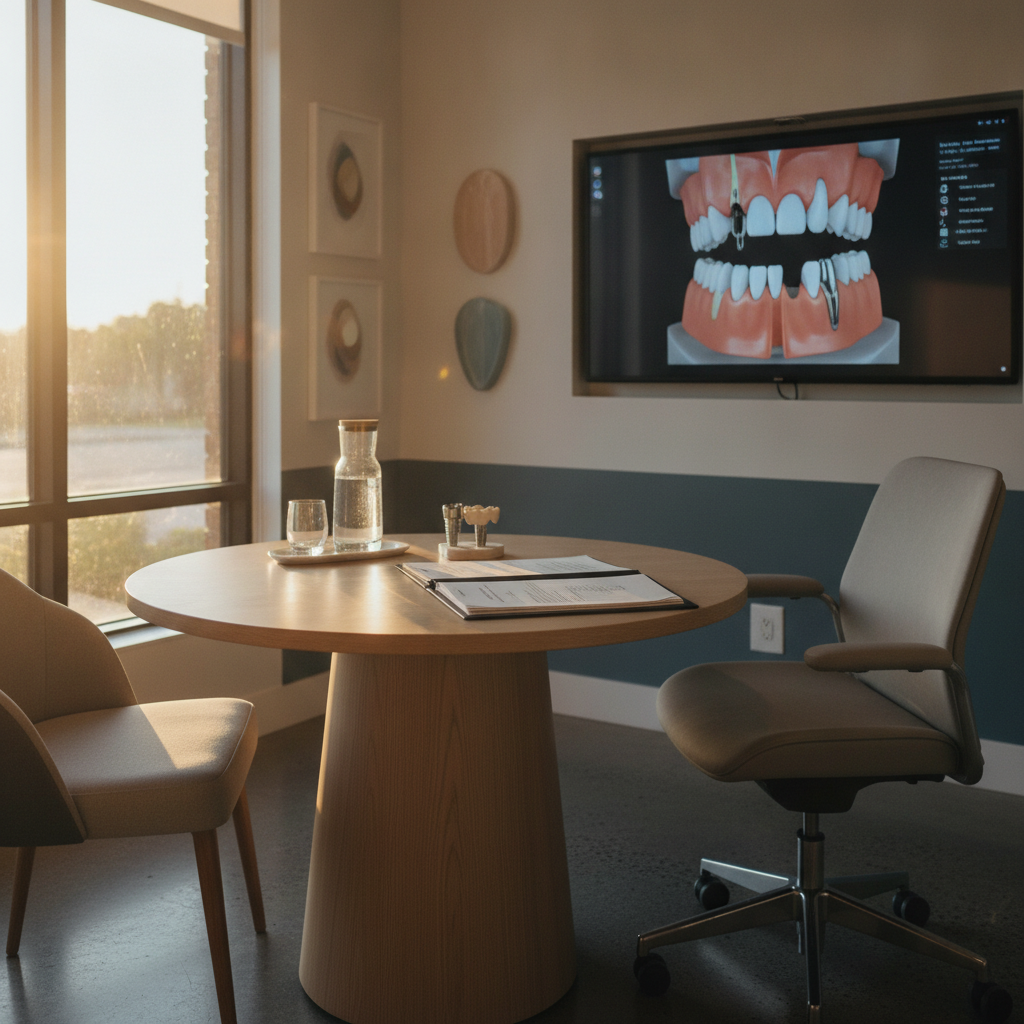
A dental implant is a small titanium post that gets placed into your jawbone to replace the root of a missing tooth. Once it fuses with the bone — a process called osseointegration — a custom crown is attached on top, giving you something that looks, feels, and functions almost exactly like a natural tooth. For most patients in Bellaire and the surrounding Houston area, it’s the closest thing dentistry has to replacing a tooth for the long term. But here’s what a lot of practices don’t tell you up front: not everyone who wants an implant is automatically ready for one. The answer depends on your bone health, your medical history, your gum condition, and sometimes a few steps that need to happen before the implant can even be placed.
- Why Implants Have Become the Standard for Missing Teeth
- The Candidacy Question Most Practices Skip Over
- What the Implant Process Actually Looks Like — and How Long It Takes
- What About Cost — and Does Insurance Help?
- Why Working With a Dentist Who Knows You Matters More Than You Think
- Frequently Asked Questions About Dental Implants in Bellaire and Houston
Why Implants Have Become the Standard for Missing Teeth
For decades, a dental bridge was the go-to solution when someone lost a tooth. It works — and it still makes sense in certain situations — but a bridge requires grinding down the two healthy teeth on either side to support it. That’s a trade-off many patients don’t realize they’re making until it’s already done. A dental implant, by contrast, stands entirely on its own. It doesn’t borrow support from neighboring teeth, it stimulates the jawbone the way a natural root does, and with good care it can last a lifetime rather than needing replacement every ten to fifteen years like most bridges.
Patients across Bellaire, West University Place, and Meyerland have increasingly been asking about implants over the past several years — and for good reason. As the options have improved and more dentists have gotten comfortable placing them, implants have become a realistic choice for a wider range of adults rather than a specialty procedure reserved for a small group.
The Candidacy Question Most Practices Skip Over
Here’s where a lot of online content — including what you’ll find on many competitor sites in the Houston area — falls short. They’ll tell you implants are “the gold standard” and encourage you to schedule a consultation, but they rarely explain what actually determines whether you qualify. That matters because going into a consultation without understanding the basics can leave you feeling pressured or confused about a treatment that involves real time, real money, and real surgery.
The most important factors in implant candidacy are:
- Adequate bone volume. The implant post needs enough jawbone to anchor into. When a tooth has been missing for a long time, the bone underneath tends to shrink — a process called resorption. If there isn’t enough bone density or height, a bone graft may be needed before the implant can be placed. This adds time to the process (often several months) but it doesn’t mean you can’t eventually get an implant.
- Healthy gums. Active gum disease needs to be treated and stabilized before any implant work begins. Placing an implant into an environment with ongoing infection is one of the fastest ways to cause implant failure. If your gum health needs attention first, that’s not a dealbreaker — it’s just the right sequence.
- General health and medications. Certain conditions — including uncontrolled diabetes, autoimmune disorders, or long-term use of bone-affecting medications like bisphosphonates — can affect how well bone heals around an implant. This isn’t a blanket disqualification, but it’s a conversation worth having honestly.
- Non-smoker status (or willingness to quit). Smoking significantly increases the risk of implant failure. Most providers will tell you this, but it’s worth repeating because the research on this point is very clear.
- Completed jaw growth. Implants aren’t placed in teenagers or young adults whose jawbones are still developing. For most patients, this isn’t a concern — but it’s relevant for younger adults in their late teens or very early twenties.
What the Implant Process Actually Looks Like — and How Long It Takes
This is another area where the information available from many local practices is frustratingly vague. The timeline for a dental implant isn’t a single appointment or even a quick series of visits. Understanding what you’re signing up for helps you plan your life around it rather than being surprised at each stage.
A typical implant process, assuming no bone grafting is needed, looks something like this:
- Consultation and imaging: X-rays (and sometimes a 3D cone beam scan) are taken to assess bone quality and plan placement precisely. This is where candidacy gets evaluated.
- Implant placement: A minor surgical procedure — often done under local anesthesia, with sedation available for patients who prefer it — places the titanium post into the jawbone. Recovery is typically a few days of mild soreness.
- Healing and osseointegration: This is the waiting period, usually three to six months, while the bone fuses to the implant. You’ll have a temporary restoration during this time so the gap isn’t visible.
- Crown placement: Once the implant has integrated successfully, impressions are taken and a custom porcelain crown is fabricated and attached. This is the final step.
If bone grafting is required, add several months to the front end of that timeline. The total process from start to finish can range from six months to well over a year depending on your starting point. That’s not a reason to avoid implants — it’s just the honest picture.
What About Cost — and Does Insurance Help?
Dental implants are a significant investment, and it’s reasonable to ask about the financial side before you decide. Most dental insurance plans still classify implants as a cosmetic or elective procedure and offer little to no coverage, though this is beginning to shift with some plans. If your insurance doesn’t cover implants, options like CareCredit can make it easier to manage the cost over time without paying everything at once. The best thing to do is have a straightforward conversation at your consultation about what your specific insurance covers and what the out-of-pocket estimate looks like for your situation. Dr. Boren’s practice offers a range of restorative options and can help you understand what makes sense given your coverage and your goals.
One thing worth keeping in mind: while implants cost more upfront than a bridge or a partial denture, they typically outlast both by a wide margin. Over a twenty- or thirty-year horizon, the math often favors the implant — especially when you factor in the cost of eventually replacing a bridge or addressing the bone loss that comes with leaving a gap untreated.
Why Working With a Dentist Who Knows You Matters More Than You Think
Houston has no shortage of dental practices advertising implants — from large multi-doctor DSO chains near the Galleria to high-volume cosmetic clinics. Some of them are excellent. But there’s a real advantage to working with a dentist who has been in the same Bellaire location for decades and knows your full dental history: they’re not evaluating your jawbone in isolation. They know whether you’ve had gum disease in the past, whether you grind your teeth, how your bone has changed over time, and what your overall oral health trajectory looks like. That kind of context leads to better decisions and fewer surprises down the road.
If you’ve been missing a tooth for a while — or if you’re facing an extraction and wondering what comes next — a consultation with Dr. Boren is a good starting point. There’s no obligation to move forward with anything at that visit. The goal is simply to understand what your options are, what you’d need to do to become a candidate if you aren’t one yet, and what the realistic timeline and cost picture looks like for your specific situation.
Frequently Asked Questions About Dental Implants in Bellaire and Houston
How long does a dental implant last?
With proper care, the implant post itself can last a lifetime. The crown on top may need to be replaced after fifteen to twenty-five years depending on wear, but the underlying implant typically does not need to be redone if it integrated successfully.
Does getting a dental implant hurt?
The placement procedure is done under local anesthesia, so you shouldn’t feel pain during it. Most patients describe the day or two afterward as feeling like a sore tooth or mild pressure — similar to having a tooth extracted. Sedation is available for patients who feel anxious about any part of the process.
What happens if I’ve had a missing tooth for years — is it too late for an implant?
Not necessarily, but the bone loss that happens over time may mean you need a bone graft before an implant can be placed. A 3D scan at your consultation will show exactly how much bone you have and what, if anything, would need to happen first.
Can I get an implant if I have gum disease?
Active gum disease needs to be treated and stabilized before implant placement. Once your gums are healthy, you may be a good candidate. Patients in Bellaire, Southside Place, and West University Place who’ve had past gum issues aren’t automatically ruled out — the key is getting those issues under control first.
Is a dental implant better than a bridge?
For most patients who are good candidates, yes — primarily because an implant doesn’t require altering the teeth on either side, preserves bone in the jaw, and tends to last longer. A bridge may still be the right choice in certain situations, and your dentist can help you weigh the specific trade-offs for your mouth.
If you’re ready to find out whether a dental implant is a realistic option for you, reach out to Charles E. Boren D.D.S., P.C. to schedule a consultation. Dr. Boren will take the time to review your bone health, your dental history, and your goals — and give you a straight answer about what makes sense for you, without pressure to move faster than you’re ready to.