
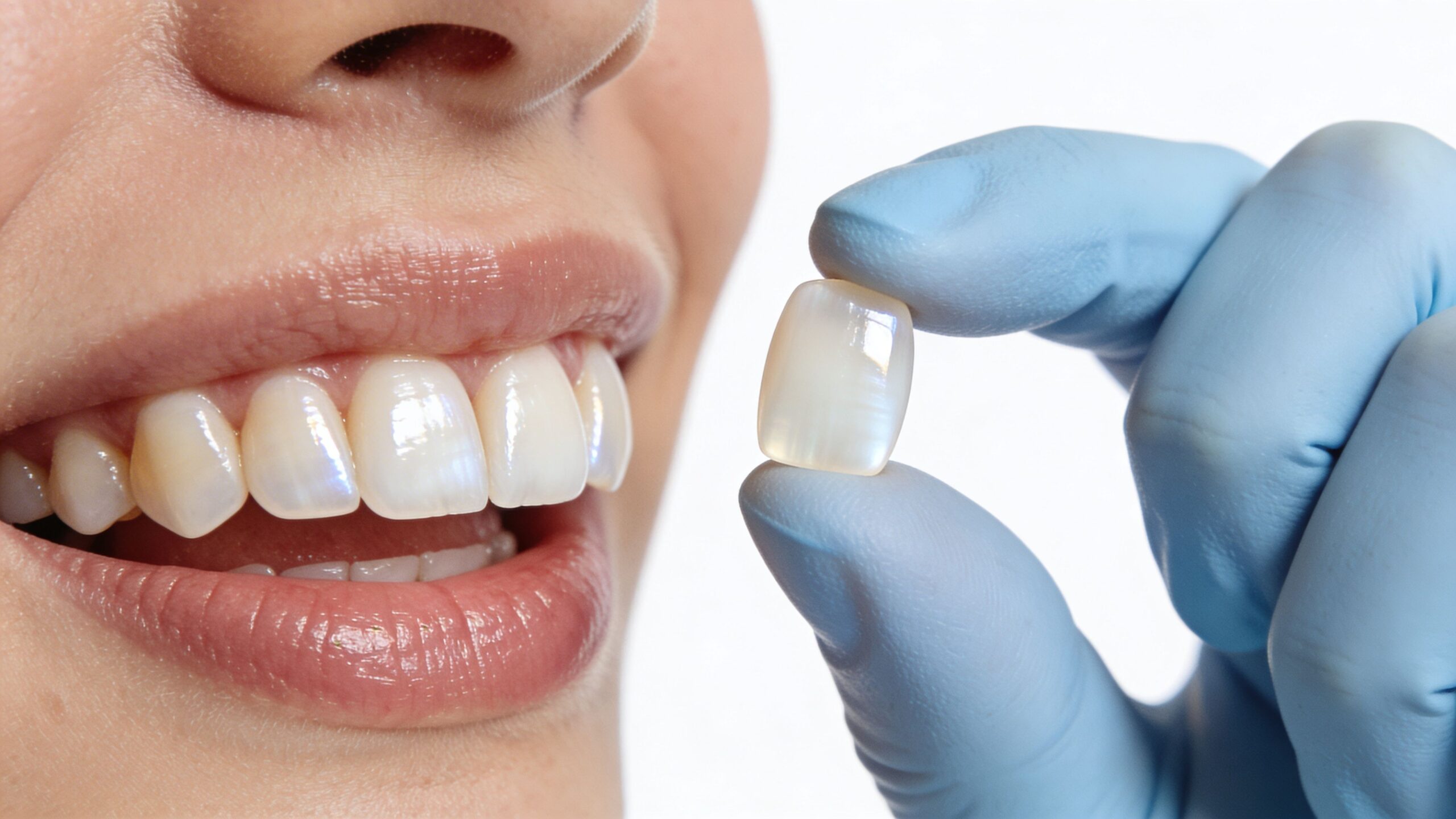
If you're covering your mouth in photos, smiling with your lips closed, or noticing that one chipped or stained front tooth draws your eye every time you look in the mirror, you're not alone. For many adults in Bellaire, West University, and Houston, the problem isn't their whole smile. It's the few teeth everyone sees first.
That’s why veneers on front four teeth is such a common starting point in cosmetic dentistry. It can be a focused way to improve the part of your smile that shows most when you talk, laugh, or meet someone for the first time. If you’ve been searching for a cosmetic dentist near me or a dentist in Bellaire, TX because you want a natural-looking change, this option is often where the conversation begins.
- Your Smile Transformation Starts with a Cosmetic Dentist in Bellaire
- Understanding Veneers for Your Front Four Teeth
- Porcelain vs Composite Which Veneer is Right for You
- Your Veneer Journey with Dr Boren A Step-by-Step Guide
- Beyond Aesthetics The Health Benefits and Considerations of Veneers
- Protecting Your Investment Long-Term Care for Your Veneers
- Schedule Your Veneer Consultation in Bellaire Today
Your Smile Transformation Starts with a Cosmetic Dentist in Bellaire
A lot of people live with small front-tooth flaws for years. A tiny chip after an accident. A stubborn stain that whitening won’t fully lift. A little spacing that makes the smile feel uneven. None of these issues may be urgent in the way a tooth extraction or emergency dentist visit is urgent, but they still matter.
They affect confidence in quiet ways. You may avoid video calls with your camera close. You may angle your face in pictures. You may think other people notice the flaw as quickly as you do.

Why the front teeth matter so much
Your upper front teeth carry most of the visual weight of your smile. Even a modest change there can make your whole smile look brighter, straighter, and more balanced.
That’s one reason veneers have become so popular. Around 8% of Americans have veneers, and procedures have surged by 250%, with approximately 600,000 Americans annually seeking this treatment, according to this veneers statistics overview. That growth reflects how many people want an option that can improve shape and color without rebuilding every tooth.
Cosmetic dentistry is personal, not one-size-fits-all
Good cosmetic dentistry doesn’t chase a trendy smile. It should match your face, your features, and the way you naturally speak and smile.
That’s also why some patients benefit from understanding how dentistry fits within the field of aesthetic medicine. The broader goal isn’t perfection. It’s harmony. Your teeth, lips, facial proportions, and bite all work together.
A beautiful smile should still look like it belongs to you.
If you’re looking for a dentist near me because your front teeth bother you every day, a focused cosmetic plan can be a practical first step. For many patients, veneers on the front four teeth offer enough improvement to change how they feel every time they smile.
Understanding Veneers for Your Front Four Teeth
Think of a veneer as a thin custom-made cover for the front surface of a tooth. It doesn’t replace the whole tooth. It refines what people see.
For a new patient, that distinction matters. Veneers are usually chosen when the tooth is healthy enough to keep, but its visible surface has cosmetic issues such as:
- Color problems that whitening can’t fully correct
- Small chips that break up an otherwise even smile
- Minor shape differences between front teeth
- Small gaps that make the smile look uneven
- Slight irregularity in alignment that doesn’t always require orthodontics
Why dentists often start with four teeth
Cosmetic dentists often follow the 4-8-10 rule. That guideline recommends veneers on four, eight, or ten teeth based on how much of the smile shows and what needs correction. Four veneers are the most conservative entry point and can be ideal for smaller cosmetic concerns, with a reported range of $6,000 to $8,000 according to this explanation of the 4-8-10 rule.
The front four upper teeth are a common choice because they usually dominate the smile zone. If those four teeth are the main source of discoloration, chips, or uneven shape, treating them can create a meaningful change without extending treatment farther back.
When four veneers works well
This option often makes sense when:
| Situation | Why four veneers may help |
|---|---|
| One or two front teeth are chipped | The surrounding front teeth can be matched for balance |
| The central front teeth look darker than the others | Veneers can create a more even color across the visible smile |
| Small spaces affect the smile line | Veneers can reshape width and contour |
| The smile already looks healthy overall | Treatment stays focused instead of overcorrecting |
Where patients get confused
Many people assume that if they improve only four teeth, the result will look obvious or incomplete. In the right case, the opposite is true. Four veneers can look very natural because they target the most visible area while preserving more untouched tooth structure.
Another common worry is that veneers always mean aggressive drilling. That isn’t the goal with modern cosmetic planning. The goal is to create enough room for a veneer to sit naturally and blend with nearby teeth.
Practical rule: The best veneer plan is the smallest one that achieves the smile you want.
If you’re also considering teeth whitening, cleaning and exams, or clear aligner treatment, those services can sometimes be part of the planning conversation. Veneers on front four teeth works best when the final smile is designed as a whole, not treated like four isolated teeth.
Porcelain vs Composite Which Veneer is Right for You
Once patients decide they like the idea of veneers, the next question is usually about material. Most choices come down to porcelain or composite.
Both can improve front teeth. They differ in how they’re made, how they wear, and how they look over time.

The quick side-by-side view
| Feature | Porcelain veneers | Composite veneers |
|---|---|---|
| Appearance | Very lifelike, strong light reflection | Attractive, but usually less depth and translucency |
| Stain resistance | Strong | More likely to discolor over time |
| Fabrication | Custom-made, usually outside the mouth | Shaped directly on the tooth in many cases |
| Repairs | May require replacement depending on damage | Often easier to repair |
| Upfront cost | Higher | Lower |
Why porcelain is often chosen for front teeth
For the front four teeth, appearance matters a lot. These teeth sit in the spotlight. They catch light when you talk and smile, and people notice subtle differences in shape and shade there more than anywhere else.
That’s why many cosmetic dentists prefer porcelain in this area. Porcelain veneers hold 60% of the market, have a 93% patient preference, and show a 91% survival rate over 20 years, outperforming indirect composites at 82% and direct composites at 67%, according to this veneer comparison.
If you want a deeper look at the trade-offs, this page on porcelain veneer pros and cons is helpful before a consultation.
When composite may still make sense
Composite can be a good option if your goal is more modest, your timeline is short, or you want a lower initial investment. Some patients also like that it can often be adjusted or repaired more easily.
That said, the front four teeth are where compromises show up fastest. If your top priority is a highly polished, long-term cosmetic result, porcelain usually gives more predictability.
A simple way to decide
Ask yourself which of these sounds more like you:
- I want the most natural look possible. Porcelain usually leads here.
- I want the strongest stain resistance. Porcelain is typically favored.
- I want a lower upfront cost. Composite may fit better.
- I want the best option for a major visible upgrade. Porcelain is often the better match.
The right veneer material isn’t about choosing the “best” product in general. It’s about choosing the best fit for your smile goals, bite, habits, and budget.
Patients searching for a cosmetic dentist near me often come in expecting a quick product recommendation. A good consultation is more nuanced than that. Material choice should follow smile design, not the other way around.
Your Veneer Journey with Dr Boren A Step-by-Step Guide
The veneer process feels much easier when you know what happens at each stage. Most patients are less worried about veneers themselves than about the unknowns around impressions, shaving teeth, temporaries, and final fit.
The process for veneers on front four teeth is planned carefully because even tiny details show on those teeth.

The first visit focuses on fit, not just looks
At the consultation, the dentist studies more than color and shape. Front-tooth veneers have to work with your lips, smile line, speech, and bite.
Digital imaging, magnification, and dental x-rays can help with this. If you’ve been looking for a dentist in Bellaire, TX who also offers broader dental care, this is often the same kind of careful evaluation that supports new patient exams, restorative dentistry, and long-term treatment planning.
A consultation may include:
- Smile goals discussion so the dentist understands what bothers you most
- Photos and digital records to evaluate tooth display and symmetry
- Oral health review to make sure veneers are being placed on healthy teeth and gums
- Bite assessment to see how your upper and lower teeth meet
Tooth preparation is more conservative than commonly expected
One of the biggest fears patients have is that veneers ruin healthy teeth. In a well-planned case, preparation is intended to be minimal.
The amount of enamel removal may be as little as 0.3mm, which is about the thickness of a human hair, according to this guide on front-teeth veneer preparation. The point is to let the veneer sit naturally, not look bulky, while preserving as much healthy tooth structure as possible.
Conservative preparation helps the veneer look natural and supports long-term durability.
What happens after preparation
After the teeth are prepared, the next phase is capturing the exact shape needed for the final veneers. This can involve digital scans or impressions, along with shade selection that considers neighboring teeth, skin tone, and the brightness you want.
Then the veneers are created to fit your smile design.
For many patients, this part feels less intimidating once they can see the workflow in action:
The final placement visit
When the finished veneers return, the dentist doesn’t bond them on and hope for the best. The fit, contour, bite, and shade all need to be checked.
This appointment often includes:
Try-in evaluation
The veneers are placed temporarily so the dentist can verify shape, edge position, and smile balance.Small refinements
If something looks too long, too square, or too bright, adjustments are discussed before bonding.Bonding
Once approved, the veneers are attached with adhesive techniques designed for precision and retention.Bite check
The dentist confirms that your new front teeth aren’t hitting too hard or interfering with normal movement.
What recovery usually feels like
Most patients return to normal activities quickly. You may notice mild sensitivity at first, especially with temperature changes, but the goal is for the veneers to feel like part of your smile rather than something foreign.
If you're an anxious patient, this step-by-step pacing matters. Knowing what will happen at each visit often lowers stress more than anything else. A carefully managed veneer process should feel organized, personal, and predictable.
Beyond Aesthetics The Health Benefits and Considerations of Veneers
A beautiful result is only half the job. Your front teeth also help steer how your jaw closes, slides, and rests through the day.
That matters with veneers on the front four teeth because small changes in length, thickness, or edge position can affect how your upper and lower teeth meet. Front teeth work like guide rails for jaw movement. If those rails are shaped well, your bite feels balanced. If they are off, even a smile that looks excellent in photos can feel strained when you chew, speak, or wake up with tension.
This is one reason patients in Bellaire often benefit from Dr. Boren’s background beyond cosmetic dentistry. He evaluates veneer cases with attention to bite function, jaw comfort, and wear patterns, drawing on his experience in TMJ care and sleep medicine. For patients who clench, grind, get tension headaches, or notice jaw clicking, that added layer of analysis can help avoid a result that looks good but feels wrong.
The benefit people notice first
Veneers can improve symmetry, brightness, and the way the front teeth frame the smile. They can also smooth chipped or uneven edges that catch the lip, affect speech, or make the smile line look irregular.
For some patients, that means more than appearance. Restoring worn or fractured front edges can improve how the teeth come together and how the lips move across them in conversation.
The consideration many general guides skip
Partial veneer treatment requires precision. The new veneers have to blend with the surrounding natural teeth in color and shape, but they also have to fit into a bite that already exists.
That is why Dr. Boren checks more than shade and contour. He looks at how the front teeth guide side-to-side movement, whether certain teeth are taking too much force, and whether signs of grinding or airway-related sleep issues may be part of the picture. Patients who have chipped teeth more than once, wake with sore jaw muscles, or feel uneven contact when they bite down should bring that up before treatment starts.
Questions like these often change the plan:
- Do your teeth touch evenly when you close?
- Do you wake up with jaw fatigue, headaches, or facial tightness?
- Have you noticed grinding, clenching, or repeated chips?
- Do you snore heavily or suspect disrupted sleep?
A veneer plan should protect comfort as well as appearance.
If you are weighing the long-term pros and cons, this guide on how long veneers last and what affects their lifespan helps explain why bite forces and habits matter so much. Done well, veneers can improve a smile while respecting the way your jaw and teeth need to function every day.
Protecting Your Investment Long-Term Care for Your Veneers
A common question after treatment is simple. How do I keep these four front veneers looking good and feeling comfortable for years?
The answer starts with daily care, but it does not stop there. Front veneers sit in one of the busiest parts of your bite. They help guide speech, touch food first, and absorb force every time you tear into a sandwich or clench during sleep. That means long-term success depends on both cleanliness and control of pressure.
For a closer look at what affects veneer longevity, including habits and bite stress, read this guide on how long veneers last and what can shorten or extend their lifespan.

The habits that protect veneers best
- Brush with a soft toothbrush and a low-abrasion toothpaste so you clean the surface without scratching it.
- Floss every day to keep the edges near the gums healthy and free of plaque buildup.
- Keep routine cleanings and exams so small changes, like a rough edge or early gum irritation, are found early.
- Use your back teeth for hard foods and avoid using the front teeth to tear packages, bite nails, or chew ice.
Why bite forces matter so much
Patients often assume veneers wear out because of coffee, normal meals, or getting older. In many cases, the bigger threat is repeated force in the wrong direction.
A veneer works like a finely fitted shell on the front of a tooth. If the bite is balanced, that shell can serve well for many years. If the front teeth are taking too much pressure from clenching, grinding, or an uneven bite, the veneer and the tooth underneath have to absorb more stress than they should.
This is one reason Dr. Boren's background in TMJ and sleep medicine matters. If you wake with jaw tightness, notice flattened teeth, or have a history of chipping dental work, long-term veneer care may include more than hygiene advice. It may include checking how your jaw moves, how your front teeth guide your bite, and whether a nightguard or other protection would help.
A good maintenance plan is simple
Clean your veneers like natural teeth. Protect them from excess force. Have them checked regularly.
That combination keeps the focus where it belongs. On a smile that still looks natural, feels right when you bite, and supports comfort in your jaw over time.
Schedule Your Veneer Consultation in Bellaire Today
If your front teeth are the part of your smile you notice first, you don’t always need a full smile makeover to feel better about your appearance. In the right case, veneers on front four teeth can create a focused, natural-looking change.
Patients often come in with a few practical questions. Will it look obvious? Will the teeth feel bulky? Is four enough? Those are exactly the right questions to ask in person, because the answer depends on your smile line, bite, enamel, and goals.
What to expect from a consultation
A good cosmetic consultation should leave you with clarity. You should understand:
- Whether four veneers is enough for your smile goals
- Which material fits best for appearance and durability
- Whether whitening or other cosmetic dentistry services should be part of the plan
- How your bite and jaw health affect the decision
If you’re in Bellaire, West University, or the greater Houston area and have been searching for a dentist near me or a cosmetic dentist near me, this is the point where online research becomes a real plan.
When it’s worth booking now
You don’t have to wait until the problem gets worse. If you’re already thinking about your front teeth often, that’s reason enough to get answers.
A consultation is also a smart time to discuss related needs, whether that’s professional whitening, restorative dentistry, new patient exams, or concerns about jaw tension that may affect cosmetic treatment.
If you're ready to explore a confident, natural-looking smile with veneers on your front four teeth, schedule a personalized consultation with Charles E. Boren. Patients in Bellaire, West University, and Houston can meet with an experienced team that combines cosmetic dentistry, bite analysis, TMJ insight, and advanced diagnostics in one place, just minutes from The Galleria.