
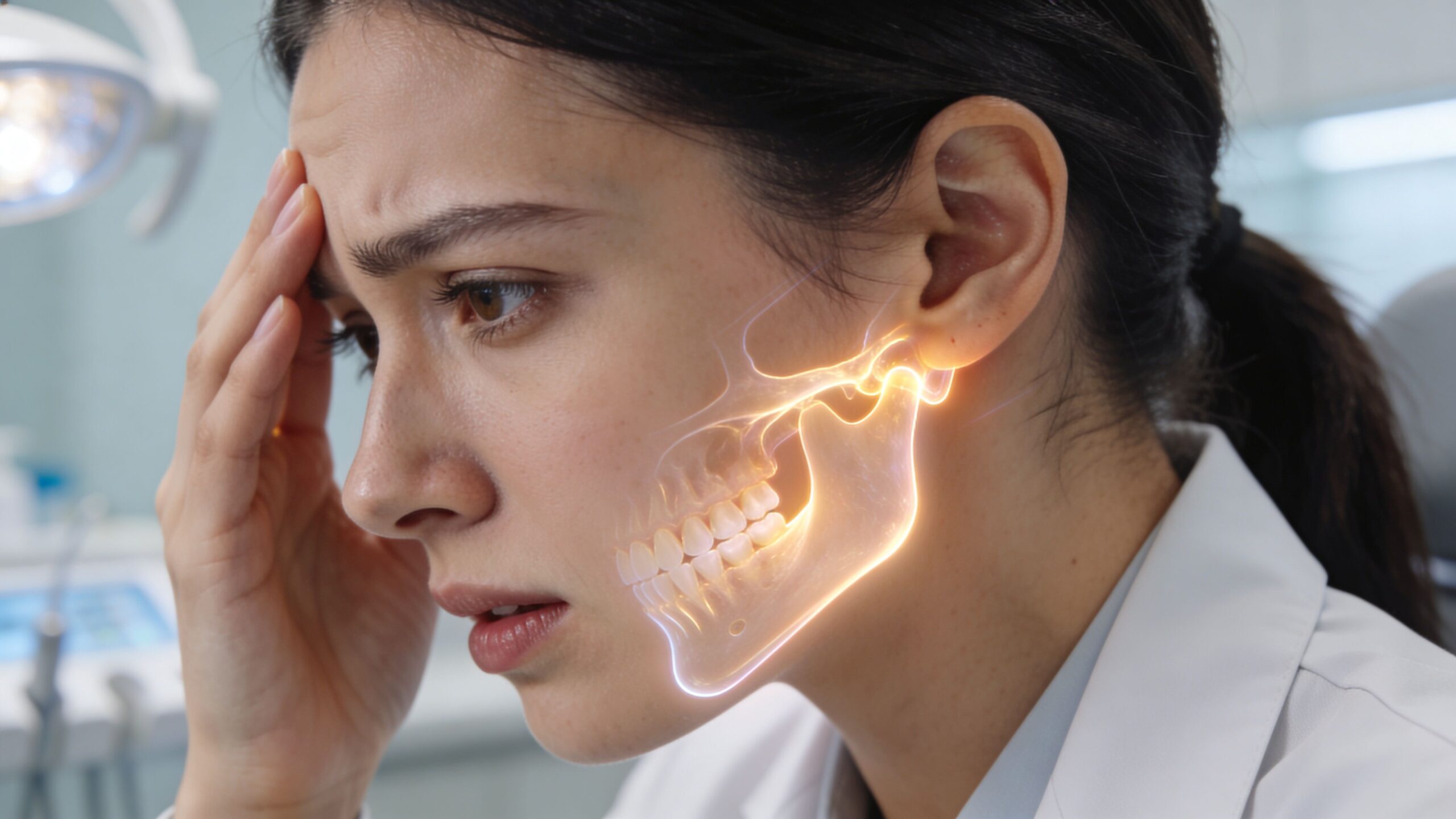
Recurring headaches can wear down even the most organized day. You get through work in Bellaire or Houston with a dull, tight pressure across your forehead, then wake up the next morning and feel it again. Many people assume that means stress, more coffee, or another trip to the medicine cabinet.
Sometimes that’s part of the story. Often, it isn’t the whole story.
Tension headache causes and treatment deserve a closer look, especially when headaches keep returning despite rest, posture changes, or over the counter pain relief. In many adults, the missing piece is dental. Jaw joint strain, bite imbalance, teeth grinding, and sleep-related airway problems can all feed the cycle of head, neck, and facial tension. That’s where a dentist in Bellaire, TX with experience in TMJ and dental sleep medicine can help uncover what standard headache advice often misses.
- Your Dentist in Bellaire for Tension Headache Relief
- Understanding Tension Headaches Beyond Just Stress
- The Hidden Dental Connection Your Dentist Can Uncover
- When Morning Headaches Point to a Sleep Issue
- Comprehensive Treatment for Lasting Headache Relief in Houston
- Your First Visit for Headache Relief at Our Bellaire Dental Office
- Take the First Step Toward a Headache-Free Life
Your Dentist in Bellaire for Tension Headache Relief
A lot of patients arrive with the same pattern. They’ve tried to power through the day, taken pain relievers when the pressure builds, adjusted their workstation, and told themselves they just need less stress. Yet the headaches keep circling back.
That’s not unusual. Tension-type headaches are the most prevalent primary headache disorder globally, and in the United States, 40% of people experience at least one tension-type headache each year according to prevalence data on tension headaches. That same source notes the burden peaks in women ages 30 to 39, reaching 46.9%.
For patients in Bellaire, West University, and nearby Houston neighborhoods, that often means trying to manage headache pain in the middle of commuting, desk work, school schedules, and sleep disruption. The common assumption is that the problem starts in the mind or in the shoulders. In some cases, the source is lower in the face, right at the bite.

Why a dentist may be part of the answer
When a headache patient also has jaw clicking, sore chewing muscles, worn teeth, clenching, or morning tightness around the temples, a dental evaluation becomes important. Those signs can point to strain in the temporomandibular joints and surrounding muscles.
A physician may focus on pain control. A dentist trained to evaluate bite function looks at a different set of clues:
- Jaw mechanics that overload muscles on one side or both sides
- Tooth wear that suggests nighttime grinding or daytime clenching
- Bite imbalance that keeps facial muscles working harder than they should
- Airway concerns that can trigger grinding and morning headaches
A headache can be a pain problem, but it can also be a jaw problem that shows up as head pain.
A more useful question
Instead of asking only, “How do I stop this headache today?” it helps to ask, “Why does it keep coming back?”
That shift matters. If the underlying cause is TMJ dysfunction, bite misalignment, or sleep-disordered breathing, another painkiller may blunt symptoms for a few hours but won’t change the cause. Patients looking for a dentist near me, an emergency dentist, or a dentist in Bellaire, TX often don’t realize headache relief may start with the same office that also provides routine dental care, new patient exams, digital x-rays, restorative dentistry, and long-term bite evaluation.
Understanding Tension Headaches Beyond Just Stress
A tension headache is often described in a similar way. It feels like a tight band, pressure, or heaviness around the forehead, temples, or back of the head. It may build slowly, sit there for hours, and leave the scalp, neck, or shoulders feeling tender.
Stress can trigger that pattern, but stress alone doesn’t explain why some headaches become stubborn and repetitive.
What chronic headaches tell us
Researchers no longer view tension headaches as a simple “muscle contraction” problem. The modern understanding is more complex. In chronic tension-type headache, which affects 2.2% of the population and is associated with 27.4 lost workdays per year, the problem involves pain hypersensitivity, where triggers amplify tenderness in the scalp, neck, and shoulders according to this PubMed summary on chronic tension-type headache.
That matters because it explains why basic advice sometimes falls short. If the nervous system has become more sensitive, then a small trigger can produce a large response. Poor sleep, clenching, posture strain, and jaw overuse may not seem dramatic on their own, but together they can keep the pain cycle active.
Episodic versus chronic patterns
A practical way to think about tension headache causes and treatment is to separate occasional headaches from recurring ones.
| Pattern | What it often looks like | Why it matters |
|---|---|---|
| Episodic tension headache | Headaches come and go, often around busy periods, posture strain, or poor sleep | Simple self-care may help if the trigger is temporary |
| Chronic tension headache | Headaches occur frequently enough that they affect work, focus, mood, and daily routines | Repeated pain often means there’s an underlying driver that needs diagnosis |
When headaches move into a chronic pattern, it’s smart to stop assuming the answer is “less stress” and start looking for physical sources of ongoing irritation.
The neck and jaw often work together
Patients are often surprised by how closely the jaw, temples, face, and neck are connected. Tightness in one area can spill into another. If you’ve been trying to sort out muscle tension at the same time as headache symptoms, this guide on causes of neck pain and relief gives helpful context on why upper body tension can become persistent.
Practical rule: If your headaches keep returning despite hydration, stretching, and ordinary stress management, don’t assume the diagnosis is complete.
Why simple fixes may stop working
Short-term headaches can improve with rest, hydration, movement, and temporary pain relief. Chronic headaches are different. Once the body starts repeating the same tension pattern, temporary measures don’t always interrupt it.
That’s why the next step isn’t always stronger medication. Sometimes it’s a better exam. The most useful evaluation looks at muscle tenderness, jaw movement, bite stability, sleep quality, and habits like clenching. Those details often reveal a cause that hasn’t been addressed yet.
The Hidden Dental Connection Your Dentist Can Uncover
Headaches don’t always start where they hurt.
A patient may point to the temples or forehead, but the strain may begin in the jaw joints and chewing muscles. That’s one reason dental causes are often missed. The pain shows up in the head, while the mechanical problem sits in the bite.
How jaw strain turns into head pain
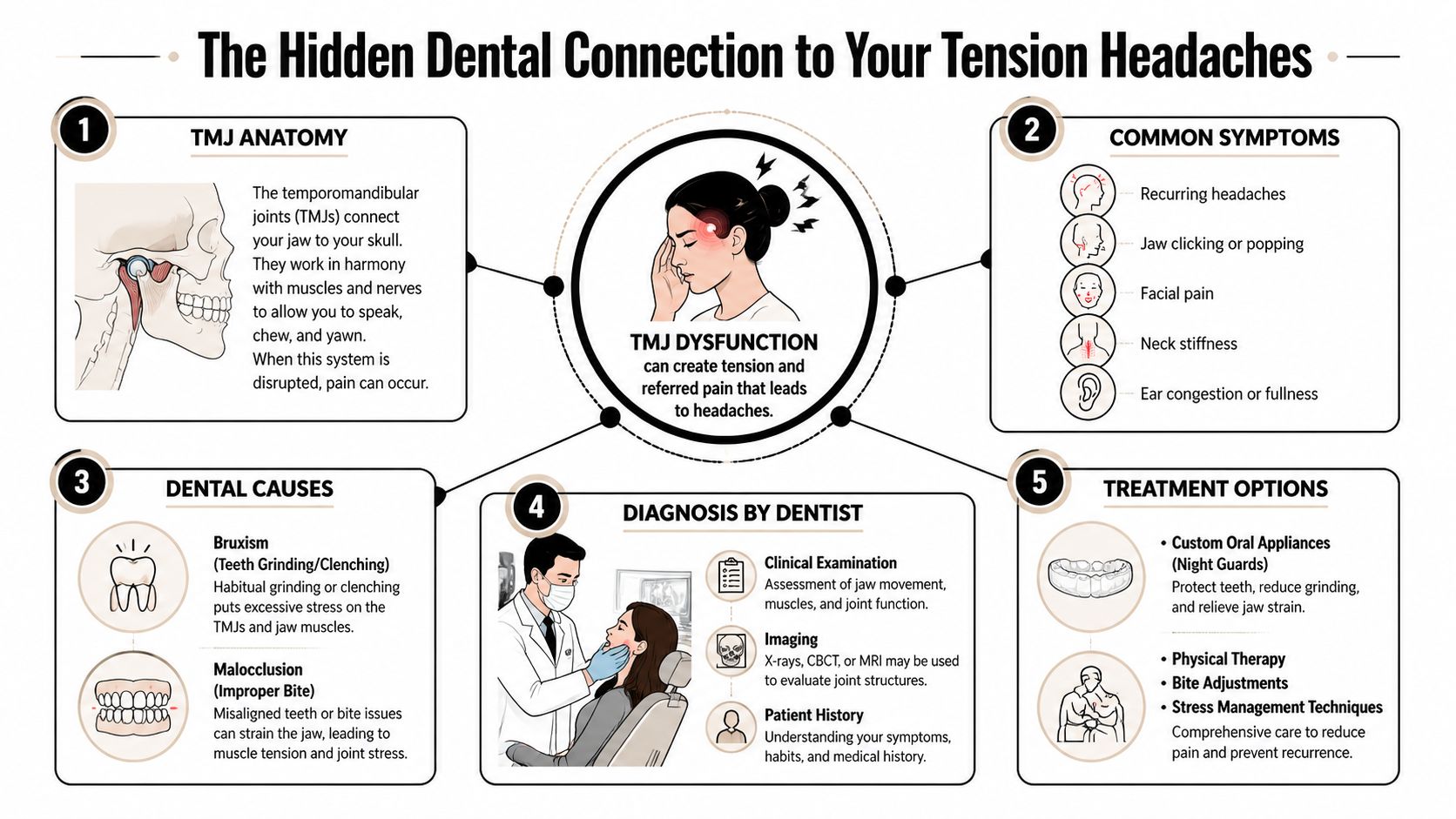
The temporomandibular joints connect the jaw to the skull. Around them is a network of muscles that help you chew, swallow, speak, and hold your jaw in position. If the bite is unstable or the jaw has to compensate constantly, those muscles can become overworked.
A door that doesn’t close evenly can still be forced shut every day, but the hinges and frame take the strain. In the mouth, that strain often lands in the jaw muscles, temples, and neck.
Signs that point toward a dental cause
Many adults with recurring tension headaches also notice symptoms they’ve never connected to their teeth or jaw. Common clues include:
- Morning jaw soreness after clenching overnight
- Clicking or popping when opening wide or chewing
- Worn or flattened teeth from grinding
- Tight temples that worsen later in the day
- Neck stiffness that seems to travel upward into the head
- Facial fatigue after eating chewy foods
- A bite that feels off or changes from side to side
These findings matter because TMJ disorders and dental bite misalignments are important but often overlooked causes of tension headaches, and bite issues are reported in 30% to 50% of chronic headache sufferers according to this overview of tension headache and dental factors.
Why medical care and dental care see different parts of the problem
A medical exam may rule out dangerous causes and help with pain management. That’s important. But standard medical visits often don’t include a detailed bite analysis, joint loading exam, or evaluation of grinding patterns on the teeth.
A dental headache evaluation can look for:
- uneven tooth contacts
- jaw joint tenderness
- restricted or shifted jaw movement
- clenching wear patterns
- muscle tenderness in the temples and cheeks
- signs that airway issues may be contributing to grinding
That’s where a focused TMJ assessment becomes useful. Patients who want to learn more about this type of evaluation can review TMJ specialist care in Houston.
If your headaches come with jaw noise, clenching, tooth wear, or facial tightness, the headache may be a symptom of bite stress rather than a problem of stress alone.
What a dentist can find that you may not notice
Bite problems aren’t always obvious. A patient may have no severe tooth pain, no cavity, and no single dramatic dental complaint. Yet the teeth may meet unevenly enough to keep the jaw muscles in constant low-grade effort.
That hidden effort can become a daily load on the muscles that refer pain into the temples and scalp. Referred pain is why a jaw problem can feel like a forehead problem. It’s also why people can spend months treating the wrong area.
What works better than guesswork
For recurring tension headache causes and treatment, the most effective approach is usually not a one-size-fits-all mouthguard purchased online. Those appliances may protect teeth in some situations, but they don’t diagnose the bite, adjust jaw positioning thoughtfully, or account for TMJ mechanics.
A useful dental plan starts with diagnosis. That may include digital x-rays, a close look at tooth wear, joint and muscle examination, and a careful record of when symptoms happen. If the bite is part of the problem, treatment can then target the actual source of overload instead of just trying to suppress pain after it starts.
When Morning Headaches Point to a Sleep Issue
Headaches that are worst on waking often tell a different story than headaches that build during a stressful afternoon. When pain shows up first thing in the morning, sleep quality deserves attention.
That’s especially true if the headache comes with dry mouth, snoring, unrestful sleep, or reports from a partner that breathing seems irregular at night.

The sleep apnea connection
A growing risk in chronic headache care is overusing over the counter pain medicine. That can contribute to medication overuse headaches. At the same time, obstructive sleep apnea is an underserved link to tension-type headaches, and custom oral appliances have been shown to reduce headache days by 50% in patients with comorbid obstructive sleep apnea according to Cleveland Clinic guidance on tension headaches.
Sleep-disordered breathing can affect headache patterns in several ways. Repeated breathing interruptions stress the body during the night. Patients may clench more, sleep more lightly, wake unrefreshed, and carry muscle tension into the morning.
Clues that your headache may start during sleep
A morning pattern becomes more suspicious when it shows up with symptoms like these:
- Snoring that’s frequent or disruptive
- Dry mouth on waking
- Jaw tightness first thing in the morning
- Grinding sounds noticed by a partner
- Daytime fatigue even after a full night in bed
Patients dealing with this pattern can also read more about why morning headaches happen, especially when jaw strain and breathing issues overlap.
Why dental sleep medicine matters
Dentists play a practical role here because oral appliances can help manage airway-related problems in appropriate patients. These devices are different from store-bought guards. They’re designed around the patient’s anatomy and used as part of coordinated care.
This overview gives a helpful visual explanation of the sleep and airway side of headache symptoms:
Headaches that start in the morning often deserve both a jaw evaluation and a sleep evaluation, not just a refill of pain medicine.
When pain medicine becomes part of the problem
Many adults do exactly what seems reasonable. They wake up with a headache, take something quickly, and keep moving. If that cycle repeats often, the medication itself can begin to complicate the picture.
That doesn’t mean over the counter medication is always wrong. It means recurring morning headaches should push the conversation toward diagnosis. If sleep apnea, grinding, and jaw tension are all feeding one another, the most useful treatment is the one that addresses the nighttime trigger.
Comprehensive Treatment for Lasting Headache Relief in Houston
Lasting headache relief depends on matching treatment to the pattern behind the pain. In practice, that often means looking past stress alone and asking whether the jaw joints, bite forces, nighttime clenching, or airway problems are keeping the muscles overworked day after day.
Treating every tension headache the same way is one of the main reasons patients stay stuck.
What can help at first
For frequent episodic tension-type headache, ibuprofen 400 mg is more effective than acetaminophen 1000 mg, while for chronic tension-type headache, amitriptyline is the most efficacious prophylactic treatment, according to the AAFP review on tension-type headache treatment. That review also notes that medication should be balanced with non-pharmacologic care to avoid medication-overuse headache.
In the office, I usually explain treatment in practical terms. Short-term relief has a place. It just should not be the whole plan when headaches keep returning.
| Situation | Often used first | Limitation |
|---|---|---|
| Occasional headache | Rest, hydration, posture correction, short-term OTC relief | Can reduce symptoms, but does not identify the source |
| Recurring or chronic headache | Preventive care, habit changes, clinical evaluation | Requires a more specific diagnosis |
| Headache tied to TMJ or bite issues | Dental appliance therapy, bite analysis, jaw-focused care | Works best when built around the patient’s anatomy |
What often falls short
Many headache patients have already been careful. They have changed pillows, stretched tight neck muscles, cut back on screens, switched pain relievers, or tried a store-bought nightguard. Those choices are reasonable, but they often miss the mechanical source of the strain.
A few patterns come up repeatedly:
- Using pain medicine too often while the trigger remains active
- Buying a generic nightguard that protects enamel but does not position the jaw in a controlled way
- Focusing only on stress when the bite is uneven or the jaw joints are overloaded
- Overlooking sleep quality when headaches are worse on waking
Dental treatment that targets the source
When an exam shows that the headache pattern is tied to the jaw, the bite, or clenching forces, treatment becomes more specific.
Custom oral appliances
A custom oral appliance can reduce pressure on the jaw muscles and help stabilize how the teeth and joints work together. The difference is fit and design. A professionally made appliance is based on the patient’s bite, muscle pattern, and goals, not a standard boil-and-bite shape.
NTI-tss and focused muscle unloading
In selected cases, an NTI-tss device may help reduce clenching intensity and decrease the load on muscles that trigger head and facial pain. It is not right for every patient. It is useful when the exam supports that kind of targeted approach.
Bite analysis and adjustment
Some headaches are fueled by repeated overload from the way certain teeth meet. If one area is carrying too much force, the jaw muscles may keep compensating every time the patient closes or grinds. Bite analysis helps identify that pattern. In the right case, selective adjustment or restorative planning can reduce that daily strain.
Coordinated care
Chronic headache cases are often multi-factor. A patient may need dental treatment, a sleep evaluation, physical therapy, or medical follow-up at the same time. That is the practical advantage of an integrated plan. It addresses the parts of the problem that are driving symptoms, rather than asking one treatment to solve everything.
For patients who want conservative self-care alongside professional treatment, natural headache solutions from Charlotte experts offers useful ideas that can complement office-based care.
Clinical takeaway: If relief lasts a few hours and the headache keeps returning, the source often has not been identified. Better results usually come from reducing the jaw, bite, or sleep-related trigger behind the muscle tension.
Where broader dental care fits
Headache workups often uncover other dental problems that deserve attention. Worn teeth may need restorative treatment. Chipped edges, cracked enamel, or bite collapse from grinding can call for bonding, crowns, or other protective care. Patients who start by asking about headache relief sometimes learn that stabilizing the bite also helps protect their teeth and improve daily comfort.
In a practice like Charles E. Boren, that overlap matters because the same evaluation can connect headache symptoms with bite stability, restorative needs, cosmetic concerns, digital imaging, and long-term maintenance. A patient may come in focused on temple pain and leave with a clearer picture of how jaw function and tooth wear have been affecting both comfort and oral health.
The practical trade-off
Masking pain is faster. Finding the cause takes more careful evaluation.
For recurring headaches, the faster option often turns into the longer road. Source-based care asks for more attention up front, but it gives patients a better chance at steadier relief and fewer setbacks over time.
Your First Visit for Headache Relief at Our Bellaire Dental Office
Most patients are relieved to hear that a headache consultation isn’t rushed and doesn’t start with assumptions. The first visit is about listening carefully and looking for patterns that haven’t been connected before.
What the appointment usually includes
The conversation comes first. You’ll talk about when the headaches happen, where you feel them, whether mornings are worse, what you’ve already tried, and whether you’ve noticed jaw symptoms like clicking, clenching, or facial fatigue.
That history matters because small details often point in the right direction. A patient who wakes with temple pain may need a different workup than someone whose headaches build after long hours at a computer.
The exam is focused and practical
A headache-focused dental visit may include:
- Jaw joint evaluation to check movement, tenderness, and joint sounds
- Muscle exam of the jaw, temple, face, and nearby areas
- Bite analysis to see how the teeth meet and whether forces are balanced
- Digital imaging when needed to look more closely at teeth, bone, and joint-related structures
- Tooth wear review for signs of grinding or clenching
Many patients have never had anyone connect their headache history with their bite history. That conversation alone often changes the direction of care.
What patients often find reassuring
You don’t need to arrive knowing whether the problem is TMJ, clenching, sleep apnea, posture strain, or something else. That’s the point of the visit. The goal is to sort through possibilities in a calm, organized way.
For anxious patients, it also helps to know this is still a dental office built around comfort. People who come in searching for a dentist near me, tooth extraction, cleaning and exams, or even an emergency dentist often stay because they appreciate having complete care under one roof. The same office that handles routine dental care can also evaluate functional issues that affect headaches, sleep, and jaw comfort.
What happens after the evaluation
If the findings suggest a dental contribution, the next step may be a custom appliance, additional records, coordination with a sleep specialist, or a phased treatment plan. If the exam suggests another primary cause, that’s useful too. Good diagnosis saves time and avoids more guessing.
The visit should leave you with something many headache sufferers haven’t had in a while: a clear explanation of what may be driving the pain and a practical plan for what to do next.
Take the First Step Toward a Headache-Free Life
If you’ve been living with recurring head pressure, temple pain, jaw tightness, or morning headaches, it’s worth considering that the problem may not be stress alone. Tension headache causes and treatment often involve the bite, the jaw joints, nighttime clenching, or sleep-disordered breathing. Those are issues a dentist can evaluate directly.
That’s especially important when headaches keep returning after the usual fixes. Temporary relief has its place, but it shouldn’t be the only plan. If the source is dental, the right treatment can do more than cover symptoms. It can reduce the strain that keeps triggering them.
Patients in Bellaire, West University, and Houston often start this process because they’re looking for a new dentist in Bellaire, TX, a cosmetic dentist near me, help with restorative dental care, or an answer to chronic discomfort that no one has fully explained. Headache evaluation fits naturally into that bigger picture of protecting oral health, sleep, function, and quality of life.
You don’t have to accept recurring headaches as normal. A careful exam can reveal whether your jaw, bite, or sleep patterns are contributing to the pain and whether a dental treatment plan may help.
If you’re ready to look deeper than temporary symptom relief, schedule a consultation with Charles E. Boren. Patients in Bellaire, West University, and Houston can contact the office to discuss recurring headaches, TMJ symptoms, dental sleep medicine, cosmetic dentistry, restorative dentistry, routine exams, or urgent dental concerns. A focused evaluation can help identify whether your headaches have a treatable dental cause and what the next step should be.