
What Is Teeth Whitening at a Dentist’s Office — and Is It Actually Worth It for Bellaire Patients Who’ve Already Tried Store-Bought Strips?
If you’ve spent money on whitening strips and wound up with teeth that still look dull — or worse, felt that sharp, zingy sensitivity without seeing much difference in color — you’ve probably wondered whether professional whitening is just the same thing with a bigger price tag. It isn’t. For patients in Bellaire and the surrounding neighborhoods of West University Place, Meyerland, and Southside Place, understanding what separates professional teeth whitening from what’s on the drugstore shelf can save you a lot of frustration and help you actually get the result you were hoping for in the first place.
- Why Store-Bought Whitening Strips Often Underwhelm
- What Professional Whitening Actually Does Differently
- In-Office vs. Take-Home: Which One Is Right for You?
- The Sensitivity Question Nobody Talks About Enough
- How Whitening Fits Into a Broader Smile Plan
- Frequently Asked Questions About Professional Teeth Whitening in Bellaire
- Ready to Find Out What Professional Whitening Can Actually Do for Your Smile?
Why Store-Bought Whitening Strips Often Underwhelm
Over-the-counter whitening products are designed to be safe for anyone to use without professional guidance. That means they use significantly lower concentrations of the active whitening agent — typically hydrogen peroxide or carbamide peroxide — than what a dentist can prescribe. The strips also sit flat against a surface that isn’t flat. Your teeth have curves, grooves, and contact points that strips simply can’t conform to, which means large areas of each tooth may never get consistent contact with the whitening gel at all.
The result is often uneven whitening — brighter on the flat front surface, with edges and in-between spaces that stay unchanged. You may also find the strips slip around during wear, which further reduces their effectiveness. And if you have any existing sensitivity, the generic formulation doesn’t account for that either.
None of this means store-bought products are worthless. They can work for minor touch-ups if your teeth are already in good shape. But if you’ve got years of coffee, tea, or red wine staining — or if your teeth have simply yellowed with age — drugstore products usually plateau well before you reach the shade you actually want.
What Professional Whitening Actually Does Differently
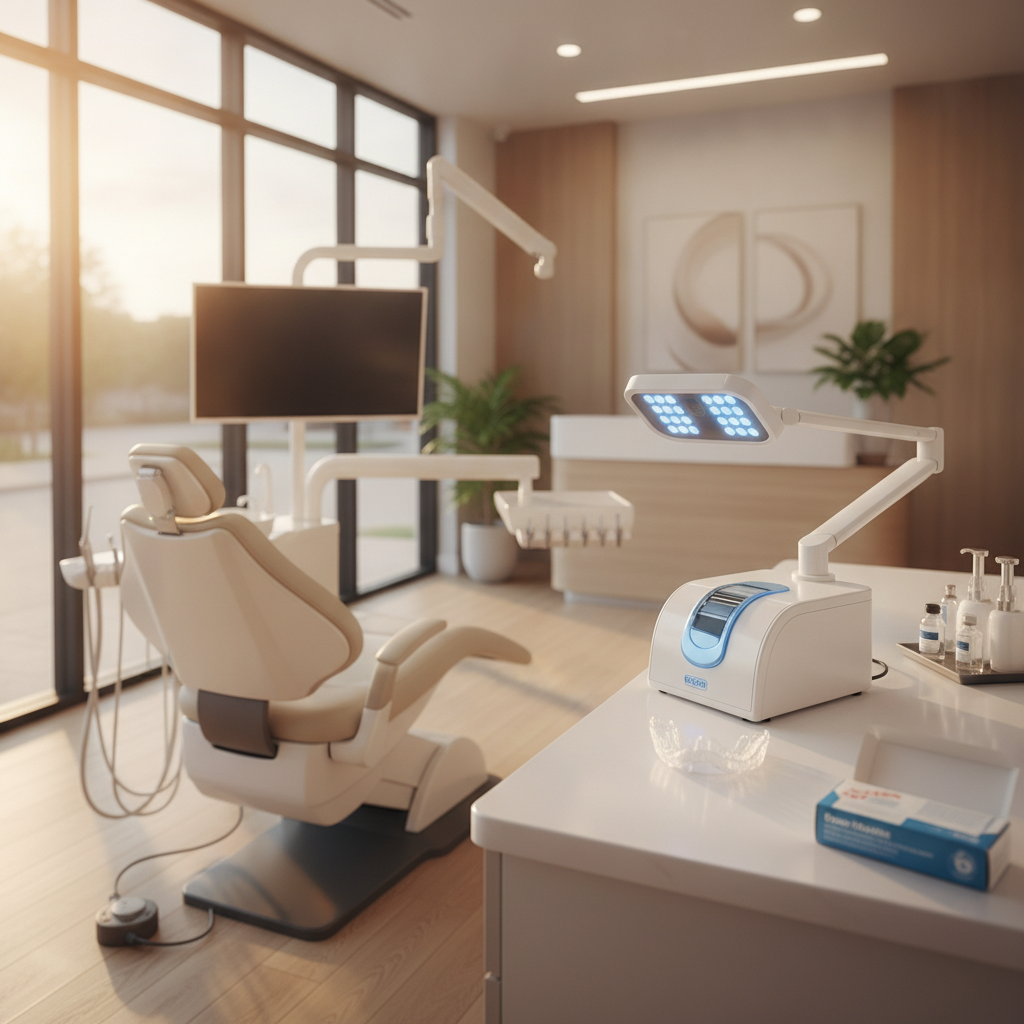
At a dental office, whitening works on the same basic chemistry — peroxide molecules penetrating the enamel and breaking up stain compounds — but with meaningfully higher concentration gels and delivery systems custom-fitted to your actual teeth. The custom-fitted tray is what most patients don’t realize makes the biggest difference.
When whitening gel sits in a tray made from a precise impression of your own teeth, it maintains full, even contact across every surface for the entire treatment period. There’s no slipping, no gaps, and no areas being missed because the tray lifted away from a curve. The gel can do its job uniformly, which is how you get results that actually look like a naturally whiter version of your smile rather than a patchy improvement.
At Charles E. Boren D.D.S., P.C., professional whitening is done with Opalescence, a prescription-strength system that offers both take-home trays and in-office options depending on what fits your schedule and goals. Opalescence gels also contain potassium nitrate and fluoride, which help manage sensitivity and protect enamel during the whitening process — something you won’t find in most drugstore formulations.
In-Office vs. Take-Home: Which One Is Right for You?
This is a question worth asking at your consultation, because the answer depends on your timeline, your sensitivity level, and what you’re trying to achieve.
In-office whitening is faster — you can see significant results in a single appointment. That’s useful if you have an event coming up, a reunion, a wedding, or a professional milestone where you want your smile to look its best quickly. The gel concentration used in-chair is higher, and Dr. Boren can monitor your response throughout the appointment.
Take-home whitening trays work more gradually, usually over one to two weeks of nightly or daily wear. For many patients, this approach actually produces results that look more natural and last longer, because the slower process allows deeper penetration without the risk of the immediate sensitivity spike that some people experience with in-office treatments. If you know you’re sensitive, this is often the more comfortable path.
Some patients do both — a single in-office session to get a strong starting point, followed by occasional take-home use to maintain results over time. Because you keep the custom trays, touch-ups down the road are simple and inexpensive.
The Sensitivity Question Nobody Talks About Enough
One of the most common reasons patients stop using over-the-counter whitening products is sensitivity. The strips cause discomfort, they push through it a few days, and eventually they quit because it doesn’t feel worth it — especially when the color change is underwhelming anyway.
Professional whitening doesn’t eliminate sensitivity entirely, but it gives you much better tools to manage it. The Opalescence formula is designed with enamel protection in mind, and Dr. Boren can recommend the appropriate gel concentration and wear schedule based on your baseline sensitivity. If you’ve had issues with sensitivity in the past, that conversation happens before treatment starts — not after you’re already uncomfortable.
It’s also worth knowing that certain types of staining don’t respond to whitening at all. Staining from tetracycline antibiotics, fluorosis, or internal tooth discoloration won’t lift with peroxide-based whitening regardless of the concentration. A professional consultation is the right place to figure out which category your situation falls into — and whether whitening is the right starting point, or whether something like veneers or porcelain crowns would give you a better outcome.
How Whitening Fits Into a Broader Smile Plan
For many patients in the Bellaire area, whitening is either the first step in a larger smile makeover or a maintenance tool after other cosmetic work is done. If you’re considering veneers, it’s important to whiten first — porcelain doesn’t respond to whitening gel, so the shade of your veneers needs to be matched to your whitened natural teeth, not the other way around.
If your goals go beyond shade alone — if you’re also dealing with chips, gaps, or teeth that have shifted over time — a conversation about the full picture is worth having before you commit to any single treatment. Dr. Boren takes a no-pressure approach to treatment planning, which means you’ll leave a consultation with a clear understanding of your options and the sequencing that makes sense for your specific situation, not a list of procedures pushed at you all at once.
Patients across Meyerland and Southside Place who’ve come to us after trying multiple drugstore products often tell us the same thing: they wish they’d just come in first. Not because the professional option is always the most expensive path — it often isn’t, once you add up what you’ve already spent on strips — but because it actually gets them where they wanted to be.
You can explore all the cosmetic and restorative services we offer to get a sense of what a full smile evaluation looks like.
Frequently Asked Questions About Professional Teeth Whitening in Bellaire
How long do professional whitening results last?
Most patients maintain their results for one to three years with reasonable care — limiting heavily pigmented foods and drinks, and doing occasional touch-up sessions with their custom trays. Results vary depending on diet and individual tooth chemistry.
Can I whiten my teeth if I have crowns, veneers, or bonding?
Whitening gel only affects natural tooth enamel — it won’t change the shade of existing restorations. This is why it’s important to discuss your existing dental work before starting whitening, so your dentist can help you set realistic expectations or plan an approach that keeps everything looking consistent.
Is professional whitening covered by dental insurance?
Cosmetic whitening is typically not covered by dental insurance. However, it’s one of the more affordable cosmetic treatments, and some patients use CareCredit to spread the cost. Ask about financing options when you call to schedule.
How white can my teeth actually get?
Whitening works within the natural range of your enamel — it brightens what’s there, but it doesn’t produce an unnaturally stark result. Most patients achieve a noticeably brighter smile that still looks like their own teeth, just cleaner and younger. The degree of improvement depends on the type and depth of staining you’re starting with.
Do I need a cleaning before whitening?
Yes, in most cases. Whitening gel works on clean enamel, not on plaque or tartar buildup. Starting with a professional cleaning ensures the gel makes direct contact with your tooth surfaces and that you’re starting from a healthy baseline. It’s also a good opportunity to check for any issues — like cavities or gum sensitivity — that should be addressed before whitening begins.
Ready to Find Out What Professional Whitening Can Actually Do for Your Smile?
If you’ve been disappointed by what’s on the drugstore shelf, or if you’re planning ahead for an event and want results you can count on, a whitening consultation at our Bellaire office is a straightforward next step. Dr. Boren will take a look at your teeth, talk through your goals, and give you an honest picture of what whitening can achieve for you specifically — and whether it’s the right starting point or part of a broader plan.
We’ve been serving patients in Bellaire, West University Place, and the surrounding Houston area for decades, and we take the same approach to every cosmetic conversation that we do to everything else: clear information, no pressure, and treatment that fits your life. Reach out to schedule a consultation — we’d be glad to help you figure out the right path forward.