
Can a Dentist in Bellaire Actually Treat Sleep Apnea Without a CPAP?
Yes — and for many patients, it’s the option they wish they’d known about sooner. If you’ve been diagnosed with obstructive sleep apnea and either can’t tolerate your CPAP machine or are looking for a more comfortable long-term solution, a dentist trained in dental sleep medicine can fit you with a custom oral appliance that keeps your airway open while you sleep. Patients in Bellaire, West University Place, and the surrounding Houston area have access to this kind of care closer to home than most people realize — and it doesn’t involve a mask, a hose, or a bedside machine the size of a lunchbox.
- What Is Obstructive Sleep Apnea, and Why Does It Matter?
- Why So Many Patients Stop Using Their CPAP
- How Oral Appliance Therapy Works
- What the Treatment Process Looks Like — Step by Step
- Is Oral Appliance Therapy Covered by Insurance?
- What Competitor Practices in the Area Often Leave Out
- Signs You Might Benefit from a Sleep Apnea Consultation
- Frequently Asked Questions
- Ready to Sleep Better? Let's Talk.
What Is Obstructive Sleep Apnea, and Why Does It Matter?
Obstructive sleep apnea (OSA) happens when the muscles at the back of your throat relax too much during sleep, causing your airway to narrow or close completely. You stop breathing — sometimes dozens or even hundreds of times per night — and your brain jolts you back to a lighter stage of sleep to restore airflow. You may not remember any of it. What you do notice is the aftermath: waking up exhausted, morning headaches, difficulty concentrating, a short fuse, and a partner who’s sleeping in the next room because your snoring has gotten out of hand.
Left untreated, obstructive sleep apnea is linked to serious health risks, including high blood pressure, heart disease, and increased stroke risk. The good news is that it’s very treatable — and your options extend well beyond CPAP.
Why So Many Patients Stop Using Their CPAP
CPAP therapy is effective when it’s used correctly and consistently. The problem is that a significant portion of patients — estimates range from 30 to 50 percent — don’t use it the way they should, or stop using it altogether. Common complaints include:
- Claustrophobia from the mask
- Skin irritation or pressure sores from the headgear
- Noise disturbing a partner’s sleep
- Difficulty traveling with bulky equipment
- Dry mouth, nasal congestion, or bloating from pressurized air
- Simply never feeling comfortable enough to fall asleep wearing it
If any of those sound familiar, you’re not alone, and you’re not out of options.
How Oral Appliance Therapy Works
An oral appliance for sleep apnea looks a bit like a sports mouthguard, but it’s custom-fabricated to fit your teeth precisely and designed to do a very specific job: gently reposition your lower jaw slightly forward while you sleep. This subtle shift tightens the soft tissue and muscles around your airway, keeping the throat open so air can move freely and your breathing stays uninterrupted through the night.
The device Dr. Boren fits is made from impressions or digital scans of your teeth, so it fits the way a custom appliance should — securely, without bulk, and without the soreness that comes from an ill-fitting over-the-counter guard. Most patients adapt to wearing it within a week or two, and many describe it as far easier to sleep with than a CPAP.
This type of device is called a mandibular advancement device (MAD), and it’s recognized by the American Academy of Sleep Medicine as a first-line treatment for mild to moderate obstructive sleep apnea, and as a CPAP alternative for patients with severe OSA who cannot tolerate positive airway pressure therapy.
What the Treatment Process Looks Like — Step by Step
One reason patients in the Meyerland and Braeswood areas sometimes hesitate is that they’re not sure what getting a sleep appliance actually involves. Here’s a straightforward look at the process:
- Start with a diagnosis. Before any dental appliance can be made, you need a formal sleep apnea diagnosis from a physician or sleep specialist. If you haven’t had a sleep study yet, Dr. Boren can help coordinate a referral. If you already have a diagnosis in hand, you’re ready to move forward.
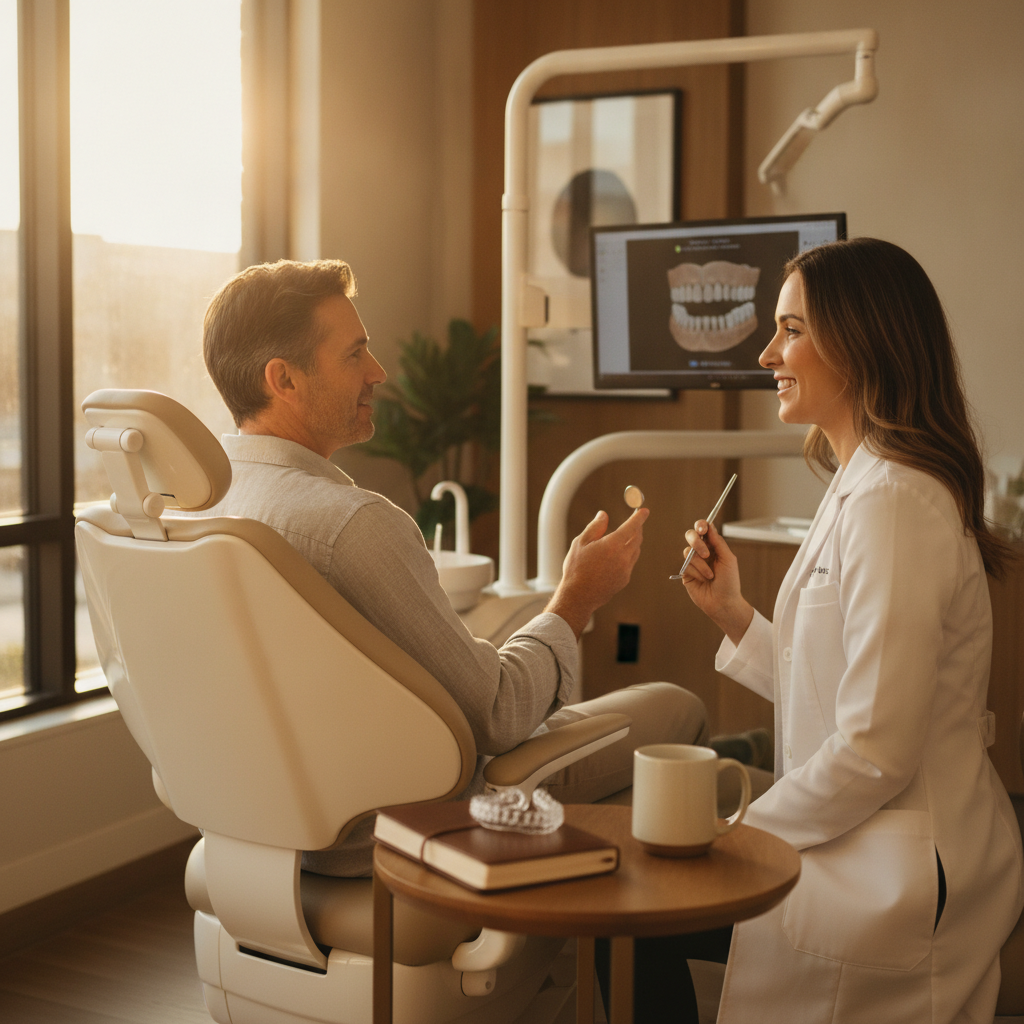
- Consultation and evaluation. At your appointment, Dr. Boren reviews your sleep study results, examines your teeth, jaw, and bite, and discusses whether oral appliance therapy is a good fit for your specific case.
- Impressions and fabrication. Detailed records of your teeth are taken so a custom appliance can be made to fit you precisely. The lab turnaround is typically a few weeks.
- Fitting and adjustment. When your appliance arrives, you come in for a fitting. The jaw position can be fine-tuned over several follow-up visits to find the most effective and comfortable setting for you.
- Follow-up sleep testing. After a period of use, a follow-up sleep test confirms that your therapy is working. This step matters — it’s how you know the appliance is actually resolving your apnea events, not just making you feel better.
Is Oral Appliance Therapy Covered by Insurance?
This is one of the most common questions patients in Houston ask, and the answer depends on your specific plan. Oral appliance therapy for obstructive sleep apnea is a medical treatment, so it’s often billed through medical insurance rather than dental insurance — including Medicare in many cases. Some dental plans also have partial coverage. The team at Charles E. Boren D.D.S., P.C. can help you understand your coverage before you commit to anything, and CareCredit financing is available for patients who need to spread out out-of-pocket costs.
What oral appliance therapy is not: a cheap, off-the-shelf fix. The boil-and-bite devices sold online or in drugstores are not the same thing and have not been clinically validated to treat sleep apnea. A custom appliance made by a qualified dental sleep medicine provider is a precision medical device — and the difference in fit, effectiveness, and long-term comfort is significant. You can learn more about the full range of services offered at our practice here.
What Competitor Practices in the Area Often Leave Out
Most dental websites in the Houston area — including practices near the Galleria, Uptown, and along the 610 Loop corridor — mention sleep apnea in passing or list it as a service without explaining what the actual process involves. Very few walk patients through the distinction between CPAP and oral appliance therapy in a way that helps someone make a confident decision. Even fewer explain the insurance billing nuance (medical vs. dental coverage) or describe the follow-up sleep testing that confirms the treatment is working.
That gap matters. Patients searching for a CPAP alternative in the Southside Place and West University Place areas often don’t know that their family dentist could be the starting point for better sleep — not just their sleep specialist or primary care doctor. Dental sleep medicine is a genuinely collaborative field, and Dr. Boren works alongside your other providers to make sure your care is coordinated, not siloed.
Signs You Might Benefit from a Sleep Apnea Consultation
You don’t need to have a formal diagnosis yet to start the conversation. Consider reaching out if you’re experiencing any of the following:
- Waking up with a headache most mornings
- Feeling unrefreshed after a full night of sleep
- Loud or frequent snoring (especially if your partner has mentioned it)
- Waking up gasping or choking
- Daytime drowsiness that affects your concentration or mood
- A CPAP machine sitting unused in your closet
These symptoms deserve a real conversation — not a checklist on a website. Dr. Boren has been treating patients in Bellaire for decades, and dental sleep medicine is one of the areas where he’s seen patients experience genuinely life-changing improvements in how they feel every day.
Frequently Asked Questions
Does a dentist need special training to treat sleep apnea?
Yes. Dental sleep medicine is a distinct area of practice that requires specific training beyond general dentistry. Not every dentist offers it. Dr. Boren’s experience in this area means you’re working with someone who understands the connection between your bite, jaw position, and airway — not just teeth.
Can oral appliance therapy completely replace CPAP?
For patients with mild to moderate obstructive sleep apnea, oral appliance therapy is often equally effective as CPAP and is recognized as a primary treatment. For severe OSA, it’s often recommended as an alternative when CPAP is not tolerated. The right choice depends on your specific diagnosis, which is why follow-up sleep testing is part of the process.
Will my medical insurance cover a dental sleep appliance?
Many medical insurance plans — including Medicare — cover oral appliance therapy for diagnosed obstructive sleep apnea when provided by a qualified dental sleep medicine provider. Coverage varies by plan. Our team can help you navigate the pre-authorization process before treatment begins.
How long does it take to get used to wearing a sleep appliance?
Most patients adapt within one to two weeks. There’s typically an adjustment period where you may notice some morning jaw soreness or slight tooth sensitivity, but this tends to resolve as the appliance is fine-tuned. The goal is always a fit that’s effective and genuinely comfortable to wear every night.
What if I live in Meyerland or Braeswood — is Dr. Boren’s office convenient?
Yes. The practice is located at 5200 Cedar St in Bellaire, which is easily accessible from Meyerland, Braeswood, West University Place, and much of southwest Houston. Most patients from these neighborhoods are within a short drive along the 610 corridor.
Ready to Sleep Better? Let’s Talk.
If you’ve been living with poor sleep, waking up exhausted, or tolerating a CPAP you hate, there may be a better path forward — and it might start right here in Bellaire. Dr. Boren offers consultations for dental sleep medicine in a practice where you’ll be heard, not rushed, and where every recommendation is based on your specific situation.
To schedule a consultation or ask questions before your first visit, reach out to our team here. We’re happy to talk through what treatment might look like for you before you commit to anything.