
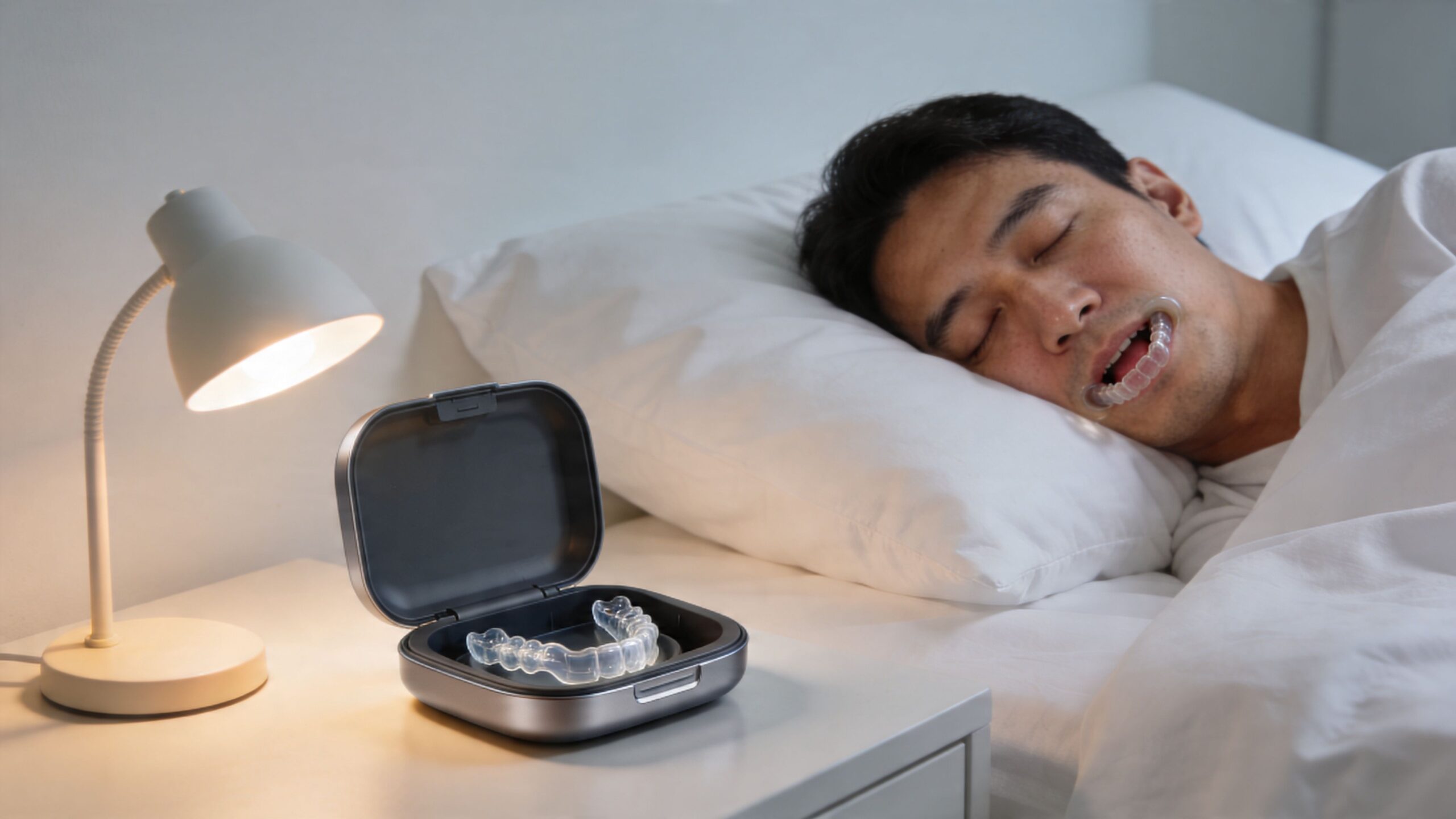
If you're searching for a solution because your snoring is keeping your spouse awake, leaving you drained during the day, or making you wonder whether something more serious is going on, you're not alone. Many adults in Bellaire, West University, and Houston start in the same place. They know their sleep isn't right, but they don't want a bulky machine on the nightstand if there's another option.
For many people, the silent night oral appliance is that option. It gives patients with chronic snoring or mild to moderate obstructive sleep apnea a small, custom dental device that can make sleep quieter and mornings easier. It also fits naturally into the kind of care people already expect from a trusted dentist in Bellaire, TX, especially when they want a treatment that feels precise, personal, and manageable.
- Tired of Sleepless Nights in Houston? A Better Solution for Snoring
- What Is the Silent Nite Oral Appliance
- How the Silent Nite Device Restores Quiet Nights
- Is a Silent Nite Appliance the Right Choice for You
- Your Journey to Better Sleep at Our Bellaire Dental Office
- Silent Nite vs CPAP A Patient-Focused Comparison
- Long-Term Success Living With Your Oral Appliance
- Your Questions About Silent Nite Answered
Tired of Sleepless Nights in Houston? A Better Solution for Snoring
You finally fall asleep, then the cycle starts again. Loud snoring. A nudge from your partner. Rolling onto your side. Waking up with a dry mouth, a headache, or that heavy, foggy feeling that follows you into work the next day.
That pattern wears people down. It affects marriages, concentration, mood, and energy. In a fast-moving area like Houston, where many residents already have full schedules, poor sleep can turn ordinary days into exhausting ones.
A lot of patients say the same thing. They thought snoring was just annoying. Then they noticed they were tired even after a full night in bed, or their partner heard pauses in breathing and became concerned. That’s often the point when a person starts looking for a dentist near me or a provider who offers sleep-focused dental care instead of just cleanings and exams.
Why snoring deserves attention
Snoring isn't always harmless background noise. In some people, it can be a sign that the airway is narrowing or collapsing during sleep. When that happens, the body has to work harder to breathe normally through the night.
Common signs that deserve a closer look include:
- Loud nightly snoring that disrupts your partner’s sleep
- Morning fatigue even after what should have been enough rest
- Dry mouth or jaw soreness when you wake up
- Daytime brain fog that makes driving, work, or parenting feel harder
- Observed pauses in breathing reported by someone sleeping nearby
Poor sleep doesn't stay in the bedroom. It follows you into your workday, your relationships, and your health choices.
Why many adults want something simpler than a machine
People often worry that treatment means something large, noisy, or hard to travel with. That concern stops some patients from seeking help at all. Others try to ignore the issue until the fatigue becomes impossible to dismiss.
A dental approach can feel more approachable. Instead of a bedside device with tubing and power cords, the silent night oral appliance is worn in the mouth during sleep. For the right patient, that can mean a calmer routine and better consistency.
This matters locally too. Patients looking for a dentist in Bellaire, TX often want one office that can coordinate a full range of care, from new patient exams and dental x-rays to more advanced services like TMJ treatment, restorative dentistry, or oral appliance therapy for sleep-disordered breathing. When care is organized and personal, it becomes easier to take the first step.
What Is the Silent Nite Oral Appliance
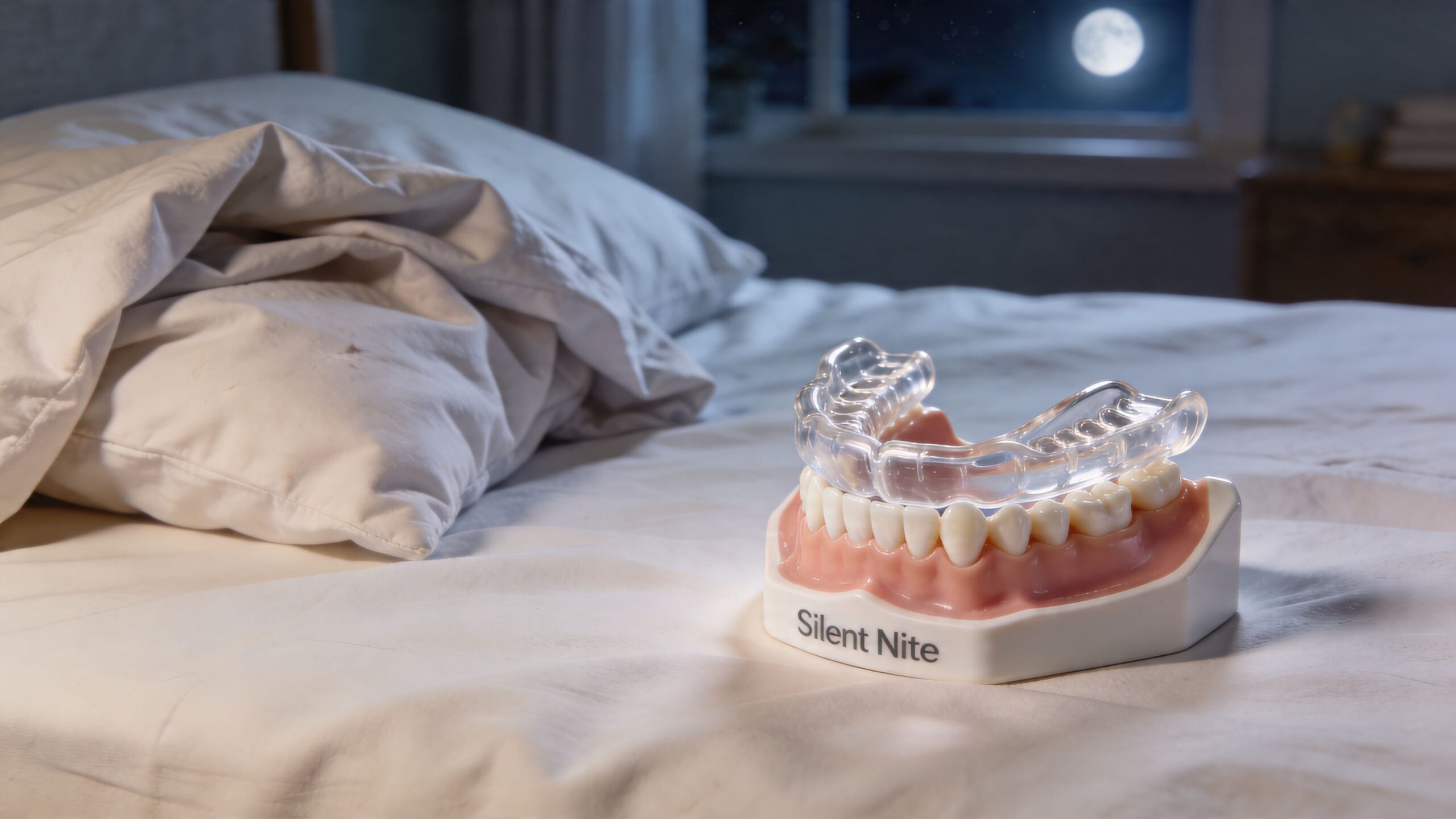
The Silent Nite oral appliance is a custom-made dental device prescribed for adults who snore or have mild to moderate obstructive sleep apnea. You wear it while you sleep. It doesn't plug in, it doesn't make noise, and it doesn't cover your face.
What it is, and what it isn't
It helps to think of this appliance as a medical treatment delivered through dentistry. It's not the same as a sports mouthguard, and it isn't an over-the-counter anti-snoring gadget. It's made from models or scans of your teeth so it fits your bite and supports a planned jaw position during sleep.
The device has a long track record. The Silent Nite appliance was introduced in 1996, has over 25 years of proven clinical use, and has been prescribed in more than 400,000 units worldwide. It is FDA-cleared for patients 18 and older and showed a 78% reduction in snoring frequency after one month of regular use in the product data shared by Riverside Dental Ceramics on Silent Nite.
Why patients are often relieved when they see it
Many people expect sleep apnea treatment to look medical and intimidating. The Silent Nite appliance usually changes that impression right away. It's compact and designed to sit over the teeth, which makes it feel more familiar to dental patients.
Patients often like that it is:
- Custom fabricated for their mouth rather than bought off a shelf
- Small and portable for home use and travel
- Quiet in use, with no bedside noise
- Made for adult patients who need a prescribed option for snoring or mild to moderate obstructive sleep apnea
Practical rule: If a sleep appliance seems generic, one-size-fits-all, or sold without a proper evaluation, it isn't the same thing as a professionally prescribed Silent Nite device.
Why a custom fit matters
Comfort and retention matter because you only benefit from a treatment you can use night after night. A well-made oral appliance should fit securely enough to stay in place while still feeling manageable.
That custom approach also fits naturally into broader dental care. If you're also dealing with worn teeth, missing restorations, TMJ symptoms, or you're due for preventive care, a dentist who already provides dental care, restorative dentistry, cosmetic dentistry, and even services like tooth extraction or an emergency dentist evaluation can look at the whole picture before moving ahead.
How the Silent Nite Device Restores Quiet Nights
The Silent Nite oral appliance works by physically changing the space in your airway during sleep. It gently holds your lower jaw slightly forward, which helps keep the tongue and surrounding soft tissues from settling backward into the throat.
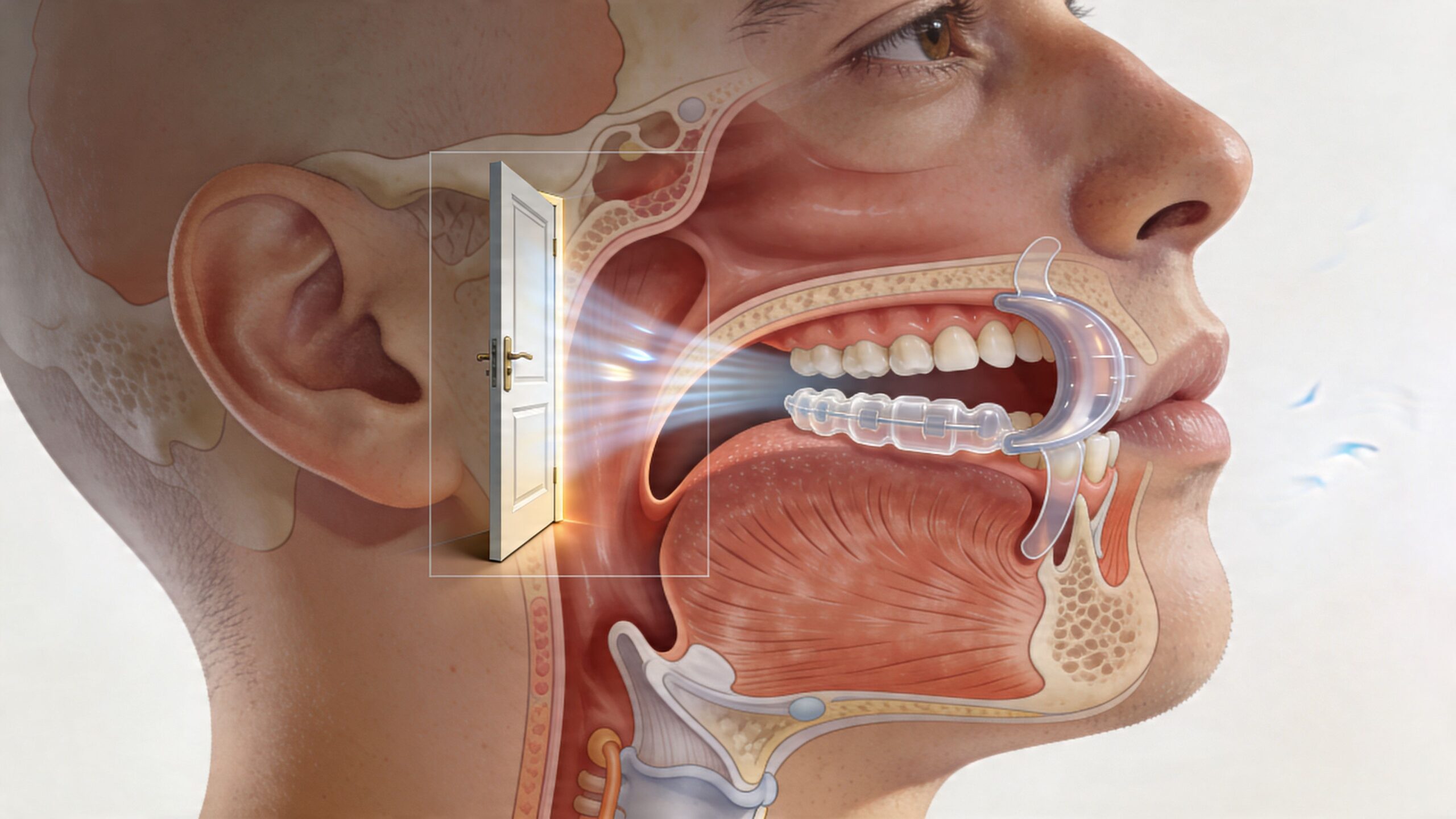
For many patients, that small shift is the difference between noisy, broken sleep and steadier breathing. The goal is not to force the jaw into an extreme position. The goal is to create enough room for air to move more freely while you sleep.
What changes once you fall asleep
During the day, the muscles of the mouth and throat help support the airway. At night, those muscles relax. If the lower jaw drops back, the tongue usually follows. That can narrow the airway and set off the chain reaction behind snoring and some forms of obstructive sleep apnea.
Here is what often happens:
- The jaw settles backward during sleep.
- The tongue and soft tissues move with it.
- The airway becomes narrower.
- Air starts to vibrate the tissues, causing snoring, or airflow drops enough to disturb breathing.
The appliance helps interrupt that pattern before it turns into repeated sleep disruption.
Why a small forward position can help so much
A lot of patients hear "moving the jaw forward" and picture something dramatic. It is usually much more controlled than that. In practice, we are making a measured adjustment, similar to fine-tuning the position of a door so it closes properly instead of sticking.
According to the product guide from Glidewell on Silent Nite biomechanics, the appliance uses connectors that can be adjusted in 0.5mm increments. That matters because sleep treatment should be customized, not guessed.
At our Bellaire practice, this is a big part of the patient journey. We do not just hand you a device and hope for the best. We evaluate how your bite fits together, how your jaw moves, and how your teeth can support the appliance. Then we adjust the position over time based on comfort, symptom improvement, and any bite changes that show up after regular use.
Why careful calibration matters
Two patients can have similar snoring complaints and need very different settings. One person may improve with a very modest adjustment. Another may need a little more advancement, but only after confirming the first setting feels stable and wearable.
That follow-up process is easy to overlook, but it matters in daily life. If an appliance is too aggressive, patients may wake up sore or stop using it. If it does not advance the jaw enough, the snoring may continue. The best result usually comes from measured adjustments, clear follow-up, and a dentist who watches both airway improvement and bite health over time.
This short video gives a helpful visual overview of how oral appliance therapy works in practice.
The best sleep appliance is the one that keeps the airway more stable and feels comfortable enough to wear consistently.
Is a Silent Nite Appliance the Right Choice for You
Not everyone who snores needs the same treatment. Some people are strong candidates for a silent night oral appliance. Others need a different plan. Knowing the difference protects your health and helps you avoid wasting time on the wrong solution.
Good candidates often notice a familiar pattern
This appliance is indicated for adults 18 and older with mild to moderate obstructive sleep apnea, and it can also help adults with chronic snoring when the airway is the issue. If you've already had a sleep study, that result plays a major role in deciding whether oral appliance therapy fits your case.
You may be a reasonable candidate if:
- You snore regularly and your sleep is affecting your household
- You've been diagnosed with mild to moderate OSA
- You want an alternative to CPAP that feels easier to wear
- You travel often and want something simpler to carry
- You have healthy enough teeth and gums to support the appliance
Some patients should not use this device
Careful screening matters. The Silent Nite appliance is not for everyone. According to the manufacturer instructions summarized in Glidewell’s Silent Nite IFU, key contraindications include central sleep apnea, severe respiratory disorders, loose teeth, and advanced periodontal disease.
That list tells you something important. A proper provider shouldn't hand out oral appliances to every snoring patient. The device places ongoing force on the teeth and jaws, so the mouth itself has to be healthy enough for treatment.
The dental exam matters as much as the sleep diagnosis
A sleep study tells you whether obstructive sleep apnea is present and how serious it is. A dental exam tells you whether your mouth can safely support treatment.
A thorough evaluation usually looks at:
- Tooth stability so the appliance has solid support
- Gum health because advanced periodontal disease can worsen under force
- Jaw joints and muscles if you already have TMJ symptoms
- Bite relationship so changes can be monitored over time
Safety starts with saying no when a treatment isn't appropriate. That's one reason proper screening matters so much.
If you're still early in the process, don't worry if you don't know whether you qualify yet. That's normal. The right next step is evaluation, not guessing.
Your Journey to Better Sleep at Our Bellaire Dental Office
Most patients feel better once they know what the process looks like. Sleep treatment sounds complicated from the outside, but the journey is usually straightforward when it's organized carefully.
The first visit focuses on your story
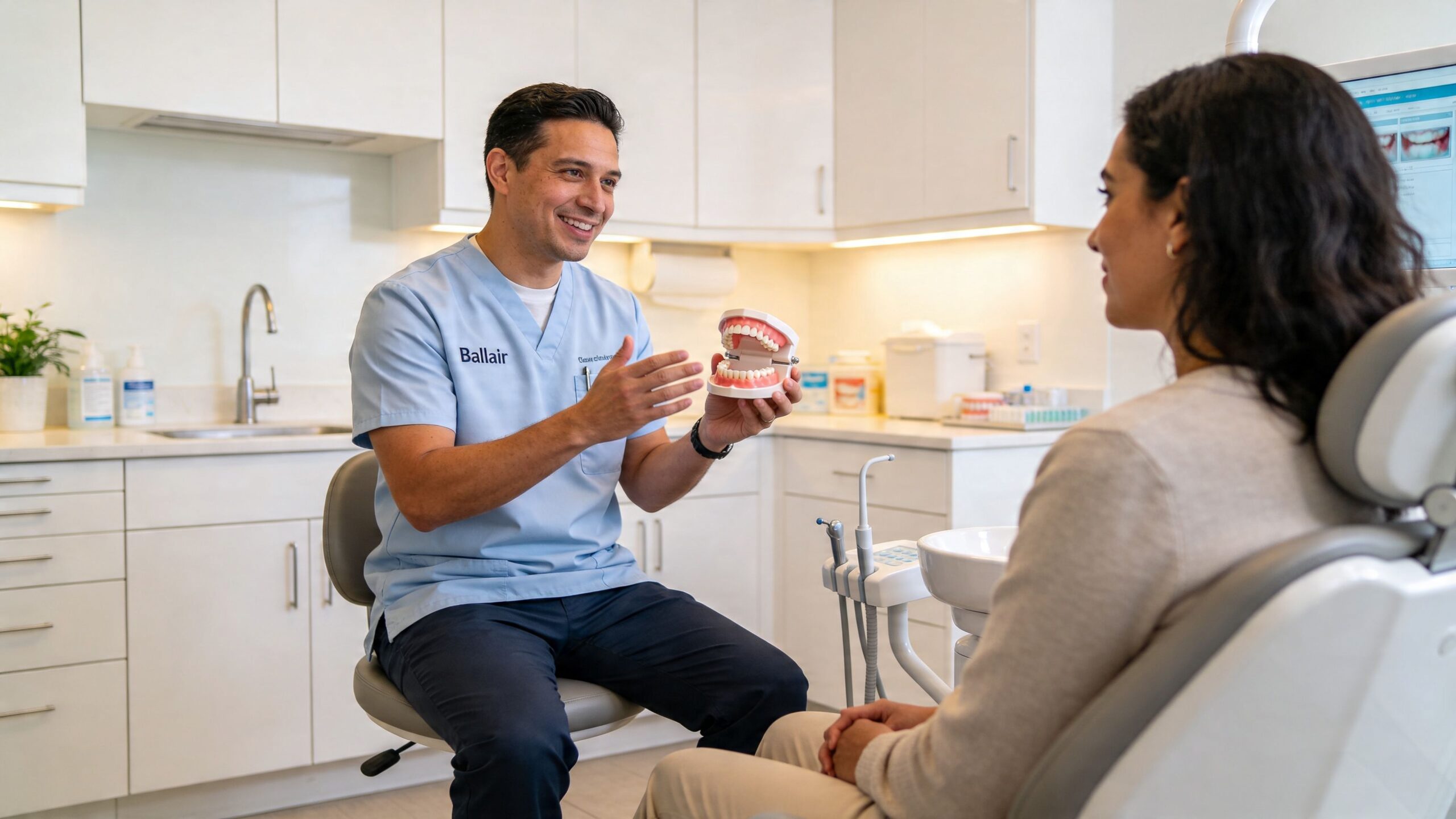
The appointment starts with questions, not impressions. Patients talk about snoring, fatigue, dry mouth, restless sleep, jaw tightness, or frustration with a prior treatment. If a partner has noticed gasping or pauses in breathing, that matters too.
This is also where many people realize their sleep issue overlaps with dental concerns. Someone may come in looking for a dentist near me because they need a new patient exam, but the conversation reveals headaches, clenching, worn teeth, or interrupted sleep. Those details help shape a more complete plan.
The exam looks beyond the obvious
A proper workup doesn't stop at the complaint. The mouth, joints, bite, and airway all need attention. In a modern office setting, this often includes digital x-rays, a close review of the teeth and gums, and an assessment of TMJ function and bite stability.
That matters because successful oral appliance therapy depends on more than just having snoring. You need teeth and periodontal support that can handle the appliance, and any existing jaw concerns should be noted before treatment starts.
Digital records help create a more precise fit
Once you're a candidate, records are taken for the appliance. Many patients are relieved to learn this doesn't have to mean old-fashioned messy trays. Digital workflows can make the process cleaner and more comfortable.
The records are used to fabricate an appliance that matches your bite and planned jaw position. If you'd like a more focused overview of this kind of care, the practice’s page on dental sleep medicine in Bellaire gives a helpful picture of how oral appliance therapy fits into integrated treatment.
Delivery is only the beginning
When the appliance is ready, you don't just receive it in a box and head home. The fitting visit matters. The appliance is checked for fit, retention, and comfort, and you’re shown how to place it, remove it, clean it, and store it.
Follow-up visits are where a lot of success happens. If the fit feels too tight, if the jaw feels tired in the morning, or if snoring has improved but not enough, adjustments can be made thoughtfully.
A strong patient experience often starts long before treatment with trust, communication, and clear expectations. For patients comparing providers online, resources about Dental Reputation Management can also be useful because they explain how dental practices build and maintain credible patient feedback in a way that's easier to evaluate.
What patients can usually expect at each stage
| Visit stage | What happens |
|---|---|
| Consultation | Review symptoms, sleep history, and goals |
| Comprehensive exam | Assess teeth, gums, bite, TMJ, and imaging needs |
| Records appointment | Gather digital impressions or models for fabrication |
| Delivery visit | Check fit, give instructions, confirm wear protocol |
| Follow-up care | Fine-tune comfort, monitor progress, address concerns |
Silent Nite vs CPAP A Patient-Focused Comparison
For many adults with sleep-disordered breathing, the actual question isn't whether treatment matters. It's which treatment they can live with night after night.
Why these two options are compared so often
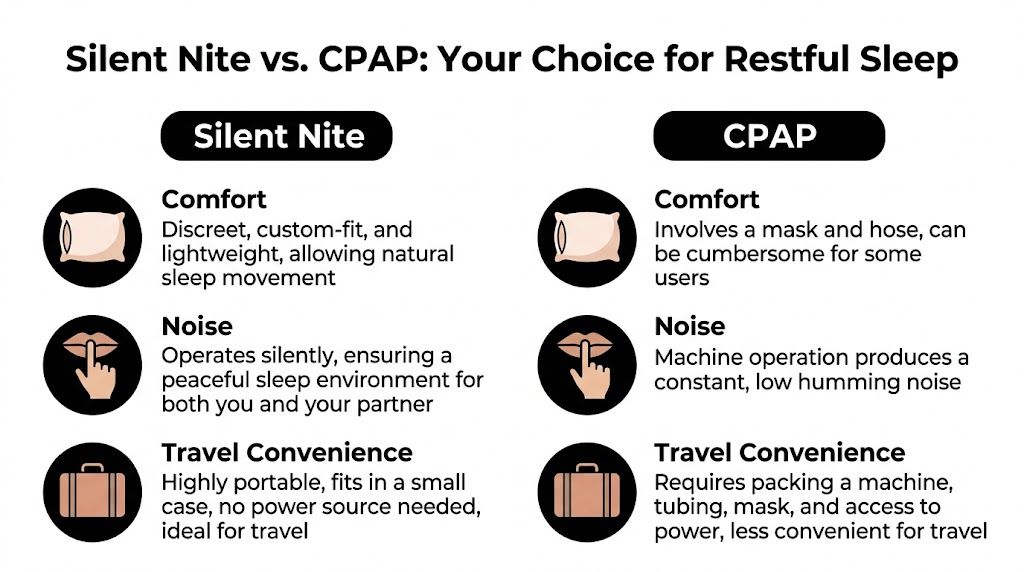
CPAP and oral appliance therapy both aim to help people sleep with a more stable airway. They do it in very different ways. CPAP uses air pressure delivered through a mask. The silent night oral appliance uses jaw positioning inside the mouth.
The best choice depends on diagnosis, severity, anatomy, comfort, and what a patient will use consistently. In mild to moderate cases, that last point matters a lot.
According to a review discussing similar mandibular advancement devices, 81% of users preferred oral appliances over CPAP, and long-term adherence for devices like Silent Nite can reach 90% over 2.5 years. That same review notes lower compliance is commonly associated with CPAP use. Those figures appear in Pixoneye’s Silent Nite review.
Day-to-day differences patients usually care about most
Some patients focus on medical terminology. Most focus on real life.
Comfort
A custom oral appliance is compact and sits inside the mouth. CPAP requires a mask and tubing. Some patients adapt well to that setup. Others never feel settled with it.Noise
The oral appliance is silent. CPAP machines produce machine noise, even when functioning normally.Travel
The oral appliance is easy to pack and doesn't need power. CPAP travel involves equipment, accessories, and reliable electricity.Sleep position
Many oral appliance users like that they can move more freely in bed without dealing with a mask seal.
A treatment only helps when it becomes part of your real nightly routine.
A balanced look at the trade-offs
This isn't a contest with one winner for every person. CPAP remains a common choice, especially when sleep apnea is more severe or when a physician recommends it based on the sleep study.
A simple side-by-side view helps:
| Question | Silent Nite oral appliance | CPAP |
|---|---|---|
| What does it involve? | A custom dental device worn during sleep | A bedside machine with mask and tubing |
| What is it like to travel with? | Small case, no power needed | More equipment, power needed |
| What does a partner notice? | Quiet use | Ongoing machine sound |
| Who may prefer it? | Patients wanting a compact option | Patients who do well with mask-based therapy |
If you're comparing options in a practical way, this page on sleep apnea oral appliance vs CPAP is a useful next read.
Long-Term Success Living With Your Oral Appliance
The first week with an oral appliance is only the start. Long-term success depends on routine, maintenance, and knowing what's normal versus what needs attention.
Daily habits that make treatment easier
A clean appliance feels better and tends to hold up better. Most patients do well with a simple morning routine: remove the device, rinse it, clean it gently as instructed, and let it dry or store it in its case.
Helpful habits include:
- Clean it every morning so buildup doesn't accumulate
- Store it in its case instead of wrapping it in a tissue or leaving it on the counter
- Keep it away from heat because shape matters for fit
- Bring it to follow-up visits so fit and wear can be checked
- Pack it for travel just like you would a retainer or medication
The bite question patients often ask late
One concern deserves more attention than it usually gets. Over time, some patients can notice changes in how their bite feels in the morning. That's a known issue with oral appliance therapy, and it's one reason follow-up care matters.
The good news is that this side effect is manageable. As explained in New West Dental Lab’s overview of the AM Aligner and bite protection, a common but manageable side effect of long-term oral appliance use is a potential change in occlusion, and the AM Aligner is important because it helps guide the jaw back to its natural position each morning.
Morning check: If your bite feels "off" when you remove the appliance, don't ignore it. Use the AM Aligner as directed and mention the change at your follow-up visit.
What to do if something feels different
You shouldn't try to self-adjust a prescribed appliance. If it suddenly feels loose, if one side seats differently, or if jaw soreness lasts beyond the expected adjustment period, it needs professional review.
Your dentist may evaluate:
- Fit changes from wear or dental changes
- Bite shifts that need monitoring
- Jaw muscle fatigue if the starting position needs refinement
- Dental work changes such as a new crown, filling, or other restorative treatment
This is also why ongoing general dental care matters. If you later need a crown, restorative treatment, or even an urgent visit with an emergency dentist, the appliance should remain part of the conversation so it continues to fit your mouth properly.
Your Questions About Silent Nite Answered
How long does a Silent Nite appliance last?
Its lifespan depends on fit, home care, grinding habits, and how consistently you use it. Some appliances last well with careful maintenance, while others need replacement sooner if they undergo heavy wear. Your dentist checks for wear at follow-up visits instead of guessing from age alone.
Will it be uncomfortable at first?
Many patients notice an adjustment period. That doesn't necessarily mean the appliance is wrong. A feeling of tightness, extra saliva, or mild morning jaw stiffness can happen early on, then improve as you adapt and the fit is refined.
Can I talk or drink water with it in?
You can usually speak a little, but it won't feel like speaking normally. Since it's meant for sleep, it's typically put in when you're ready for bed. Small sips of water are generally manageable, but you won't want to wear it as an all-evening appliance while chatting or snacking.
What if I grind my teeth or have TMJ symptoms?
That doesn't automatically rule you out, but it does mean the evaluation should be careful. Existing muscle tension, jaw soreness, or joint clicking can affect how the appliance is designed and monitored. This is one reason a provider with TMJ experience can be valuable.
What happens if I need other dental work later?
Tell your dentist before and after major dental changes. A new crown, filling, extraction, or other restorative work can affect fit. The appliance may need to be checked or updated so it continues to seat properly.
Does insurance ever help with oral appliance therapy?
Coverage varies by medical plan and documentation requirements. Some patients also ask about Medicare-related billing pathways for approved devices. The office team can usually help review benefits, required records, and next steps so you have a clearer picture before moving forward.
Is this only for sleep apnea patients?
No. Some adults seek care mainly because of snoring that disrupts the household. Others come in after a sleep study confirms mild to moderate obstructive sleep apnea. The right starting point is diagnosis and screening, not self-labeling.
If you're ready to stop snoring, explore treatment for mild to moderate sleep apnea, or want a more comfortable alternative to a bedside machine, Charles E. Boren offers advanced, patient-centered care for adults in Bellaire, West University, and Houston. Schedule a consultation to find out whether a custom silent night oral appliance is the right fit for your sleep, your health, and your daily life.