
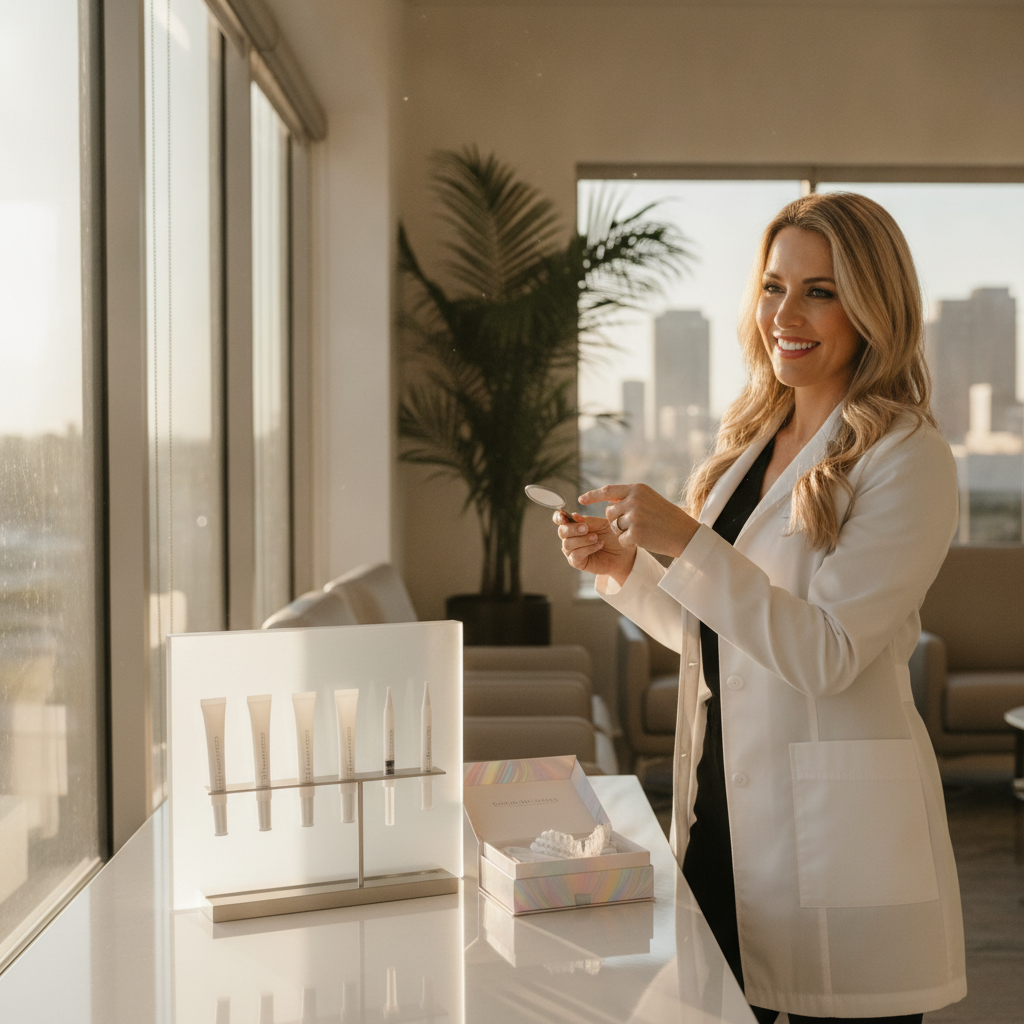
What Is Opalescence Teeth Whitening — and Why Are Bellaire Patients Getting Better Results Than They Expected?
Opalescence is a professional-grade teeth whitening system that dentists have used for decades — and it consistently delivers results that over-the-counter strips and trays simply cannot match. For patients in Bellaire, West University Place, and the surrounding Houston area, it’s one of the most popular cosmetic services we offer, not because of marketing, but because it works. Whether you’re preparing for a big event, bothered by years of coffee and wine staining, or just want your smile to look as healthy as you feel, Opalescence gives us a reliable, customizable way to get you there without guesswork.
- How Opalescence Is Different From What You Buy at the Drugstore
- Two Ways to Use Opalescence: In-Office and Take-Home
- Who Gets the Best Results — and Who Should Ask a Few More Questions First
- What Most Competitor Sites Aren't Telling You: Whitening and Sensitivity
- How Long Do Results Last — and What Affects Them in Real Life?
- Frequently Asked Questions About Opalescence Whitening in Bellaire
- Ready to See What Your Smile Actually Looks Like Without the Staining?
How Opalescence Is Different From What You Buy at the Drugstore
Most whitening products you find at a pharmacy contain hydrogen peroxide in concentrations somewhere between 3% and 10%. They’re designed to be safe for anyone to use without supervision, which means they’re intentionally mild. Opalescence professional whitening uses prescription-strength formulas that range from about 10% to 45% carbamide or hydrogen peroxide depending on the treatment type — giving your teeth real access to deep, intrinsic staining that surface-level strips never reach.
There’s another difference that patients often overlook: custom fit. When you use a one-size-fits-all whitening tray from a store, the gel doesn’t stay in full contact with your teeth the way a custom tray does. It pools, slips, and often ends up irritating your gums more than it whitens your teeth. With Opalescence take-home trays made from impressions of your actual mouth, the gel sits exactly where it needs to, for exactly as long as it should. That precision matters more than most people realize.
Two Ways to Use Opalescence: In-Office and Take-Home
One thing that makes Opalescence stand out among professional whitening systems is that it gives both patients and dentists real flexibility. Depending on your schedule, your goals, and how sensitive your teeth are, there’s likely a version that fits your life.
Opalescence Boost (In-Office Treatment)
If you want a noticeable difference in a single appointment, Opalescence Boost is the in-office option. It’s a 40% hydrogen peroxide gel applied directly by your dentist — no light or laser required, which is actually a good thing. Research consistently shows that whitening lights don’t improve results; they mostly add cost and marketing appeal. Opalescence Boost skips the theater and focuses on the chemistry. Most patients see meaningful whitening within about an hour.
Opalescence Take-Home Trays
For patients who prefer to whiten on their own schedule — or who have teeth that respond better to slower, gentler treatment — the take-home system is often a better fit. You’ll wear custom trays for a set amount of time each day (anywhere from 30 minutes to overnight, depending on the concentration prescribed), typically over one to two weeks. Many patients actually prefer this approach because the gradual process tends to feel more comfortable, especially if you’ve had sensitivity issues with whitening in the past.
The two approaches can also be combined. Some patients start with an in-office session for immediate results and then use take-home trays to maintain and refine their shade over time.
Who Gets the Best Results — and Who Should Ask a Few More Questions First
Opalescence works beautifully on natural tooth enamel that has yellowed or stained over time from food, beverages, aging, or tobacco. Coffee, tea, red wine, and years of ordinary use are exactly what it’s designed to address. If your discoloration fits that description, the results tend to be genuinely impressive.
There are a few situations where whitening alone won’t give you what you’re hoping for, and a good dentist will tell you that before you spend money on a treatment that won’t solve your problem:
- Intrinsic staining from tetracycline antibiotics or fluorosis can be resistant to peroxide whitening. These stains are baked into the structure of the tooth, not sitting on the surface. Whitening may improve the appearance somewhat, but veneers or other cosmetic options often do more.
- Crowns, veneers, and bonding don’t respond to whitening gel the same way natural enamel does. If you have visible restorations in your smile zone, whitening your natural teeth may actually create a mismatch you weren’t expecting.
- Active cavities or gum disease should be addressed before whitening. Applying a concentrated gel over a tooth with decay or inflamed gum tissue is uncomfortable and can make underlying problems worse.
This is why the first step isn’t picking a whitening product — it’s having a conversation with a dentist who can look at your actual teeth and tell you what’s realistic. Our cosmetic dentistry services include a full evaluation before any whitening treatment so you know exactly what to expect going in.
What Most Competitor Sites Aren’t Telling You: Whitening and Sensitivity
If you’ve looked around at other dental websites in the Houston area, you may have noticed that teeth whitening pages tend to be short on details — especially when it comes to sensitivity. It gets mentioned briefly, usually with a reassuring sentence or two, and then the subject changes. That’s a gap worth filling, because sensitivity is the number one reason patients either quit whitening early or avoid it altogether.
Here’s what actually helps: Opalescence formulas include potassium nitrate and fluoride as part of the gel itself — not as a separate afterthought. These ingredients actively work to reduce sensitivity during treatment and strengthen enamel as you go. Patients who struggled with sensitivity using other whitening systems are often surprised by how much more manageable Opalescence feels.
If you know sensitivity is a concern for you, mention it before treatment starts. Lower-concentration formulas worn for longer periods tend to be gentler than higher-concentration short-contact applications. There’s a real dial here, and a dentist who takes time to understand your history can find the right setting for your teeth specifically.
How Long Do Results Last — and What Affects Them in Real Life?
Professional whitening results aren’t permanent, but they’re not fragile either. Most patients in Bellaire and Meyerland who treat their teeth well see results that hold for one to three years before they want to touch up. A few factors shorten that window: heavy coffee or tea consumption, red wine, smoking, and just the natural aging process of enamel.
The smartest long-term strategy is to hold onto your custom trays. Opalescence touch-up gel is available through our office, so when you notice your shade starting to drift after a year or so, you can do a brief round of maintenance whitening without starting over. It’s a much smaller commitment once the initial treatment is done — and it’s far less expensive than repeating the full process from scratch.
Frequently Asked Questions About Opalescence Whitening in Bellaire
Is Opalescence safe for my teeth?
Yes — when used as directed under professional supervision. The formula includes ingredients specifically designed to protect enamel and reduce sensitivity. The key is starting with a dental evaluation to make sure whitening is appropriate for your specific teeth and gum health.
How much does professional whitening cost compared to store-bought options?
Professional whitening through a dentist costs more upfront than drugstore products, though the range varies depending on whether you choose in-office or take-home treatment. We’re happy to discuss your specific options and pricing during a consultation. Many patients find the results are significantly better, and the longevity of professional whitening makes the cost difference feel smaller over time.
Can I whiten my teeth if I have veneers or crowns?
Whitening gel doesn’t change the color of dental restorations. If you have crowns or veneers in visible areas of your smile, it’s worth discussing this with your dentist before whitening so you can plan around any potential color mismatch. In some cases, whitening the natural teeth first is part of a larger cosmetic plan.
Will whitening work on my coffee or wine stains?
In most cases, yes. Surface staining from beverages, food, and tobacco responds very well to professional whitening. Deeper structural staining may require a different approach, which is something we’d identify before starting treatment.
Do you offer whitening for patients who’ve had sensitivity problems before?
Absolutely. We see patients from West University Place, Southside Place, and all around the Houston area who’ve had frustrating experiences with sensitivity from other whitening products. Opalescence’s built-in desensitizing ingredients make a real difference, and we can also adjust the concentration and wear schedule to find what’s comfortable for you.
Ready to See What Your Smile Actually Looks Like Without the Staining?
Dr. Boren has been serving patients in the Bellaire area for decades, and whitening consultations are one of the most straightforward conversations we have — no pressure, no overselling, just an honest look at your teeth and a clear explanation of what’s possible. Learn more about Dr. Boren and the practice, or when you’re ready to talk about your smile, reach out to schedule a consultation. We’re right here in Bellaire, and we’d be glad to help.