
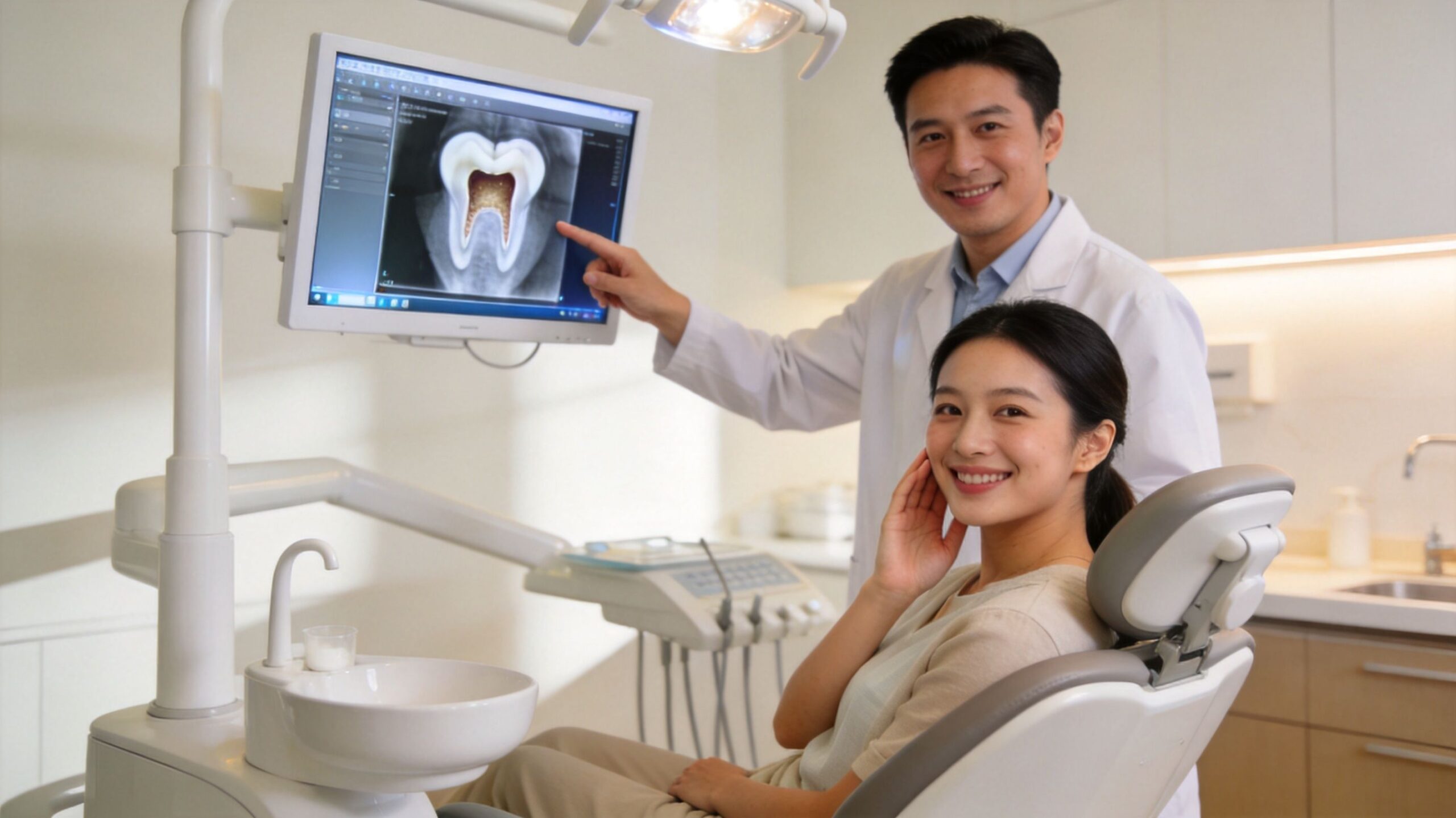
You get home after a tooth extraction, keep waiting for the soreness to start, and then nothing much happens. That can feel oddly unsettling. Many patients expect a difficult recovery, so when they have little or no discomfort, they wonder if something is wrong.
Most of the time, it isn't. In many cases, no pain after tooth extraction is exactly what careful treatment and good healing are supposed to look like. For people searching for a dentist in Bellaire, TX, an emergency dentist, or help with a recent tooth extraction, it helps to understand what a normal recovery really looks like.
- Is It Normal to Have No Pain After a Tooth Extraction?
- Why You Might Feel Fine After Your Tooth Extraction
- Your Healing Timeline After a Tooth Extraction
- Proactive Aftercare for a Comfortable Recovery
- Warning Signs That Require a Dentist's Attention
- Experience Advanced Gentle Dentistry in Bellaire TX
Is It Normal to Have No Pain After a Tooth Extraction?
Yes. It can be completely normal to have very little pain, or even no pain, after an extraction.
A common pattern goes like this. A patient braces for a miserable evening, picks up soft foods, fills the ice pack, and plans to clear the schedule. Then the numbness wears off and the expected pain never really shows up. Instead of relief, they feel suspicious. They think, “Shouldn't this hurt more?”
Why a painless recovery can be a good sign
Modern dentistry is designed to make extractions as comfortable as possible. Good anesthesia, gentle technique, and clear aftercare all work together to reduce tissue irritation and support smooth healing. When those pieces line up well, a calm recovery is not unusual.
A 2023 study in BMC Oral Health found that 22% of males and 4% of females reported no pain whatsoever after a dental extraction. That doesn't mean every patient will feel the same, but it does show that a comfortable recovery is more common than many people expect.
No pain doesn't automatically mean something was missed. Often, it means the procedure was controlled, the area was protected, and your body is healing well.
Some patients also confuse lingering numbness with healing problems. If that's what you're wondering about, this guide on how long numbing lasts after tooth extraction can help you sort out what's typical.
What people often misunderstand
Patients usually expect recovery to feel dramatic. In reality, healing can be surprisingly quiet.
A few examples are common:
- Mild pressure but no true pain: You may notice the area feels “different” without hurting.
- Tenderness only when chewing nearby: The site can be sensitive without signaling a problem.
- No pain, but some swelling: Swelling and pain don't always rise together.
If the extraction site is calm, bleeding is controlled, and you're feeling better rather than worse, that usually points in the right direction. For many patients, “I feel fine” is not a warning sign. It's a sign that treatment and healing are going well.
Why You Might Feel Fine After Your Tooth Extraction
A smooth recovery usually isn't luck. It often comes from a combination of effective anesthesia, precise treatment, and the body's natural ability to heal when the area isn't overly disturbed.
A 2022 clinical study published in Frontiers in Dental Medicine reported an average pain rating of 3.66 out of 10 over the first three days after extraction, and 91% of patients said their dentist prepared them well for pain management. That supports what many patients now experience in practice. Minimal discomfort is often the standard, not the exception.
Modern numbing works well
Today's local anesthetics are designed to create a reliable nerve block at the treatment site. They act quickly, last for hours, and help prevent pain from building during and immediately after the procedure. Many patients feel pressure during an extraction, but not sharp pain.
That difference matters. Pressure can feel strange, but it isn't the same as pain.
Gentle technique changes recovery
The way a tooth is removed affects how you feel afterward. When a dentist uses a careful, minimally invasive approach, there is often less disruption to the surrounding gum and bone. Less trauma usually means less inflammation, and less inflammation often means less soreness later.
For patients in Bellaire, West University, and Houston looking for a dentist near me, this is one of the most important things to understand. Recovery doesn't depend only on the tooth itself. It also depends on how precisely the extraction is planned and performed, often with tools like digital x-rays, magnification, and strong lighting that help the dentist work with more control.
Your body may simply be doing its job well
Once the tooth is out, your body starts repairing the area right away. A healthy blood clot forms in the socket and protects the site while new tissue develops underneath. If that process stays undisturbed, healing can be quieter than patients expect.
Practical rule: The less irritation the site experiences during and after the extraction, the more likely you are to have a comfortable recovery.
That's one reason aftercare matters so much. A well-done extraction gives you a strong start. Good home care helps protect that start.
Your Healing Timeline After a Tooth Extraction
Individual experiences improve when there is a clear understanding of the process. Recovery after an extraction usually follows a steady pattern, even when discomfort is mild or absent.
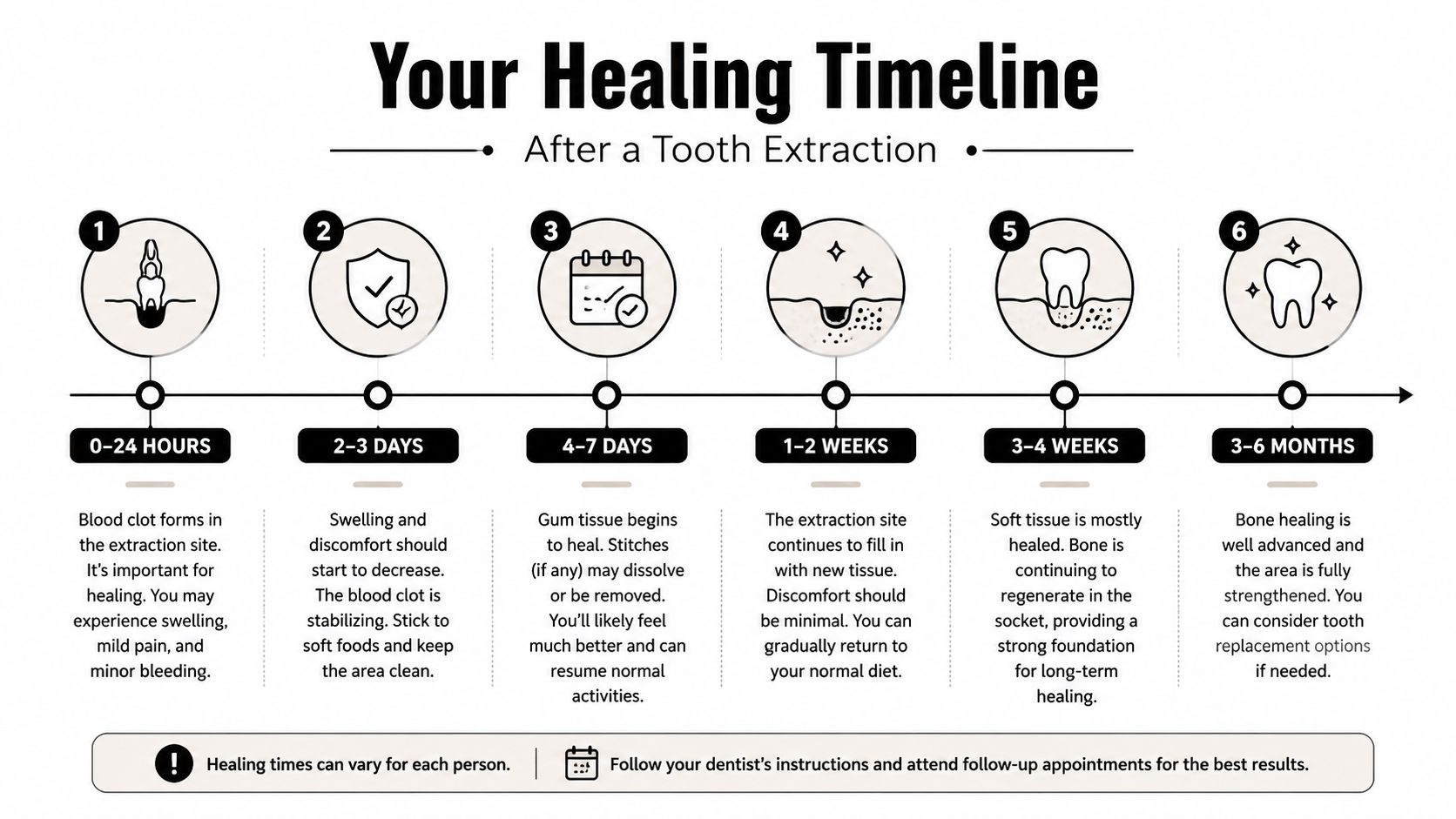
According to clinical guidance from Cleveland Clinic, post-extraction discomfort typically peaks around day three as swelling reaches its maximum, then significantly subsides by days 4 to 7. That timing helps explain why some patients feel almost nothing at first, while others notice the area more on the second or third day.
The first day
During the first several hours, numbness may still be present. Once it wears off, you might feel tenderness, pressure, or very mild throbbing. Some patients feel almost nothing at all.
The main event on day one is clot formation. That clot protects the socket. If it stays in place, healing gets off to a strong start.
Days two and three
This is often the phase that confuses patients. They assume that if pain is coming, it should start immediately. But swelling often increases before it starts decreasing, so the area may feel more noticeable on these days than it did the first evening.
An uncomplicated way to view this:
| Time | What you may notice | What it usually means |
|---|---|---|
| First 24 hours | Numbness fading, mild bleeding, little or mild soreness | Early healing begins |
| Days 2 to 3 | More awareness of swelling or tenderness | Normal inflammatory response |
| Days 4 to 7 | Less swelling, less soreness, easier eating | Recovery is moving forward |
If you still have no pain after tooth extraction during this stretch, that can still be normal. Healing doesn't have to be dramatic to be real.
The rest of the first week
By this point, the site usually starts settling down. Swelling often eases. The socket remains delicate, but most patients feel more comfortable and more confident.
A normal recovery usually trends in one direction. Better each day, even if it isn't perfectly linear.
The body moves through a sequence of healing stages, beginning with bleeding, then clot formation, then clot integration, then tissue filling the socket, and finally gum healing over time. That's why the area can look unusual before it looks normal. Appearance and pain don't always match.
For patients planning dental implants near me after an extraction, this timeline matters too. A healthy early healing phase helps set the stage for whatever restorative dentistry comes next.
Proactive Aftercare for a Comfortable Recovery
A comfortable recovery isn't only about what happened in the chair. It also depends on what you do once you get home.

Patients do best when they follow instructions before pain shows up, not after it becomes a problem. If you tend to forget details once you leave an appointment, it helps to review your notes later. A plain-language guide to understanding follow-up instructions and visit notes can make that much easier.
The habits that protect the blood clot
The first goal is simple. Protect the extraction site so the clot stays stable.
- Rest your mouth: Stick to soft foods and chew away from the extraction area.
- Use ice correctly: Apply it on and off as directed during the early phase to help with swelling.
- Skip straws and smoking: Suction and smoke can disturb the clot and slow healing.
- Be careful with gauze: Use it exactly as instructed, and don't keep changing it unnecessarily.
For a more detailed home-care checklist, this page on what not to do after having a tooth extracted is a useful reference.
Small choices that make recovery easier
Many patients think aftercare is mostly about medication. It isn't. Your daily habits matter just as much.
Try to keep things simple:
- Choose soft, cool, easy foods such as yogurt, mashed potatoes, or eggs if your dentist says they're appropriate.
- Brush the rest of your teeth normally but stay gentle around the extraction area.
- Take medications exactly as directed rather than waiting for discomfort to become intense.
- Stay hydrated and give yourself a quieter day than usual.
Protecting the clot is often the difference between a routine recovery and a painful setback.
That approach gives patients the tools they need. It shifts recovery from “I hope this doesn't hurt” to “I know how to keep this healing on track.”
Warning Signs That Require a Dentist's Attention
Reassurance matters, but so does clarity. Some symptoms deserve a call to your dentist, even if the extraction seemed easy at first.
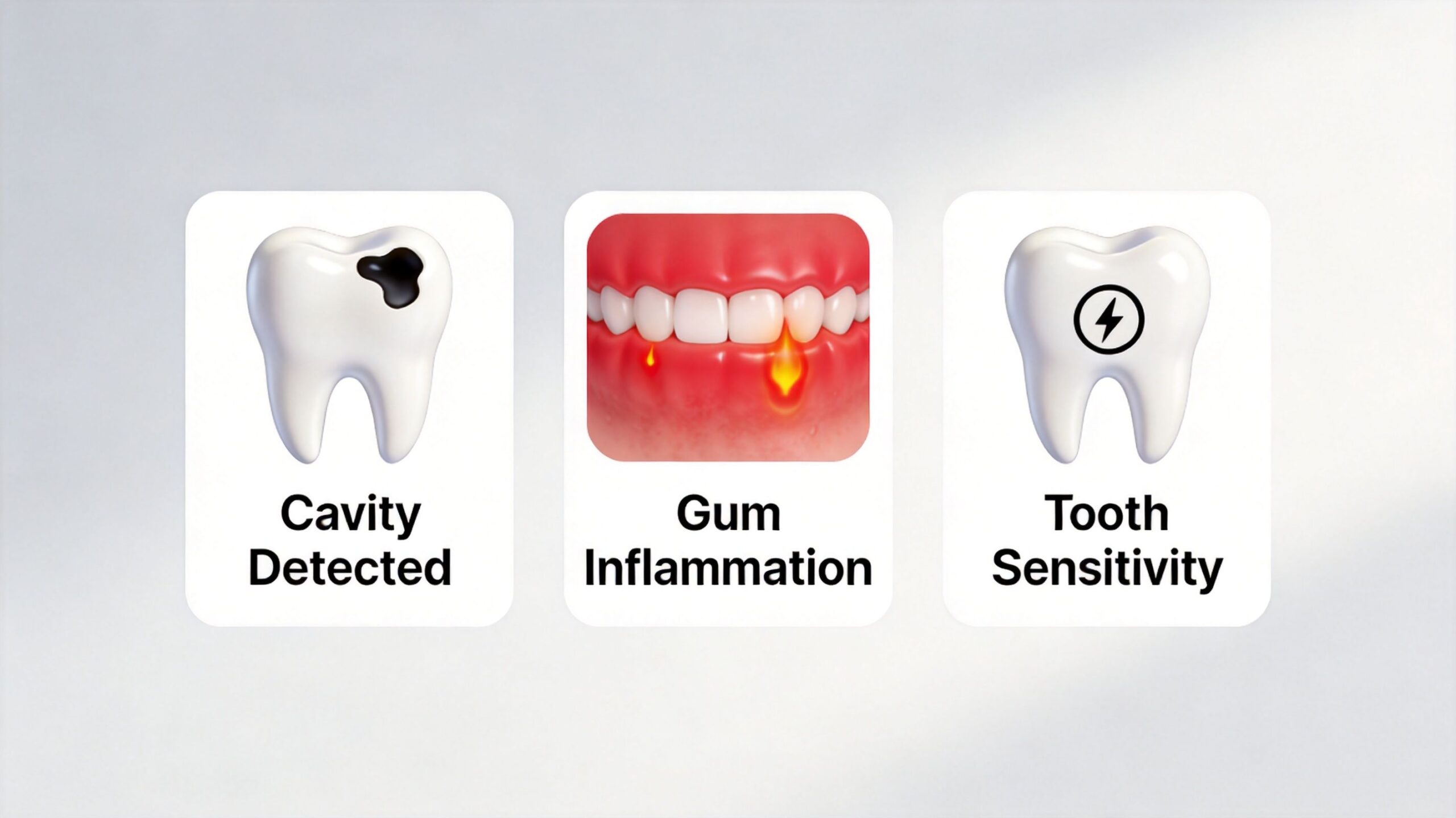
A normal recovery may include mild soreness, light swelling, or tenderness while eating. What isn't normal is a clear turn for the worse after things seemed stable.
Signs that suggest a problem
Call a dentist promptly if you notice any of the following:
- Severe pain that starts or worsens after a few days: This can point to dry socket, especially when the pain feels deep, sharp, or radiates.
- Bleeding that doesn't settle down: Oozing early on can be normal, but persistent bleeding needs attention.
- Fever or feeling unwell: Infection can affect more than just the extraction site.
- Pus, foul taste, or bad odor: These can signal infection or poor healing.
- Swelling that keeps increasing instead of easing: The trend matters. Improvement is expected over time.
What dry socket often feels like
Dry socket is one of the complications patients hear about most, but many aren't sure what it means. In simple terms, the protective clot is lost too early, leaving the socket exposed. That can make the pain feel stronger and more intense than ordinary post-extraction soreness.
It usually does not feel like “a little tender.” Patients often describe it as pain that seems out of proportion to what they expected.
If your discomfort is sharply worsening instead of gradually improving, don't wait it out.
For anyone in Bellaire, West University, or Houston searching for an emergency dentist after an extraction, this is the key point. Mild symptoms can be watched. Escalating symptoms should be evaluated. It's always better to call and ask than to assume a complication will pass on its own.
Experience Advanced Gentle Dentistry in Bellaire TX
The idea that a tooth extraction has to lead to days of misery is outdated. When modern planning, careful technique, and patient-friendly follow-up come together, a comfortable recovery becomes much more realistic.
That same philosophy matters across many services, not only extractions. Patients looking for a dentist near me, cosmetic dentist near me, cleaning and exams, new patient exams, dental x-rays, or restorative care often want the same thing. They want treatment that is precise, understandable, and easier on their body.
Comfort starts before the extraction
Many anxious patients worry most about the procedure itself. That's where sedation can help. According to clinical guidance on painless extraction techniques, nitrous oxide can be combined with long-lasting local anesthetics to eliminate pain during treatment and reduce the stress that can amplify pain perception afterward.
Stress matters more than people realize. A tense patient often braces, worries, and anticipates the worst. A calmer patient usually has a better experience from start to finish.
Why patients value a more modern approach
For adults in Bellaire, TX, and nearby areas, gentle dentistry means more than being “nice.” It means using methods that support accuracy and reduce unnecessary irritation.
That can include:
- Digital imaging: Better visibility supports better planning.
- Minimally invasive techniques: Less tissue disruption often leads to easier healing.
- Clear communication: Patients recover better when they know what's normal.
- Broader care options: Cosmetic dentistry, restorative dentistry, and even planning for future implants all benefit from the same careful approach.
If you're curious how dental practices build trust online before a patient ever books, Transactional LLC's dental marketing insights offer a useful look at how education and patient communication shape that decision.
A good extraction experience shouldn't feel like a surprise. It should feel like the result of thoughtful care. For many patients, no pain after tooth extraction is not odd at all. It's what excellent dentistry is trying to achieve.
If you're looking for a calm, experienced dentist in Bellaire, TX for tooth extraction, emergency dental care, dental implants, or a thorough new patient exam, Charles E. Boren provides advanced, personalized care for patients in Bellaire, West University, and Houston. Schedule an appointment to get answers, feel at ease, and experience dentistry focused on comfort from the very first visit.