

If you're searching for a family dentist Houston residents can rely on, you're probably trying to solve more than one problem at once. You may need cleanings for the kids, help for your own sensitive tooth, a plan for cosmetic work you've put off, or answers about jaw pain, headaches, snoring, or a dental emergency that can't wait.
Most families don't want to bounce between several offices for routine care, cosmetic treatment, restorative work, and comfort-focused visits. They want one dental home that understands their history, explains options clearly, and can treat different needs under one roof in Bellaire, West University, and the greater Houston area.
- Your Trusted Partner for Family Dental Health in Houston
- What a Family Dentist Does for Your Household
- Comprehensive Dental Services for Every Smile
- How Advanced Technology Ensures Better Dental Care
- The Patient Experience at Our Bellaire Dental Office
- Your Guide to Visiting Our Houston Dental Practice
- Frequently Asked Questions About Family Dentistry
Your Trusted Partner for Family Dental Health in Houston
Finding the right dentist for one person is hard enough. Finding one for an entire household is harder. Parents want a dentist who's gentle with children, adults want practical long-term treatment plans, and anxious patients want to know they won't feel rushed or dismissed.
That matters even more in a large city where access can already be tight. Texas ranks 43rd out of 50 states with just 25.94 dentists per 100,000 residents, according to BLS dentist availability data. In a fast-moving area like Houston, that shortage makes consistency valuable. When you find a dentist who knows your family well, it's easier to stay on schedule, catch problems early, and avoid fragmented care.
Why one long-term dental home works better
A true family practice doesn't just clean teeth. It tracks changes over time. A child's bite develops. A teen may become interested in smile alignment. An adult may need a crown, whitening, or treatment for grinding. A grandparent may need a more stable restorative plan.
When those needs stay in one office, the care is more connected.
- History stays clear. Your dentist sees patterns, not just isolated appointments.
- Decisions get simpler. Treatment planning becomes easier when one team understands your goals and past work.
- Comfort improves. Children and nervous adults often do better in a familiar setting.
- Scheduling is more practical. Families can often coordinate visits instead of managing multiple offices.
Practical rule: Choose a dentist who can care for your family over time, not just solve today's immediate problem.
What neighbors in Bellaire and West University usually want
Those seeking a dentist near me aren't searching for a lecture. They want answers to straightforward questions. Can this office handle preventive care, cosmetic needs, and urgent problems? Will they explain treatment in plain language? Can they help if someone in the family is anxious?
Those are the right questions to ask. If you're comparing options, this guide on how to choose a dentist can help you focus on what affects long-term care, from experience and technology to communication and comfort.
For families in Houston, Bellaire, and West University, the strongest choice is usually the practice that combines experience, broad clinical scope, and a calm approach to patient care. That's what keeps small problems from turning into larger ones.
What a Family Dentist Does for Your Household
A family dentist is the oral health version of a primary care doctor. Instead of focusing on one age group or one narrow service, a family practice supports patients across different life stages and different needs.
That means a child can come in for early preventive care, a teenager can get guidance about appearance and alignment, and an adult can address worn teeth, missing teeth, jaw discomfort, or old dental work that no longer fits well. The biggest advantage isn't just convenience. It's continuity.
One practice for different ages and different needs
Families often assume they need separate providers for children, adults, and more advanced concerns. Sometimes specialist referral is appropriate, but many day-to-day dental needs fit comfortably within a family practice.
A household may use one office for:
- Routine cleanings and exams that help prevent decay and gum problems
- Dental x-rays and new patient exams to identify issues before they become painful
- Fillings and crowns when teeth are damaged or weakened
- Cosmetic updates such as teeth whitening, veneers, or clear aligner discussions
- Urgent visits for broken teeth, swelling, or a sudden toothache
- Monitoring habits like clenching, grinding, or airway-related concerns
The benefit is simple. The dentist learns how your family's oral health changes over time and can make recommendations that fit the whole picture, not just one appointment.
Why continuity improves care
When a dentist has seen a patient for years, subtle changes stand out faster. A worn edge on a front tooth, a habit of grinding during stress, or gum inflammation that keeps returning isn't just a one-time note in a chart. It becomes part of a pattern.
That helps in practical ways:
| Household need | What a family dentist provides |
|---|---|
| Young child starting care | Gentle introduction, preventive monitoring, parent guidance |
| Busy parent needing efficient visits | Consolidated care and treatment planning |
| Teen interested in smile improvement | Discussion of appearance, alignment, and oral habits |
| Adult with old restorations | Evaluation of function, wear, comfort, and replacement options |
A good family practice doesn't treat each visit like a reset. It builds on what it already knows about your health, habits, and goals.
Guidance parents can use at home
Family dentistry also includes everyday coaching. Parents often ask about brushing habits, thumb sucking, mouth breathing, sports protection, and when to schedule a child's first dental visit. If you're unsure about timing, this page on what age a child should go to the dentist is a helpful starting point.
Home care products matter too, especially for younger children who may swallow toothpaste. For parents sorting through ingredient labels, this guide to safe toothpaste for kids is a useful outside resource.
The families who do best usually keep things simple. They choose one practice, show up consistently, and ask questions early. That doesn't eliminate every dental issue, but it usually makes problems smaller, easier, and less expensive to manage.
Comprehensive Dental Services for Every Smile
A family may need very different dental care in the same month. A child comes in for a cleaning. A parent wants to replace an old crown that no longer feels right. Another adult in the home keeps waking up with jaw tension, headaches, or loud snoring. One practice should be able to sort through those problems clearly and treat them in a coordinated way.
That matters because oral health is tied to comfort, sleep, appearance, and how well you chew. Over 30 years in practice, I have seen how often those concerns overlap. The patient asking about a brighter smile may also have grinding wear. The patient with a cracked tooth may also have bite strain. The person with morning headaches may need more than a night guard.
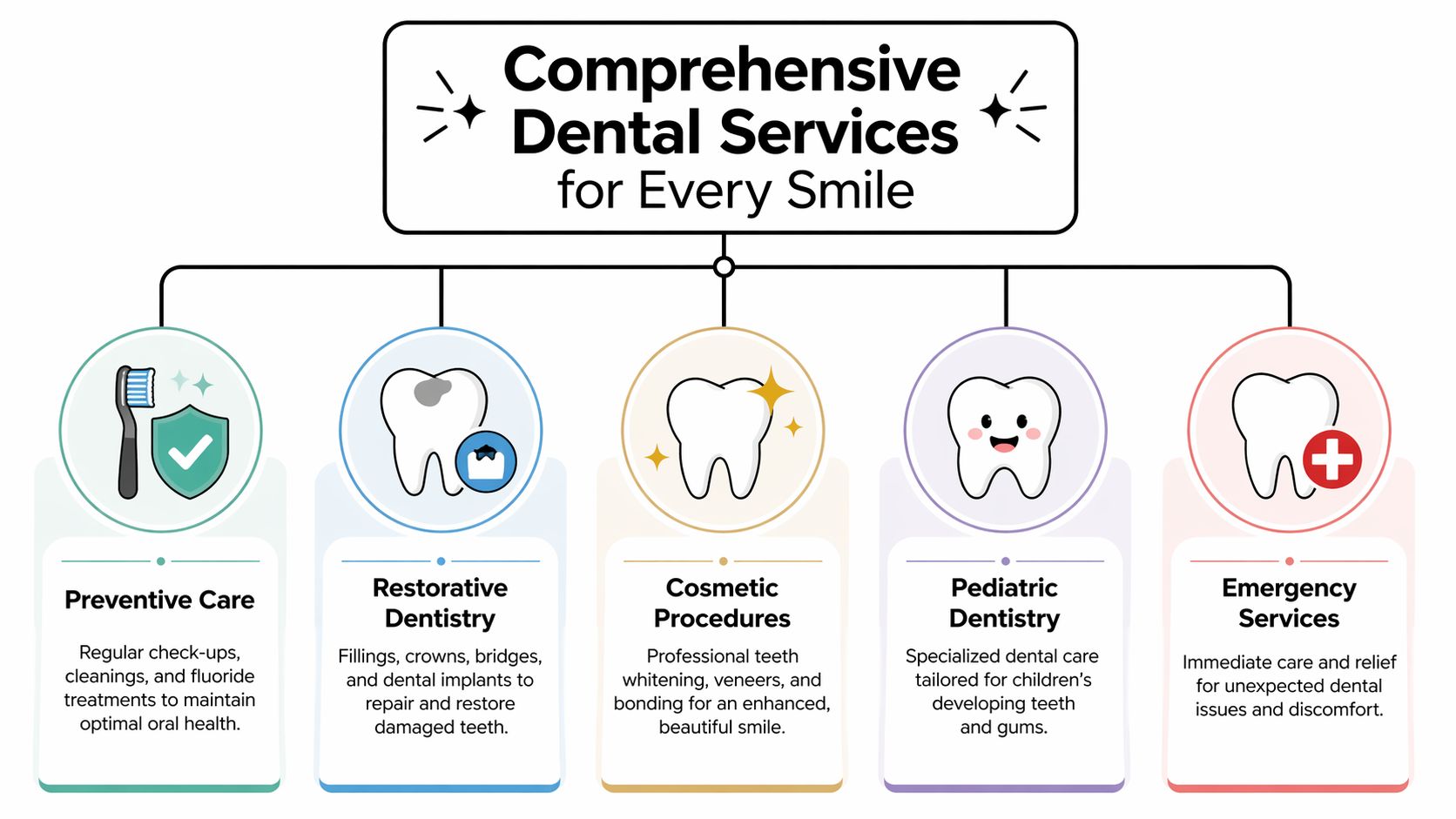
Preventive care that keeps small problems small
Routine visits do more than keep teeth clean. They give the dentist a chance to catch early decay, gum inflammation, worn enamel, leaking fillings, and bite changes before they turn into pain or more involved treatment.
For children, that often means building trust and good habits early. For adults, it often means preserving natural teeth and watching old dental work before it fails. For older family members, it may include closer attention to recession, root exposure, dry mouth, and wear from years of chewing and clenching.
Common findings at these visits include:
- Early cavities that can be treated before they deepen
- Gum irritation that responds better before bone loss develops
- Small cracks in teeth or fillings that can worsen under pressure
- Tooth wear linked to grinding or a strained bite
- Subtle bite changes that may connect to jaw discomfort
Restorative treatment for damaged or missing teeth
Teeth do not fail on a convenient schedule. A filling breaks during dinner. A back tooth starts hurting when you bite. An old crown loosens. In those moments, patients need clear options, not vague reassurance.
Good restorative care starts with diagnosis. The key question is not just whether a tooth is damaged, but whether it can be repaired predictably and whether that repair will hold up under daily use. Sometimes a conservative filling is enough. Sometimes a crown offers better long term support. Sometimes the tooth is too compromised, and extraction with a replacement plan is the more honest answer.
Services in this category may include:
- Fillings or bonding for decay, chips, and smaller fractures
- Crowns for teeth that have lost more structure
- Tooth extraction when saving the tooth is unlikely to succeed
- Tooth replacement options for adults who want stable function after tooth loss
- Emergency care for swelling, sudden pain, or a broken tooth
If a tooth hurts when you bite, schedule an exam soon. That pattern often points to a crack, infection, or bite problem that rarely improves by waiting.
Cosmetic improvements that still respect function
Cosmetic treatment should look natural and feel comfortable. Patients usually want a smile that looks healthier, more even, and less worn, not one that looks overdone. The best results come from matching appearance goals to the condition of the teeth, the bite, and the amount of change a patient desires.
That may include whitening, bonding, veneers, all porcelain crowns, or clear aligner treatment. Each option has trade-offs. Whitening is conservative but does not change shape. Bonding can be efficient for small improvements but may stain or chip over time. Veneers and porcelain can create a bigger transformation, but they require careful planning and a bite that will support them.
| Patient situation | Service that may help |
|---|---|
| Stained but healthy teeth | Professional whitening |
| Chipped or uneven front teeth | Bonding, veneers, or porcelain restorations |
| Mild alignment concerns | Clear aligner discussion |
| Older visible dental work | Updated cosmetic and restorative treatment |
TMJ care for jaw pain, clenching, and headache patterns
Jaw problems can show up in ways patients do not always connect at first. Clicking, muscle fatigue, temple headaches, neck tension, sore teeth, and difficulty chewing can all point to bite strain or TMJ dysfunction.
Treatment depends on the cause. Some patients benefit from an oral appliance. Others need bite evaluation, muscle relief strategies, or changes that reduce overload on specific teeth and joints. A rushed fix can make things worse, so this is an area where experience matters. The goal is to calm the system down, protect the teeth, and improve daily comfort.
Sleep apnea and snoring support in the same office
Many families are surprised to learn that a dental office can play a role in sleep related breathing treatment. Yet dentists often see the oral signs first, including heavy wear, dry mouth, scalloped tongue edges, and reports of fatigue or snoring from a spouse.
For the right patient, oral appliance therapy can be a practical option for obstructive sleep apnea or chronic snoring, often as part of care coordinated with a physician. It is not the right fit for every case, and that distinction matters. Some patients do better with CPAP. Others want an alternative they are more likely to use consistently. The right plan balances severity, comfort, and long term follow-through.
That broader scope is one reason families value a single office with depth. Charles E. Boren provides family, cosmetic, restorative, TMJ, and dental sleep medicine services in one practice, which can make care easier to coordinate for households with very different needs.
How Advanced Technology Ensures Better Dental Care
Good dental technology should do two things. It should help the dentist see more clearly, and it should make treatment easier on the patient. If a tool doesn't improve comfort, precision, or efficiency, it doesn't add much value from the patient's perspective.
In family dentistry, that matters every day. Children benefit from faster imaging and simpler explanations. Busy adults want fewer repeat visits. Nervous patients want procedures that feel less invasive and more predictable.
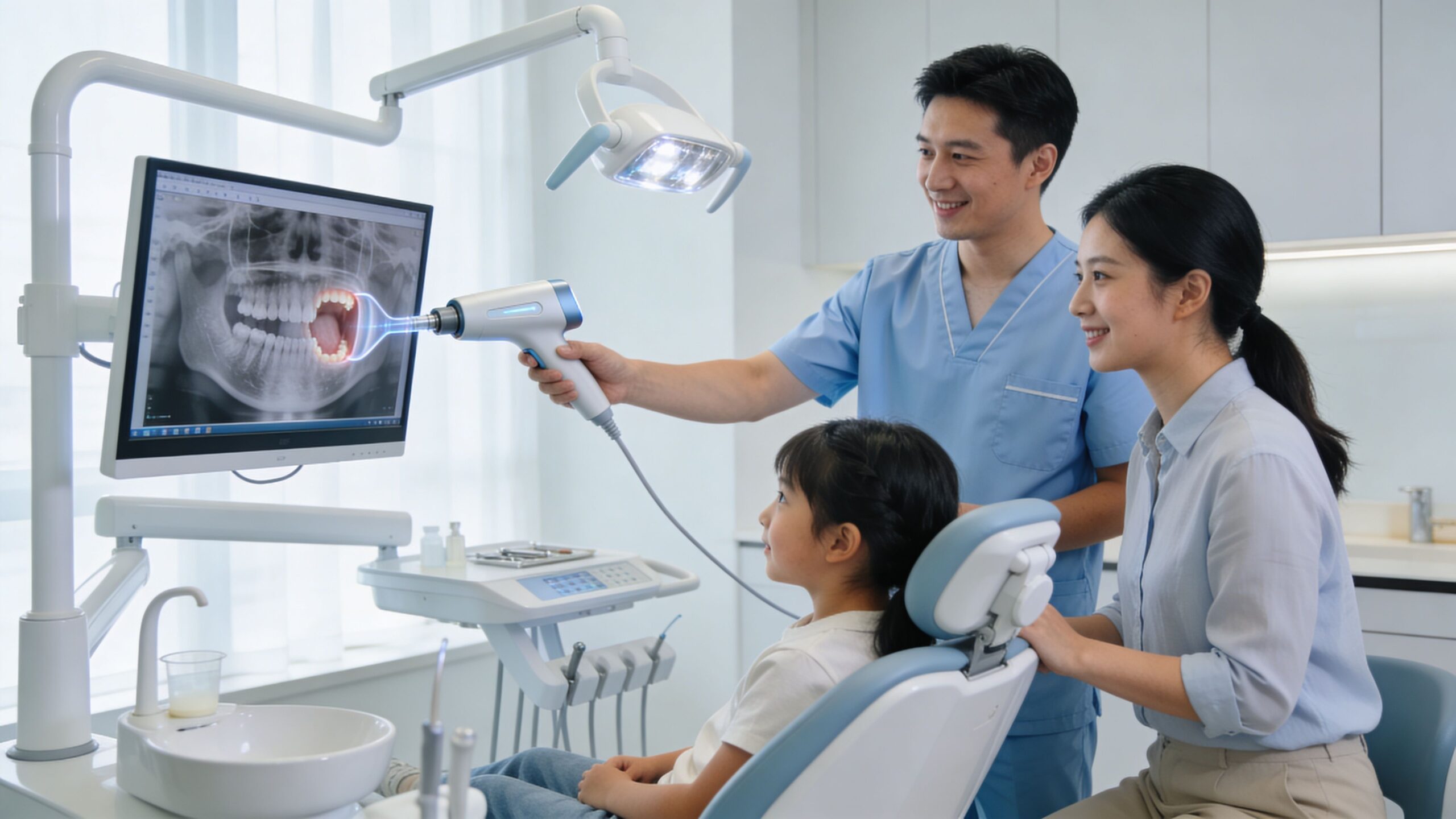
Digital imaging improves diagnosis and comfort
Traditional x-rays did the job for years, but digital imaging changed the experience in practical ways. Images appear quickly, the dentist can enlarge details chairside, and patients can see what is being discussed instead of trying to interpret a vague explanation.
Practices using modern digital imaging and CAD/CAM systems can reduce radiation exposure significantly and cut overall treatment time for restorations by 40 to 60 percent, according to this review of technology's impact on modern dentistry. For patients, that means less waiting, fewer return visits for some restorations, and more confidence that the treatment is based on accurate information.
Why precision matters in everyday cases
Precision doesn't only matter in major reconstruction. It matters in common treatment too. A small crack, an open margin around an old filling, or the exact shape of a worn biting surface can affect comfort and longevity.
Tools and techniques that support that precision may include:
- Digital x-ray imaging for immediate chairside review
- Magnification and fiber optics to inspect teeth more carefully
- Micro air abrasion for conservative treatment in selected cases
- Adhesive bonding to preserve tooth structure where appropriate
- CAD/CAM workflows for accurate restorative planning
Patients usually feel the difference in simple terms. Treatment is easier to understand. Appointments are more efficient. Results often require less adjustment.
Better technology doesn't replace clinical judgment. It supports it by giving the dentist clearer information and more precise ways to act on it.
Single-visit planning and fewer remakes
One of the most useful advances for restorative and cosmetic care is the combination of digital imaging with CAD/CAM systems. That workflow can support digital impressions and on-site fabrication for selected restorations, which helps reduce the guesswork that came with older impression materials.
For a patient, the value is straightforward. If a crown or veneer process can be completed with fewer appointments and less remake risk, the treatment becomes easier to fit into real life. Parents don't have to keep rearranging schedules. Working adults don't have to carve out multiple return visits for the same tooth.
A short overview of the technology helps make that clearer:
Technology also helps anxious patients
Many anxious patients don't fear dentistry in the abstract. They fear specific parts of it. Not knowing what's happening. Sitting too long. Feeling pressure or discomfort. Worrying they'll need to come back again because something didn't fit correctly the first time.
Modern imaging, minimally invasive techniques, and efficient restorative systems help remove those friction points. When paired with clear communication and sedation options where appropriate, technology can turn a stressful visit into one that feels organized and manageable.
That doesn't mean every procedure becomes easy overnight. It means the experience becomes more predictable, and predictability is one of the biggest drivers of comfort.
The Patient Experience at Our Bellaire Dental Office
A good dental visit starts before anyone sits in the chair. It starts with the first phone call, the first question answered clearly, and the first interaction that makes a patient feel heard instead of processed.
That matters in Houston because families aren't just choosing a procedure. They're choosing a relationship. Houston added over 159,000 new residents in a single year, according to Houston growth data cited here, and growth like that puts more pressure on established healthcare offices. In that environment, patients usually do best with a practice that can provide steady, long-term care rather than one-off visits.

What the first visit usually feels like
New patients often arrive with one of three concerns. They haven't been in for a while. They're unhappy with something about their smile. Or they're worried treatment will hurt.
A thoughtful first visit usually includes time to listen before making recommendations. The team gathers health history, discusses symptoms, takes needed images, and explains what they see in plain English. If there's more than one way to address a problem, the trade-offs should be explained openly.
That kind of conversation helps patients understand questions like:
- Does this tooth need immediate treatment, or can it be monitored?
- Is a cosmetic option mainly about appearance, or does it also protect the tooth?
- Will this problem keep coming back if the bite isn't addressed?
- What can be done to make treatment more comfortable?
Comfort matters as much as clinical skill
Many adults postpone treatment because of past experiences. Some were rushed. Some felt embarrassed. Some associate dental visits with pain, noise, or loss of control.
Comfort-focused care isn't just about being nice. It's about structuring care so patients can tolerate and complete it. That includes slower pacing when needed, checking in often, explaining sensations before they happen, and offering sedation support when appropriate.
Patients with dental anxiety usually don't need pressure. They need a clear plan, steady communication, and an office that respects their limits while still helping them move forward.
Sedation and support for anxious patients
Sedation dentistry can make a major difference for patients who avoid care because of fear, a strong gag reflex, difficulty getting numb, or trouble sitting through longer procedures. It's also helpful for some patients receiving more involved restorative or cosmetic treatment.
The practical benefit isn't just relaxation. It can make treatment more efficient and help patients complete care they might otherwise delay for months or years.
A comfort-focused office should also think beyond the procedure itself:
| Stage of visit | What patients need |
|---|---|
| Before treatment | Clear instructions, realistic expectations, time for questions |
| During treatment | Reassurance, comfort measures, gentle pacing, sedation when appropriate |
| After treatment | Simple home-care guidance, follow-up support, next-step clarity |
Long-term relationships change the experience
The strongest family practices don't feel unfamiliar every time you return. The front desk recognizes your name. The clinical team remembers what made past visits easier. The dentist knows whether you tend to clench, whether your child gets nervous, or whether your schedule requires grouped family appointments.
That familiarity can make all the difference. Patients stop feeling like they are starting over at each visit, and care becomes part of normal life instead of something to dread.
Your Guide to Visiting Our Houston Dental Practice
Choosing a dentist often comes down to logistics as much as treatment. Can you get an appointment without a long delay? Is the office convenient from Bellaire, West University, or central Houston? Will the team explain payment options clearly before treatment begins?
Those questions are especially important for households that don't qualify for public assistance but still have to watch costs carefully. Many middle-income families in Bellaire and West University face that gap, and practices that offer new patient specials and flexible financing can provide a practical solution, as discussed in this overview of dental options for low-income and middle-income families in Houston.
What helps families move forward
Most patients don't need complicated instructions. They need a straightforward path.
- Call or request an appointment. Share whether you need a routine new patient exam, urgent care, cosmetic consultation, or evaluation for jaw pain, snoring, or sleep apnea.
- Mention timing concerns early. If you're dealing with pain, a broken tooth, or swelling, say so when scheduling.
- Ask about payment details before treatment. Clarify insurance, new patient offers, and financing options in advance.
- Bring the basics. Identification, insurance information if applicable, medication list, and any prior records you want the office to review.
- Say if you're anxious. That single detail helps the team pace the visit and discuss comfort options appropriately.
Location and convenience
A Bellaire dental office that also serves West University and Houston should be easy to reach for workday visits, school-year scheduling, and family appointments. Being minutes from The Galleria is useful for many patients who live nearby or commute through central Houston.
Convenience should also include practical scheduling and communication. A good office makes it easy to confirm appointments, ask follow-up questions, and understand next steps after treatment.
What to ask before you book
If you're still comparing offices, ask specific questions instead of general ones.
- Can the practice treat both routine family needs and more advanced concerns?
- Do they offer cosmetic dentistry, restorative care, tooth extraction, and emergency visits?
- Can they evaluate TMJ symptoms or sleep-related concerns?
- Do they have comfort options for anxious patients?
- Will they review financing and treatment sequencing clearly?
Those questions tell you much more than broad marketing language. They help you find a practice that's equipped for how real families use dental care.
Frequently Asked Questions About Family Dentistry
When should I bring my child for a first dental visit
Early visits help children get comfortable with the office and allow the dentist to monitor development, home care, and habits before problems become bigger. Parents usually benefit from guidance on brushing, diet, and what changes to watch for as teeth come in.
Do I need a separate office for my child and for adult care
Not always. Many families prefer one practice because it simplifies scheduling and creates continuity. A family dentist can often handle preventive care, exams, dental x-rays, routine restorative treatment, and many cosmetic or functional concerns across age groups.
What should I do during a dental emergency
Call as soon as possible and explain the situation clearly. If you have swelling, bleeding, a broken tooth, or significant pain, tell the office that right away so they can guide you on timing and immediate next steps. If you're searching for an emergency dentist Houston patients can contact quickly, speed and clear communication matter as much as the treatment itself.
Is ClearCorrect better than braces
It depends on the case. ClearCorrect can be a good fit for patients who want a more discreet appearance and can wear aligners consistently. Traditional braces may still be more practical in some situations, especially when tooth movement is more complex or patient compliance is uncertain.
Can a dentist really help with TMJ pain and headaches
In many cases, yes. If the symptoms are related to bite imbalance, clenching, grinding, or joint strain, a dentist can evaluate those patterns and recommend options such as bite analysis, oral appliances, and other supportive treatment. The key is identifying the actual source of the problem instead of guessing.
I'm nervous about dental treatment. What should I say when I call
Be direct. Tell the office you've had difficult dental experiences or that you feel anxious even about routine visits. That helps the team plan for a slower pace, clearer communication, and sedation options when appropriate. If you're looking for a dentist in Bellaire, TX who understands dental anxiety, that conversation should feel easy from the first phone call.
If you're ready to find a dental home for your household, schedule a visit with Charles E. Boren. Patients in Bellaire, West University, and Houston can contact the office for routine family care, cosmetic dentistry, restorative treatment, TMJ evaluation, sleep apnea support, and emergency dental needs.