
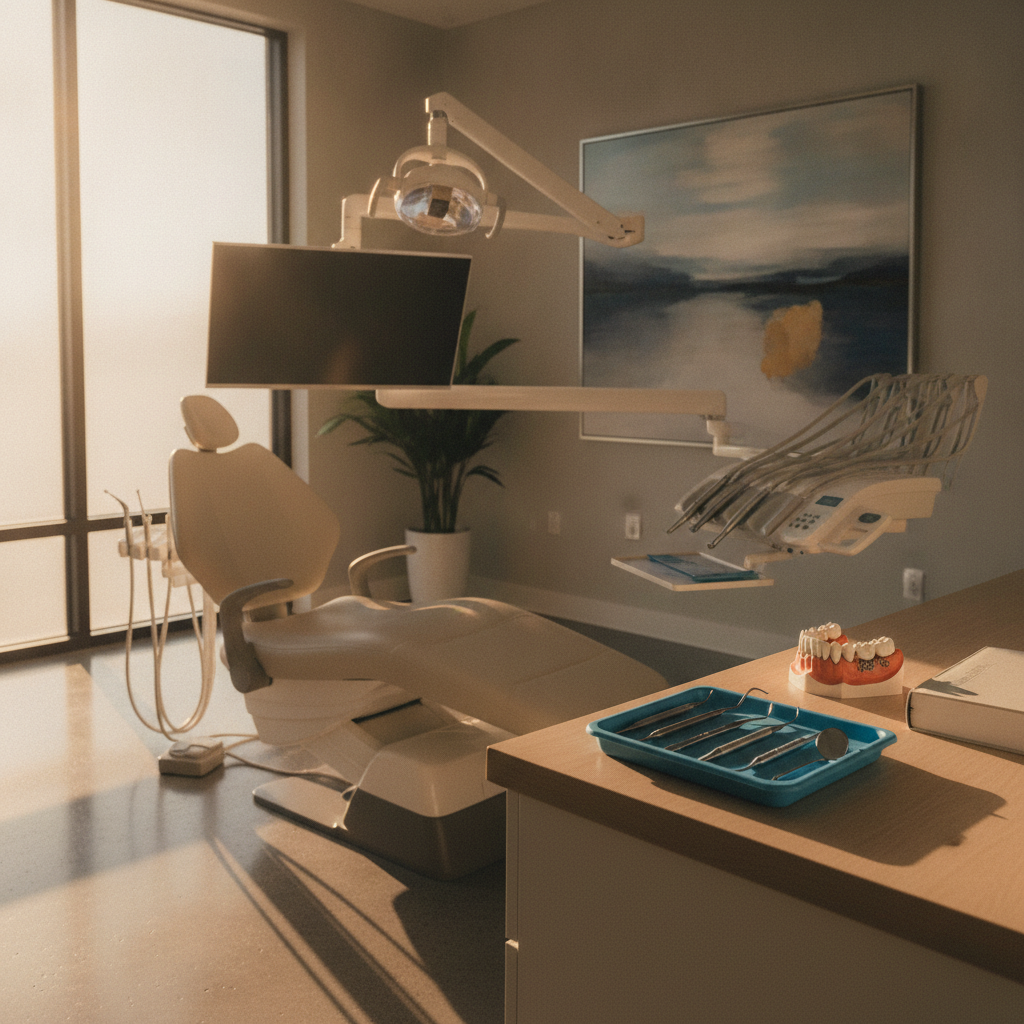
Why Are Bellaire Patients Getting Gum Disease Diagnosed Late — and What Are the Early Warning Signs Most People Miss?
Gum disease is one of the most common conditions we see in adults across Bellaire and the surrounding Houston area — and one of the most frequently caught too late. Not because patients aren’t trying to take care of themselves, but because the early stages are genuinely easy to miss. There’s usually no sharp pain, no obvious swelling, nothing dramatic enough to make you pick up the phone. What there is, most of the time, is a slow, quiet process that’s already been working against you for months by the time someone flags it at a checkup.
If you’ve been told you have gum disease and felt blindsided — or if you’re wondering whether something you’ve been noticing lately is worth mentioning — this article is worth reading through. Understanding what early periodontal disease actually looks like is one of the most useful things you can do for your long-term oral health.
- What Gum Disease Actually Is — Before It Becomes a Crisis
- The Warning Signs Bellaire Patients Most Commonly Overlook
- Why So Many Patients in the Bellaire and Meyerland Area Don't Catch It Early
- What Happens When Gum Disease Is Caught Early vs. Late
- What This Visit Actually Looks Like — for Patients Who've Been Avoiding It
- Frequently Asked Questions About Gum Disease in Bellaire
- Ready to Find Out Where You Actually Stand?
What Gum Disease Actually Is — Before It Becomes a Crisis
Periodontal disease is an infection of the structures that support your teeth — the gums, the connective tissue, and eventually the bone underneath. It starts with bacteria in plaque that irritates the gum tissue, causing inflammation. At that early stage, it’s called gingivitis, and it’s genuinely reversible. With a thorough professional cleaning and improved home care, your gums can fully recover.
The problem is that gingivitis doesn’t always feel like a problem. It might show up as a little pink in the sink when you spit after brushing — something a lot of people chalk up to brushing too hard. Or gums that look slightly puffy along the edge. Or breath that doesn’t quite go away no matter how much you rinse. These are easy things to dismiss or delay.
When gingivitis isn’t addressed, it progresses to periodontitis — a deeper infection that begins to pull the gums away from the teeth, creating pockets where bacteria can accumulate below the gumline. At that stage, you’re dealing with bone loss, and bone doesn’t grow back on its own. That’s when treatment becomes more involved, and that’s when patients often wish they’d come in sooner.
The Warning Signs Bellaire Patients Most Commonly Overlook
There’s a reason we spend time during every checkup looking carefully at gum tissue, not just at the teeth. Here are the early signs that deserve attention rather than a wait-and-see approach:
- Gums that bleed when you brush or floss. Healthy gums don’t bleed. If yours do, that’s inflammation — not aggressive brushing. A lot of patients stop flossing because it hurts or bleeds, which is understandable, but unfortunately that makes things worse over time.
- Gums that look red or feel tender. Pale pink and firm is what you’re aiming for. Gum tissue that’s consistently red along the margin, or that feels sore to the touch, is telling you something is off.
- Persistent bad breath. Bacteria that live below the gumline in periodontal pockets produce compounds that cause chronic halitosis. If your breath is a consistent concern even with good hygiene, that’s a sign worth discussing at your next visit.
- Gums that look like they’re pulling away from your teeth. Recession can make teeth appear longer than they used to. It can also cause sensitivity, because the root surface — which isn’t covered by enamel — becomes exposed.
- Teeth that feel slightly loose or have shifted. This indicates bone loss has already occurred. It’s a later-stage symptom, but it’s one that patients sometimes mistake for normal aging or attribute to other causes.
Any one of these, on its own, is worth mentioning. A combination of them is definitely something to have evaluated.
Why So Many Patients in the Bellaire and Meyerland Area Don’t Catch It Early
Part of the challenge is that early gum disease is almost entirely painless. Our nervous system responds to pain — we’re wired to notice it and act on it. But inflammation and bacterial infection in gum tissue can progress considerably before it causes discomfort. By the time something actually hurts, you’re often well past the point where simple treatment is enough.
Another piece of it is the gap between dental visits. Life gets busy. In Bellaire, West University Place, and Meyerland, we see a lot of working families and professionals who put off scheduling until something prompts them. If a year or two passes between cleanings, a case of mild gingivitis has had plenty of time to become something more significant.
For patients who do have risk factors — smoking, diabetes, a family history of periodontal disease, or certain medications that affect gum tissue — progression can happen faster than the general population. That’s important context for how frequently you should really be coming in. Preventive care at our Bellaire practice is calibrated to your actual risk level, not just a default schedule.
What Happens When Gum Disease Is Caught Early vs. Late
This is the part that matters most. When we catch gingivitis early — before pockets have formed and before bone involvement — the treatment is a professional cleaning, specific home care guidance, and a follow-up to confirm the tissue has responded. That’s it. It’s not dramatic, and it doesn’t need to be.
When periodontitis has set in, treatment typically involves a deeper cleaning procedure called scaling and root planing, which clears bacteria and deposits from below the gumline. For patients dealing with more advanced or persistent cases, laser gum therapy can be a less invasive alternative to traditional surgical approaches. It reduces bacterial load, helps the tissue reattach, and often means a more comfortable recovery than older methods.
The difference in cost, recovery time, and long-term outcome between treating early-stage gum disease and treating advanced periodontitis is substantial. Earlier is always better — not because we want to alarm you, but because that’s simply what the evidence shows.
What This Visit Actually Looks Like — for Patients Who’ve Been Avoiding It
We know some patients stay away from the dentist partly because they’re worried about what they’ll be told. If you’ve been putting off a visit because you suspect something is wrong with your gums, we want to be straightforward with you: finding out sooner is always in your favor. There’s no version of this where waiting improves the situation.
At Charles E. Boren D.D.S., P.C., a periodontal evaluation is a standard part of every checkup. We measure the depth of the spaces between your teeth and gums, note any recession, look for signs of bone changes in your X-rays, and talk through what we’re seeing with you in plain language — not dental shorthand. If something needs attention, we explain what it is, why it matters, and what your options are. There’s no pressure and no surprises. Dr. Boren has been practicing in Bellaire long enough to know that trust is built one honest conversation at a time.
Frequently Asked Questions About Gum Disease in Bellaire
Is bleeding when I floss always a sign of gum disease?
Bleeding with flossing is the most common early sign of gum inflammation, and it should be taken seriously rather than ignored. It doesn’t always mean you have full-blown periodontal disease, but it does mean something is irritating your gum tissue that deserves a professional look. Consistent bleeding is not normal, even if it’s been happening for years.
Can gum disease affect my overall health, not just my teeth?
Yes — and significantly. Research has established links between untreated periodontal disease and systemic conditions including cardiovascular disease, diabetes management difficulties, and complications in pregnancy. The bacteria and chronic inflammation involved in periodontitis don’t stay neatly confined to your mouth. This is one of the clearest reasons why gum health is genuinely part of your overall health picture.
Do I need surgery to treat gum disease?
Not necessarily, and not as a first step. Early and moderate gum disease is often manageable with deep cleaning and ongoing maintenance. For patients where more intervention is needed, laser gum therapy offers a less invasive option than traditional surgery for many cases. The right approach depends on how far the condition has progressed and how your tissue responds to initial treatment.
How often should I come in if I’ve had gum disease before?
Most patients with a history of periodontal disease benefit from more frequent maintenance visits — often every three to four months rather than twice a year. This isn’t a permanent punishment; it’s a realistic maintenance interval that reflects how quickly bacteria recolonize below the gumline once you’ve had active disease. Your schedule can be adjusted over time based on how your tissue is holding up.
Can gum disease come back after it’s been treated?
It can, which is why ongoing care matters. Treating active gum disease is step one. Keeping it in check through consistent professional maintenance and good daily habits is the part that protects your results long-term. Patients who stay on a regular schedule after treatment consistently do better than those who taper off.
Ready to Find Out Where You Actually Stand?
If any of the warning signs in this article sound familiar — or if it’s simply been longer than you’d like since your last checkup — the most useful thing you can do is come in and find out. Gum disease that’s caught early is manageable. Gum disease that’s caught late is a much longer road.
Charles E. Boren D.D.S., P.C. has been serving patients in Bellaire, Southside Place, West University Place, Meyerland, and the broader Houston area for decades. We offer straightforward evaluations, clear explanations, and treatment plans that are built around what you actually need — not what’s most convenient for us. If you’ve been putting this off, now is a good time to stop doing that.
Contact our Bellaire office to schedule a checkup and periodontal evaluation. We’re here when you’re ready.