
What Is a Dental Veneer Consultation — and How Do Bellaire Patients Know What to Ask Before They Commit to Changing Their Smile?
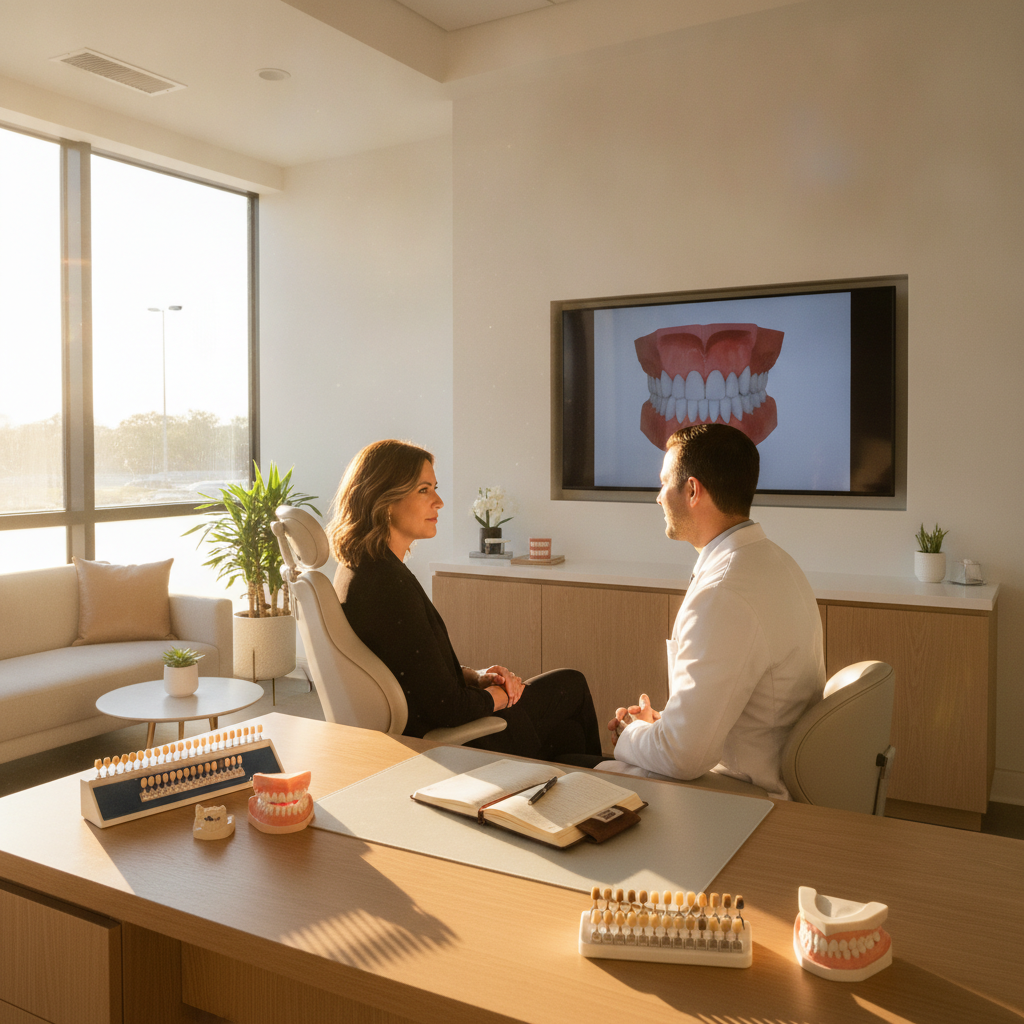
A veneer consultation isn’t a sales meeting, and it shouldn’t feel like one. At its best, it’s a real conversation — a chance for you to describe what’s bothering you about your smile, ask honest questions about your options, and leave with enough information to make a decision that’s actually right for you. But for many patients in Bellaire and across the Houston area, the consultation is where the process goes sideways. They come in without knowing what to ask, they leave without fully understanding what they’ve agreed to, and somewhere between the appointment and the procedure they realize they had questions they never got to ask.
That gap — between what patients wish they’d known and what they actually learned at their consultation — is exactly what this article is meant to close.
- What Actually Happens at a Veneer Consultation?
- The Veneer vs. Lumineers Question — and Why It Should Come Up Early
- The Questions Most Patients Forget to Ask
- Why a Cosmetic Consultation Should Never Feel Rushed
- What About Cost — and Is Financing Realistic?
- Frequently Asked Questions About Veneer Consultations in Bellaire
- Ready to Have a Real Conversation About Your Smile?
What Actually Happens at a Veneer Consultation?
A thorough veneer consultation covers more ground than most people expect. Yes, you’ll look at before-and-after photos. Yes, you’ll talk about the shade and shape of teeth you’re hoping to achieve. But the clinical part of the conversation matters just as much as the aesthetic part — and it’s what separates a thoughtful consultation from a rushed one.
Your dentist should be examining the health of your existing teeth and gums before any veneer discussion begins in earnest. Veneers aren’t placed on compromised teeth. If there’s active gum disease, significant decay, or a bite problem that hasn’t been addressed, those issues need to come first. That’s not a delay — that’s responsible care, and any dentist worth your time will say so plainly.
Beyond the exam, expect a conversation about your goals. Are you trying to close a gap? Even out teeth that are slightly different lengths? Cover old staining that whitening hasn’t touched? The answer shapes everything — how many veneers make sense, whether you need traditional porcelain or a thinner option like Lumineers, and whether other treatments might serve you better or in combination.
The Veneer vs. Lumineers Question — and Why It Should Come Up Early
One of the most common sources of confusion for patients considering cosmetic work is the difference between traditional porcelain veneers and Lumineers. Both are thin shells bonded to the front surface of your teeth. The meaningful difference is in thickness — and what that means for the preparation process.
Traditional veneers typically require a small amount of enamel removal from the front of the tooth before placement. This is a permanent step, which is why the decision deserves careful thought. Lumineers are thinner and in many cases can be placed with little or no enamel reduction — making them technically reversible, though that word should be used carefully.
Neither option is universally better. The right choice depends on the condition of your teeth, the degree of change you’re hoping to make, and how your teeth are positioned. A patient in West University Place with naturally thin enamel and crowding may need a very different approach than someone in Meyerland with healthy, straight teeth who simply wants to address deep staining.
What matters is that your dentist explains both options in plain language — not just which one they prefer, but why one fits your situation better than the other. If you leave a consultation without understanding that distinction, ask before you schedule any follow-up. You can learn more about how Dr. Boren approaches veneers and cosmetic options here.
The Questions Most Patients Forget to Ask
Most people remember to ask about cost and timeline. Fewer think to ask about the questions that actually matter most for long-term satisfaction. Here are the ones worth raising at your consultation:
- How many teeth are we actually talking about? Veneers are often placed in sets — typically six to eight on the upper teeth — because placing just one or two can create a noticeable mismatch in color or texture. Ask your dentist what number makes aesthetic sense for your specific case.
- Will I need any prep work first? If there’s any decay, gum inflammation, or bite issue, it needs to be resolved before veneers are placed. Ask directly whether your mouth is ready, or what needs to happen first.
- What does the process look like from start to finish? Traditional veneer placement typically involves at least two appointments — one for preparation and impressions, one for final placement — with temporary veneers in between. Some practices offer a diagnostic wax-up or digital preview so you can see a simulation of your result before committing.
- How long should these last, and what could shorten that? Well-placed porcelain veneers can last fifteen years or more with proper care. But grinding your teeth, biting your nails, or chewing ice can compromise them much sooner. Ask about protective options if any of those habits apply to you.
- What happens if I don’t love the result? This is the question people hesitate to ask because it feels presumptuous — but it’s completely reasonable. Understand ahead of time what the adjustment or redo process looks like, and make sure you feel confident in the communication you’ve had about your goals.
Why a Cosmetic Consultation Should Never Feel Rushed
Across the Houston area, patients shopping for cosmetic dentistry have no shortage of options. Large multi-dentist practices near the Galleria and Uptown corridor often move quickly — high volume means shorter consultations, and shorter consultations mean less time to actually understand what a patient wants. That’s not a judgment; it’s simply the reality of how some practices are structured.
For elective cosmetic work, that pace is a problem. Veneers are not reversible in the way a teeth cleaning is reversible. You deserve a consultation where someone is genuinely listening to what you’re describing, looking carefully at your existing teeth, and explaining your options without pressure or a clock running in the background.
Dr. Boren has been practicing in Bellaire for decades, and his approach to cosmetic consultations reflects that. Patients in Southside Place, West University Place, and the surrounding neighborhoods come to the practice specifically because they want to be heard — not handed a treatment plan before they’ve finished describing what’s bothering them. Learn more about Dr. Boren and the practice here.
What About Cost — and Is Financing Realistic?
Veneers are an investment, and it’s worth being straightforward about that. The cost varies depending on how many teeth are being treated, the material used, and the complexity of your case — your dentist can give you a personalized estimate during the consultation, not before. What’s worth knowing ahead of time is that dental insurance rarely covers elective cosmetic procedures, so most patients are looking at out-of-pocket costs.
Many patients in the greater Houston area use CareCrect financing to spread the cost over time, and it’s worth asking during your consultation whether that’s an option. It often makes the decision more manageable without requiring you to wait until you’ve saved the full amount.
Frequently Asked Questions About Veneer Consultations in Bellaire
Do I need a referral to schedule a veneer consultation?
No referral is needed. You can contact the practice directly to schedule a consultation. If you’re already a patient, your dentist can often work cosmetic planning into an existing appointment to start the conversation.
Is a veneer consultation different from a regular exam?
Yes. A veneer consultation is specifically focused on your cosmetic goals and candidacy — though a review of your overall dental health is part of it. It’s not a substitute for your regular cleaning and exam, but it’s a dedicated conversation about what you want to change and whether veneers are the right way to get there.
Can I get veneers if I grind my teeth?
Possibly, but bruxism (teeth grinding) is a factor your dentist will want to discuss seriously. Grinding puts stress on veneers that can cause chipping or debonding over time. Some patients address this with a custom night guard alongside their veneers. Your consultation should include an honest conversation about this if it applies to you.
How do I know if I’m a good candidate for veneers?
Good candidates generally have healthy gums and teeth without significant decay, enough existing enamel for proper bonding, and realistic expectations about what veneers can and can’t change. The only way to know for certain is a clinical evaluation — which is exactly what the consultation is for.
What if I just want to fix one tooth?
It’s a reasonable goal, and in some cases a single veneer works well. The challenge is matching the color and texture of the new veneer to your surrounding teeth closely enough that it doesn’t stand out. Your dentist can look at your specific situation and let you know whether one veneer makes sense or whether a slightly broader approach would give you a better result.
Ready to Have a Real Conversation About Your Smile?
If you’ve been curious about veneers — or any cosmetic work — but haven’t known quite where to start, the consultation is the right first step. Not a commitment. Not a sales pitch. Just an honest conversation about what you’re hoping for and whether there’s a path to get there that makes sense for your teeth, your timeline, and your life.
Dr. Boren and the team at Charles E. Boren D.D.S., P.C. have been having those conversations with patients in Bellaire and the surrounding communities for a long time. If you’re ready to have one, reach out here to schedule your consultation. There’s no pressure, no rush — just a chance to get the answers you actually need.