
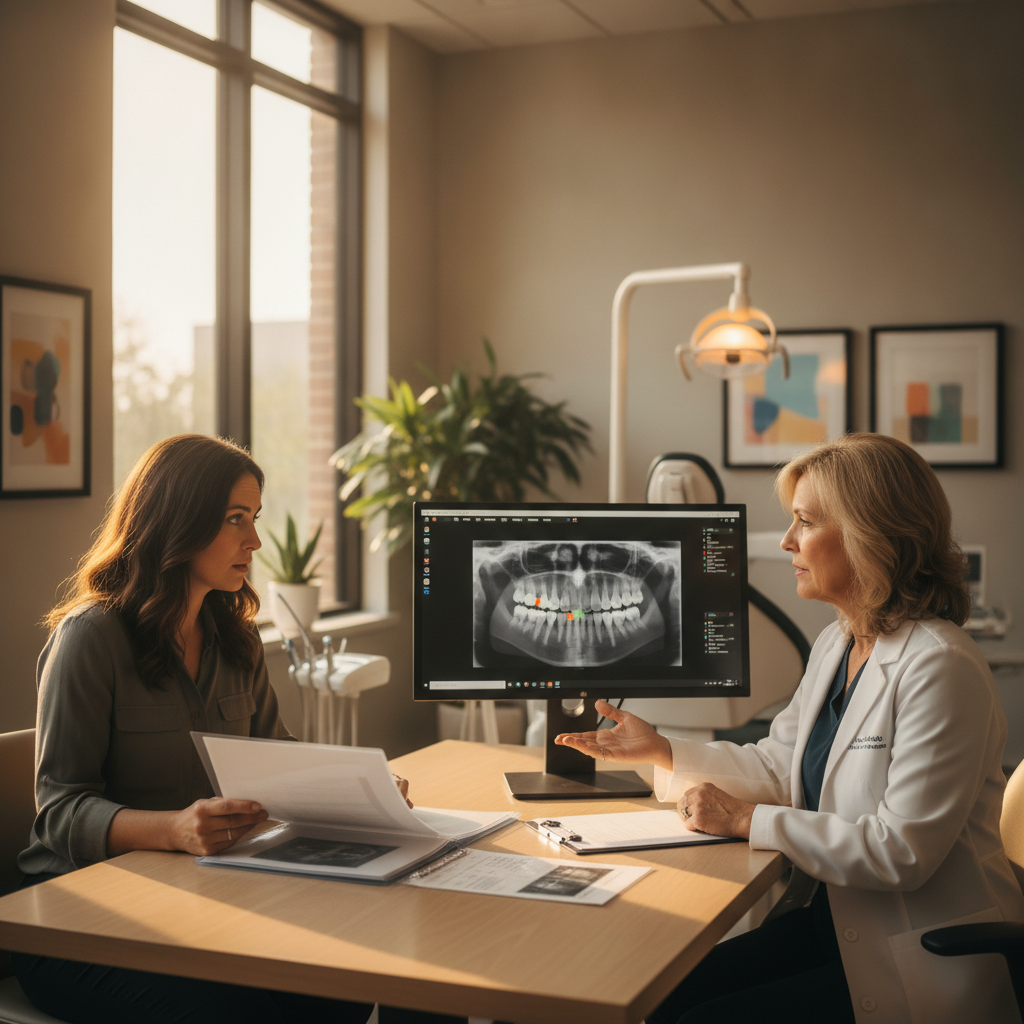
What Is a Second Opinion in Dentistry — and Should Bellaire Patients Ever Ask for One?
Yes — and more often than you might think. If another dentist has told you that you need a root canal, a full set of veneers, multiple crowns, or a significant restorative procedure, it is completely reasonable — and frankly wise — to get a second opinion before moving forward. In Bellaire and across the greater Houston area, patients have access to many dental offices, and not all of them approach treatment planning the same way. Knowing when to pause, what questions to ask, and what a trustworthy dentist will tell you can protect both your health and your wallet.
- Why the Topic of Dental Second Opinions Is Rarely Discussed — But Should Be
- When Should You Actually Get a Dental Second Opinion?
- What to Bring to a Second Opinion Appointment
- What a Good Dentist Will Tell You at a Second Opinion Visit
- Second Opinions for Cosmetic Dentistry: A Slightly Different Conversation
- Will Asking for a Second Opinion Offend Your Current Dentist?
- Frequently Asked Questions About Dental Second Opinions
- A Note About Choosing a Dentist You Actually Trust
Why the Topic of Dental Second Opinions Is Rarely Discussed — But Should Be
Scroll through the websites of most dental practices in Houston and you’ll find plenty of information about what procedures they offer. What you won’t often find is honest, patient-centered guidance on when you should seek a second opinion — or how to do it without feeling awkward. That silence isn’t necessarily sinister, but it does leave patients without a framework for one of the most important decisions they can make about their oral health.
This matters especially in a market like the Southwest Houston corridor, where large dental service organizations and multi-dentist group practices have expanded rapidly. These environments can sometimes create pressure to complete high-volume treatment quickly. That’s not a blanket criticism — many group practices deliver excellent care. But it does mean that patients in Bellaire, West University Place, Meyerland, and Southside Place deserve to understand their rights and options.
When Should You Actually Get a Dental Second Opinion?
Not every visit warrants a second opinion. If your dentist recommends a routine cleaning or wants to watch a small cavity, you can reasonably trust that. But there are certain situations where pausing and getting another perspective is genuinely worth your time:
- A significant restorative recommendation: If you’ve been told you need several crowns, a full-mouth rehabilitation, or multiple implants — especially after a first visit — a second opinion can confirm whether the scope of treatment is appropriate.
- A cosmetic treatment plan that feels rushed: Veneers, smile makeovers, and orthodontic treatment like clear aligners are elective decisions. You should never feel pressured into a timeline.
- A root canal recommendation you didn’t expect: Sometimes a tooth that looks concerning on an X-ray isn’t actually symptomatic or in immediate danger. A second set of eyes can clarify whether treatment is urgent, elective, or better watched over time.
- A diagnosis that doesn’t match your symptoms: If something feels off — if you have no pain but you’re being told you need extensive work, or vice versa — trust that instinct.
- A treatment plan that seems financially overwhelming: Cost alone isn’t a reason to avoid necessary care, but a well-structured treatment plan should come with clear priorities and phasing options. If you’re not getting that, another dentist may offer a clearer path.
What to Bring to a Second Opinion Appointment
The most useful thing you can bring is your existing X-rays. Most dental offices can provide you with a copy of your recent radiographs — it’s your record, and you’re entitled to it. Bringing those images means the second dentist doesn’t have to expose you to additional radiation, and it gives them the same baseline the first dentist was working from.
If the original office provided a written treatment plan with itemized recommendations, bring that too. It allows the second dentist to respond specifically to what was proposed rather than starting from scratch. You should also be prepared to describe any symptoms you’re experiencing — or not experiencing — in your own words. Sometimes the most telling information isn’t on the X-ray at all.
What a Good Dentist Will Tell You at a Second Opinion Visit
A trustworthy dentist giving a second opinion will not automatically contradict whatever the first dentist said — nor will they simply validate it to win your business. What you should expect is an honest, independent assessment. That might mean:
- Confirming that the original recommendation was appropriate
- Suggesting a more conservative alternative that the first dentist didn’t mention
- Recommending a watch-and-wait approach with a clear benchmark for when treatment becomes necessary
- Identifying something the first evaluation missed
What you should not hear at a second opinion appointment is immediate upselling or pressure to schedule treatment before you’ve had time to think. A patient-centered practice gives you time to ask questions, go home, and make a decision that feels right.
Dr. Charles Boren has practiced dentistry in Bellaire for decades, and his approach has always been to explain what he’s seeing, why it matters, and what your options are — without pushing you toward any particular outcome. If another dentist’s recommendation brought you here, you’ll get a straight answer.
Second Opinions for Cosmetic Dentistry: A Slightly Different Conversation
Cosmetic dental procedures — veneers, teeth whitening, clear aligners, all-porcelain crowns used for aesthetic reasons — are inherently elective. That means the bar for getting a second opinion is even lower than it is for restorative care. You’re not just evaluating whether a treatment is medically necessary; you’re evaluating whether a particular approach, timeline, and aesthetic outcome are right for you.
Patients considering smile makeovers who live in or near Houston often cross-shop across multiple neighborhoods — Uptown, River Oaks, the Galleria area, and the communities inside the 610 Loop. That’s completely reasonable. Cosmetic dentistry is a significant investment, and finding a dentist whose eye for aesthetics matches what you’re hoping to achieve matters just as much as the clinical technique.
If you’ve already had a cosmetic consultation elsewhere and want to compare approaches, our cosmetic dentistry page outlines what we offer and how we think about smile design — including the difference between traditional veneers, Lumineers, and tooth-colored crowns.
Will Asking for a Second Opinion Offend Your Current Dentist?
This is one of the most common concerns patients mention — and it’s worth addressing directly. Any dentist worth staying with will not take it personally if you want to verify a significant recommendation. Healthcare providers in every specialty understand that patients seek second opinions. If a dental office makes you feel guilty, pressured, or unwelcome for requesting your records, that reaction tells you something important about how that practice operates.
Patients in West University Place and Meyerland who’ve been with the same dentist for years sometimes worry that asking questions will damage a long-standing relationship. In practice, a dentist who genuinely has your best interests in mind will welcome the chance to explain their reasoning more thoroughly — and will have no objection to you verifying it independently.
Frequently Asked Questions About Dental Second Opinions
Is it rude to get a second opinion on a dental diagnosis?
Not at all. Seeking a second opinion is a normal and respected part of healthcare decision-making. Any reputable dentist will understand and support your right to verify a significant recommendation before committing to treatment.
How do I get my X-rays from my current dentist?
Simply call the office and request a copy of your recent radiographs. Under HIPAA, you have the right to your own health records. Most offices can provide them digitally or on a disc within a day or two, sometimes for a small administrative fee.
Will my dental insurance cover a second opinion visit?
Many dental insurance plans cover diagnostic exams, which is essentially what a second opinion visit involves. It’s worth calling your insurer ahead of time to confirm coverage. Even if the visit isn’t fully covered, the cost is typically modest compared to the expense of the procedure you’re evaluating.
What if both dentists give me different recommendations?
Disagreement between two dentists doesn’t necessarily mean one of them is wrong — treatment philosophy varies, and some decisions in dentistry involve genuine clinical judgment calls. If you receive conflicting opinions, you can ask each dentist to explain their reasoning more specifically, or in some cases, pursue a third opinion. Understanding why each dentist is recommending what they’re recommending is more useful than simply counting votes.
Can I get a second opinion on a cosmetic treatment plan, not just a medical one?
Absolutely. In fact, second opinions on cosmetic plans are especially encouraged, since these procedures are elective and involve subjective aesthetic decisions. Different dentists have different approaches to smile design, veneer preparation, and aligner treatment. Shopping around for the right fit is a completely reasonable thing to do.
A Note About Choosing a Dentist You Actually Trust
The best outcome of any second opinion isn’t just confirming whether a specific procedure is necessary — it’s discovering whether you’ve found a dentist you genuinely feel comfortable with. A long-term relationship with a dentist who knows your history, explains things clearly, and never makes you feel rushed is worth more than any single procedure decision.
If you’re looking for that kind of practice — whether as a second opinion or as a new patient starting fresh — we’d be glad to see you. Contact our Bellaire office to schedule a consultation with Dr. Boren. You’ll leave with honest answers and a clear picture of where things stand — whatever that turns out to be.