
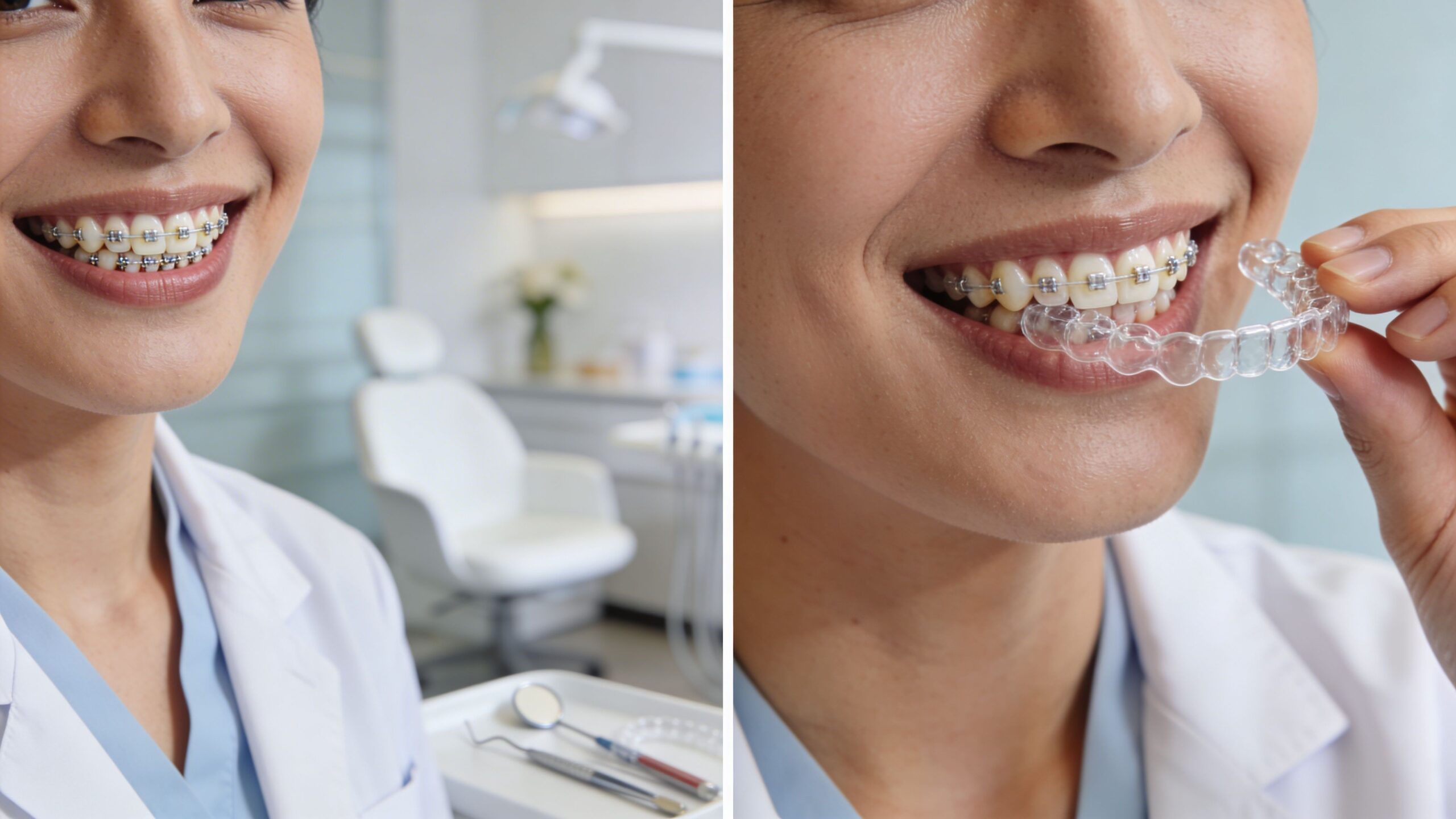
You’re here because your teeth have shifted, your bite feels off, or you’ve started noticing your smile more in photos, video calls, or day-to-day conversations. That’s common. Adults in Bellaire, West University, and Houston want straighter teeth, but they also want a treatment plan that fits work, family life, and long-term oral health.
The good news is that adult orthodontic treatment is no longer unusual. One-in-three orthodontic patients is now over age 18, according to the American Association of Orthodontists. Adults aren’t choosing treatment for appearance. They’re also addressing bite problems, uneven wear, and areas that are hard to clean well.
- Straighten Your Smile Confidently in Bellaire TX
- The Health Risks of Crooked Teeth and Misaligned Bites
- A Detailed Comparison of Adult Teeth Straightening Options
- Analyzing the Cost and Timeline for Your New Smile
- The ClearCorrect Advantage at Our Bellaire Dental Practice
- What to Expect During Your Treatment Journey with Dr Boren
- Common Questions About Adult Teeth Straightening
Straighten Your Smile Confidently in Bellaire TX
A lot of adults wait longer than they want to.
They think they missed their chance. Or they assume braces are the only option. Or they worry treatment will look too obvious at work, take too long, or feel hard to manage with a full schedule.
In practice, the conversation is more personal than that. A patient might say their bottom teeth have crowded over the years. Another may explain that they had braces when they were younger, but things shifted back. Others want a more polished smile before choosing whitening, veneers, or other cosmetic dentistry.
Adult treatment is normal now
If you’ve been searching for the best teeth straightening options for adults, you’re not alone. Adults now make up a large share of orthodontic patients, and modern treatment options are more discreet than many people expect.
That matters in a place like Bellaire, where many patients want a smile that looks natural and professional through the entire process. They want to keep speaking comfortably in meetings, eating normally when possible, and maintaining good oral hygiene without turning life upside down.
What adults usually care about most
Adult patients weigh a few practical questions before they do anything:
- Appearance: Will people notice the appliance right away?
- Comfort: Will it irritate my mouth or affect speech?
- Maintenance: How hard will brushing and flossing become?
- Timeline: Is this a quick refinement or a more involved correction?
- Long-term value: Will it improve health as well as appearance?
Those are the right questions.
Straightening teeth as an adult isn’t only about getting a nicer smile. It’s about choosing a method that solves the right problem without creating new ones in hygiene, comfort, or bite balance.
Dr. Boren has served Bellaire-area patients for more than 30 years, and that kind of experience matters when treatment decisions aren’t simple. Some adults are excellent candidates for clear aligners. Some need fixed braces because the tooth movement is more demanding. Some don’t need orthodontic treatment at all, and may be better served by cosmetic or restorative dentistry.
A good plan starts with diagnosis, not a sales pitch.
The Health Risks of Crooked Teeth and Misaligned Bites
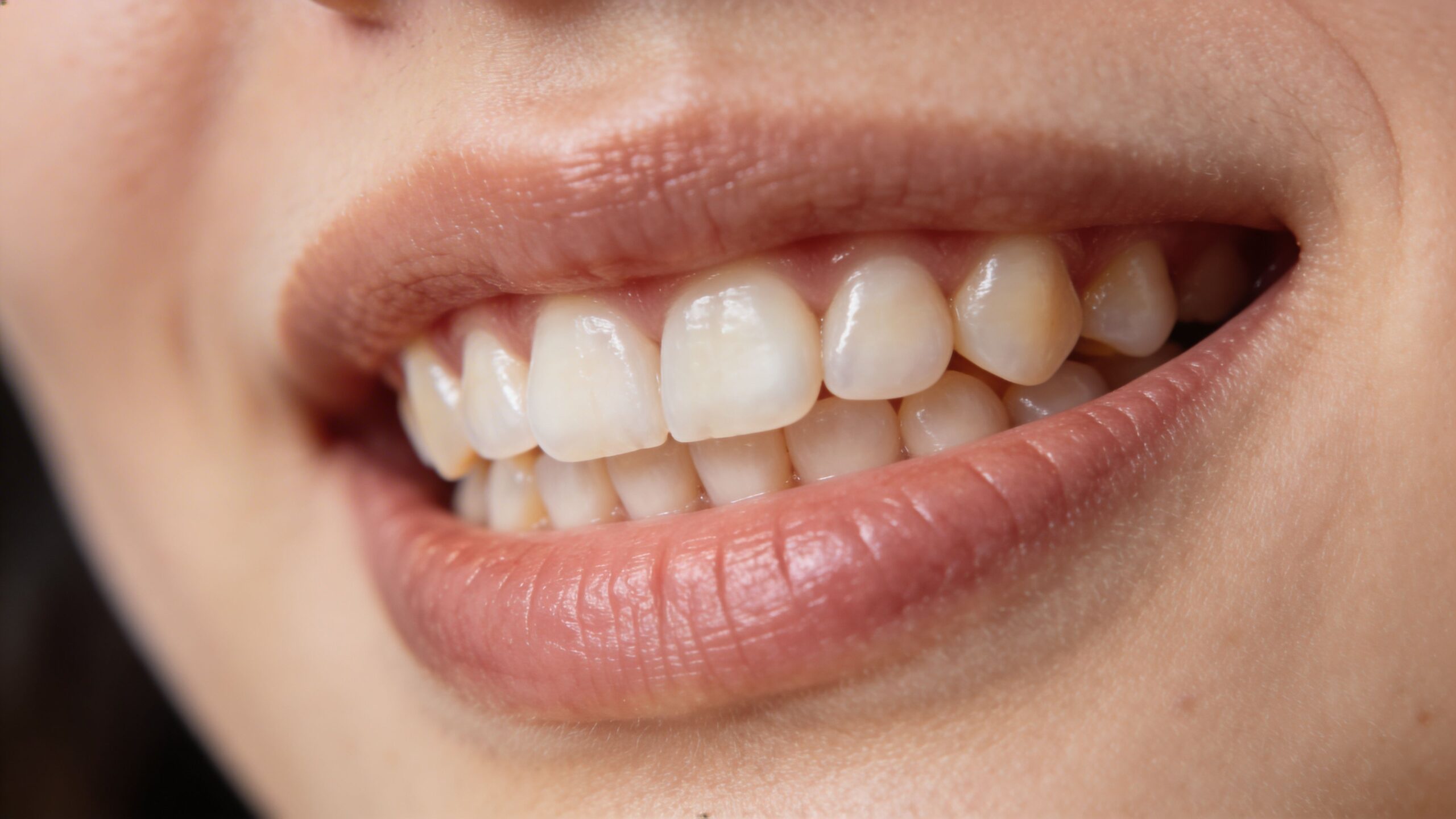
Crooked teeth can affect more than appearance. When teeth overlap, rotate, or sit out of position, they create small spaces that are harder to clean. Plaque tends to collect in those areas, and routine brushing becomes less effective.
That can raise the risk of cavities and gum inflammation over time. Misalignment can also change how teeth contact each other when you bite and chew.
Why bite alignment matters
A poor bite doesn’t always hurt right away. Sometimes the signs are gradual.
You may notice chipping on certain teeth, flattening of the edges, sensitivity, or one side of the mouth doing more work than the other. In other cases, the problem shows up as muscle tension, clenching, or jaw discomfort.
The verified research behind adult orthodontics notes that untreated misalignment may contribute to abnormal enamel wear, chewing difficulties, tooth decay, and gum disease. Those are practical health reasons to consider treatment, not cosmetic extras.
Problems that often start small
Misalignment can lead to several day-to-day issues:
- Hard-to-clean crowding: Tight overlaps make flossing more difficult and leave bacterial buildup behind.
- Uneven wear: Teeth that hit too hard or too early can wear down faster.
- Chewing strain: A bite that doesn’t come together well can make food breakdown less efficient.
- Jaw tension: Bite imbalance can aggravate the muscles and joints involved in chewing.
For some patients, this overlaps with TMJ symptoms or tension-related headaches. Straightening teeth doesn’t solve every jaw problem, but bite evaluation is often an important part of the larger picture.
Straightening can be preventive care
Many people think of orthodontic treatment as separate from general dental care. It isn’t.
When a dentist looks at crowding or bite problems, the concern isn’t only whether teeth look straighter in a mirror. The concern is whether those teeth are easier to maintain, whether the bite is healthier, and whether the mouth is set up to stay stable over time.
Clinical insight: The best adult treatment plan protects enamel, supports gum health, and creates a bite that functions more evenly. A straighter smile is part of the outcome, not the whole outcome.
That’s why a thorough diagnosis matters. A patient might come in focused on cosmetics, but the more important finding may be wear, gum irritation, or a bite pattern that needs attention before it becomes a larger restorative problem.
A Detailed Comparison of Adult Teeth Straightening Options
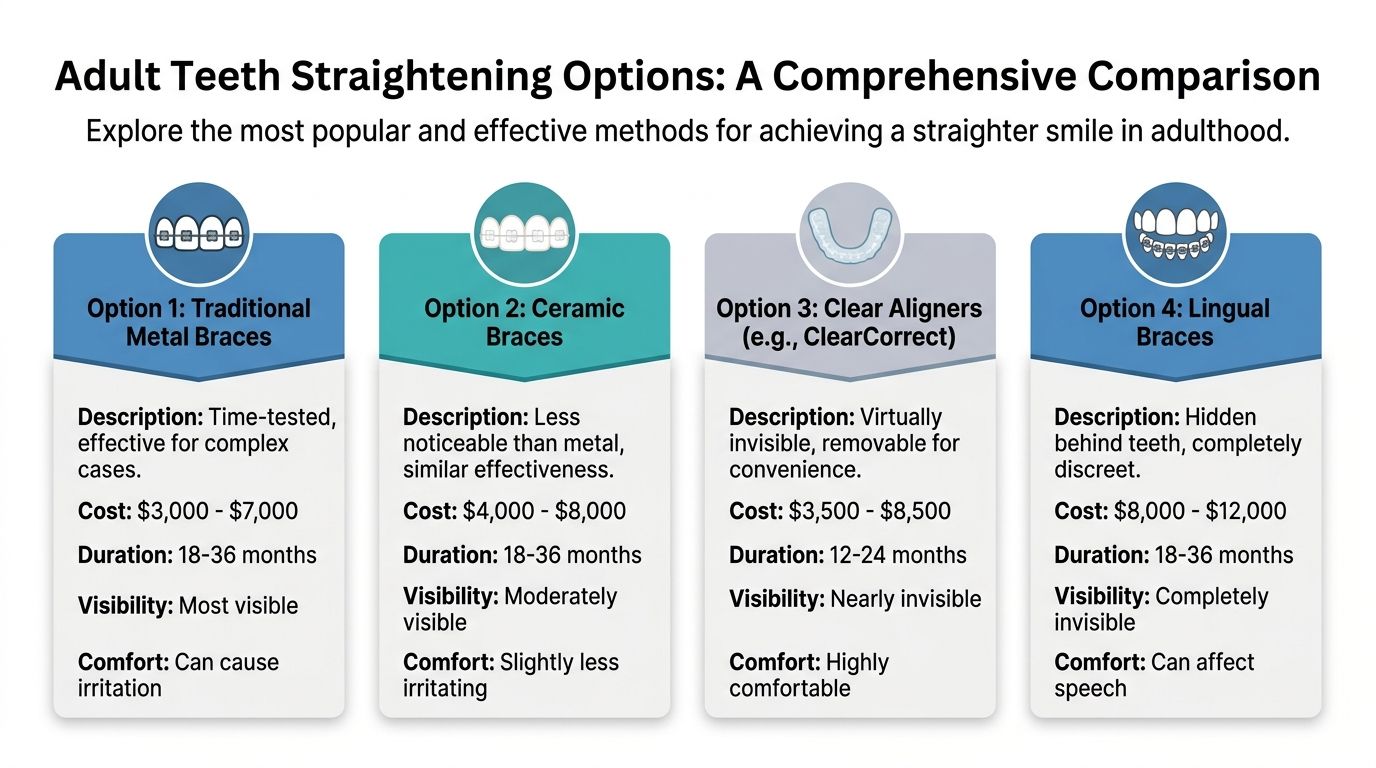
Adults choose between traditional metal braces, ceramic braces, lingual braces, and clear aligners. Each option has strengths. Each also has trade-offs.
The right choice depends on how much movement is needed, how visible you want treatment to be, how disciplined you can be with home care, and whether your case is simple, moderate, or complex.
| Option | Visibility | Comfort | Hygiene and maintenance | Best fit |
|---|---|---|---|---|
| Traditional metal braces | Most noticeable | Effective but can irritate cheeks and lips | More involved brushing and flossing | Complex tooth movement and bite correction |
| Ceramic braces | Less noticeable than metal | Similar function, slightly more aesthetic | Still requires careful cleaning around brackets | Adults who need fixed treatment but want a softer look |
| Lingual braces | Hidden behind teeth | Can affect speech and tongue comfort | Cleaning can be more demanding | Adults who want fixed treatment with maximum discretion |
| Clear aligners | Nearly invisible | Smooth, removable trays are easier to tolerate | Remove for meals and brushing, must be worn consistently | Mild to moderate alignment cases and adults who value flexibility |
Traditional metal braces
Metal braces still have an important place in adult treatment. They’re reliable for cases that involve more difficult tooth movement, significant rotations, or bite correction that removable trays may not handle as predictably.
Their downside is obvious. They’re visible, and they make cleaning more complicated.
Adults who choose metal braces do so because function matters more than discretion, or because the case is too complex for a removable system to be the safest choice.
Ceramic braces
Ceramic braces work like metal braces but blend in better with natural teeth. For many adults, that makes fixed treatment easier to accept.
They still require the same daily commitment to brushing, flossing, and regular visits. If your main concern is appearance but your teeth need the control of brackets and wires, ceramic braces can be a reasonable middle ground.
Lingual braces
Lingual braces sit behind the teeth, so they don’t show when you smile. That appeals to adults who want treatment hidden from view.
The trade-off is comfort and adaptation. Because the brackets sit near the tongue, speech can feel different at first, and some patients find them harder to get used to. Cleaning can be more demanding.
Clear aligners
For many adults, clear aligners are the most attractive option because they’re discreet and removable. The verified data notes that clear aligners use custom-made removable trays, require at least 20 hours of daily wear, and are best suited for mild to moderate alignment cases. Some treatments can be completed in 4 to 6 months for appropriate cases, according to this clinical overview of clear aligner protocols.
That removability is both the benefit and the challenge. You can take them out for meals and brushing. But if you don’t wear them consistently, treatment slows down or becomes less predictable.
For adults, the central trade-off is simple. Fixed braces give the dentist more control in complex cases. Clear aligners give the patient more flexibility in daily life.
If you’d like a more focused breakdown of when each method makes sense, this comparison of clear aligners vs braces is useful.
Which option works best for different goals
Some adults don’t need a full-mouth correction. They need a limited refinement after prior orthodontic treatment, or they want to close small spaces before cosmetic dentistry.
Others need extensive bite correction. In those cases, the most discreet option isn’t always the best option.
A practical way to think about it looks like this:
- Choose clear aligners if your case is mild to moderate, you want minimal visibility, and you’ll wear trays as directed.
- Choose ceramic braces if you need fixed control but want a less noticeable appliance.
- Choose metal braces if the movement is more complex and efficiency matters more than appearance.
- Choose lingual braces if discretion is essential and you accept a more difficult adjustment period.
What doesn’t work well
The wrong treatment choice fails for predictable reasons.
- Aligners don’t work well when the case is too complex or the trays aren’t worn enough.
- Fixed braces become frustrating when a patient isn’t prepared for the cleaning and maintenance involved.
- Cosmetic-only fixes don’t solve bite problems if teeth need to be moved.
That’s why adults benefit from a dentist who looks beyond the headline question of “braces or aligners” and considers wear, gum health, bite function, and long-term stability.
Analyzing the Cost and Timeline for Your New Smile
Cost matters. So does the amount of time treatment will take.
Adults want a straightforward answer, but pricing depends on the complexity of movement, the type of appliance, and how much professional supervision the case requires.
What adults in this market usually see
Verified market data shows clear price differences across treatment types. In-office clear aligner systems such as ClearCorrect average $3,000 to $6,000, while lower-cost at-home systems can be cheaper but don’t provide the same level of in-person oversight for more complicated problems, as explained in this detailed guide to adult teeth straightening options.
Traditional metal braces are the most budget-friendly option for complex treatment. At-home aligners may look appealing on price, but they’re limited to minor correction and place more responsibility on the patient.
Timeline depends on the case, not just the product
The timeline question is just as important.
Some clear aligner cases finish quickly, especially when the movement is limited. More involved cases take longer. Fixed braces require more time, but they may still be the better choice if the bite correction is more demanding and the goal is a stable result.
A short treatment that doesn’t fully address the problem isn’t a shortcut. It’s just incomplete care.
Practical rule: Adults should compare treatment timelines only after they understand the diagnosis. A fast plan for the wrong case can cost more later in refinements, relapse, or restorative work.
For local patients, a detailed cost conversation should also include what comes after the active phase. Retainers, follow-up visits, and any needed refinement matter because they affect the total investment in your result.
If you want a closer look at local pricing considerations, this page on braces cost in Houston adds useful context.
Why professional supervision changes value
The least expensive path isn’t always the best value.
Professional supervision matters when tooth movement affects the bite, when teeth already show wear, or when gum support needs evaluation before anything moves. Adults have a more complicated dental history than teenagers. Old restorations, grinding, recession, or previous orthodontic work can all change the safest plan.
A well-made diagnosis can prevent avoidable problems.
This short video offers a helpful overview of the cost side of treatment and what patients should think about before choosing an option:
When patients frame treatment as a long-term health decision instead of only a cosmetic purchase, the choices become clearer. The goal isn’t to pay less upfront. The goal is to choose a method that fits your mouth, your schedule, and your long-term dental needs.
The ClearCorrect Advantage at Our Bellaire Dental Practice
For many busy adults, ClearCorrect hits the right balance between appearance, convenience, and effective tooth movement.
That’s one reason clear aligners have become such a common choice for cosmetic smile improvement. Verified data shows that over 50% of clear aligner users are adults seeking discreet orthodontic solutions, which reflects how strongly adults value low-visibility treatment in everyday life, according to these Invisalign adoption statistics and adult treatment trends.
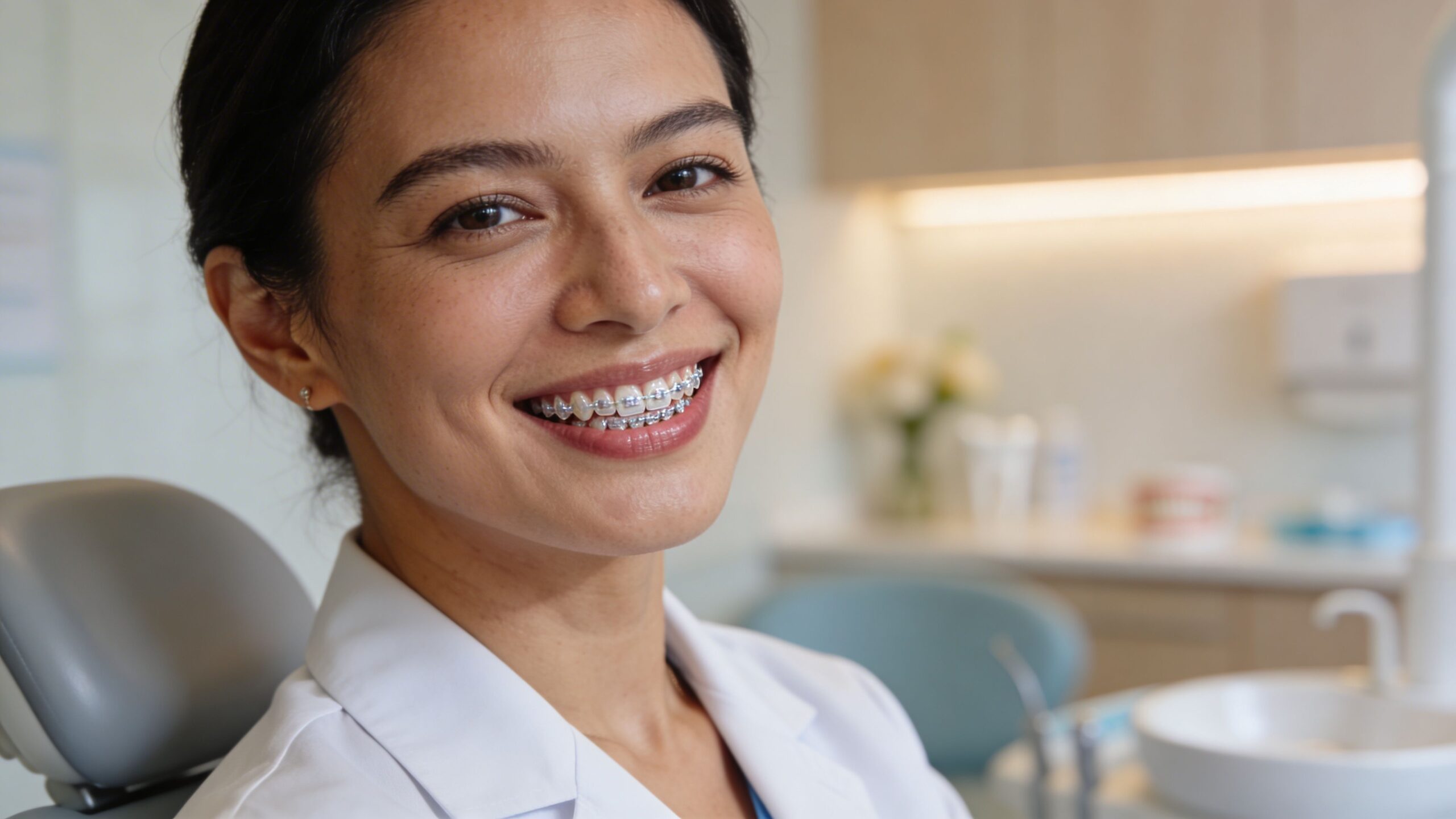
Why adults prefer it
ClearCorrect uses a sequence of custom trays to guide teeth into better alignment. Because the trays are removable, patients can eat without brackets or wires and brush and floss much more normally than they could with fixed braces.
That matters for adults who want orthodontic improvement without changing every part of their daily routine.
Common reasons adults lean toward ClearCorrect include:
- Discretion: The trays are much less noticeable in professional and social settings.
- Convenience: You remove them for meals and oral hygiene.
- Comfort: Smooth plastic trays feel gentler than brackets and wires.
- Planning: Digital treatment planning helps map movement before active treatment begins.
Why diagnosis still matters
ClearCorrect is not the answer for every case.
It tends to work best when crowding, spacing, or bite concerns fall into the mild to moderate range. If a patient needs complex movement, significant bite correction, or more force in multiple directions, fixed appliances may still be the more dependable choice.
That’s why treatment should be selected after records, bite analysis, and a clear review of goals. Adults assume the most invisible option is the right one. Sometimes it is. Sometimes it isn’t.
Where it fits in a broader smile plan
At Charles E. Boren, ClearCorrect can also fit into a larger cosmetic or restorative plan. Some adults want to straighten first, then consider whitening, bonding, veneers, or other finishing work once teeth are in a better position.
That sequence makes sense. When teeth are aligned first, cosmetic treatment can be more conservative and easier to plan.
A key advantage of clear aligners isn’t only that they’re hard to notice. It’s that they let many adults improve alignment while keeping meals, meetings, and home care normal.
For the right patient, that combination is hard to beat.
What to Expect During Your Treatment Journey with Dr Boren
Most adults feel more comfortable once they know what the process looks like.
The first visit isn't about choosing trays or brackets on the spot. It's about understanding your teeth, your bite, your goals, and whether the mouth is healthy enough to begin moving teeth safely.
Your first appointment
A thorough exam comes first. That may include digital x-rays, photographs, and a close evaluation of tooth position, enamel wear, gum health, and bite function.
If you’ve been looking for a dentist in Bellaire, TX who takes a broader view of treatment, this step is where that difference shows. Straightening isn’t isolated from the rest of dental care. Existing concerns like decay, gum irritation, old dental work, or grinding habits have to be considered before any movement begins.
Building a personalized plan
After the records are reviewed, the treatment recommendation becomes much clearer.
Some patients learn they’re good candidates for clear aligners. Others need fixed braces. Some may benefit from limited movement before cosmetic dentistry, and a few find that their main problem is retention or bite stabilization rather than major repositioning.
This is also where comfort concerns are addressed. For anxious patients, a calm environment, clear communication, and sedation options when appropriate can make treatment much easier to start.
Follow-up visits and long-term stability
Once treatment begins, follow-up visits are used to check progress, make adjustments, and confirm that teeth are tracking the way they should. Those visits matter because they keep small issues from turning into larger delays.
The most overlooked part of treatment comes after the active movement is done. Many consumer guides spend limited time on retention, even though verified guidance notes that retainer compliance is the most common reason for treatment failure, as discussed in this overview of adult straightening and retention concerns.
That’s why retention shouldn’t be treated like an afterthought.
If you want your result to last, the conversation about retainers needs to start before treatment begins, not after the trays or braces come off.
Patients should know what type of retainer they’ll need, how often they’ll wear it, and how periodic check-ins help protect the investment they made in their smile.
Common Questions About Adult Teeth Straightening
Am I too old to straighten my teeth
No. Healthy teeth can be moved in adulthood. Age alone doesn’t disqualify you.
The more important questions are whether your gums are healthy, whether your bone support is adequate, and what kind of tooth movement is needed. Many adults are strong candidates once those basics are evaluated.
Will treatment hurt
Most adults describe treatment as pressure rather than pain.
That settles down. The bigger comfort difference tends to come from the type of appliance chosen and how complex the movement is.
How do I keep my teeth clean during treatment
That depends on the method.
With clear aligners, you remove the trays to brush and floss, which makes home care simpler. With braces, you’ll need more deliberate brushing around brackets and wires, and flossing takes more effort.
A few habits make a big difference:
- Brush carefully: Don’t rush around crowded areas or orthodontic hardware.
- Clean after meals when possible: This helps reduce buildup before it sits for hours.
- Keep follow-up visits: Small hygiene issues are easier to correct early.
- Use the appliance correctly: Aligners only work when they’re worn as directed.
What if I had braces before and my teeth shifted
That’s common in adults.
Sometimes the movement is minor and can be corrected with limited treatment. In other cases, the issue is less about active straightening and more about rebuilding a retention plan that you can maintain.
Teeth that moved after past orthodontic care are one reason adults often search for the best teeth straightening options for adults later in life.
Are clear aligners always better than braces
Not always.
They’re more convenient and less visible, which makes them appealing. But the best appliance is the one that matches the biology of your case. If a fixed appliance gives you more controlled movement and a more stable bite, that may be the better decision.
What happens after treatment is complete
Retention begins.
That usually means wearing retainers as instructed and returning for periodic checks so your dentist can make sure everything is holding where it should. Without retention, even a successful treatment result can drift.
Can cosmetic dentistry replace straightening
Sometimes cosmetic procedures can improve the look of uneven teeth, but they don’t move teeth or correct the bite.
If the underlying problem is crowding, spacing, or misalignment, cosmetic treatment alone may hide the issue instead of solving it. A proper exam helps determine whether orthodontic treatment, cosmetic dentistry, or a combination makes the most sense.
What should I expect as a new patient
You should expect a conversation, not pressure.
A good new patient exam should identify what’s happening, explain the trade-offs of each option, and help you decide whether treatment now makes sense. If you’re also looking for routine dental care, a cosmetic dentist near me, or support for related issues like worn teeth, jaw discomfort, whitening, restorations, or even future needs such as tooth extraction or dental implants near me, the evaluation should connect those pieces instead of treating them separately.
If you’re ready to find out which straightening option fits your smile, bite, and schedule, schedule a consultation with Charles E. Boren. A personalized exam can show whether clear aligners, braces, or another approach makes the most sense for your long-term oral health in Bellaire, TX.