
What Is a Dental Flipper or Temporary Tooth Replacement — and Are Bellaire Patients Choosing the Right Short-Term Option While They Wait for an Implant?
If you’ve had a tooth extracted — or you’ve lost one unexpectedly — you probably know the feeling of running your tongue across that gap and wondering what comes next. For many patients in Bellaire and the surrounding neighborhoods, the answer isn’t immediate. Dental implants, which are often the best long-term solution for a missing tooth, typically require a healing period of several months before the final restoration can be placed. That leaves a real question on the table: what do you do about your smile in the meantime?
That’s where temporary tooth replacement options like a dental flipper come in. Most patients have never heard of a flipper until they need one — and that gap in awareness is exactly why so many people either walk around with an empty space or end up with a temporary solution that doesn’t actually serve them well.
- What Is a Dental Flipper, Exactly?
- When Does a Dental Flipper Make Sense — and When Doesn't It?
- Other Temporary Options Worth Knowing About
- What Happens to Your Jaw While You Wait — and Why It Matters
- What Should You Ask Your Dentist Before Getting a Flipper?
- A Note on Comfort and Fit
- Frequently Asked Questions About Temporary Tooth Replacement in Bellaire
- Ready to Talk Through Your Options?
What Is a Dental Flipper, Exactly?
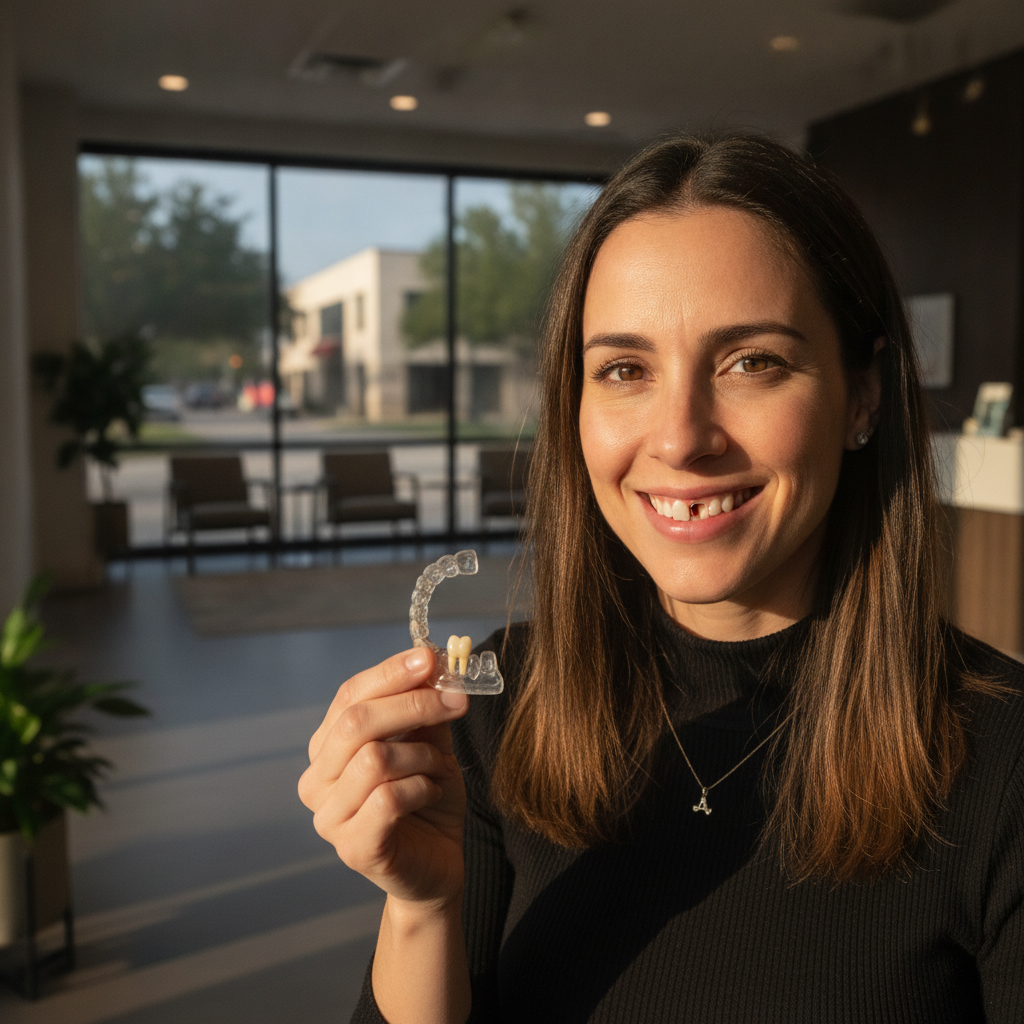
A dental flipper is a removable, temporary partial denture that holds one or more artificial teeth. It’s made from an acrylic base — usually tinted to match your gum tissue — with a lightweight tooth or teeth attached. The whole appliance rests on your gums and may hook around nearby natural teeth with small wire clasps or rely on suction alone, depending on its design.
The name “flipper” comes from the fact that you can flip it in and out of your mouth with your tongue — which is admittedly a bit of a party trick, but more importantly, it means you’re not committing to anything permanent while your jaw heals or while you decide on your long-term treatment plan.
Flippers are lightweight, relatively affordable compared to other options, and can be made quickly — sometimes within a week or two of an extraction. For patients who are self-conscious about a visible gap, especially in the front of the mouth, a flipper can restore the appearance of a complete smile right away.
When Does a Dental Flipper Make Sense — and When Doesn’t It?
A flipper is genuinely useful in certain situations. If you’ve just had a front tooth extracted and you’re waiting for an implant to integrate with your jawbone, a flipper gives you something presentable to wear to work, family dinners, or social events in Meyerland or West University Place without feeling like you have to explain anything to anyone.
That said, a flipper is not designed for heavy chewing. It’s a cosmetic and functional placeholder, not a permanent chewing surface. Patients who try to use a flipper the way they’d use a natural tooth — biting into firm foods, applying pressure on the appliance regularly — often end up cracking the acrylic or irritating the underlying gum tissue. A flipper is best thought of as a temporary confidence solution, not a functional replacement.
Flippers are also not ideal for every location in the mouth. A missing back molar may not need a temporary replacement at all from an aesthetic standpoint, though your dentist may still recommend one to prevent neighboring teeth from shifting into the open space over time — which is a real concern that can complicate implant placement later.
Other Temporary Options Worth Knowing About
A flipper isn’t the only temporary route available. Depending on your situation, your dentist might also discuss:
- Essix retainer with a tooth: A clear plastic retainer with a tooth-colored pontic attached. It’s often less noticeable than a flipper and a good choice for patients who already wear retainers or clear aligners.
- Temporary crown or bridge: In some cases, a temporary fixed restoration can be placed over existing teeth while a permanent bridge or implant-supported crown is being fabricated. This isn’t removable, which some patients find more comfortable.
- Immediate temporary implant crown: For some patients who are good candidates, a temporary crown can actually be placed on the implant post at the time of surgery, giving you a fixed tooth from day one. Not everyone qualifies for this, but it’s worth asking about.
Each option has trade-offs in terms of cost, comfort, durability, and how well it protects the surrounding teeth and bone while you heal. A conversation with your dentist — one who knows your full oral health picture — is really the only way to figure out which one fits your situation. You can learn more about the full range of restorative services available at our Bellaire practice here.
What Happens to Your Jaw While You Wait — and Why It Matters
Here’s something most patients aren’t told clearly enough: when a tooth is missing, the jawbone underneath begins to shrink. It’s a process called resorption, and it happens because the bone no longer receives the stimulation it used to get from the tooth root. This is one reason why dental implants — which actually integrate into the bone — are considered superior to bridges or dentures for long-term bone health.
During the waiting period between extraction and implant placement, a temporary appliance like a flipper does not stop bone loss. It sits on top of the gums; it doesn’t stimulate the bone below. That’s not a reason to avoid a flipper — it’s still a perfectly reasonable placeholder — but it’s a reason not to wait too long before moving forward with a permanent solution. Patients in Southside Place and across the greater Houston area who delay implant treatment for a year or more sometimes find they need a bone graft before they can proceed, which adds both time and cost to the process.
What Should You Ask Your Dentist Before Getting a Flipper?
If you’re heading into an extraction or you’re currently living with a gap in your smile, here are questions worth raising at your next appointment:
- Do I need a temporary replacement at all, given where the missing tooth is located?
- How long will I realistically be wearing a temporary option before we move to the permanent restoration?
- Will a flipper fit comfortably with my existing bite, or is there a better short-term option for my situation?
- Should I be worried about bone loss during the waiting period, and is there anything we can do to minimize it?
- Does my insurance cover a temporary appliance, and what portion of the implant or bridge will it cover?
These aren’t complicated questions, but they often go unasked — and the answers shape your experience significantly. At our Bellaire practice, Dr. Boren takes time to walk through these decisions with you so that you understand your options before any treatment begins, not after.
A Note on Comfort and Fit
One thing patients don’t always expect: flippers can take some getting used to. Speaking clearly, eating comfortably, and keeping the appliance clean all require a small adjustment period. If your flipper feels loose, causes sore spots, or just doesn’t feel right after the first week, that’s a reason to come back in — not a reason to suffer through it quietly. A well-made flipper that fits properly is very different from one that was rushed or that hasn’t been adjusted correctly.
Fit also matters for protecting the underlying gum tissue during healing. An ill-fitting flipper that rocks or presses unevenly on the gums can slow the healing process and make the eventual implant placement more complicated. This is one area where working with a dentist who knows your mouth well — rather than a high-volume chain practice where you may see a different provider each visit — makes a real difference.
Frequently Asked Questions About Temporary Tooth Replacement in Bellaire
How long can you wear a dental flipper?
A flipper is designed to be a short-term solution, typically worn for a few weeks to several months. Most patients use one during the healing phase after an extraction while waiting for an implant or other permanent restoration. Wearing a flipper for years is not recommended because the appliance can wear down, the fit changes as gum tissue heals, and long-term use without a permanent solution allows bone loss to continue.
Can you eat normally with a dental flipper?
You can eat soft foods comfortably with a flipper, but it’s not designed for heavy chewing. Hard, crunchy, or sticky foods can crack or dislodge the appliance and irritate the underlying gum tissue. Think of it as something that lets you eat a meal without feeling self-conscious — not a substitute for a full tooth when it comes to biting into a sandwich or an apple.
Does insurance cover dental flippers in Texas?
Some dental insurance plans cover a portion of a temporary partial denture, but coverage varies widely. It’s worth checking with your carrier before treatment. If out-of-pocket costs are a concern, CareCredit financing can help spread payments across time. Dr. Boren’s team can review your insurance benefits and help you understand what to expect before you commit.
How is a flipper different from a permanent partial denture?
A flipper and a traditional removable partial denture are similar in concept — both are removable appliances with artificial teeth — but a permanent partial denture is typically made from stronger, more durable materials and is designed to be a long-term solution. A flipper is lighter, less expensive, and fabricated quickly, which is why it works well as a placeholder but not as a permanent answer.
Can a dental flipper help prevent teeth from shifting after extraction?
Yes, to some extent. When a tooth is removed, neighboring teeth can gradually drift toward the open space over time. A flipper fills that space and can help slow shifting, though it doesn’t replace the full stimulating effect of a tooth root on the surrounding bone and tissue. If shifting is a concern — particularly for patients waiting longer for an implant — your dentist may recommend a more fixed temporary option.
Ready to Talk Through Your Options?
If you’re facing a tooth extraction or you’re already living with a gap and not sure what to do next, you don’t have to figure it out alone. Dr. Boren has been helping patients across Bellaire, Houston, and West University Place navigate exactly these decisions for decades — without pressure, without confusion, and without being rushed into a plan that doesn’t fit your life or your budget.
A temporary tooth replacement conversation is really a bigger conversation about where your oral health is headed and what permanent solution makes the most sense for you. We’re glad to have that conversation at whatever pace feels right. Reach out to our Bellaire office to schedule a consultation and let’s talk through what your next step actually looks like.