
What Is Tooth Erosion — and Are Everyday Habits in West University Place Actually Wearing Down Your Enamel?
Yes — tooth erosion is real, it’s more common than most people realize, and there’s a good chance some part of your daily routine is contributing to it. In West University Place, Bellaire, and the surrounding Houston neighborhoods, patients often come in noticing that their teeth feel more sensitive than they used to, or that certain teeth look slightly more transparent at the edges. They’re rarely surprised to hear that the cause might be something as ordinary as sparkling water, citrus, or a long-standing acid reflux issue. What does surprise them is how long the damage has been quietly building — and how early intervention can make a significant difference.
Enamel, the hard outer layer that protects your teeth, doesn’t grow back. Once it’s gone, it’s gone. That’s what makes erosion different from a cavity, and honestly, what makes it more important to catch early. So let’s talk about what it actually is, what’s causing it, and what your dentist can do about it before the window for simpler treatment closes.
- What Does Tooth Erosion Actually Mean?
- The Everyday Habits That May Be Causing the Problem
- How a Dentist Actually Identifies Erosion — and Why It Matters That They Look
- What You Can Do Right Now to Slow Erosion
- When Erosion Requires Restorative Treatment
- Frequently Asked Questions About Tooth Erosion
- Ready to Find Out Where Your Enamel Actually Stands?
What Does Tooth Erosion Actually Mean?
Tooth erosion — sometimes called acid erosion or enamel erosion — happens when acid repeatedly contacts your tooth surfaces and slowly dissolves the mineral structure of your enamel. This is different from mechanical wear (like grinding, which is a separate issue) and different from a cavity, which is caused by bacteria producing acid in a localized spot. Erosion tends to affect broader surface areas, and it often shows up across multiple teeth at once.
What you might notice first is increased sensitivity — especially to cold drinks, sweet foods, or even breathing through your mouth on a cool morning. As erosion progresses, teeth can start to look more yellowish (because the inner layer of dentin becomes more visible as enamel thins), feel rougher or chalkier, or take on a slightly hollowed or cupped appearance on the chewing surfaces. The edges of front teeth may start to look rounded or slightly translucent.
These are signs that something has been happening for a while. They’re easy to miss until they become noticeable — which is exactly why your dentist checking for early erosion at routine visits matters so much.
The Everyday Habits That May Be Causing the Problem
This is the part that tends to catch people off guard, because most of the common causes of tooth erosion feel completely harmless — even healthy.
- Sparkling water and flavored carbonated beverages: Even unflavored sparkling water is acidic. Flavored versions — including many popular brands — are significantly more so. Sipping throughout the day means your teeth are in near-constant acid contact.
- Frequent citrus consumption: Lemon water in the morning is a popular wellness habit, but citric acid is one of the most erosive substances your teeth encounter. Squeezing lemon into everything, or snacking on oranges and grapefruit regularly, adds up over time.
- Sports and energy drinks: These often combine high acidity with sugar, making them particularly damaging. Many patients in the Texas Medical Center corridor or near the Galleria area who work long hours reach for these routinely.
- Vinegar-based foods: Kombucha, pickled foods, and certain salad dressings are increasingly popular — and consistently acidic.
- Acid reflux and GERD: This is one of the most significant and underrecognized causes of erosion. If stomach acid is reaching your mouth regularly — even without obvious heartburn symptoms — it’s quietly bathing your teeth in acid, often while you sleep.
- Frequent vomiting: Whether from illness or a history of eating disorders, repeated exposure to stomach acid is one of the most damaging patterns a dentist can identify on tooth surfaces.
None of this is meant to make you feel bad about your habits. It’s meant to help you understand the connection, because most patients genuinely don’t know these things until someone explains it clearly.
How a Dentist Actually Identifies Erosion — and Why It Matters That They Look
One of the gaps we’ve noticed in how dental practices around the Houston area discuss erosion is this: they focus on treatment without explaining what the diagnostic process actually looks like. So here’s what happens in a thorough exam.
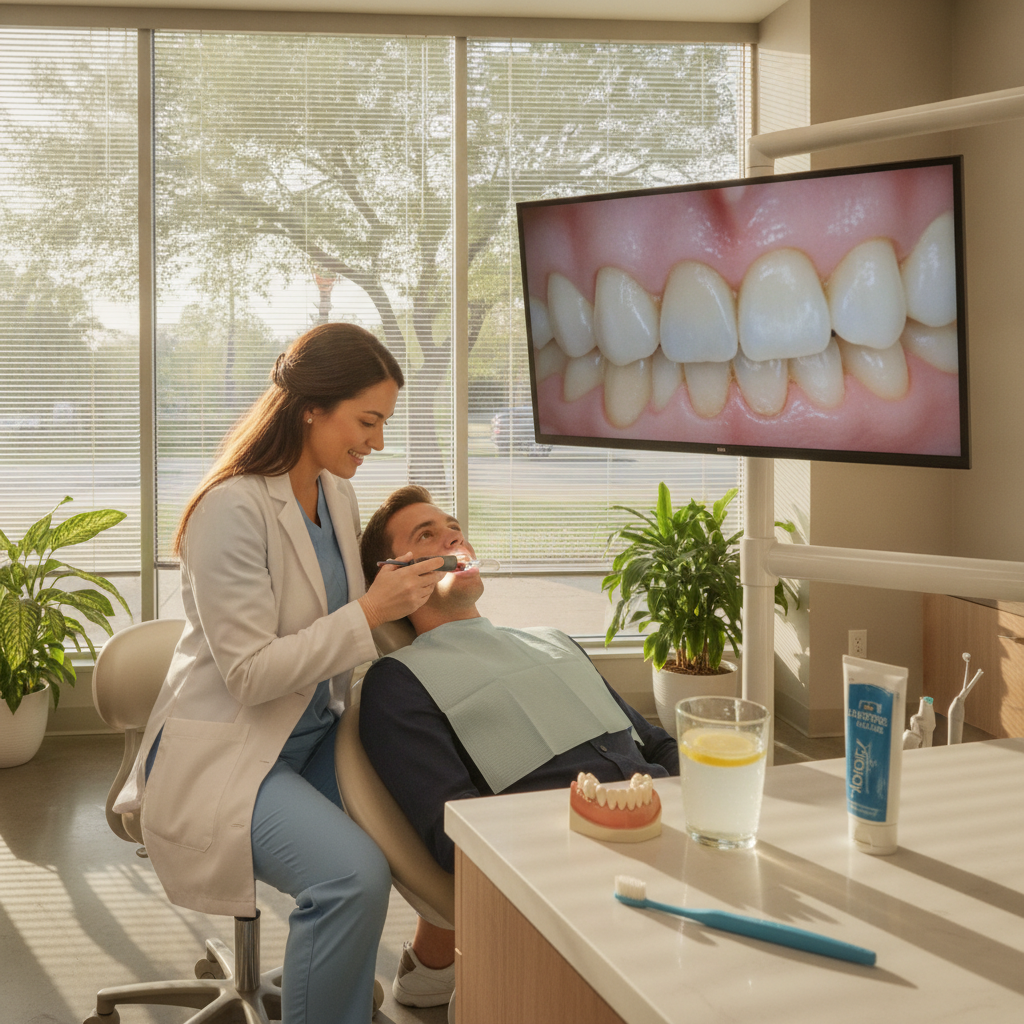
When Dr. Boren examines your teeth, he’s looking at more than whether you have cavities. He evaluates the overall appearance of your enamel — its thickness, texture, translucency at the edges of teeth, and any cupping or concavity on chewing surfaces. He also looks at patterns: erosion from dietary acids tends to show up differently than erosion from reflux or grinding. Those patterns tell a story.
If there are signs of erosion, the conversation that follows is about the likely cause, what changes might slow or stop it, and what your restorative options look like depending on severity. In mild cases, that might just mean modifying habits and using a remineralizing toothpaste or prescription fluoride. In more advanced cases, it might involve protecting damaged surfaces with bonding, veneers, or crowns. You can learn more about the full range of services Dr. Boren offers here.
The key point is that catching it early — before enamel loss becomes severe — gives you far more options and far less expense.
What You Can Do Right Now to Slow Erosion
You don’t have to overhaul your entire diet. Small, consistent adjustments make a real difference:
- Drink acidic beverages through a straw to reduce contact with tooth surfaces
- Rinse with plain water immediately after consuming acidic foods or drinks
- Wait at least 30 minutes after eating before brushing — brushing on softened enamel can accelerate wear
- If you have reflux symptoms, talk to your physician and mention it to your dentist — it’s worth monitoring both medically and dentally
- Ask your dentist about prescription-strength fluoride toothpaste or remineralizing products like MI Paste, which can help strengthen vulnerable enamel
- Limit sipping acidic drinks throughout the day; consuming them in one sitting is far less damaging than slow, constant exposure
These aren’t dramatic changes. But for patients in Meyerland, Southside Place, and West University Place who come in with early signs of erosion and commit to a few simple adjustments, the difference at their next visit is often measurable.
When Erosion Requires Restorative Treatment
If erosion has progressed to the point where enamel loss is affecting the appearance or function of your teeth, there are good options. Dental bonding can protect and restore the surface of mildly affected teeth. For more significant loss — particularly on front teeth that have become thin or transparent-looking — porcelain veneers can restore both the appearance and structural integrity of the tooth surface. Learn more about cosmetic options including veneers and all-porcelain crowns.
The goal is always to do the least invasive thing that solves the problem. Dr. Boren takes the time to explain exactly what’s happening with your specific teeth and walks you through options without pressure. If you’re not ready for a particular treatment, that’s okay — the conversation still helps you understand what to watch for and when acting sooner would actually save you money and tooth structure.
Frequently Asked Questions About Tooth Erosion
Can tooth enamel actually grow back?
No — once enamel is lost, the body cannot regenerate it. That’s what makes prevention and early intervention so important. However, remineralizing products can help strengthen weakened enamel before it’s fully lost, which is a meaningful distinction. Your dentist can recommend the right products based on where your enamel currently stands.
How do I know if my sensitivity is from erosion or something else?
Sensitivity has several possible causes — erosion, gum recession, a cracked tooth, or early decay. The pattern and location matter. Erosion-related sensitivity often affects multiple teeth and tends to worsen with cold, sweet, or acidic foods. A dental exam is the only reliable way to identify the actual cause and rule out anything more urgent.
Is sparkling water really bad enough to cause erosion?
Plain sparkling water is mildly acidic — significantly less damaging than soda or citrus juice, but not entirely neutral. The concern is less about a single glass and more about sipping it constantly throughout the day, every day, for years. Patients who do this and already have thin enamel may notice it accelerates erosion. If sparkling water is a daily staple, just be mindful of how you’re consuming it.
I’ve had acid reflux for years. Should I tell my dentist?
Absolutely — and your dentist should be asking. GERD is one of the most significant and underrecognized contributors to tooth erosion, particularly on the inner surfaces of upper teeth and the chewing surfaces of lower back teeth. If you have reflux, Dr. Boren can watch for these specific erosion patterns and factor that into your care plan.
What does treatment for erosion actually cost?
It depends heavily on severity and which teeth are affected. Remineralizing products and prescription fluoride are relatively low-cost preventive steps. Bonding is typically more affordable than veneers. For patients whose erosion has advanced to the point of needing cosmetic or restorative work, CareCredit financing is available to spread costs over time. The earlier you address it, the more affordable the solution tends to be.
Ready to Find Out Where Your Enamel Actually Stands?
If you’ve been noticing more sensitivity lately, or if it’s simply been a while since a dentist looked closely at the overall condition of your enamel, this is a reasonable moment to schedule an exam. Dr. Boren has been practicing in Bellaire for decades, and he takes the kind of careful, unhurried approach to exams that makes it easy to ask questions and understand exactly what’s going on in your mouth — no pressure, no upsell, just clear information and honest guidance.
Patients from West University Place, Meyerland, Southside Place, and across Houston’s southwest side are welcome at the practice. Contact the office to schedule an appointment or ask a question — we’re glad to help.