
What Is an Oral Cancer Screening — and Should Bellaire Patients Be Asking for One at Every Checkup?
Yes — and the honest answer is that most patients don’t know to ask, and some dental offices don’t make it a visible part of every exam. An oral cancer screening is a quick, painless visual and physical check that your dentist performs to look for early signs of abnormal tissue in your mouth, throat, and surrounding structures. It takes only a minute or two, it doesn’t require any special equipment or preparation, and catching something early can make an enormous difference in outcomes. If you’re a patient in Bellaire, West University Place, or the surrounding Houston neighborhoods, it’s worth understanding exactly what this screening involves — and why it shouldn’t be something you have to specifically request.
- What Does an Oral Cancer Screening Actually Involve?
- Who Is Most at Risk — and Is It Really Only Smokers?
- Why Early Detection Changes Everything
- What's Missing From Many Local Dental Websites — and Why That Matters
- How Often Should You Be Screened?
- What If You Haven't Been to the Dentist in a While?
- Frequently Asked Questions
- Ready to Schedule a Thorough Exam in Bellaire?
What Does an Oral Cancer Screening Actually Involve?
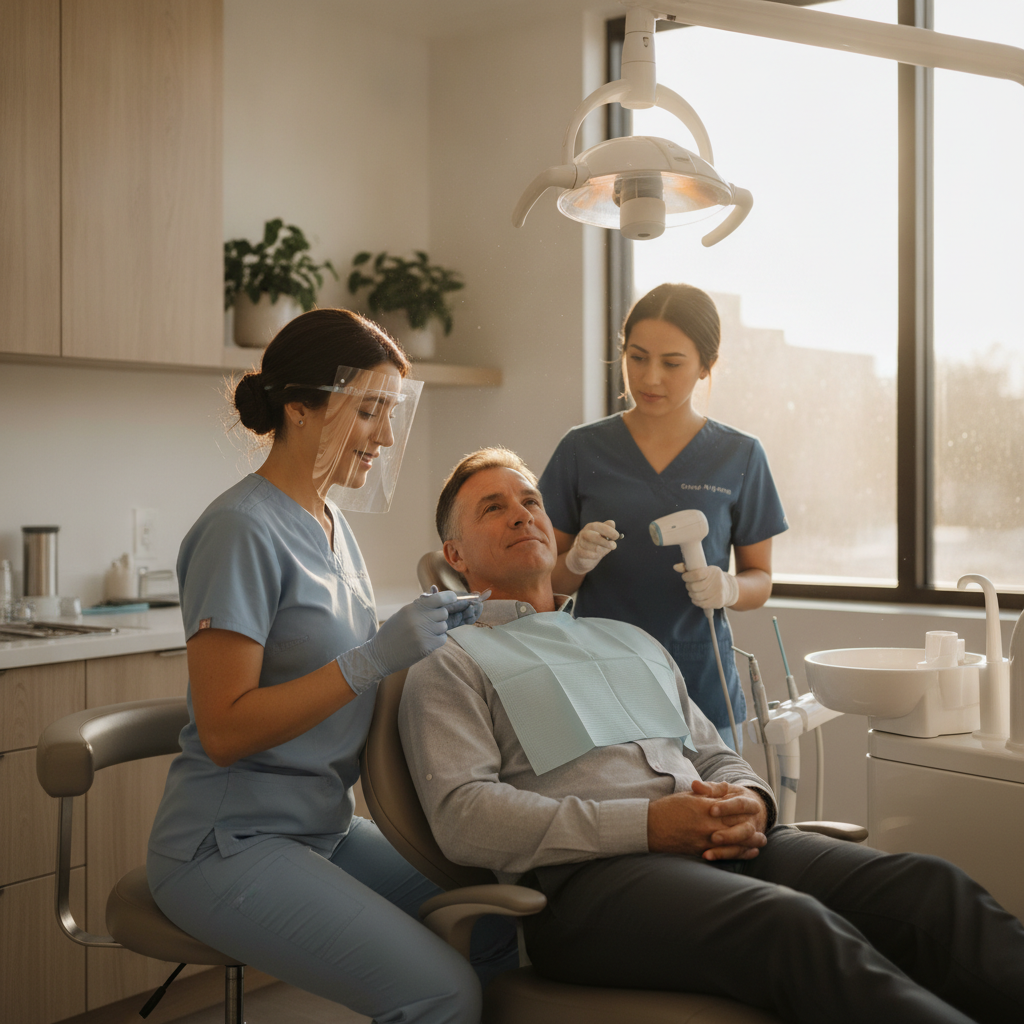
A lot of patients are surprised to learn they may have already received a basic screening without realizing it. During a thorough dental exam, your dentist isn’t just looking at your teeth and gums. A proper screening includes a visual inspection of your lips, the inside of your cheeks, your tongue (top, sides, and underneath), the floor of your mouth, the roof of your mouth, and the back of your throat. Your dentist will also gently feel along your jaw, neck, and lymph nodes for any swelling or irregularities.
What they’re looking for: patches of red or white tissue that look unusual, sores that haven’t healed within two weeks, lumps or thickened areas, numbness or tenderness in areas of the mouth that don’t have an obvious cause, and any changes in how your bite fits together. None of this requires X-rays or lab work to get started — it’s largely a hands-on, eyes-on assessment by someone who knows what normal looks like and what doesn’t.
If something looks worth monitoring or investigating further, your dentist will tell you clearly and calmly what they see, what it might mean, and what the next step is. That might be a follow-up appointment in a few weeks to see if a sore resolves, or a referral to a specialist. In a well-run practice, you won’t be left guessing.
Who Is Most at Risk — and Is It Really Only Smokers?
This is one of the most common misconceptions, and it’s worth addressing directly. While tobacco use and heavy alcohol consumption do significantly raise the risk of oral cancer, a growing number of cases — particularly in younger adults — are linked to certain strains of the human papillomavirus (HPV). That means oral cancer is no longer a condition that only applies to older patients with a long history of smoking.
That said, some factors do increase your overall risk:
- Current or former tobacco use (cigarettes, cigars, chewing tobacco, or vaping products)
- Regular or heavy alcohol consumption
- HPV exposure
- Prolonged sun exposure (which affects the lips specifically)
- A personal or family history of oral or throat cancer
- Age — risk increases after 40, though younger patients are not immune
If you don’t check any of these boxes, that’s good news — but it’s not a reason to skip the screening. Oral cancer can and does appear in patients with no obvious risk factors, which is exactly why routine visual exams matter.
Why Early Detection Changes Everything
Oral cancer has a significantly better survival rate when it’s caught early — before it spreads to the lymph nodes or other tissues. The challenge is that early-stage oral cancer often doesn’t cause pain. A small white or red patch inside the cheek might not feel like anything at all. That’s why the visual exam your dentist performs is genuinely valuable in a way that self-monitoring at home simply isn’t. You’re not going to notice the back of your own tongue or the tissue under the floor of your mouth on a regular basis.
The reason this matters so much is that oral cancer is often diagnosed late — not because screening tools don’t exist, but because patients weren’t seen regularly, or the signs were missed in a rushed exam. A dentist who takes the time to look carefully at every surface, every appointment, is doing something that genuinely protects your long-term health.
What’s Missing From Many Local Dental Websites — and Why That Matters
When you look at the websites for many dental practices across Houston and the surrounding area, oral cancer screening is either buried in a list of “services we offer” or missing entirely. It’s not a flashy procedure. It doesn’t generate a lot of patient-driven searches the way cosmetic treatments do. But that absence in their content reflects something real: it often isn’t consistently discussed with patients, either.
At a practice that’s been caring for patients in Bellaire for decades, this kind of preventive attention is part of what a thorough exam means — not an afterthought, and not something you have to specifically request. The full range of services offered here is rooted in the idea that a dental visit should look at your whole oral health picture, not just what’s bothering you today.
How Often Should You Be Screened?
For most adults, once a year is the general recommendation — which conveniently aligns with your regular dental checkups. If you’re a current or former tobacco user, your dentist may want to take a closer look at every visit. The same applies if you’ve had a previous finding that was monitored and resolved, or if you notice any changes between appointments.
Changes worth mentioning at your next visit include:
- A sore in your mouth that hasn’t healed after two weeks
- A lump or thickening you can feel on the inside of your cheek or under your jaw
- White or red patches you haven’t seen before
- Difficulty chewing, swallowing, or moving your tongue or jaw
- Persistent hoarseness or a feeling that something is stuck in your throat
- Numbness in the tongue or other areas of the mouth
None of these symptoms automatically mean something serious — but every one of them deserves a conversation with your dentist rather than a wait-and-see approach.
What If You Haven’t Been to the Dentist in a While?
You’re not alone. Many adults in Meyerland, Southside Place, and across the Houston area go longer than they intend between dental visits — life gets busy, coverage lapses, anxiety about the chair sets in, and before long it’s been a few years. If that sounds familiar, the important thing to know is that returning to care without judgment is always an option. A good dentist isn’t going to lecture you. They’re going to take stock of where things are now and help you move forward.
If you’ve been putting off a visit, getting a thorough exam — including an oral cancer screening — is a strong reason to come back in. Dr. Boren and the team at this Bellaire practice have spent years building relationships with patients who needed time to feel comfortable, and that approach hasn’t changed.
Frequently Asked Questions
Does an oral cancer screening hurt?
No. The screening is entirely non-invasive. Your dentist will look at and gently feel the tissues in and around your mouth. There are no needles, no instruments, and nothing that should cause discomfort.
Is an oral cancer screening covered by dental insurance?
In many cases, yes — it’s typically considered part of a comprehensive dental exam, which most plans cover at least partially. It’s worth confirming with your specific insurance plan, and the front desk at the practice can help you sort that out before your appointment.
What happens if my dentist finds something suspicious?
Finding something unusual doesn’t mean the news is bad. Many abnormalities resolve on their own within a couple of weeks. Your dentist will explain what they’ve found, ask about any symptoms, and recommend either a follow-up appointment to monitor the area or a referral to an oral pathologist or specialist for further evaluation. You’ll always know what the next step is.
Can I do an oral cancer self-exam at home?
You can familiarize yourself with how your mouth normally looks and feels, which makes it easier to notice changes. But a self-exam is not a substitute for a professional screening — your dentist can see and feel areas you simply can’t examine on your own, and they know what normal variations look like versus what warrants attention.
I don’t smoke or drink heavily. Do I still need a screening?
Yes. While tobacco and alcohol are the most well-known risk factors, HPV-related oral cancers are increasing across all demographic groups, including younger non-smokers. Routine screening is worthwhile regardless of your risk profile.
Ready to Schedule a Thorough Exam in Bellaire?
If it’s been a while since you’ve had a comprehensive dental exam — or if you’ve never had anyone take the time to walk you through what a full screening actually covers — this is a good moment to reach out. At Charles E. Boren D.D.S., P.C. on Cedar Street in Bellaire, a thorough exam means looking at the whole picture: your teeth, your gums, your bite, your jaw, and the soft tissues throughout your mouth. Contact the office to schedule your next appointment or ask any questions before you come in. There’s no pressure, no rush, and no lecture waiting for you — just a dentist who’s been taking care of this community for a long time and takes that responsibility seriously.