
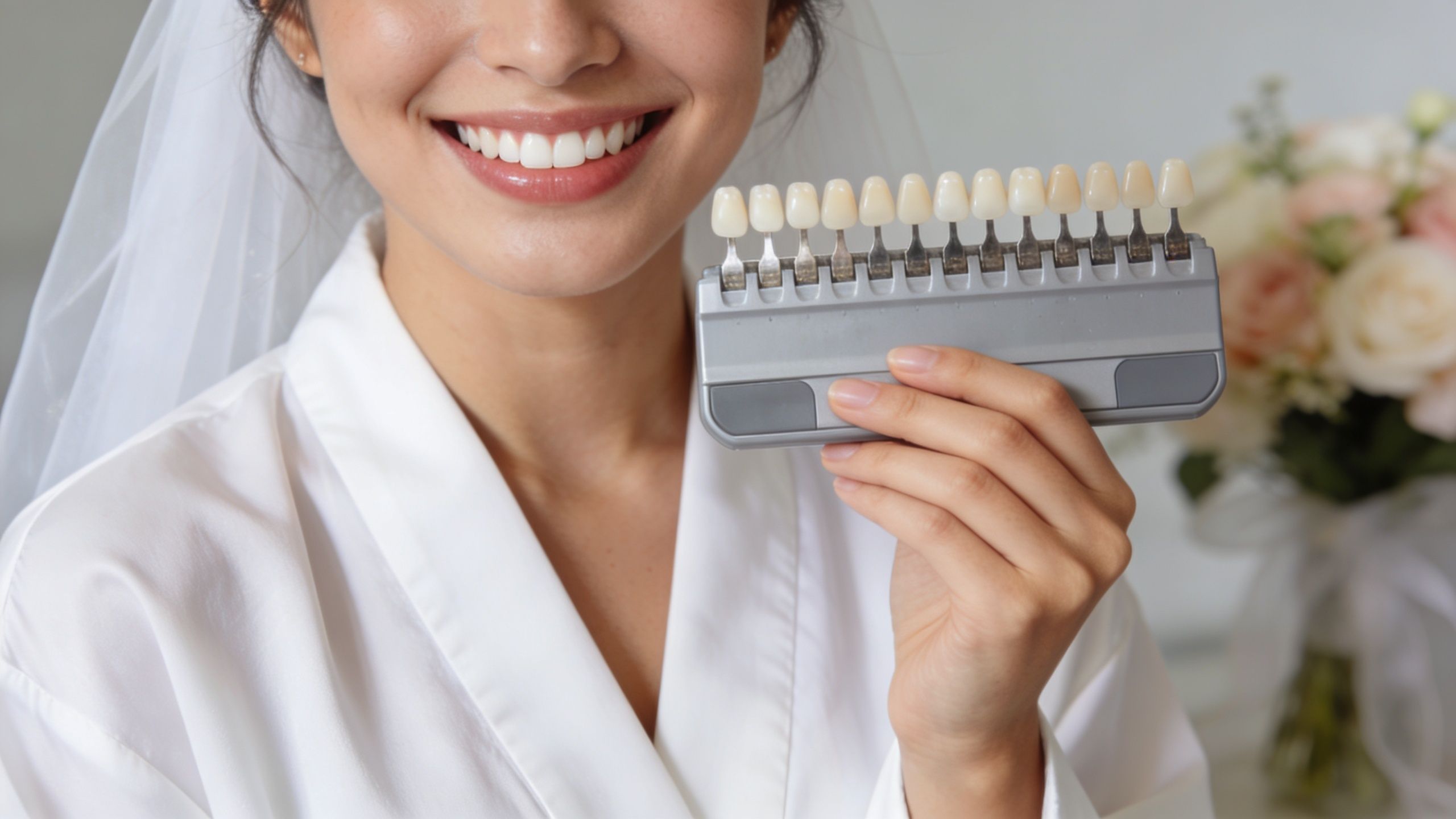
You’ve booked the venue, reviewed the photo list, and probably zoomed in on your own smile at least once while looking through engagement pictures. That’s normal. For many engaged patients in Bellaire, West University, and Houston, teeth whitening before wedding planning becomes part of the bigger question: how do I look like myself, only more polished and camera-ready?
A brighter smile isn’t vanity. It’s one of the details that changes how relaxed you feel when you’re talking, laughing, and standing in front of a camera all day. If your smile has picked up stains from coffee, tea, red wine, or just time, wedding planning is a smart point to address it in a deliberate, low-stress way.
Your Perfect Wedding Smile Starts with a Plan
Wedding planning has a way of turning every small detail into a decision. Hair color. Dress alterations. Skin care. Then somewhere along the way, you notice your teeth in a mirror or a save-the-date photo and think, “I want my smile to look fresher than this.”
That instinct is common. A 2024 whitening trend summary reported that 37% of brides actively choose professional teeth whitening for their wedding day, and it also noted that four in 10 people under 35 have undergone teeth whitening treatments. That tells me two things. First, you’re not overthinking this. Second, whitening has moved into the mainstream of pre-wedding preparation.
Why planning matters more than the whitening method alone
The biggest mistake I see isn’t choosing the “wrong” whitening product. It’s waiting until the last minute and trying to squeeze cosmetic decisions into an already packed week. Whitening works best when it fits into a broader smile timeline that leaves room for cleaning, evaluation, and small course corrections if needed.
That matters even more if your wedding smile goals go beyond whitening alone. If you’re also thinking about ClearCorrect, veneers, bonding, or replacing older visible dental work, whitening shouldn’t happen in isolation. It should be sequenced.
Practical rule: Your best wedding smile usually comes from a plan, not a panic purchase.
A good smile plan also lowers stress. Many engaged patients are juggling work, travel, family expectations, and a long to-do list. If you need help simplifying the non-dental side of things too, this guide for overwhelmed couples is a useful reset.
What a thoughtful smile timeline does for you
A personalized whitening plan helps you:
- Protect comfort: Sensitive teeth need a different pace than stain-resistant teeth.
- Match other cosmetic work: Crowns, veneers, and fillings don’t whiten the way natural enamel does.
- Avoid rushed decisions: Last-minute whitening can leave no room to adjust if your teeth feel tender.
- Keep results looking fresh: Timing affects how bright your smile looks on the actual wedding day.
If you’re searching for a cosmetic dentist near me or a dentist in Bellaire, TX because your wedding is coming up, this is the right mindset. Don’t think in terms of one appointment. Think in terms of a managed timeline built around your event date, your current dental health, and the way you want your smile to look in person and in photos.
Professional vs At-Home Whitening Your Best Options
Not every whitening path fits every patient. The right option depends on your timeline, your sensitivity level, the type of staining you have, and whether you already have crowns, veneers, implants, or bonding in visible areas.
In-office treatment for speed and control
Professional whitening in a dental office is the fastest route when you need a visible improvement without waiting through weeks of trial and error. According to this overview of professional whitening for major events, professional teeth whitening lightens teeth by several shades using high-strength bleaching agents in a controlled clinical setting. That same source notes that treatment can be customized to individual sensitivity levels, which is one of the main reasons in-office care tends to be a better fit for wedding planning than a random store-bought kit.
This option works well for patients who:
- Have a short timeline: You want improvement before bridal portraits, showers, or the wedding itself.
- Need supervision: You’ve had sensitivity before and want the strength and pacing adjusted.
- Want a cleaner plan: One coordinated treatment is easier than juggling multiple products at home.
There’s an important limitation. Whitening doesn’t work on implants, crowns, or veneers. If front teeth already have restorative or cosmetic work, the shade plan has to account for that from the beginning.
Custom take-home trays for flexibility
Dentist-provided take-home trays sit in the middle ground. They’re more controlled than over-the-counter strips and more flexible than a single office visit. For many wedding patients, this is the best blend of convenience and professional guidance.
Custom trays are especially helpful when:
| Option | Best for | Main trade-off |
|---|---|---|
| In-office whitening | Faster results and close supervision | Less flexible once scheduled |
| Custom professional trays | Gradual brightening with control at home | Requires consistency |
| Over-the-counter products | Mild surface stain maintenance | Less precise and less predictable |
If you like the idea of an at-home plan but want dentist-level guidance, this page on best teeth whitening options gives a helpful overview of how professionally guided systems compare.
What over-the-counter products can and can’t do
Store-bought strips, whitening toothpastes, and generic kits can help with mild surface discoloration. They’re not useless. They’re just limited. They tend to be less precise, less adaptable for sensitivity, and less effective for deeper stains.
Whitening strips are fine for maintenance. They’re usually not the best choice when your wedding date is fixed and your expectations are high.
Over-the-counter products also can’t tell you whether a dull-looking tooth needs whitening, a cleaning, bonding, or replacement of old dental work. That’s why many patients who search for a dentist near me or cosmetic dentist near me before a wedding aren’t only buying whitening. They’re buying clarity.
Your Wedding Teeth Whitening Timeline
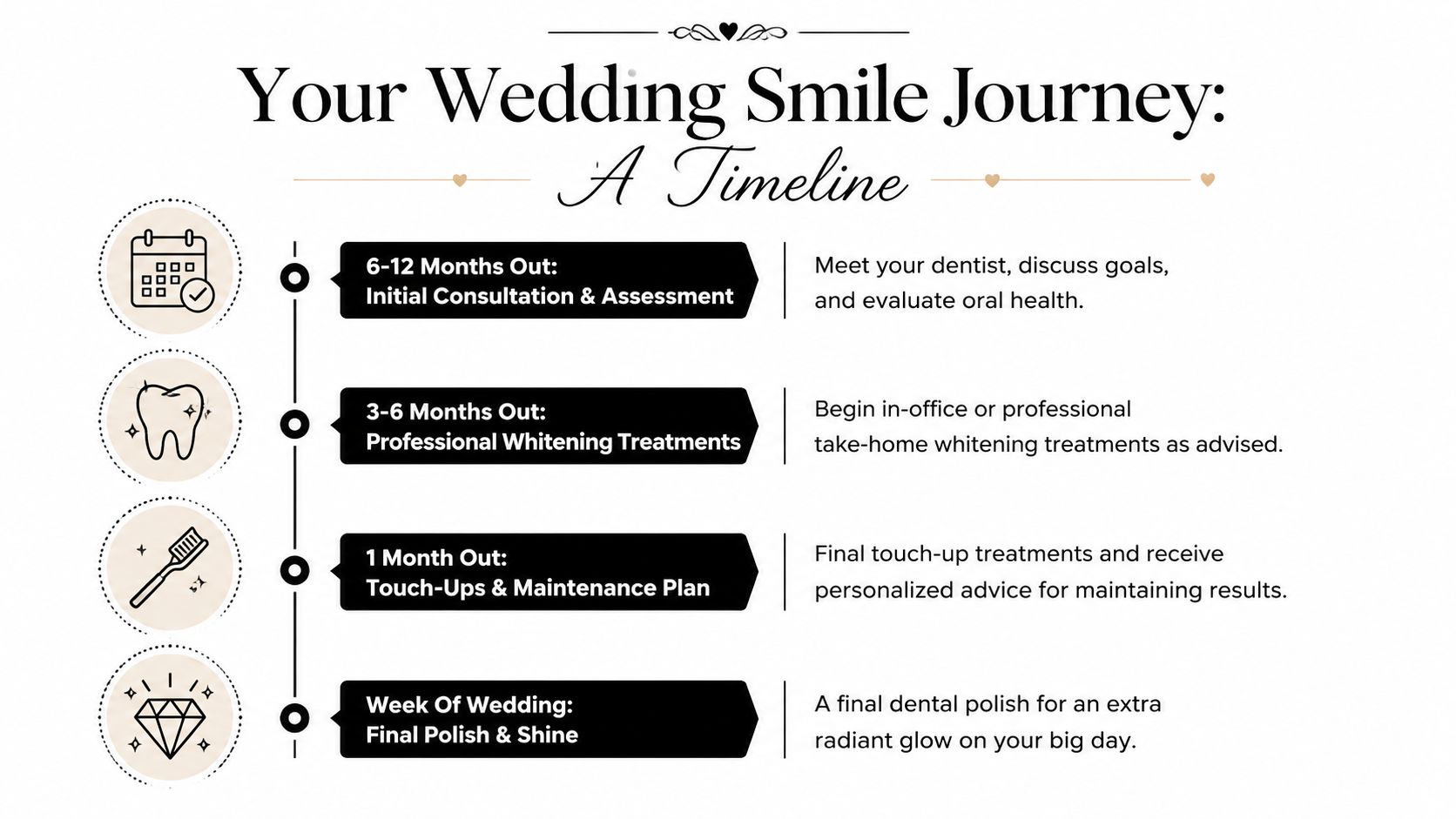
Whitening is easiest when it follows a calendar instead of a guess. If you want your smile to look bright, even, and natural on the wedding day, the sequence matters as much as the treatment.
Six to twelve months out
This is the right window if your smile plan might include more than whitening. Teeth don’t exist in isolation from the rest of your cosmetic dentistry. If you’re considering ClearCorrect, veneers, replacing old fillings on front teeth, or even addressing bite issues that affect wear patterns, start here.
During this stage, the focus should be on diagnosis and sequencing. A thorough exam, dental x-rays if needed, and a review of visible restorations can uncover issues that would interfere with whitening or change the recommended order of treatment.
This is also the time to handle the basics. If there’s decay, gum irritation, or a tooth that may need restorative work, those concerns come before cosmetic brightening. Patients searching for a dentist in Bellaire, TX often arrive thinking they need only whitening and learn that a cleaning, bonding update, or restorative adjustment will improve the final result more than bleach alone.
Three to six months out
This is the best phase for active cosmetic planning. If your smile is healthy and your main concern is color, you can decide whether in-office whitening, custom trays, or a combination approach makes the most sense.
If you’re doing ClearCorrect or another alignment treatment, whitening usually works better after teeth are in a more ideal position. If you’re considering veneers or replacing visible crowns, the whitening shade should be established before final shade matching for new cosmetic work.
A few practical priorities during this phase:
- Schedule a cleaning first: Surface buildup can block whitening from working evenly.
- Review existing dental work: Front crowns, bonding, and veneers may need shade coordination.
- Set a realistic goal: The best wedding smile isn’t always the brightest possible white. It’s the shade that looks healthy and believable on your face.
Resistant staining, uneven enamel, and visible restorations are why a personalized plan beats a one-size-fits-all kit.
Two to four weeks out
This is the most important timing rule for in-office treatment. According to this wedding whitening timing guidance, dental professionals consistently recommend scheduling in-office whitening 2 to 4 weeks before a wedding so sensitivity has time to settle while the color still looks fresh for the event.
That window matters for practical reasons. Whitening too early can leave more time for everyday stain pickup before the wedding. Whitening too late can make the final week more stressful if your teeth feel tender or if you want a small touch-up.
For many patients, this period is also when final beauty decisions stack up. Hair trial, final dress fitting, travel confirmations, rehearsal details. You don’t want your smile care creating extra uncertainty.
The week of the wedding
This is not the time to start a brand-new whitening method. It’s the time to preserve what you’ve already done.
Keep the week simple:
- Use your home care exactly as directed.
- Avoid stain-heavy foods and drinks when possible.
- Stay gentle with brushing if your teeth are still a little sensitive.
- If you have custom trays, only use them according to your dentist’s instructions.
A light polish or check-in can make sense for some patients, especially if they’ve had a longer cosmetic plan involving cleaning and exams, ClearCorrect, or restorative finishing touches. But the heavy lifting should already be done by now.
How to Manage Sensitivity and Protect Your Results
Sensitivity is the concern most patients mention first. That makes sense. Nobody wants a brighter smile if it comes with a week of discomfort right before photos, travel, and events. The good news is that sensitivity is usually manageable when whitening is paced correctly and matched to the patient.
How to reduce discomfort during whitening
If you already know your teeth run sensitive, say that early. It changes the plan. Sometimes the answer is a lower-strength professional system, fewer consecutive treatment days, or shorter tray wear time. Sometimes it means choosing in-office care where the process can be monitored more closely.
These habits usually help:
- Use a sensitivity-focused toothpaste: Start before whitening, not after discomfort begins.
- Don’t overdo it: More gel or more frequent use doesn’t guarantee a better result.
- Keep your gums protected: Custom-fitted trays and proper application matter.
- Pause if needed: A short break can be smarter than pushing through soreness.
For patients who are also considering small shape corrections or masking isolated discoloration, this page on teeth whitening and bonding is useful because whitening and bonding often work best when planned together.
The first few days matter most
Post-whitening care isn’t optional. This post-whitening wedding care article notes that enamel porosity peaks 48 to 72 hours after bleaching, which increases stain uptake by 150% from pigmented foods and drinks. It also reports that 28% of patients see a 1 to 2 shade regression within a week if they don’t follow proper maintenance.
That’s why the immediate aftercare period is so important, especially if your rehearsal dinner, travel, or bachelorette events fall close to treatment.
For the first few days after whitening, treat your teeth like a white shirt. If something would obviously stain fabric, it can threaten your result too.
A practical approach during that window is to keep meals lighter in color and skip the most obvious staining culprits when you can. Coffee, red wine, pigmented sauces, and dark berries are common trouble spots.
Here’s a short video that covers practical whitening considerations in a patient-friendly way:
What actually protects your investment
The best maintenance plan is simple enough to follow during a busy wedding season.
- Brush and floss consistently: Clean enamel holds color better than plaque-covered enamel.
- Use touch-ups carefully: Professional guidance matters more than frequency.
- Plan around events: If you know a rehearsal dinner or wine-heavy weekend is coming, time whitening accordingly.
- Think beyond the wedding day: Good maintenance helps your smile look strong in honeymoon photos too.
If you’re looking for a cosmetic dentist near me because you’re worried about sensitivity, that concern shouldn’t stop you from exploring whitening. It should guide the way the treatment is designed.
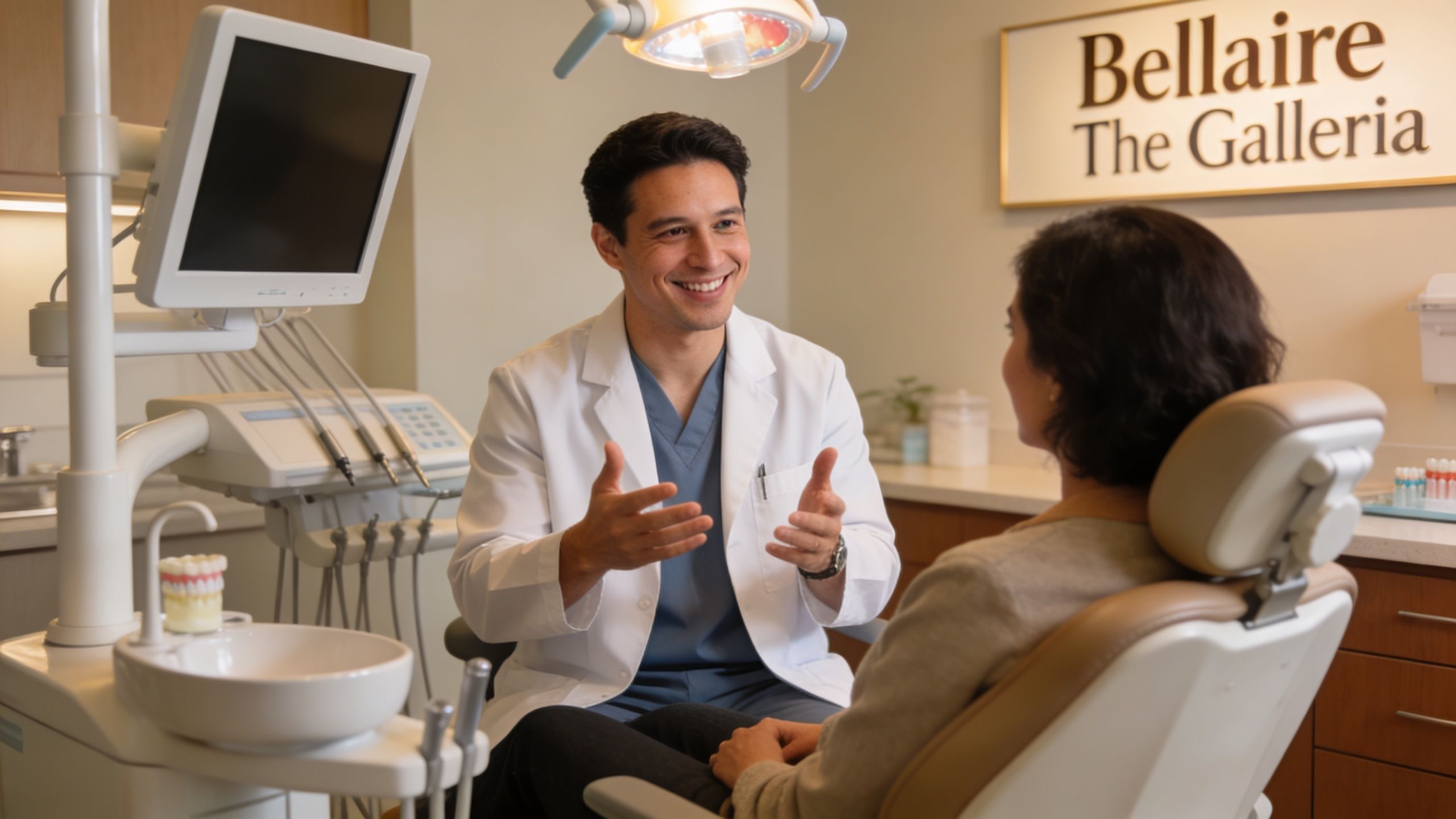
Your Whitening Consultation with Dr Boren in Bellaire
A whitening consultation should feel clear, not salesy. Most engaged patients want straightforward answers to a few practical questions. Are my teeth a good candidate for whitening? Will my existing dental work match? How early should I start if I’m also thinking about ClearCorrect, veneers, or bonding?
What happens at the first visit
The first step is a conversation about your goals. Some patients want a noticeable brightening before engagement photos. Others are planning around the wedding date itself. Some have one darker tooth, old visible bonding, or restorations that don’t blend as well as they used to.
A complete evaluation typically includes:
- Review of your current oral health: Whitening works best on healthy teeth and gums.
- Assessment of past dental work: Crowns, fillings, veneers, and implants affect the plan.
- Discussion of sensitivity history: This helps determine the safest approach.
- Coordination with other cosmetic care: ClearCorrect, Lumineers, porcelain crowns, and bonding may need to be staged.
Why technology and planning matter
Advanced diagnostics improve cosmetic planning because they help identify details that can change the outcome. Digital x-ray imaging, magnification, and close visual assessment make it easier to spot issues that would interfere with whitening or change the timing.
That’s particularly important for patients who are also dealing with cracked edges, uneven contours, worn enamel, or old restorations in the smile zone. In those cases, whitening can still be part of the solution, but it may not be the whole solution.
A good whitening consultation doesn’t just ask how white you want your teeth. It asks what needs to happen first so the final result looks even and natural.
Comfort matters too
Some patients are excited about cosmetic care but anxious about dental visits in general. That deserves attention, especially during wedding planning when stress is already high. A calm environment, clear communication, and options for comfort support can make the process feel much easier.
If you’ve been searching for a dentist near me, dentist in Bellaire, TX, or even help with broader needs like cleaning and exams, cosmetic dentistry, restorative dentistry, or an emergency dentist after a chipped tooth before an event, the ideal first visit should leave you with a real sequence. Not just a product recommendation.
Common Questions About Wedding Teeth Whitening
Will whitening work on crowns, veneers, or dental implants
No. Whitening products don’t change the color of crowns, veneers, fillings, caps, or implants. If those restorations are visible when you smile, the plan has to account for them before whitening begins. Sometimes whitening the natural teeth first helps guide later cosmetic updates. Sometimes the visible restoration is the primary issue.
What if I have sensitive teeth or sensitive gums
Sensitivity doesn’t automatically rule whitening out. It usually means the method, strength, and pacing should be adjusted. A professionally supervised approach is often the safest option because the treatment can be customized and stopped or modified if your teeth react strongly.
Is whitening enough if my teeth also look uneven or crowded
Not always. If your concern is shape, spacing, or alignment as much as color, whitening may only solve part of the problem. Some wedding patients do better with a combined cosmetic plan that may involve ClearCorrect, bonding, or veneers depending on the smile goals.
Should I whiten before engagement photos or before the wedding
That depends on your event schedule. If engagement photos are a major priority, it may make sense to brighten your smile earlier and then consider maintenance or a touch-up later. If your biggest concern is the wedding day itself, the timing should be built around that date.
Can I use store-bought products right before the ceremony
That’s usually not the smartest move. Last-minute experiments are where people run into patchy results, gum irritation, or unexpected sensitivity. If your wedding is close, keep the plan conservative and stick to what has already worked.
How long will my results last
That depends on your diet, oral hygiene, and whether you continue exposing your teeth to stain-heavy foods and drinks. Even strong whitening results need maintenance. The best way to keep them looking good is a combination of smart timing, consistent home care, and occasional touch-ups when appropriate.
What if I also need other dental treatment before the wedding
Then the sequence matters more than ever. A routine exam can reveal whether you need a cleaning, restoration, bonding update, or another service before cosmetic whitening. If you’ve delayed care and now have pain, a broken tooth, or swelling, urgent treatment comes first. Cosmetic work should never compete with dental health priorities like restorative dentistry, a tooth extraction, or emergency dental services when those are needed.
If you’re planning teeth whitening before wedding events and want a smile plan that fits your timeline, cosmetic goals, and comfort level, Charles E. Boren offers personalized dental care in Bellaire, TX for patients in Bellaire, West University, and nearby Houston communities. Whether you’re looking for a dentist near me, a cosmetic dentist near me, or a trusted office for cleaning and exams, restorative dentistry, ClearCorrect, veneers, or professional whitening, the next step is simple. Schedule a consultation and get a wedding smile plan built around your date, your existing dental work, and the way you want to look and feel when the photos start.