
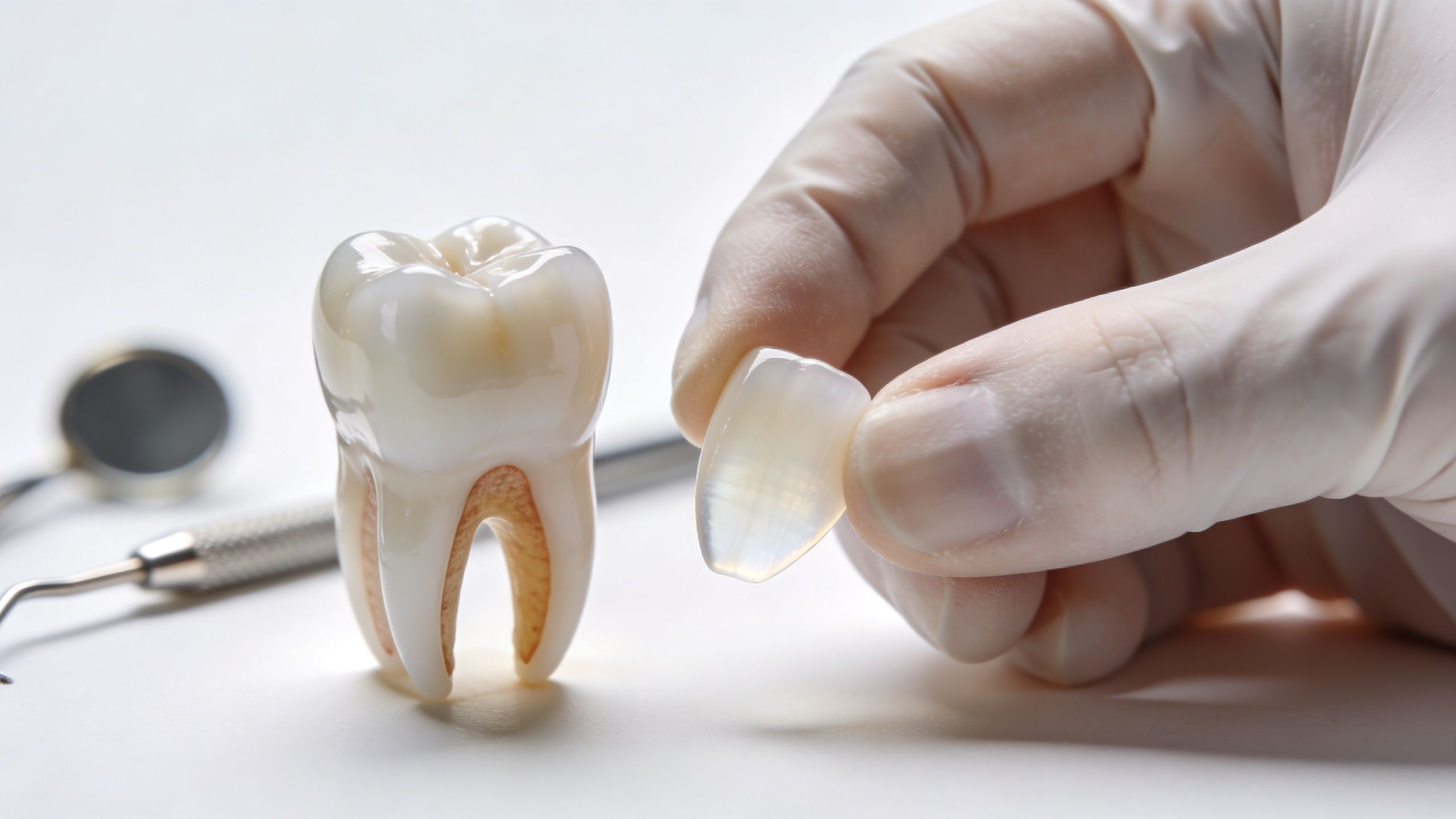
If you’ve been covering your mouth when you laugh, avoiding close-up photos, or noticing one tooth that always seems darker, chipped, or slightly out of line, you’re not being overly critical. Small flaws in front teeth can draw your eye every time you look in the mirror. For many adults in Bellaire, TX, that’s what starts the search for a cosmetic dentist near me.
Veneers are one of the most predictable ways to reshape a smile without changing your whole mouth. They can hide stains that don’t respond well to teeth whitening, soften the look of small gaps, and improve teeth that look worn or uneven. If you’ve been wondering how does veneers work, the short answer is simple. A veneer is a thin custom-made covering that bonds to the front of a tooth to improve its color, shape, and balance.
The important part is what happens between that first idea and the final smile reveal. Good veneer treatment isn’t just about making teeth look whiter. It starts with planning, careful tooth preparation, and precise bonding so the result feels comfortable, looks natural, and fits your bite.
- A Guide to Your Perfect Smile with a Cosmetic Dentist in Bellaire
- What Are Dental Veneers and How Do They Work
- Choosing Your Veneers Porcelain vs Composite
- The Veneer Placement Process in Our Bellaire Office
- Benefits and Long-Term Care for Your New Smile
- Veneer Alternatives and Your Next Consultation
A Guide to Your Perfect Smile with a Cosmetic Dentist in Bellaire
A lot of veneer consultations begin the same way. A patient says, “I don’t hate my teeth. I just don’t love smiling.” That usually means the problem isn’t severe pain or a dental emergency. It’s a front tooth chip from years ago, deep discoloration, uneven edges, or spacing that draws attention in every photo.
In Bellaire, West University, and nearby Houston neighborhoods, many adults want a smile upgrade that looks polished but not artificial. They don’t want teeth that look bulky or opaque. They want a smile that still looks like them, just more balanced and refreshed.
Why veneers appeal to so many adults
Veneers work well when the main concern is cosmetic. They’re often considered for:
- Stubborn discoloration that doesn’t lift enough with whitening
- Small chips and worn edges that make teeth look older
- Minor gaps between front teeth
- Slightly uneven shapes that make the smile look asymmetrical
- Mild visual misalignment when the goal is appearance rather than full orthodontic movement
A veneer covers the front visible surface of a tooth, so it can change how that tooth looks without replacing the entire tooth structure.
A beautiful veneer case should look calm and believable. Most patients don’t want “veneers.” They want a smile that no longer distracts them.
Patients also want clarity. They’re asking practical questions. Will it hurt? How much tooth has to be touched? Will the veneers look fake? How long do they last? Those are the right questions, and they deserve clear answers.
If you’re exploring porcelain veneers in Bellaire, it helps to think of the process as a guided cosmetic treatment plan, not just a product placed on top of teeth. The consultation, design, fit, and bonding all matter.
Why the local consultation matters
A proper veneer plan starts with your actual teeth, gums, bite, and goals. That matters whether you’re also searching for a dentist in Bellaire, TX, a provider for cleaning and exams, or even an emergency dentist for unrelated concerns. Cosmetic dentistry works best when it’s built on healthy teeth and stable gum tissue.
That’s why the first visit isn’t about rushing you into treatment. It’s about deciding whether veneers are the right fit for your smile and your long-term dental care.
What Are Dental Veneers and How Do They Work
The easiest way to understand a veneer is to think of it as a custom shell for the front of a tooth. Many patients compare it to a contact lens for the tooth surface because it’s thin, precise, and designed to blend in naturally.
A veneer doesn’t move your tooth. It changes what you see. By covering the front of the tooth, it can improve color, shape, length, and visible symmetry.
What the veneer is made of
Most veneers are made from porcelain or composite resin. Porcelain is a lab-crafted ceramic material known for a lifelike appearance and strong stain resistance. Composite is a tooth-colored resin material shaped directly or indirectly for cosmetic improvement.
The veneer itself is thin, but the bond to your tooth is what makes it function like part of your smile.
How the bonding process actually works
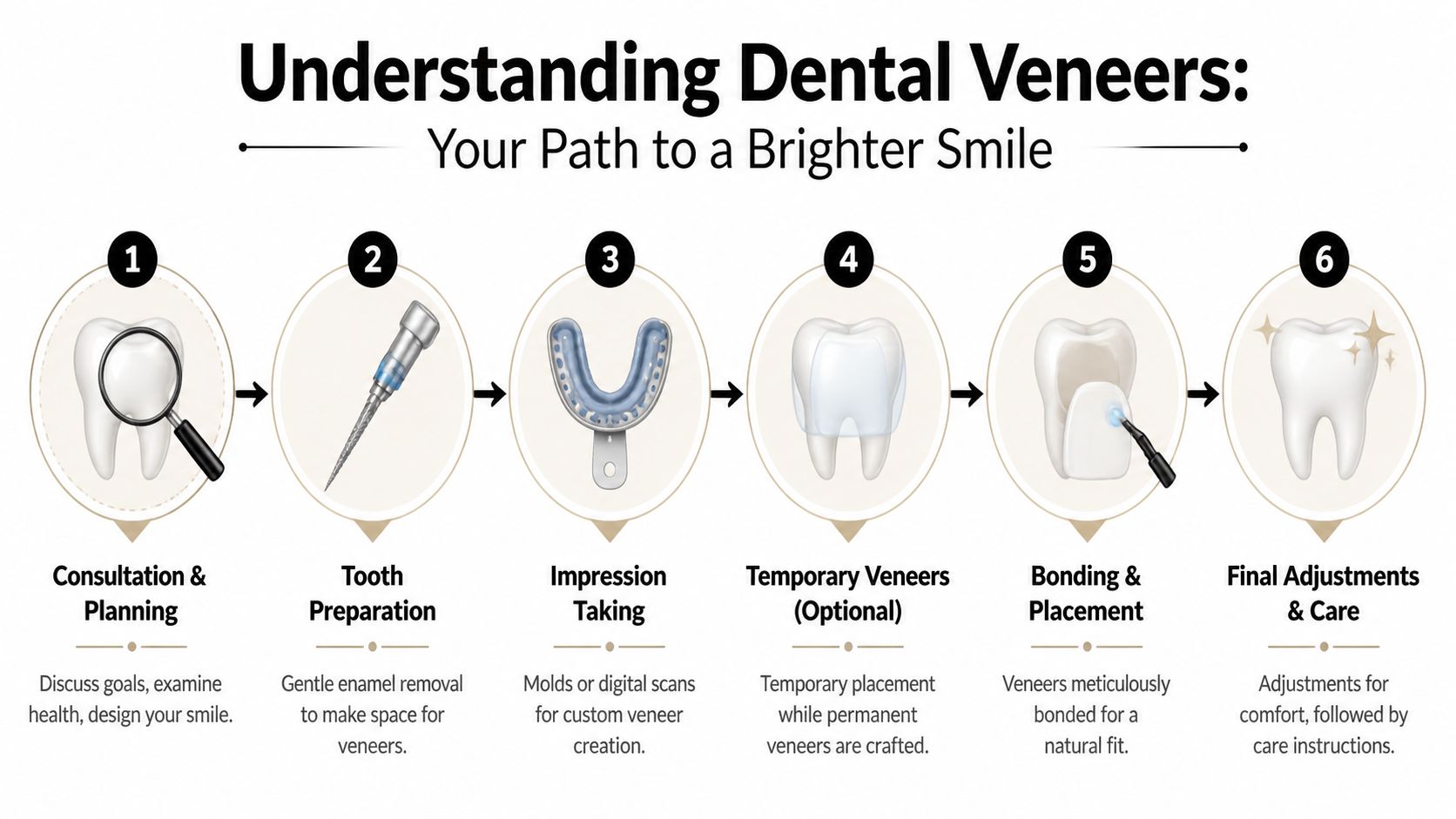
Here’s the basic sequence in plain language:
- Your dentist checks whether the teeth and gums are healthy enough for veneers. If there’s decay, gum inflammation, or bite instability, those issues need attention first.
- A small amount of enamel is usually adjusted. The veneer process involves minimal tooth preparation of just 0.3 to 0.5 mm of enamel removal according to this overview of how veneers bond to teeth.
- An impression or digital scan is taken. That record helps create a veneer that fits your tooth precisely.
- The veneer is fabricated to the planned shape and shade.
- The tooth surface is prepared for bonding. A mild acidic gel creates microscopic roughness that helps the adhesive grip the enamel.
- Resin cement bonds the veneer to the tooth. The same source notes that this process can achieve bond strengths of 25 to 40 MPa, which is comparable to natural enamel-dentin bonds.
- Final adjustments are made. Your dentist checks the bite, polish, and edge contours so the veneer feels smooth and natural.
Why only a small amount of enamel is removed
Patients often get nervous when they hear the word “shaving.” In reality, veneer preparation is usually conservative. The goal isn’t to cut the tooth down dramatically. The goal is to create just enough space for the veneer to sit naturally instead of looking thick or overbuilt.
That small adjustment is one reason veneers can look so realistic. They don’t only sit on top of the tooth like a cap. They’re designed to integrate with your smile line and lip movement.
Practical rule: A veneer should improve the tooth without making it look heavier, flatter, or too bright for the rest of your face.
Where people get confused
Many people ask if veneers “strengthen” teeth. They can reinforce the front appearance of a tooth, but their main purpose is cosmetic. They aren’t the same as crowns, and they aren’t a substitute for treating active dental disease.
Another common question is whether veneers are painful. Most patients tolerate the process well because the preparation is minimal and carefully controlled. If you’re an anxious patient looking for a dentist near me, this is one of the reasons veneer treatment often feels more approachable than expected.
Choosing Your Veneers Porcelain vs Composite
Both porcelain and composite veneers can improve a smile, but they don’t behave the same way over time. The best choice depends on your goals, your bite, your timeline, and how much polish and longevity you want from the result.
A side by side look
| Feature | Porcelain veneers | Composite veneers |
|---|---|---|
| Appearance | Very natural translucency and polish | Attractive, but usually less lifelike over time |
| Stain resistance | Stronger resistance to staining | More prone to discoloration |
| Longevity | Can last 15 to 20+ years | Typically 5 to 7 years |
| Cost | Higher initial investment | 30 to 50% less than porcelain |
| Survival data | Long-term durability is stronger | 80 to 85% survival rate |
| Visits | Often requires lab fabrication | May be completed more quickly |
The durability and cost differences above come from this clinical overview of composite resin veneers.
When porcelain makes more sense
Porcelain is usually the better fit when a patient wants the most refined cosmetic result. It reflects light in a way that’s closer to natural enamel, and it tends to keep its appearance longer. That matters for front teeth, especially if you’re correcting multiple concerns at once, such as color, shape, and visible unevenness.
For adults comparing veneers to repeated teeth whitening sessions, porcelain can also be appealing because it resists stains better than composite.
When composite may be the better choice
Composite can be a useful option if you want a more conservative cosmetic change, a lower upfront fee, or a simpler correction on one tooth. It can work well for small chips, slight contour changes, and certain short-term cosmetic goals.
That doesn’t make it a lesser treatment. It just means it has a different maintenance profile.
Composite is often chosen for flexibility. Porcelain is often chosen for longevity and polish.
The real decision isn’t only material
The bigger decision is how you want your smile to function and age. Some patients want the most durable cosmetic result they can get. Others want a more conservative starting point. A thoughtful consultation should compare veneers with other cosmetic dentistry options too, not push one material on every patient.
If your concern is mostly one dark tooth, bonding or whitening might be enough. If your concern is multiple front teeth with shape and color issues, porcelain may make more sense. That’s why material choice should follow diagnosis, not trends.
The Veneer Placement Process in Our Bellaire Office
Most patients feel calmer once they know what the appointments look like. Veneer treatment usually unfolds over a small number of visits, and each one has a different purpose.
Your first visit and smile planning
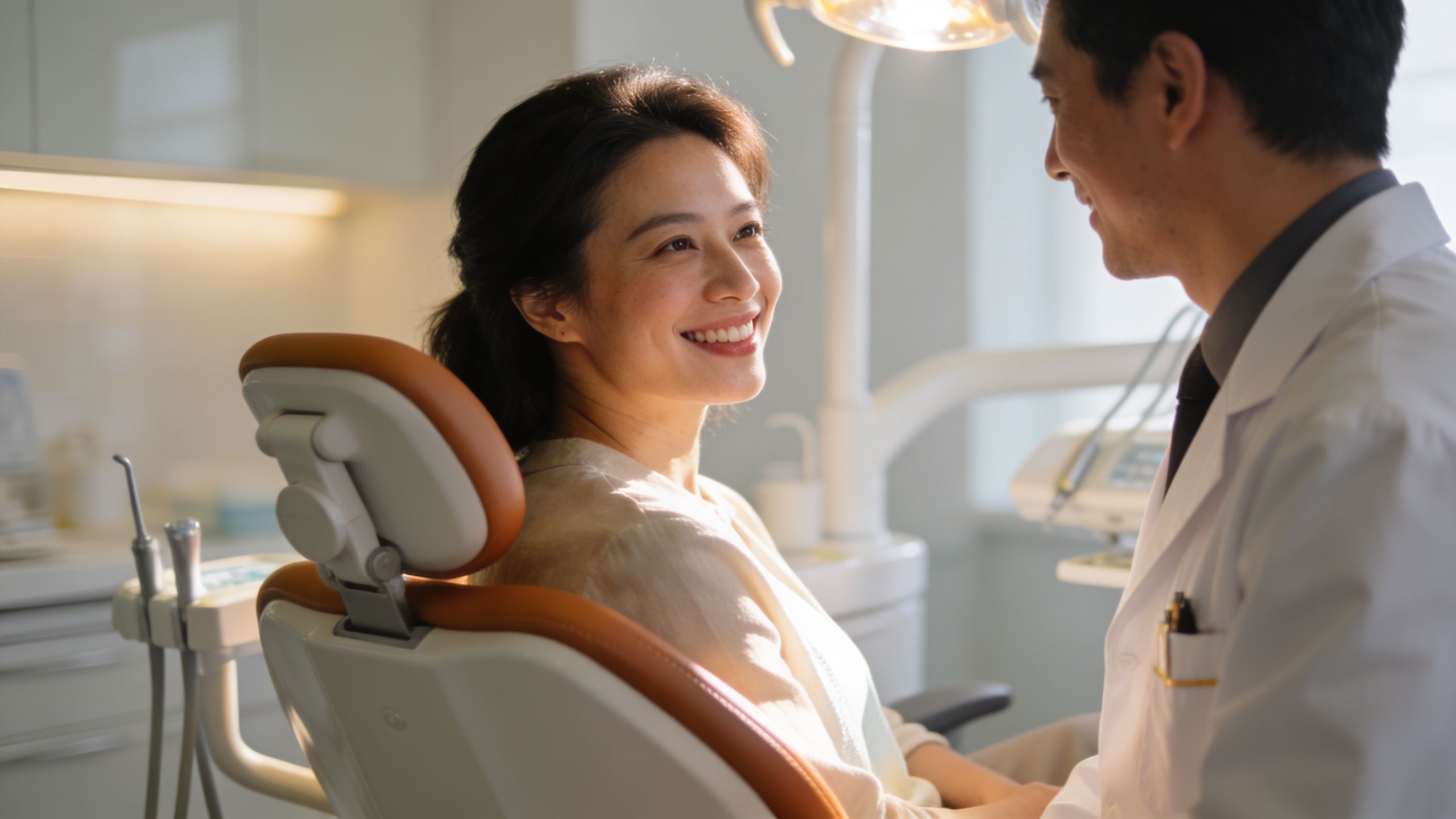
The first appointment is a conversation as much as an exam. You’ll talk about what bothers you, whether that’s staining, a short front tooth, old bonding, or a smile that feels uneven. This is also where a dentist checks whether veneers are appropriate or whether another treatment would protect your teeth better.
At this stage, photos, digital x-rays, and a careful bite evaluation help guide the plan. In a practice that provides cosmetic and restorative care, this same diagnostic mindset also supports services like new patient exams, dental x-rays, and treatment planning for concerns ranging from minor cosmetic wear to more complex restorative dentistry.
The preparation appointment
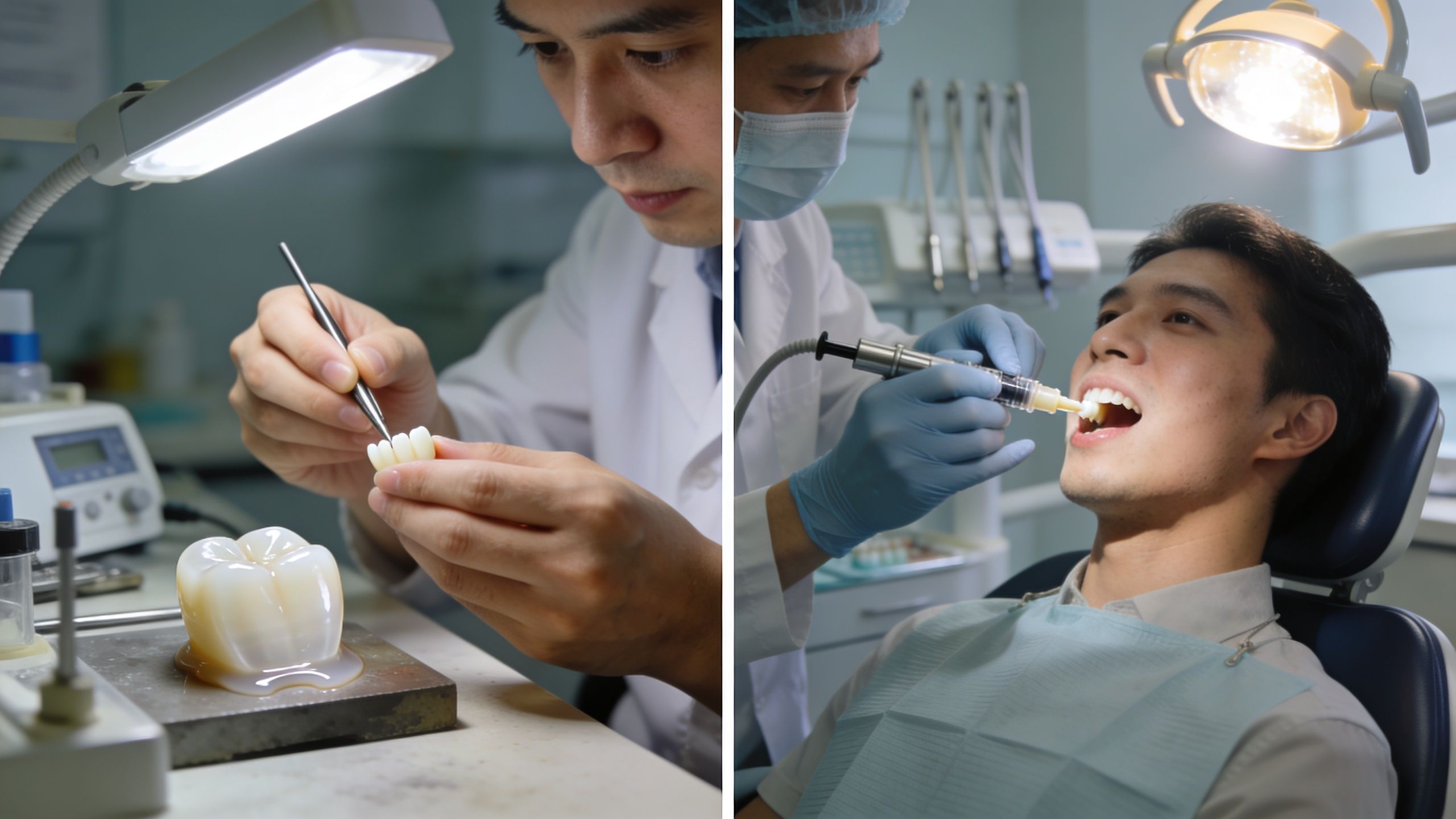
Once the design is approved, the teeth being treated are prepared conservatively. The focus is precision. Small enamel adjustments create space for the veneer so it blends naturally instead of protruding. Detailed impressions or digital scans are then taken so the final restorations match the planned contours.
For some patients, temporary veneers may be used while the final ones are being made. These temporaries can preview shape and length and give useful feedback before final bonding.
A good overview of the process in motion can help if you like seeing treatment before you commit.
The bonding and final smile reveal
The final visit is where patients usually feel the shift from “treatment” to “result.” Each veneer is tried in, checked for fit and appearance, then bonded into place. After bonding, the bite is adjusted so the veneers feel balanced when you speak and chew.
Long-term data is one reason many patients feel comfortable making this investment. According to porcelain veneer survival statistics from long-term clinical studies, porcelain veneers show a 96% survival rate at 5 years, 93 to 95% at 10 years, and 83% at 20 years.
What patients often notice right away
Patients usually comment on a few things immediately:
- Their teeth look brighter but not flat
- The edges look smoother and more even
- Their smile appears more symmetrical
- The veneers feel surprisingly natural after small bite adjustments
Charles E. Boren provides veneer treatment as part of a broader cosmetic and restorative approach in Bellaire, using diagnostics and adhesive techniques that support careful, minimally invasive planning.
Benefits and Long-Term Care for Your New Smile
The biggest benefit of veneers isn’t just that teeth look whiter. It’s that the smile starts to look more consistent. When color, width, edge shape, and small gaps are harmonized, the whole face can look more rested and balanced.
For many patients, that translates into something simple. They stop thinking about their teeth every time they smile.
What makes veneers worth considering
Porcelain veneers have very high patient approval. Studies report 93% patient satisfaction for porcelain veneers, as noted in this review of veneer outcomes and patient satisfaction. The same source notes market demand is projected to push the global veneers market to over $11 billion by 2030.
Those numbers line up with what patients care about in real life:
- Predictable cosmetic change for stains, chips, and uneven shape
- A conservative approach compared with treatment that removes much more tooth structure
- Strong stain resistance with porcelain
- A custom result designed around your face, smile line, and bite
Veneers work best when they solve a specific visual problem clearly. They don’t need to make every tooth perfect to make the whole smile look better.
How to care for veneers at home
Veneers don’t require complicated care, but they do require consistent care. You still need the same healthy habits that protect natural teeth and gums.
A simple routine usually includes:
- Brush gently twice a day with a non-abrasive toothpaste
- Floss daily to protect the gumline around the veneers
- Keep regular cleanings and exams so your dentist can monitor the margins and your bite
- Avoid using teeth as tools to open packages or bite hard objects
- Mention clenching or grinding if you notice jaw tension or wear patterns
If you’d like a deeper look at maintenance and longevity, this guide on how long veneers last is a helpful next read.
Veneers still need a healthy mouth
Veneers improve the visible front surfaces of teeth, but they don’t replace regular dental care. That means cleaning and exams, gum health monitoring, and occasional review of related concerns such as grinding, bite pressure, or older restorations.
Patients sometimes search for a cosmetic dentist near me thinking cosmetic work sits apart from general dental care. It doesn’t. The best long-term results happen when cosmetic dentistry and everyday preventive care support each other.
Veneer Alternatives and Your Next Consultation
Veneers are popular because they can solve several cosmetic problems at once, but they aren’t the only option. Sometimes a smaller treatment is enough. Dental bonding may help with a chip. Professional whitening may improve color if the stains are responsive. All-porcelain crowns may be more appropriate when a tooth needs more coverage. Clear aligner treatment such as ClearCorrect can help when the main issue is tooth position rather than surface appearance.
That’s why the best cosmetic consultation isn’t a sales conversation. It’s a matching process. The treatment should fit the tooth, the bite, and your long-term goals.
A question thoughtful patients ask is whether veneers are permanent. The honest answer is yes in the sense that enamel is typically reduced, so this is a lasting commitment. At the same time, long-term planning matters just as much as the initial smile design. As explained in this discussion of the long-term biological plan for veneered teeth, great cosmetic dentistry includes thinking ahead to how veneers may be maintained or replaced after 15 to 20 years.
If your main issue is staining, it can also help to understand what surface discoloration can and cannot do. For example, this guide on how to remove tea stains from teeth gives useful context for people deciding whether whitening alone might be enough before committing to veneers.
If you live in Bellaire, West University, or Houston and you’re comparing a dentist near me, cosmetic dentist near me, or even broader services like restorative dentistry, tooth extraction, or dental implants near me, the most useful next step is a consultation that looks at your whole smile rather than one isolated feature.
If you’re ready to talk through your options, schedule a consultation with Charles E. Boren. A personalized visit can help you decide whether veneers, whitening, bonding, crowns, or clear aligners make the most sense for your smile and your long-term dental health.