
If you’re searching for a veneers dentist near me, there’s a good chance you’re not casually browsing. You may be tired of looking at a chipped front tooth in photos, frustrated by stains that whitening didn’t fix, or wondering whether small gaps or uneven edges can be corrected without a long orthodontic process.
That’s a very common place to start.
Patients in Bellaire, West University, and nearby Houston neighborhoods often come in with the same basic question. They want a smile that looks natural, not artificial, and they want to know whether veneers are right for their teeth. They also want a local dentist in Bellaire, TX who will be honest about the process, the limits, and the long-term commitment.
Veneers can be a beautiful option, but they aren’t one-size-fits-all. The details matter. Your enamel, your bite, your gum health, and even habits like clenching or grinding can affect whether veneers will look good and last well. That’s why a thoughtful cosmetic evaluation matters just as much as the final result.
- What Are Porcelain Veneers and How Do They Work
- Types of Veneers A Comparison for Bellaire Patients
- Are You a Candidate for Veneers A Deeper Look
- The Veneer Treatment Process Step-by-Step in Our Bellaire Office
- Veneer Costs and Longevity An Investment in Your Smile
- Why Bellaire Chooses Dr Boren for Cosmetic Dentistry
- Frequently Asked Questions About Dental Veneers
What Are Porcelain Veneers and How Do They Work
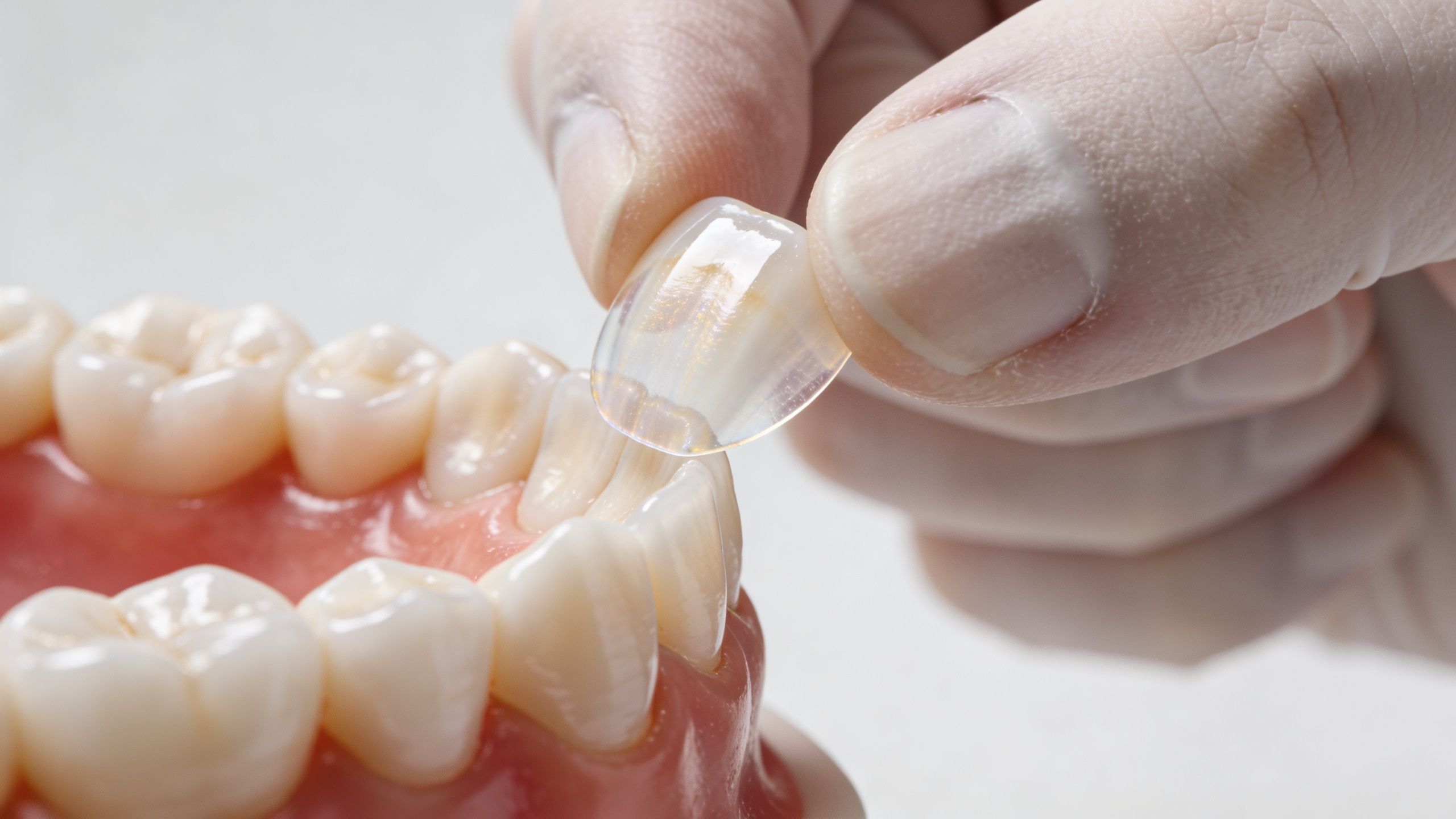
Porcelain veneers are easiest to understand if you think of them as very thin custom covers for the front surface of teeth. Many patients describe them as being a little like contact lenses for teeth. That comparison isn’t exact, but it helps. Veneers are thin, precise, and designed to blend in rather than stand out.
They’re commonly used when someone wants to improve the look of teeth that are discolored, chipped, slightly uneven, worn down, or separated by small spaces. Instead of changing the whole tooth, a veneer changes the visible front surface.
What a veneer is made of
Porcelain veneers are made from dental ceramic. They’re very thin, typically 0.3 to 0.5 mm thick, and they’re designed to mimic the way natural enamel reflects light, according to this overview of veneer materials and bonding. That optical quality is one reason porcelain can look so lifelike in the right hands.
A veneer doesn’t sit loosely on a tooth. It’s bonded into place using adhesive techniques that create a strong connection between the porcelain and the enamel underneath. That same source notes that bonding protocols can achieve 20 to 40 MPa bond strength, with longitudinal data showing a debonding risk under 5% over 10 years when the case selection and bonding are done well.
Why veneers can look so natural
A natural smile doesn’t come from making teeth look flat, bright, and uniform. Real teeth have subtle shape changes, light reflection, texture, and slight variation from one tooth to the next. Veneers work best when they’re planned to match those details.
Here’s what veneers can help improve:
- Stubborn discoloration that doesn’t respond well to whitening
- Small chips or worn edges that interrupt the smile line
- Minor spacing issues such as small gaps
- Uneven shapes that make one tooth look shorter, narrower, or out of balance
- Mild visual crowding or misalignment when the main concern is cosmetic appearance
Practical rule: Veneers don’t just make teeth whiter. They reshape what people see when you smile.
How they stay in place
The bonding process matters as much as the porcelain itself. A veneer is carefully fitted to the prepared tooth, then cemented into place using adhesive materials that lock it onto the enamel surface. That’s why good planning is so important. The veneer has to fit your gumline, bite, and neighboring teeth precisely.
For many patients, the appeal is simple. Veneers can address several cosmetic concerns at once. If someone has discoloration, slight chipping, and a small gap, veneers may offer one treatment that improves all three issues together.
That doesn’t mean every smile concern should be treated with veneers. Sometimes whitening, bonding, clear aligners, or crowns make more sense. But when veneers are the right choice, they can create a very polished result while preserving much of the natural tooth structure.
Types of Veneers A Comparison for Bellaire Patients
Not all veneers are the same. When patients search for a cosmetic dentist near me or a veneers dentist near me, they often assume there’s one standard treatment. In reality, the material and technique make a big difference in appearance, longevity, and how much tooth preparation may be needed.
The right option depends on your goals. Some people want the most stain-resistant and durable result possible. Others want a more conservative or budget-conscious approach. Some want to correct one visible tooth. Others are considering a broader smile makeover.
Porcelain veneers
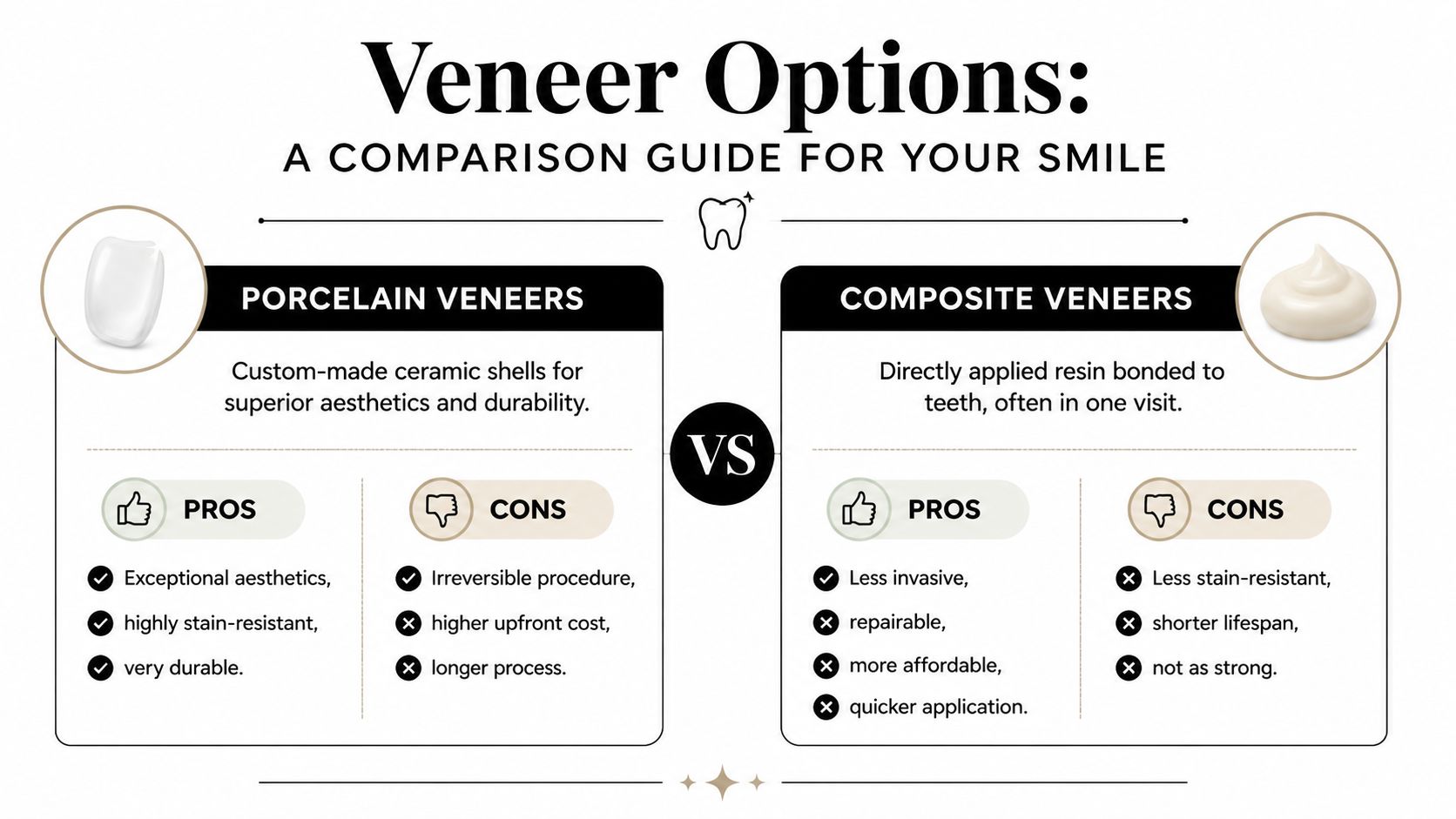
Porcelain veneers are often the option that comes to mind. They’re custom-made in a lab or fabricated through digital systems, then bonded to the front of the tooth. Their biggest advantages are their refined appearance and resistance to staining.
Patients often choose porcelain when they want a more complete cosmetic transformation, especially on the front teeth where light reflection and symmetry matter most.
Typical strengths include:
- Natural appearance because porcelain reflects light similarly to enamel
- Strong stain resistance compared with resin-based materials
- Durability when the bite is stable and the veneers are properly maintained
The tradeoff is that porcelain usually involves more planning, a higher initial fee, and a commitment to a more permanent treatment path.
Composite veneers
Composite veneers use tooth-colored resin applied directly to the tooth. In some cases, they can be completed more quickly than porcelain and may require less preparation.
They can be a practical choice for smaller cosmetic changes, short-term smile improvements, or patients who want a lower-cost entry point into cosmetic treatment.
Composite veneers may appeal to patients because they are:
- More affordable upfront
- Repairable if a small area chips
- Often faster to place
Their limits matter too. Composite tends to stain more easily and generally doesn’t wear as well over time as porcelain.
No-prep veneers and Lumineers
Some patients ask specifically about no-prep veneers or Lumineers. These are ultra-thin veneers designed for selected cases where very little or no enamel reduction may be needed. They can work well when the teeth are smaller, slightly spaced, or already positioned in a way that allows a thin shell to add shape without creating bulk.
They are not ideal for every smile. If a tooth already projects forward, a no-prep veneer can sometimes make it look thicker unless the case is chosen carefully.
A conservative veneer option sounds appealing, but conservative only works when it also looks balanced in the final smile.
Comparing your veneer options
| Feature | Porcelain Veneers | Composite Veneers | No-Prep Veneers (Lumineers) |
|---|---|---|---|
| Material | Dental ceramic | Tooth-colored resin | Ultra-thin ceramic |
| Appearance | Very natural, enamel-like light reflection | Good for many cases, but less lifelike in some lighting | Natural-looking in the right case |
| Stain resistance | High | Lower than porcelain | High, similar to porcelain-based systems |
| Durability | Strong long-term option | Shorter-lasting than porcelain | Depends heavily on case selection |
| Tooth preparation | Usually some enamel removal | Often minimal | Very minimal or none in selected cases |
| Repairability | Usually replaced rather than patched | Often easier to repair | Depends on design and material |
| Best for | Comprehensive smile design | Smaller cosmetic changes or budget-focused treatment | Conservative cosmetic cases with favorable tooth shape |
How to think about the decision
If you’re comparing options, it helps to think in three layers:
What bothers you most
Color, shape, spacing, chips, or overall symmetry may point toward different solutions.How long you want the result to last
Some patients want the most durable material. Others prioritize a lower initial cost.What your teeth can support
Enamel amount, old fillings, bite pressure, and gum health can all influence what’s realistic.
The best veneer choice usually isn’t the most advertised one. It’s the one that fits your teeth, your habits, and your expectations.
Are You a Candidate for Veneers A Deeper Look
A lot of veneer articles stop at a very broad answer. They say you need healthy teeth and gums, and that’s true, but it’s not enough to help a real patient decide. Many adults in Bellaire and Houston have more complicated dental histories than that. They may grind their teeth, have a history of TMJ discomfort, old fillings on front teeth, previous orthodontic treatment, or gum issues that were treated years ago.
Those details matter.

The basic requirements
In general, good veneer candidates usually have:
- Enough healthy enamel for reliable bonding
- Stable gum health without active inflammation
- Teeth that are structurally sound
- Cosmetic concerns on visible teeth that veneers can realistically improve
- A bite pattern that won’t place destructive pressure on the veneers
If a patient has active decay, untreated gum disease, or significant bite instability, those problems should be addressed first. Cosmetic work lasts longer when the foundation is healthy.
Where patients often get confused
The confusing part is this. You can want veneers for cosmetic reasons, but the success of veneers often depends on functional issues that aren’t visible in the mirror. A person may think the problem is just the color or shape of a front tooth. The deeper issue may be clenching, edge-to-edge bite contact, or movement from an unstable bite.
That’s why candidacy is more than a smile photo.
A useful review of this gap in patient education notes that many practices don’t clearly explain candidacy for people with bruxism, gum disease, or other specific dental histories, and that practices using advanced diagnostics to assess bite-related issues help fill an important decision-making gap, according to this discussion of veneer candidacy concerns.
If you grind your teeth or have TMJ symptoms
Bruxism doesn’t automatically rule out veneers. It does mean the case needs more care. If you clench or grind, the extra force can stress veneer edges and shorten the life of cosmetic work if the bite isn’t managed properly.
Common clues include:
- Flattened tooth edges
- Morning jaw soreness
- Frequent tension headaches
- Clicking or fatigue in the jaw
- A history of broken dental work
In those cases, the veneer conversation has to include bite analysis. If the pressure pattern is ignored, even beautifully made veneers may be placed under the wrong kind of force every day.
Here’s a short overview many patients find helpful before a cosmetic consultation:
What about old fillings, root canals, or past orthodontics
These situations don’t automatically disqualify you either. They just change the planning.
A front tooth with a large filling may need a different restoration approach than a tooth with strong intact enamel. A tooth that has shifted after braces may still be treatable, but the final smile design has to respect the current bite and tooth position. If a tooth has had root canal treatment, the question becomes whether the remaining structure is strong enough for a veneer or whether another restorative option would be safer.
Clinical insight: The best cosmetic plan doesn’t start with “What looks good?” It starts with “What will stay healthy and stable?”
Questions worth asking at your consultation
If your dental history is complicated, these questions help:
- How much enamel do I have on the teeth we’re considering?
- Does my bite place extra pressure on front teeth?
- Would TMJ symptoms or grinding affect longevity?
- Are veneers better than bonding, clear aligners, or crowns for my case?
- Do any old restorations change the treatment plan?
That kind of discussion protects you from choosing a cosmetic treatment for the wrong reason, or too soon.
The Veneer Treatment Process Step-by-Step in Our Bellaire Office
Most patients feel better once they know what happens from the first visit to the final placement. Veneers sound like a big cosmetic change, but the process is usually very organized and very deliberate. The goal isn’t to rush you into a new smile. It’s to help you understand the decisions at each stage so the final result feels comfortable, attractive, and predictable.
The first visit and smile planning
The process begins with a consultation. During this meeting, you talk through what you’d like to change and what you want to keep. Some patients want a brighter, more symmetrical smile. Others want to fix one or two teeth that draw attention in photos. Some are deciding between veneers, whitening, bonding, or clear braces.
At this stage, the exam matters as much as the conversation. Your teeth, gums, bite, and existing dental work all need to be evaluated before cosmetic treatment is chosen. If you’ve been searching for a dentist in Bellaire, TX because you want a practice that also handles broader dental care, this kind of visit should feel thorough, not sales-driven.
Records, images, and design details
Once veneers appear to be a good option, more detailed records are taken. That may include digital imaging, photographs, and impressions or scans. These records help map out tooth shape, length, gumline balance, and how your upper and lower teeth meet.
This is also where expectations are refined. “Natural” means different things to different people. One patient wants a brighter, polished look. Another wants something softer and less noticeable. A good design conversation avoids the common fear that veneers will look too white, too square, or too uniform.
For patients who want a closer look at how the procedure is typically planned and performed, this page on the veneers for teeth procedure gives a useful overview.
The most satisfying veneer cases usually come from careful planning, not dramatic last-minute changes.
Tooth preparation and temporary veneers
When the treatment moves forward, the next visit often involves preparing the teeth. For many porcelain veneer cases, a small amount of enamel is reshaped to make room for the veneer so the final smile doesn’t look bulky. This preparation is usually conservative and focused only on what is needed for proper fit and appearance.
Patients are often relieved to learn that this step is controlled and precise. If you’re anxious about dental treatment, comfort options and a calm pace can make a major difference.
In many cases, temporary veneers are placed while the final restorations are being fabricated. These temporaries do more than fill time. They let you test the general shape and appearance in everyday life. You can smile, speak, and see how the design feels before the permanent veneers are bonded.
The final placement appointment
The delivery visit is where everything comes together. Each veneer is tried in carefully before bonding. Color, shape, edge position, and symmetry are checked. Bite contact is also reviewed so the veneers don’t take the wrong kind of force when you chew or move your jaw.
Once the fit is confirmed, the teeth are prepared for bonding and the veneers are cemented into place. Small adjustments may be made after bonding so everything feels natural.
Most patients notice two things right away:
- Their smile looks more balanced
- The veneers feel smoother and more polished than their old worn edges
Aftercare and follow-up
After placement, you’ll get instructions on caring for the veneers and protecting the result. That usually includes routine home care, regular cleanings and exams, and sometimes a nightguard if clenching or grinding is part of your bite pattern.
If you’re also looking for a long-term dental home, it helps when your cosmetic care is part of a broader practice relationship. Veneers aren’t separate from the rest of dentistry. Cleanings, dental x-rays, restorative care, and bite monitoring all support how well cosmetic work holds up over time.
Veneer Costs and Longevity An Investment in Your Smile
Cost is one of the first questions patients have, and it should be. Veneers are a cosmetic investment, so you deserve a clear explanation of what affects the fee and what you’re receiving in return.
In major U.S. markets, porcelain veneers typically cost $1,000 to $2,500 per tooth, and patients often choose 6 to 10 veneers for a fuller smile makeover, according to this veneers market and pricing overview. The same source notes that the global dental veneers market reached $2.1 billion in 2023, which reflects how widely veneers are used as a cosmetic treatment.

Why veneer fees vary
Two veneer cases can look similar from the outside and still differ in cost for valid reasons.
The fee is often influenced by:
- Material choice such as porcelain versus composite
- How many teeth are being treated
- Complexity of the smile design
- Whether old restorations or bite issues need to be addressed first
- The level of customization needed for shape, shade, and symmetry
A single veneer placed to match neighboring teeth precisely can require a great deal of detail. A multi-tooth case involves planning the whole visible smile zone so the teeth relate naturally to each other.
Longevity changes the value conversation
Initial cost matters, but so does how long the result is likely to serve you. A treatment that looks good briefly but needs earlier replacement may not be the best value for every patient.
There’s another issue that deserves more open discussion. Many veneer pages focus heavily on the smile reveal and not enough on long-term ownership. This discussion of veneer maintenance and replacement costs points out that patients are rarely given a clear picture of ongoing maintenance, replacement timing, or how lifestyle habits can affect longevity. That’s important because cosmetic decisions are easier to feel good about when the long-term responsibilities are clearly explained.
Questions to ask before you commit
A good cost conversation includes more than the fee quote. Ask:
- How many veneers are needed to meet my goal?
- What maintenance will help protect them?
- Will I need a nightguard if I clench or grind?
- How are touch-ups, repairs, or replacement handled?
- Are financing or phased treatment options available?
Paying for veneers is only part of the decision. Understanding the lifetime care of veneers is what helps you choose wisely.
If cost is part of your research, this page on how much veneers cost can help you frame the conversation before your consultation.
Why Bellaire Chooses Dr Boren for Cosmetic Dentistry
A patient may come in wanting a brighter, more even smile and assume the conversation starts with shade and shape. In many veneer cases, the safer starting point is different. We first need to know how the teeth come together, whether old dental work is stable, and whether clenching, TMJ strain, or sleep-related grinding could shorten the life of cosmetic treatment.
That fuller evaluation is one reason Bellaire patients choose Dr. Boren. Veneers sit on teeth, but they also live inside a bite. If the bite is off, the veneers can end up carrying forces they were never meant to absorb. It works like putting fine tile over a floor that shifts underneath. The surface may look beautiful at first, but the foundation still decides how well it holds up.
Experience and diagnostics support better planning
Dr. Boren brings more than 30 years of experience to cosmetic treatment planning. According to information from the practice, that planning may include magnification, fiber optics, digital x-ray imaging, micro air abrasion, and adhesive bonding techniques. Those tools help with careful preparation, close evaluation of existing restorations, and decisions that protect as much healthy tooth structure as possible.
This matters even more for patients with complex dental histories.
If you have worn edges from bruxism, jaw soreness after waking, a history of crowns or fillings on front teeth, or symptoms linked to TMJ stress, veneer planning should account for those factors before cosmetic work begins. Dr. Boren’s office also provides TMJ and sleep medicine services, which adds an important layer to candidacy review. For the right patient, treating the forces that damage teeth can be just as important as improving the look of the teeth themselves.
Cosmetic results should fit the function of your mouth
Some offices focus only on the smile design. Patients with stable bites and healthy enamel may do very well with that approach. But many adults searching for a veneers dentist near me are not starting from a blank slate. They may have old bonding, uneven wear, cracked enamel, a history of orthodontics, or night grinding that has gone unaddressed for years.
In those cases, cosmetic dentistry works best when the diagnosis is broader and more precise. The goal is not merely to place veneers. The goal is to help the veneers last comfortably and look natural in daily life, while talking, chewing, and waking up without added strain on the jaw joints or muscles.
A local dental home matters
Bellaire patients often want one office that can continue caring for them after the cosmetic work is finished. That includes routine exams, maintenance, repair decisions if a restoration chips, and follow-up if bite symptoms change over time. Familiarity matters here. A dentist who knows your history can often spot small changes before they become bigger problems.
Patients also tend to value the human side of care. Clear explanations. Respect for your time. A calm setting for anxious visits. Convenient access for families in Bellaire, West University, and Houston who want skill and continuity in the same place.
For readers curious about how patients find local practices online, this overview of dental SEO strategies explains how service-based dental information reaches people searching for care nearby.
Good cosmetic dentistry depends on appearance, bite stability, and long-term follow-up working together.
Frequently Asked Questions About Dental Veneers
A common situation sounds like this. You like the idea of veneers, but you are also wondering how they fit with real life. Can you eat comfortably, keep them clean, and trust them to hold up if you have a history of grinding, jaw tension, or older dental work? Those are the right questions to ask before any cosmetic treatment.
Can I still eat normally with veneers
Yes, in normal day-to-day eating, veneers should let you chew and smile with confidence. Porcelain is strong, but it behaves more like fine ceramic dishware than raw enamel. It handles regular use well, yet repeated force in the wrong direction can chip an edge.
That is why habits matter. Opening packages with your front teeth, chewing ice, biting nails, or tearing into very hard foods puts stress on the thinnest part of a veneer. If you clench or grind at night, that matters too. In those cases, the bite needs careful review before veneers are placed, and protective steps such as a night guard may be part of the plan.
Can teeth with veneers still get cavities
Yes. A veneer covers the visible front of the tooth, but the natural tooth is still there underneath and around it.
Cavities usually form at the edges where plaque sits undisturbed, especially near the gumline. Brushing, flossing, and regular exams still do the daily maintenance. Veneers improve the outside appearance. They do not make a tooth immune to decay.
How do you choose a shade that looks natural
Shade selection is more precise than choosing a brighter white. A natural-looking veneer has to fit your face the way a well-matched paint color fits a room. The right shade depends on skin tone, lip line, the color of nearby teeth, and how much of the teeth show when you speak and smile.
This becomes more important when you are matching one or two veneers to older restorations, crowns, or untreated natural teeth. The goal is a smile that looks believable in daylight, indoor light, and conversation, not a flat uniform color.
Will veneers feel bulky
They should not feel bulky when they are planned correctly. In many cases, a small amount of reshaping creates the room needed so the veneer sits in harmony with the rest of the tooth instead of feeling like an added layer.
Patients often notice the edges briefly because the contours are cleaner and more refined than worn enamel or old bonding. That awareness usually fades as the lips and tongue adjust.
Are porcelain veneers worth it compared with composite
That depends on what you want the treatment to do. Porcelain usually offers better stain resistance and a more stable surface appearance over time. Composite can be a reasonable option when lower initial cost, conservative treatment, or easier chairside repair is the priority.
The better question is often which material fits your bite, habits, and existing dental history. A patient with heavy clenching, older fillings on front teeth, or a changing bite may need a different plan than someone seeking a small cosmetic change on otherwise healthy teeth. For general background on how veneer materials differ in longevity, this review of veneer longevity gives a useful overview.
Do veneers look too perfect
They can, if the design ignores the face they belong to. Natural smiles have variation in texture, translucency, and edge shape. Good veneer design respects those details.
A result that suits you usually looks polished, not artificial.
What if I only dislike one or two front teeth
You may not need a full smile makeover. Some patients do well with a single veneer, a few veneers, or a combination of veneers, whitening, bonding, or crown replacement.
This is especially true if you have prior dental work. One discolored tooth, one chipped edge, or one older restoration may call for a focused solution rather than treating every front tooth.
Is a consultation still worth it if I’m unsure between veneers and whitening
Yes. In fact, that is one of the best times to come in.
A good consultation should sort out what is causing the concern in the first place. Color alone may point toward whitening. Shape, wear, cracks, or old bonding may point toward veneers or another restoration. If you also have jaw soreness, headaches, tooth wear, or a history of bruxism or TMJ symptoms, those bite forces need attention because they can affect how well cosmetic work holds up over time. That broader view is where an office that also evaluates TMJ and sleep-related factors can be especially helpful.
If you are in Bellaire, West University, or Houston and want clear answers about veneers, bite stability, prior restorations, or grinding-related risk, schedule a consultation with Charles E. Boren. A personalized evaluation can show whether veneers fit your goals now, what alternatives may make more sense, and what steps can help your results last comfortably for the long term.