

You expected soreness. You may not have expected to feel worn out, foggy, or ready for a nap after a tooth extraction. That reaction is common. Patients often worry that being so drained means something went wrong, especially if the extraction itself seemed straightforward.
In most cases, tiredness after tooth extraction is a normal part of healing. Your body is redirecting energy toward repair, your sleep may be lighter than usual, and if you had sedation, that can leave you feeling slow for a while. If you're in Bellaire, TX and searching for a dentist near me, emergency dentist, or help after a tooth extraction, it helps to know what recovery usually feels like and when it's time to check in.
- Why Feeling Tired After a Tooth Extraction is Normal
- The Science Behind Post-Extraction Fatigue
- Your Recovery Timeline What to Expect Day by Day
- Practical Tips to Regain Your Energy After Dental Surgery
- When Tiredness Is a Warning Sign Contact Your Dentist
- How Our Bellaire Dental Practice Supports Your Recovery
- Schedule Your Consultation with Bellaire’s Trusted Dentist
Why Feeling Tired After a Tooth Extraction is Normal
A common recovery story goes like this. The numbness wears off, the jaw feels sore, and by evening the biggest surprise isn't the mouth. It's the fatigue. Even patients who handle dental visits well can feel unusually low on energy after an extraction.
That doesn't automatically mean there's a problem. Healing takes work, and the body often signals that by asking for rest. One clinical study found that 49% of men experienced an inability to work after the procedure, compared to 25% of women, and most individuals needed 1 to 3 days off according to this 2023 clinical study on extraction recovery and daily functioning. That tells patients something important. Recovery fatigue isn't rare, and it isn't just “in your head.”
Why the feeling can catch people off guard
People usually prepare for pain, swelling, and dietary limits. They don't always prepare for the overall drained feeling that can come with surgery, even minor oral surgery. A tooth extraction affects more than the tooth. It affects sleep, eating, hydration, stress levels, and routine.
If you've been dealing with an infected tooth, poor sleep before treatment, or anxiety leading up to the appointment, you may feel even more depleted once the procedure is over. Your body has been under strain before the extraction even starts.
Practical rule: If your energy is lower than usual for a few days, but your pain and swelling follow the normal pattern your dentist described, that's often part of the expected healing process.
What patients usually need most
Patients recovering from extraction don't usually need panic. They need realistic expectations, a quiet day, fluids, soft food, and permission to slow down. That's especially true after wisdom tooth removal or urgent care from an emergency dentist.
If you're in Bellaire, West University, or Houston and looking for a dentist in Bellaire, TX who can evaluate a painful tooth, explain the procedure clearly, and help you recover comfortably, it's worth choosing a practice that treats recovery as part of the procedure, not an afterthought. Good dental care doesn't stop when the tooth comes out.
The Science Behind Post-Extraction Fatigue
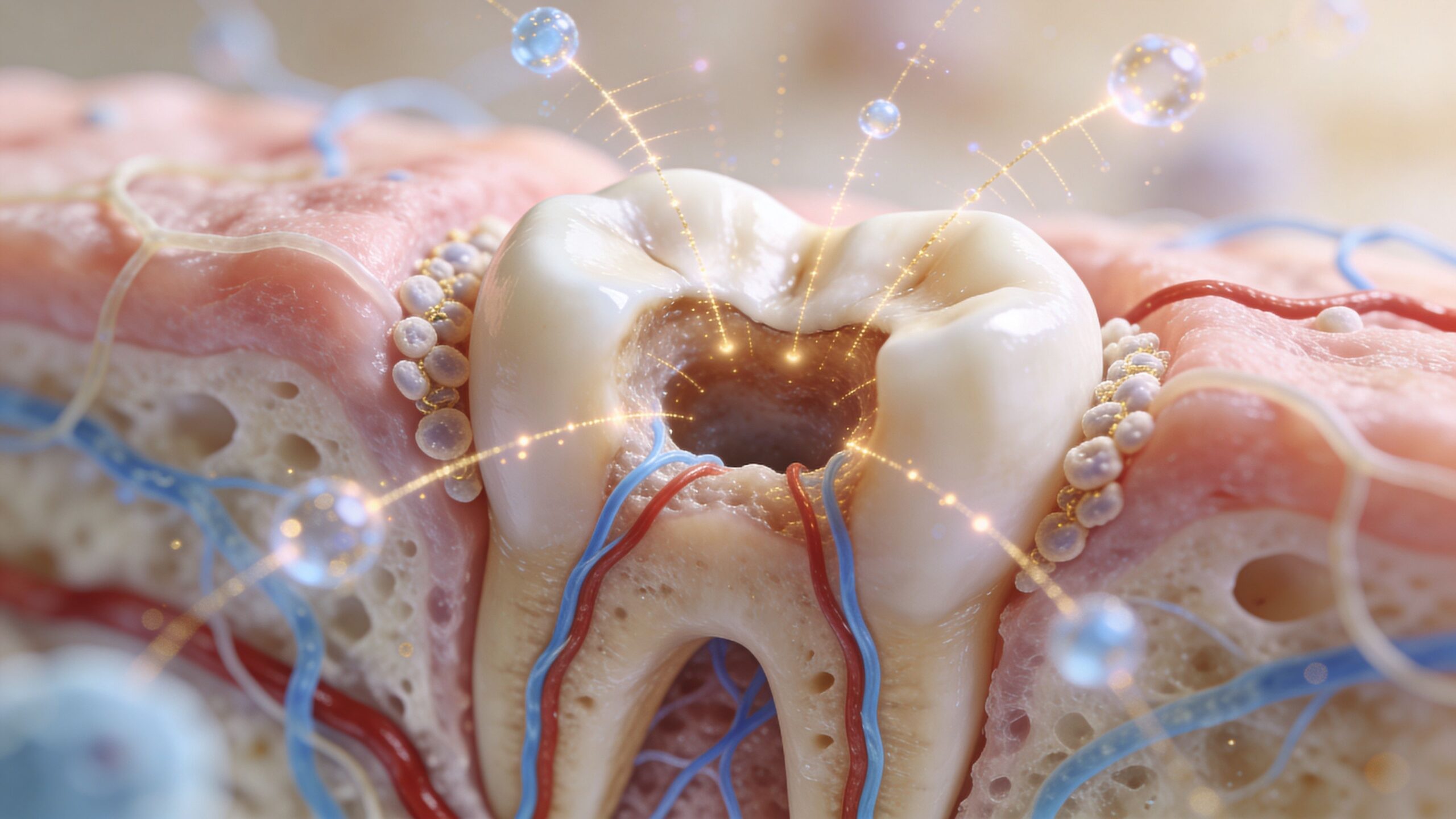
A simple way to think about recovery is this. Your body has started a repair project, and it's diverting resources to the extraction site. Energy that usually goes toward your normal day gets redirected toward clot formation, tissue repair, inflammation control, and immune activity.
That shift is why some people feel physically tired, mentally foggy, or less sharp for a short time after treatment.
Inflammation uses energy
When a tooth is removed, the tissues around it respond immediately. Blood flow changes, immune cells move in, and inflammatory signals help coordinate healing. Patients sometimes interpret that whole-body response as “I feel off” or “I feel wiped out.”
Inflammation can also affect the way you sleep and think. Trauma from an extraction can irritate the trigeminal nerve, disrupting signals to the brain and contributing to brain fog, headaches, and sleep disturbances that worsen fatigue, as described in this discussion of oral surgery fatigue and trigeminal nerve irritation. That doesn't mean nerve injury is expected in routine cases. It means the mouth and face are closely connected to systems that influence how rested you feel.
Sedation and anesthesia can linger
If you had IV sedation or a more involved procedure, the “heavy” feeling may not be coming from healing alone. Sedation can leave people groggy, mentally slower, and less coordinated for a while after the appointment.
In the verified guidance provided for this article, post-IV sedation cognitive impairment can drop 10 to 15% and take 24 to 48 hours to resolve. That's why patients are told to rest, avoid driving, and keep decisions simple on the day of treatment. Even when the extraction goes well, sedation can make the first day feel longer and harder than expected.
Eating less can make you feel worse
Many patients don't realize how much energy drops when they barely eat after oral surgery. They may sip something sweet, skip protein, and end up with low energy by afternoon. Others avoid drinking enough because swallowing feels awkward or because they're trying not to disturb the area.
A soft diet is appropriate, but an underfed recovery isn't. If your body is healing and you're taking in very little fluid or nutrition, tiredness tends to deepen.
Stress adds another layer
Some people come into the appointment after days of poor sleep, tooth pain, clenching, or worry. Once the procedure is done, the adrenaline drops. That “crash” can feel dramatic. The extraction didn't create all the fatigue. It may have uncovered fatigue that was building for days.
Your body doesn't separate dental surgery from the rest of your health. Sleep, stress, inflammation, and nutrition all show up in recovery.
What works better than trying to push through
Trying to “act normal” too quickly often backfires. Patients usually do better when they expect a slower first day, protect their sleep, take pain medicine as directed, and avoid turning recovery into a test of toughness.
For many people, the fastest way back to normal energy is not to push harder. It's to heal more efficiently.
Your Recovery Timeline What to Expect Day by Day
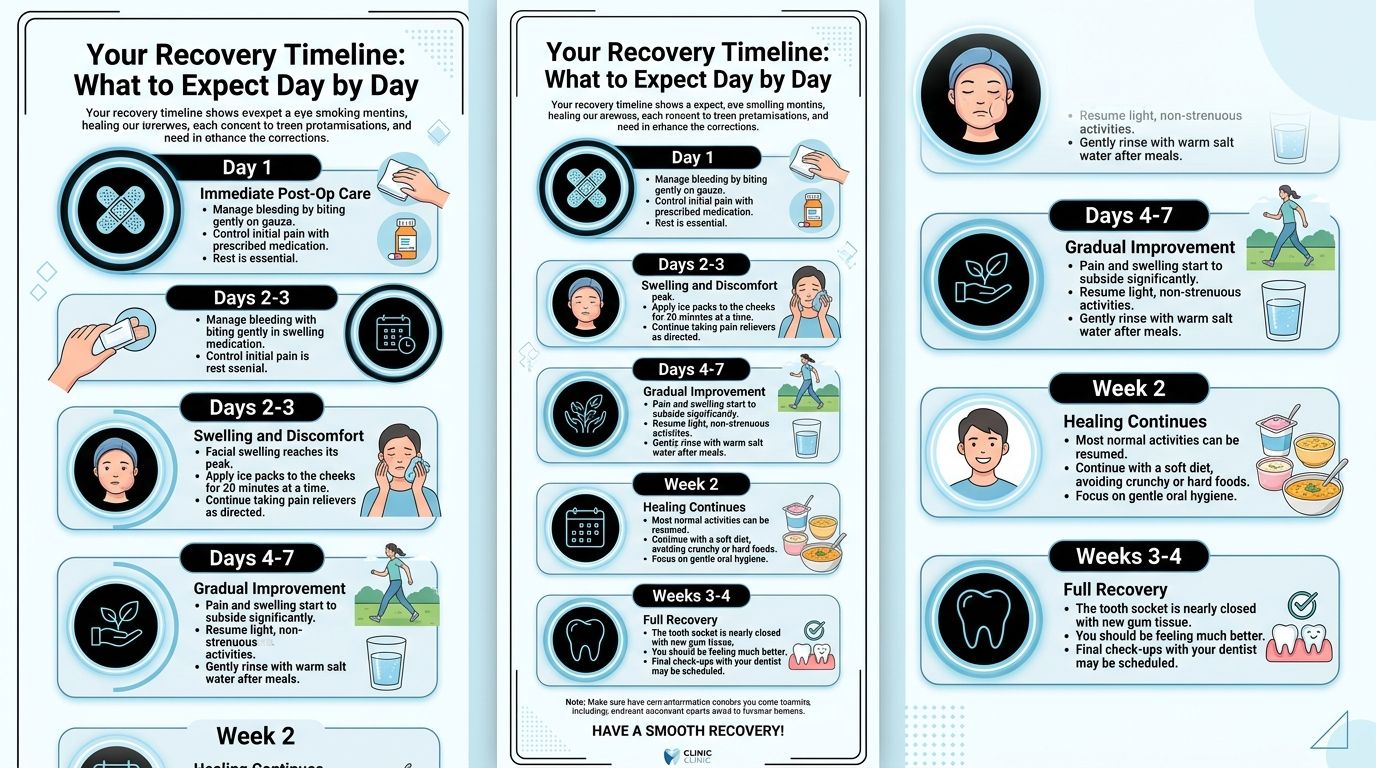
Patients usually feel better when they know the general rhythm of recovery. The exact pace varies by the tooth, the difficulty of the extraction, your baseline health, and whether sedation was used, but the pattern is often predictable.
Days one and two
The first day is usually the most restrictive. You're managing gauze, numbness wearing off, soreness, and the general aftereffects of the procedure. If sedation was part of your visit, the first day may feel especially slow.
The second day can be deceptively tiring. Swelling and stiffness may become more noticeable, and your sleep from the first night may not have been very good. That's one reason people often wonder why they feel more worn down than they expected.
A few practical expectations help:
- Activity level: Keep it light. Rest is productive on these days.
- Mental energy: Don't expect your usual focus if you had sedation.
- Meals: Soft foods matter. Skipping them usually makes fatigue worse.
Days three through seven
This is often the stretch where recovery turns the corner, but not in a perfectly straight line. You may feel better in the morning and more tired at night. You may notice improved pain but still have disrupted sleep.
A 2024 study on third molar surgery found that sleep quality suffers a significant negative impact in the week after extraction, with insomnia severity increasing and linking directly to heightened pain perception, according to this PMC study on sleep changes after third molar surgery. In plain terms, poor sleep can make pain feel worse, and pain can make sleep worse. That loop is one reason the first week can feel draining even when healing is on track.
If you're still numb longer than expected or wondering what normal anesthetic recovery feels like, this guide on how long numbing lasts after tooth extraction can help set expectations.
Most people don't recover in a smooth upward line. They recover in a trend. Better overall, with a few uneven moments.
Week two and beyond
By the second week, many patients feel much closer to themselves again. The extraction site is still healing, but day-to-day energy often improves. Chewing may still be limited on one side, and the area may remain tender, especially after a more involved extraction or treatment connected to future dental implants near me searches.
If fatigue is still intense, or if it seems out of proportion to what the mouth is doing, that's worth attention. At that point, the issue may be more than routine post-operative recovery. It may involve pain control, sleep disruption, or an underlying condition that the procedure has brought into focus.
Practical Tips to Regain Your Energy After Dental Surgery
Recovery goes better when patients treat fatigue as something to manage, not something to ignore. The basics sound simple, but they work. Hydration, calories, protein, pain control, and rest all support healing.

Start with fluids and fuel
If you had IV sedation, the verified guidance for this article notes that cognitive impairment can drop 10 to 15% and take 24 to 48 hours to resolve, and that hydration with 2 to 3 liters of water and nutrition such as protein shakes can help support clearance and tissue repair, based on this post-extraction sedation and recovery guidance. You don't need a perfect meal plan on day one. You do need steady intake.
Soft foods that usually work well include yogurt, smoothies eaten carefully, scrambled eggs, soup that's not too hot, mashed vegetables, oatmeal, cottage cheese, and protein shakes. The goal is steady nourishment without irritating the site.
A few recovery habits help more than patients expect:
- Drink consistently: Small, frequent sips are easier than trying to catch up later.
- Choose protein early: Protein supports tissue repair and tends to keep energy steadier than sugary drinks alone.
- Keep food simple: Bland, soft meals are easier to maintain than forcing foods you're not ready to chew.
Protect your sleep
Many people focus on daytime soreness and underestimate nighttime recovery. Sleep gets disrupted by discomfort, jaw tension, odd sleeping positions, and worry about the extraction site.
If you're trying to boost energy naturally and reclaim your vitality, the general principle applies here too. Better rest and steadier nutrition are often more effective than trying to power through the fatigue. After extraction, that means elevating your head slightly if advised, taking pain medicine on schedule, and keeping the bedroom quiet and cool.
Recovery insight: If pain wakes you up, fatigue the next day isn't a sign of weakness. It's a sign your body didn't get the rest it needed.
This short video may also help reinforce smart aftercare habits during the first few days.
Stay ahead of discomfort
Pain control isn't only about comfort. It helps with sleep, hydration, eating, and overall energy. Patients who wait until pain spikes often have a harder recovery day than patients who take medication as directed and stay consistent.
That doesn't mean overdoing medication. It means following the instructions you were given, eating before medicines when appropriate, and asking questions if your pain plan isn't working well enough for you to rest.
Avoid the mistakes that prolong fatigue
The biggest recovery mistakes are usually ordinary ones. Not drinking enough. Eating almost nothing. Going back to normal activity too fast. Sleeping poorly and hoping the next night fixes it.
If you want a practical list of habits to avoid, review this guide on what not to do after a tooth extraction. Patients often feel better faster when they stop doing the small things that keep the site irritated.
When Tiredness Is a Warning Sign Contact Your Dentist
Most fatigue after an extraction is temporary. It should gradually ease as the mouth heals. What matters is the overall pattern. If your energy is improving, even slowly, that's usually reassuring. If it's getting worse or staying extreme, that deserves a call.
Persistent fatigue can occasionally point to a complication at the extraction site, but it can also reveal a broader health issue. The verified guidance for this article notes that while most post-extraction tiredness resolves in a week, persistent fatigue can sometimes unmask or worsen obstructive sleep apnea or TMJ disorders, and extreme tiredness beyond two weeks warrants a discussion with your dentist, based on this guidance on fatigue, oral health treatment, and underlying conditions.
Normal recovery versus a problem
This comparison helps patients decide when normal tiredness is still normal and when it's time to reach out.
| Symptom | Normal Experience (First 3-5 Days) | When to Call Your Bellaire Dentist |
|---|---|---|
| Tiredness | Lower energy, more naps, feeling run down after eating less or sleeping poorly | Fatigue is severe, worsening, or still extreme beyond two weeks |
| Pain | Soreness that gradually becomes easier to manage | Pain becomes stronger instead of better, or suddenly intensifies after initial improvement |
| Swelling | Mild to moderate swelling that peaks early and then settles | Swelling keeps increasing or comes with other concerning symptoms |
| Sleep | Rest is lighter or more interrupted than usual | You can't sleep because symptoms are escalating, or recovery seems to be worsening overall |
| Mouth symptoms | Tenderness, stiffness, and caution with chewing | Bad taste, visible drainage, or other signs that concern you |
| Jaw tension | Temporary tightness after keeping the mouth open for treatment | Locking, major bite changes, or worsening TMJ symptoms |
Symptoms that deserve attention
Call promptly if the tiredness comes with signs that the extraction site may not be healing properly. Patients should also call if they feel so weak or unwell that normal home recovery no longer seems reasonable.
Situations that should trigger a check-in include:
- Worsening pain: Especially if pain surges after it had started to improve
- Concerning drainage: Pus, foul taste, or a bad odor from the area
- Fever or feeling ill: General sickness that feels different from normal post-op fatigue
- Ongoing sleep-related strain: Loud snoring, waking unrefreshed, or fatigue that feels disproportionate to the dental symptoms
- TMJ flare-ups: Jaw joint pain, clenching, or headaches that become more noticeable after treatment
If your mouth seems to be healing but your whole body still feels unusually depleted, don't ignore that mismatch.
A good dental evaluation looks at both the extraction site and the person recovering from it.
How Our Bellaire Dental Practice Supports Your Recovery
Recovery starts before the tooth is removed. Better planning often leads to an easier post-operative period, especially when the dentist uses careful diagnostics and a conservative technique.
For patients in Bellaire, West University, and Houston, that matters whether you're coming in for urgent care, a planned tooth extraction, restorative treatment, or long-term care that may eventually include cosmetic dentistry or dental implants. Comfortable dentistry isn't only about the procedure itself. It's about reducing the factors that make recovery harder.

Careful diagnostics reduce surprises
Digital X-rays and magnified visualization help the dentist understand root shape, surrounding bone, and nearby structures before treatment begins. That kind of planning supports a more precise procedure and clearer aftercare instructions.
Patients usually feel more at ease when they know what to expect. They also recover more calmly when the office has already thought through the likely pressure points, such as swelling, bite changes, jaw soreness, or the need for a phased restorative plan afterward.
Comfort options can make a real difference
Anxious patients often arrive exhausted before treatment even starts. Stress, poor sleep, clenching, and increased tension can make the post-extraction period feel heavier. Sedation can be helpful when appropriate, but so can a calm environment, clear communication, and an approach that doesn't rush the patient.
The same is true of routine dental care. Patients looking for a dentist near me often aren't only comparing services. They're trying to find a place where they won't feel dismissed, hurried, or confused about what happens next.
Whole-person dentistry matters
Some patients recover exactly as expected. Others notice the extraction brings attention to a larger issue. Their mouth may be healing, but they still wake tired, clench at night, or develop more jaw tension than expected.
That's where a broader dental skill set matters. A practice that understands TMJ disorders, bite-related strain, and oral appliance therapy for sleep-related breathing concerns can connect symptoms that might otherwise be treated as unrelated. For some patients, the extraction wasn't the whole story. It was the moment that made the bigger story easier to see.
What patients should expect from a strong follow-up process
A good post-op experience usually includes more than written instructions. Patients benefit when the office is prepared to answer recovery questions, check on unusual symptoms, and adjust guidance when healing doesn't follow the expected path.
That support is valuable for many kinds of patients:
- Emergency patients: They need quick relief and clear next steps.
- New patients: They often want a home base for ongoing care after the immediate problem is handled.
- Complex cases: They may need extraction followed by restorative treatment, bite analysis, or sleep-related evaluation.
When a dental practice treats recovery as part of the treatment plan, patients tend to feel safer and less alone in the healing process.
Schedule Your Consultation with Bellaire’s Trusted Dentist
Feeling tired after an extraction can be unsettling, especially if nobody warned you it might happen. In most cases, it's a normal response to healing, disrupted sleep, changes in eating, and the aftereffects of treatment. What matters is knowing the difference between expected fatigue and the kind that needs attention.
Patients in Bellaire, West University, and Houston deserve dental care that addresses both. Relief for the tooth problem, and support for the whole recovery process. That includes guidance after tooth extraction, thoughtful planning for restorative needs, and a wider view of health when fatigue may connect to jaw strain or sleep-related issues.
If you're searching for a dentist in Bellaire, TX, an emergency dentist, cosmetic dentist near me, or help with a painful tooth that may require extraction, don't wait until symptoms become harder to manage. Prompt care can ease pain, reduce uncertainty, and help you recover with fewer setbacks.
Good dentistry should leave you with a plan. You should know what healing should feel like, what to do at home, and when to call. That's true whether you're coming in for urgent treatment, cleaning and exams, dental x-rays, new patient exams, teeth whitening, restorative dentistry, or exploring whether replacing a missing tooth with dental implants near me is the right next step.
If post-extraction tiredness feels normal but frustrating, support helps. If it feels abnormal, prompt evaluation matters even more.
If you're dealing with dental pain, recovery concerns, TMJ symptoms, or fatigue that doesn't seem to fit the usual pattern, schedule a visit with Charles E. Boren. Patients in Bellaire, West University, and Houston can get personalized guidance, advanced dental care, and a clear plan for comfortable treatment and recovery.