
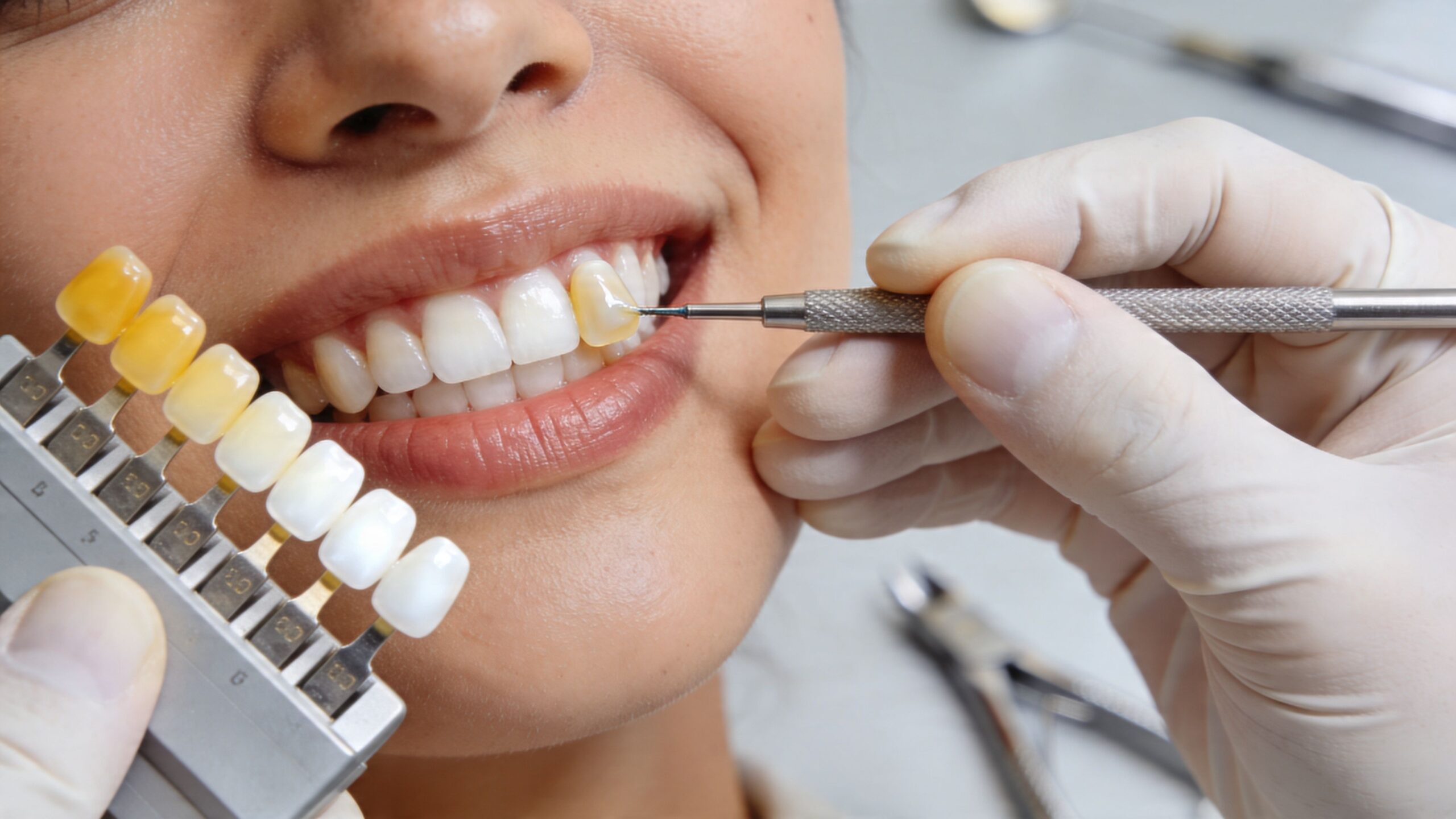
If you're looking in the mirror and thinking, “I like the shape of my teeth, but I want them brighter,” you're not alone. Many adults in Bellaire, West University, and nearby Houston neighborhoods come in with a very specific goal. They want whiter teeth, but they also want to fix a small chip, close a tiny gap, or smooth an uneven edge.
That combination is where a lot of confusion starts. Teeth whitening and bonding can work beautifully together, but only when they're planned in the right order. If they're not, the result can be a smile that looks patchy, mismatched, or less durable than it should be.
For patients searching for a cosmetic dentist near me or a dentist in Bellaire, TX who can help them make smart long-term decisions, the key is understanding that smile design isn't just about today’s result. It’s also about how your teeth, your bonding, and your color will look months and years from now. That’s especially true if you want cosmetic dentistry that blends naturally with regular dental care, cleaning and exams, dental x-rays, or future restorative dentistry.
- Your Cosmetic Dentist for Teeth Whitening and Bonding in Bellaire TX
- Why Dental Bonding Does Not Whiten Like Natural Teeth
- The Right Order Whitening Before Bonding
- Options for Whitening Teeth with Existing Bonding
- Managing Risks and How We Minimize Them at Our Bellaire Practice
- Your Smile Transformation Journey in Bellaire TX
- Long-Term Care for Your Whitened and Bonded Teeth
- Your Questions About Teeth Whitening and Bonding Answered
Your Cosmetic Dentist for Teeth Whitening and Bonding in Bellaire TX
A common patient story goes like this. Someone has healthy teeth overall, but years of coffee, tea, wine, or just normal color change have left the smile looking dull. At the same time, there may be one front tooth with a chip, a corner that looks worn, or a space that catches the eye in photos.
Whitening sounds like the easy first answer. Bonding sounds like the easy second answer. What is often overlooked is that these two treatments affect each other.
When patients want brightness and symmetry
If your enamel is darker than you'd like, whitening can improve the color of your natural teeth. If one tooth is misshapen or slightly damaged, bonding can reshape it with composite resin. Used together, they can create a very natural upgrade.
Used in the wrong sequence, they can create a frustrating mismatch.
That’s why cosmetic treatment has to be planned as a whole smile decision, not as two unrelated appointments. In practice, that means looking at:
- Your current tooth color
- Any existing bonding or fillings in visible areas
- Whether you want a subtle refresh or a more dramatic cosmetic change
- How important long-term shade matching is to you
- Whether veneers, whitening, or bonding makes the most sense for specific teeth
A bright smile looks best when color, shape, and surface texture are designed together.
A local approach that fits real life
Patients in Bellaire often aren't asking for a “Hollywood” smile. They want their teeth to look healthier, cleaner, and more even, without looking artificial. That usually means choosing a shade that suits the face, then matching any bonding to that final result rather than guessing in advance.
This is also why cosmetic planning often overlaps with other services. Some patients need a cleaning and exams visit before whitening. Some need dental x-rays or a new patient exam to check for decay or cracks before cosmetic work begins. Others may discover that a chipped tooth needs restorative dentistry instead of a purely cosmetic fix.
For anyone searching for a dentist near me who can sort through those options clearly, the goal is simple. Make the plan predictable. Keep it conservative. Protect the result.
Why the relationship matters
Teeth whitening bonding isn't a one-visit impulse treatment. It works best as a partnership. The smile has to be designed around what your natural teeth can do, what resin can do, and how both will age over time.
That’s where patients benefit from a dentist who looks past the immediate appointment and plans for the next stage too. Whether you're coming from Bellaire, West University, or near The Galleria, the right cosmetic plan should feel calm, understandable, and built around a result you can maintain.
Why Dental Bonding Does Not Whiten Like Natural Teeth
The biggest misconception about teeth whitening bonding is that everything in your smile will lighten together. That isn’t how the materials behave.
Natural enamel and bonding resin are different substances. Whitening gel can affect one of them. It can't affect the other in the same way.
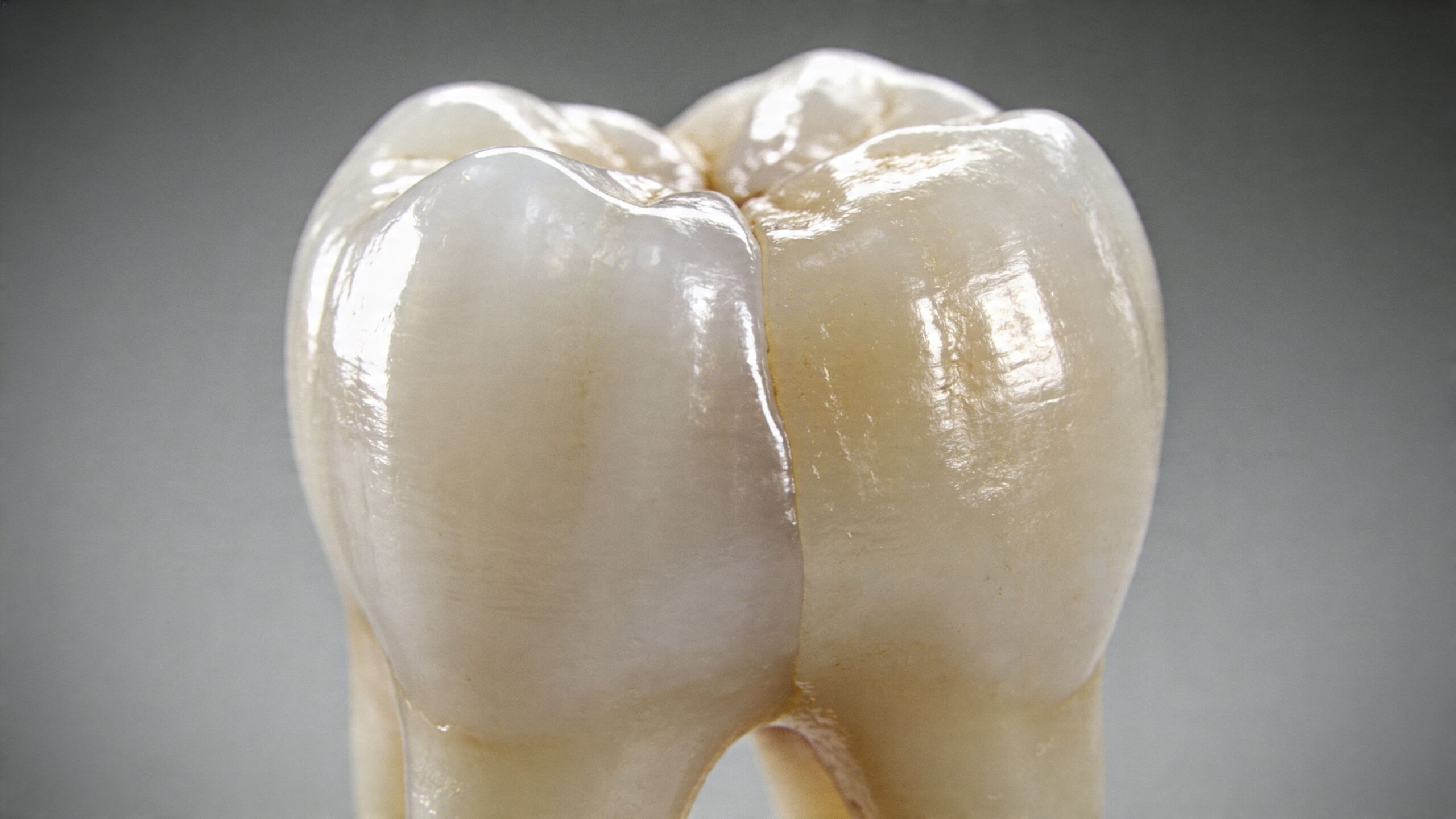
Enamel and composite don't react the same way
Think of natural enamel like a surface that whitening gel can move through. Think of bonding resin like a sealed surface that blocks that process.
A patient-friendly way to picture it is this. If a wood door has absorbed stain, you can sometimes lighten the appearance by treating the material itself. If you have a painted cabinet with a sealed finish, the same treatment won't soak in and change the color underneath. Bonding behaves more like that sealed finish.
A published explanation of this material difference notes that dental bonding resin is a nonporous composite material that does not respond to teeth whitening agents, while natural enamel can lighten, which is why bonded areas stay the same shade and can stand out after whitening (districtdentistryclt.com on bonding and whitening mismatch).
What that means for your smile
If you already have bonding on a front tooth and you whiten the surrounding enamel, your natural teeth may brighten while the bonded area stays where it was. That can make a previously invisible repair suddenly easier to see.
This is especially common in a few situations:
- Old edge bonding on front teeth that was matched to a darker smile years ago
- Small cosmetic repairs done after a chip or minor trauma
- Bonding used to close a gap where the shape still looks good, but the color no longer blends
- Touch-up whitening from over-the-counter products that changes enamel gradually while resin stays put
Whitening changes teeth. It doesn't repaint bonding.
Why patients often notice this later
Many bonded restorations look excellent when they're first placed because the shade was matched carefully to your natural teeth at that time. The mismatch tends to show up later, after the enamel changes color, or after a patient decides they want a brighter smile than they originally had.
That's why cosmetic planning isn't just about whether bonding can fix a chip. It's about whether the color you're choosing today will still make sense if you want whitening later.
What works better than guessing
The practical answer is straightforward. If a bonded tooth is in a visible part of your smile and you're considering whitening, your dentist should evaluate the bonding before any bleaching starts.
That conversation usually centers on three questions:
- Is the existing bonding in a spot that will show color contrast?
- Do you want a whiter overall smile than your current bonding can match?
- Would replacing the bonding after whitening create the cleaner result?
For many patients, that planning step is what turns cosmetic dentistry from “I hope this looks even” into a result that feels completely natural.
The Right Order Whitening Before Bonding
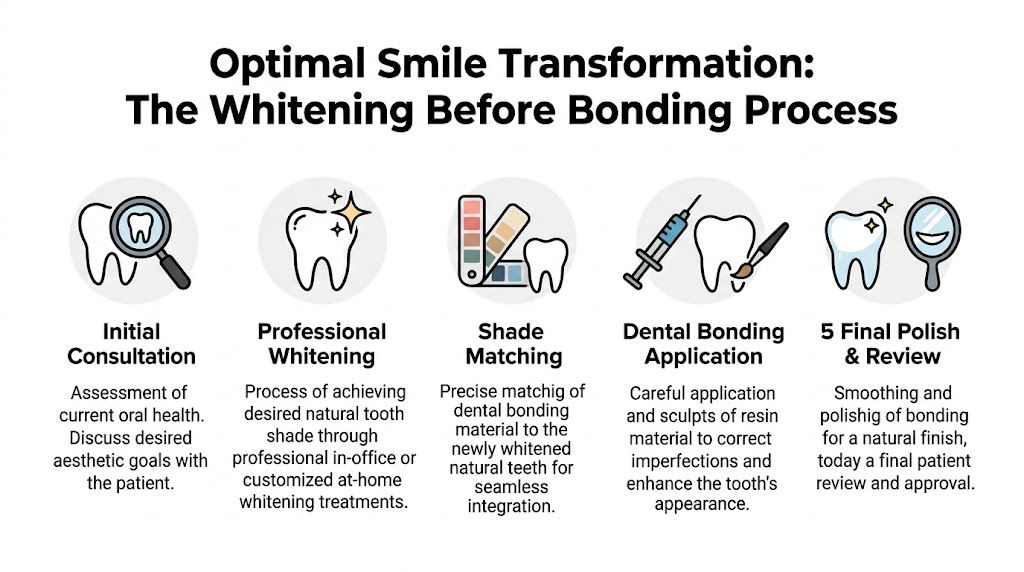
The correct sequence for most cosmetic cases is simple. Whiten first, then bond later. That isn't just a preference. It's the sequence that gives the most predictable color and the most reliable adhesion.
Why this order protects the result
There are two separate reasons for doing whitening before bonding. The first is cosmetic. You want to choose the final shade of your natural teeth before any composite is color-matched to them.
The second reason is mechanical. Bonding placed too soon after bleaching may not adhere as well as it should.
A key study reported that immediate dental bonding after whitening reduced bond strength by 71% to 76%, and the explanation given was that residual oxygen from peroxide can interfere with resin polymerization. The same research supports a 1 to 2 week delay before bonding for more durable adhesion (PubMed summary of the whitening and bond strength study).
What the sequence looks like in real life
For a patient who wants a brighter smile plus reshaping, the process usually follows a clear path:
Start with an exam
Teeth and gums need to be healthy enough for cosmetic treatment. If there's decay, leaking restorations, or gum irritation, those issues should be handled first.Whiten the natural teeth
This can be done with in-office treatment, take-home trays, or a combination depending on the case and sensitivity level.Let the shade settle
Teeth can look different immediately after whitening than they do after a short stabilization period.Match the bonding to the settled shade
Cosmetic precision is especially important. Bonding should be selected after the whitening result has become more reliable.Place and polish the bonding
Once the color is stable and the enamel is ready, the bonding can be sculpted for shape and finish.
Clinical rule: If you're planning both procedures, don't lock in the resin shade before you know the final tooth shade.
Why timing matters to appearance too
Even if bond strength weren't part of the conversation, whitening first still makes more sense visually. Bonding that matches your pre-whitening smile may look too dark after the rest of the enamel brightens. Then you're paying to replace material that could have been matched correctly from the start.
Patients often appreciate having this sequence laid out because it removes a lot of uncertainty. It also helps with scheduling. If you're preparing for a wedding, photos, interviews, or another milestone, timing both steps properly matters.
For a broader look at maintaining a brighter shade after treatment, the practice’s guide to lasting professional teeth whitening results in Bellaire TX gives helpful context on keeping whitening results stable.
What doesn't work well
A few approaches tend to disappoint:
- Whitening after new front-tooth bonding when you expect everything to lighten evenly
- Bonding immediately after bleaching because you want to finish quickly
- Spot-fixing one visible tooth without planning the smile color around it
- Choosing a resin shade on dehydrated teeth and assuming it will still look right later
The best cosmetic work often looks simple when it's done. The planning behind it isn't simple at all. Good teeth whitening bonding depends on getting the order right the first time.
Options for Whitening Teeth with Existing Bonding
If you already have bonding and now want a whiter smile, you're not stuck. You just need a plan that respects how the old resin will behave once the natural enamel brightens.
For most patients, there are two realistic paths. One is to whiten the teeth and then replace the visible bonding so everything matches again. The other is to consider veneers if you want a broader redesign of color and shape.
Option one replacing the bonding after whitening
This is the more conservative solution when the existing bonding has served you well but no longer matches your smile goals. The natural teeth are whitened first. After the new shade is established, the old bonding is removed and replaced with composite selected for the updated color.
This approach keeps treatment focused and preserves natural tooth structure. A clinical protocol summary notes that when whitening creates mismatch, replacing the resin can restore uniformity with 95% patient satisfaction, and that this minimally invasive approach preserves 90% to 95% of vital tooth structure compared with more aggressive crown preparation (SPF Dental Care discussion of replacing bonding after whitening).
For patients comparing techniques, the practice’s Houston composite bonding page explains how bonding can be used to repair chips, improve contours, and refine smile symmetry.
Option two moving to veneers
Veneers may make sense when the issue isn't just color mismatch. Some patients also want changes in tooth width, length, alignment appearance, or overall smile uniformity that go beyond what selective bonding replacement can accomplish.
This option is often considered when:
- Several front teeth already have aging cosmetic work
- The patient wants a more extensive smile redesign
- The existing bonding is worn, stained, or uneven in multiple places
- A longer-term stain-resistant material is the priority
Side-by-side comparison
| Option | Best for | Tooth preservation | Appearance flexibility |
|---|---|---|---|
| Replace bonding after whitening | Small to moderate visible mismatch | More conservative | Strong for localized improvements |
| Veneers | Broader smile redesign | More involved than bonding replacement | Greater control over color and shape |
How the decision usually gets made
The right choice usually depends less on one tooth and more on the whole smile. If the teeth are healthy, the shape is mostly attractive, and the issue is that old bonding no longer blends, replacement is often the logical next step. If the smile needs larger changes in form as well as shade, veneers may be worth discussing.
A good cosmetic plan doesn't start by asking, “What treatment is more dramatic?” It starts by asking, “What is the smallest treatment that will get the right result?”
What patients should expect
If you choose bonding replacement, the process is usually straightforward from the patient perspective. Whitening comes first. Then the visible bonding is updated to harmonize with the new enamel shade.
If you choose veneers, the planning is more thorough because the goal isn't only to correct mismatch. It's to redesign the front smile in a more complete way.
Either path can work well. The best one is the one that matches your goals, your existing dental work, and how much change you want.
Managing Risks and How We Minimize Them at Our Bellaire Practice
Cosmetic dentistry should feel exciting, but it should also be honest. Whitening and bonding are safe, conservative treatments when planned well. Problems usually come from rushing, poor sequencing, or trying to force one procedure to do what it can't do.

The two main concerns
The first concern is bond failure when bonding is done too soon after whitening. In an in vivo orthodontic clinical trial, brackets bonded within 24 hours of whitening had a 16.6% failure rate over 180 days, compared with 1.8% on unbleached teeth. Delaying bonding for 2 to 3 weeks reduced failures to 2.1% (WVU clinical trial on post-whitening bonding failure).
The second concern is sensitivity, especially in patients with exposed root surfaces, older restorations, or a history of reacting strongly to whitening products. Sensitivity doesn't mean whitening is off the table. It means the protocol should be chosen carefully.
How risk gets lowered in practice
At our Bellaire office, the risk discussion starts before treatment is scheduled. The exam matters because cosmetic dentistry sits on top of biology. If the enamel is compromised, if gums are inflamed, or if older bonding is already failing, those details change the plan.
A careful protocol usually includes:
- A full review of existing restorations so visible bonding isn't accidentally left mismatched
- Shade planning before resin placement so color is selected after whitening, not before
- A waiting period when indicated so the enamel surface is ready for adhesion
- Magnification and fiber-optic evaluation to refine the margin and surface detail
- Micro air abrasion and adhesive bonding techniques when surface preparation calls for conservative precision
Why this matters to anxious patients
Patients often assume cosmetic work is mostly artistic. The artistic part matters, but the hidden technical part is what protects the result.
Some of the best cosmetic dentistry is invisible for two reasons. You can't see the restoration, and you can't see the planning that kept it from failing.
That same careful mindset also benefits patients looking for broader care from a dentist near me, including restorative dentistry, emergency dentist visits after a chipped tooth, or even evaluation when trauma makes a tooth extraction or future replacement part of the conversation. Cosmetic treatment works best when it’s integrated into overall dental health, not treated like a stand-alone beauty service.
Your Smile Transformation Journey in Bellaire TX
Starting cosmetic treatment usually feels easier once you know what the visit is like. Most patients aren't walking in saying, “I need teeth whitening bonding.” They’re saying, “I want my smile brighter,” or “I chipped a tooth and I want it to look natural again.”

What the first visit usually feels like
When a new patient comes to the Bellaire office, the early part of the appointment is focused on clarity. That includes learning what bothers you, what changes you want, and whether the issue is color, shape, wear, previous dental work, or some mix of all three.
A cosmetic consultation often connects with the same basics that matter in any good dental office:
- New patient exams that look beyond the obvious cosmetic concern
- Digital dental x-rays when needed to check the teeth beneath the surface
- Cleaning and exams if buildup or gum irritation could affect the final appearance
- Discussion of other services if a tooth needs restorative attention before cosmetic work
Patients coming from Bellaire, West University, and nearby Houston areas often say they were worried the process would feel sales-driven or confusing. A well-run consultation should feel the opposite. You should leave understanding your options, not feeling pushed into the biggest one.
Designing the smile together
Once the teeth are evaluated, the conversation becomes more specific. If whitening is appropriate, the likely shade range is discussed. If a front tooth needs bonding, that repair is planned around the target shade and the proportions of the surrounding teeth.
That collaboration matters. Cosmetic dentistry isn't just about making teeth white. It's about making them believable.
This short video offers a helpful visual introduction to smile-focused care:
What happens after the consultation
From there, the sequence is customized. Some patients move directly into whitening. Others need a cleaning first. Some discover that an old filling or worn edge should be addressed as part of the plan. Patients also sometimes ask about related services such as Dental implants near me when a missing tooth affects the overall smile, or Emergency dentist care if the cosmetic concern began with sudden damage.
The important thing is that nothing has to feel rushed. Good cosmetic work should feel organized from the first conversation forward. When treatment is paced correctly, patients usually feel more confident not only about how their smile will look, but about how long that result will hold up.
Long-Term Care for Your Whitened and Bonded Teeth
A bright, well-matched smile isn't a one-time event. It's something you maintain. That matters even more when your smile includes both natural enamel and bonded restorations, because those surfaces don't age or stain in exactly the same way.
Long-term success comes from small habits, regular check-ins, and realistic expectations.
Your home care checklist
The basics still matter, but cosmetic work makes consistency more important.
- Brush gently and thoroughly so plaque doesn't dull the enamel or collect around bonded edges.
- Floss every day because healthy gums make cosmetic work look cleaner and more natural.
- Be mindful with stain-heavy habits such as frequent coffee, tea, red wine, or tobacco exposure.
- Avoid using your teeth as tools since biting pens, opening packaging, or chewing ice can chip bonding.
- Use whitening only as directed so you maintain shade without overdoing it.
What to expect over time
Bonding is conservative and versatile, but it isn't permanent. A verified clinical overview notes that composite bonding often needs replacement in 5 to 10 years as it wears or stains over time. That reality doesn't mean bonding is a poor option. It means it should be chosen with maintenance in mind.
For many patients, the practical long-term pattern looks like this:
| Time frame | Common need |
|---|---|
| Soon after treatment | Monitoring shade stability and comfort |
| Routine recall visits | Cleaning, exams, and polish checks |
| Later maintenance | Refinement, repair, or replacement if bonding no longer blends |
The value of regular professional follow-up
Professional cleanings do more than remove buildup. They also give your dentist a chance to monitor margin integrity, surface luster, wear patterns, and whether your whitening shade still matches the bonded areas.
The best way to protect cosmetic dentistry is to treat it like preventive care, not like a finished project you never have to think about again.
Patients who stay on schedule with cleaning and exams usually have more options when small changes appear. A rough edge can be polished. A minor stain issue can be discussed early. A touch-up whitening plan can be coordinated before mismatch becomes obvious.
A partnership that keeps the smile looking natural
Cosmetic dentistry thus becomes a long-term relationship rather than a one-time transaction. Your smile changes with time, habits, and normal wear. The job isn't just to make it look good once. It's to keep it looking balanced as those changes happen.
That ongoing support is especially helpful if your smile includes multiple cosmetic elements, or if you also rely on the same practice for routine dental care, restorative dentistry, or future treatment planning. Done well, maintenance doesn't feel complicated. It just feels consistent.
Your Questions About Teeth Whitening and Bonding Answered
Patients usually ask very practical questions once they understand the basics. These are some of the ones that matter most.
Will coffee or smoking stain my bonding faster than my natural teeth
They can. A reviewed clinical summary notes that composite bonding can discolor faster than natural enamel, especially for smokers or heavy coffee drinkers, and that it often needs replacement in 5 to 10 years, while porcelain veneers offer stronger long-term stain resistance (Scott Greenhalgh DDS on bonding longevity and stain risk).
That doesn't mean you need to avoid coffee forever. It means habits matter more when you have visible bonding. Regular cleanings, rinsing after dark beverages, and staying ahead of polish or replacement needs can make a noticeable difference.
If one tooth looks darker should I whiten it or bond it
It depends on why that tooth looks darker. If the issue is generalized stain across many teeth, whitening may help the overall smile. If one tooth has a shape defect, a chipped area, or a localized cosmetic issue that whitening won't solve well, bonding may be the better fix.
This is why a cosmetic exam matters. Two smiles can look similar in the mirror and need completely different treatment.
How long should I wait between whitening and bonding
The answer depends on the case and the material being placed, but the practical rule is to allow time after whitening before bonding is done. In cosmetic dentistry, that delay helps with both shade stability and adhesion.
If you're trying to plan around a deadline, bring that up early. Timing can often be managed well, but the schedule should fit the biology, not the other way around.
Is bonding or veneers better if I want a very white smile
For smaller shape corrections, bonding can work very well once the natural teeth have been whitened to the target shade. Veneers may be more appropriate if you want a broader redesign or if stain resistance over time is a major concern.
Can I still be a good candidate if I need other dental work too
Often, yes. Cosmetic treatment can be coordinated with routine dental care, restorative dentistry, and other needs identified during new patient exams. In some cases, cosmetic work is sequenced after health issues are stabilized.
The key is not to separate appearance from function. The healthiest cosmetic result is the one built on a stable foundation.
If you're considering whitening, bonding, veneers, or a more complete smile plan in Bellaire, the next step is a thoughtful consultation. Charles E. Boren provides cosmetic and extensive dental care for patients in Bellaire, West University, and nearby Houston, with treatment plans designed around both immediate results and long-term maintenance. Schedule an appointment to discuss your goals, evaluate existing bonding, and create a smile plan that looks natural and lasts.