
TL;DR: The AAPD recommends your child’s first dental visit by their first birthday or within six months of the first tooth erupting. Starting early helps prevent problems before they become painful, and children who begin dental care at age one have been shown to incur about $300 less in dentally related expenses through age five than children who start at age three.
If you’re a parent wondering whether you’re early, late, or already behind, you’re not alone. Many families in Bellaire, West University, and Houston ask the same question while juggling teething, sleep changes, feeding routines, and everything else that comes with a new baby or busy toddler.
The good news is simple. There is a clear recommendation, and there is also a clear path forward if your child is older than that guideline. Whether your baby just cut a first tooth or your preschooler has never had a new patient exam, the goal is the same: help your child feel comfortable, keep little problems from turning into bigger ones, and make dental care feel normal from the beginning.
- The Official Guideline for Your Child's First Dental Visit
- Why Early Dental Care is Critical for Lifelong Health
- What to Expect at Your Child's First Dental Visit in Bellaire
- Is It Too Late? A Guide for a Delayed First Visit
- Helping Anxious Children Feel Safe and Comfortable
- Building a Lifetime of Healthy Smiles Beyond the First Visit
The Official Guideline for Your Child’s First Dental Visit
The short answer to what age should child go to the dentist is this: by age 1, or within six months of the first tooth coming in. That recommendation comes from the American Academy of Pediatric Dentistry, and it isn’t meant to rush parents into treatment. It’s meant to start prevention early.

A lot of parents are surprised by that age. They assume a dental visit can wait until all the baby teeth are in, or until a child is old enough to sit still and follow directions. But the early visit is mostly about guidance, screening, and building healthy habits before decay starts.
According to the AAPD guidance summarized by Valley Smiles, 23% of two- to five-year-olds already have cavities in their primary teeth, and children who start dental care at age one incur an average of $300 less in dentally related expenses through age five than children who begin at age three.
Why age one matters
Think of the first visit as the start of a dental home. That means your child has a familiar place for cleanings and exams, questions about teething, and help if something doesn’t look right.
Parents often need practical answers more than treatment at this stage, such as:
- Teething timing: When should the first teeth appear, and what’s normal discomfort?
- Cleaning baby teeth: Should you use a cloth, a finger brush, or a small toothbrush?
- Bottle and sippy cup habits: Which routines are gentle on developing teeth?
- Thumb-sucking and pacifiers: When are these habits harmless, and when should you ask about them?
If you’re still trying to sort out when babies start teething, it helps to understand that teething and first dental visits often overlap. Once that first tooth appears, oral care becomes part of everyday routine.
Practical rule: If your child has a tooth, your child should have a dentist.
What this visit is really for
This is not usually a long, stressful appointment. In many cases, it’s a calm introduction. The dentist checks the mouth, looks at how teeth are coming in, talks with you about home care, and helps you avoid common problems before they start.
That’s a very different mindset from waiting until your child has pain and searching for an emergency dentist near me. Early care is simpler, gentler, and easier on families.
Why Early Dental Care is Critical for Lifelong Health
Baby teeth are small, but they do important work. They help children chew, speak clearly, and hold space for the adult teeth that come later. When decay starts early, it can affect much more than a smile.
One reason dentists recommend an early visit is Early Childhood Caries, often shortened to ECC. This is tooth decay in young children, and it can begin much earlier than many parents expect.
How cavities can start so early
According to My Children’s Dentist, ECC affects up to 23% of U.S. children aged 2 to 5. The same source explains that this process can begin as early as 6 months, when bacteria such as Streptococcus mutans form a biofilm on erupting teeth.
Biofilm sounds technical, but the idea is simple. It’s a sticky layer of bacteria that clings to the teeth. If it sits there and feeds on sugars and starches often enough, the tooth surface begins to weaken.
That’s why timing matters. Once teeth erupt, they can develop decay.
What happens during prevention
An early dental visit gives parents a chance to catch small changes before they become cavities. It also gives the dentist a chance to look for:
| What the dentist checks | Why it matters |
|---|---|
| White spots or weak enamel | These can be early warning signs |
| Gum irritation | It may point to cleaning or feeding issues |
| Tooth eruption pattern | It helps monitor normal development |
| Oral habits | Thumb-sucking or prolonged bottle use may need guidance |
A professional fluoride varnish is one of the most useful preventive tools at this age. The same source notes that fluoride varnish can reduce caries by 37% when used as part of early preventive care.
Small problems are easiest to treat when they’re still small.
Why this affects more than teeth
When young children have untreated cavities, parents often notice changes before they ever hear the word “cavity.” A child may avoid certain foods, become fussy during brushing, wake at night, or resist cold drinks.
Early prevention supports:
- Comfort at meals
- Clear speech development
- Better daily brushing habits
- Less chance of urgent treatment later
This is one reason many families looking for a dentist in Bellaire, TX or a dentist near me choose a practice that offers not only cleaning and exams, but also dental x-rays when needed, restorative dentistry, and emergency dentist care under one roof. Prevention works best when follow-up is easy.
What to Expect at Your Child’s First Dental Visit in Bellaire
For most parents, the hardest part is not the appointment itself. It’s the unknown. Once you know what the visit looks like, it usually feels much more manageable.
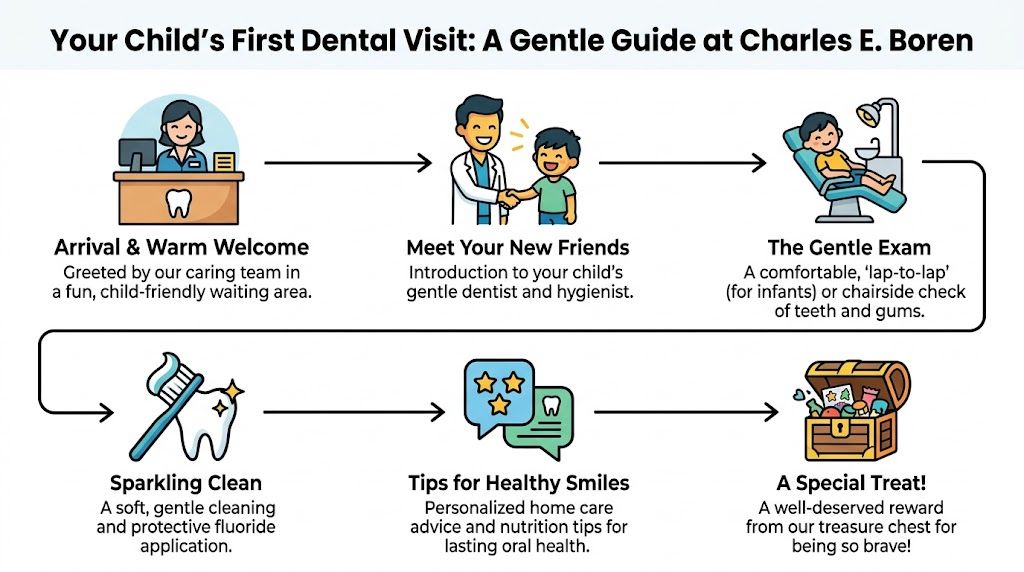
A simple walkthrough
Many first visits are short and parent-centered. For infants and young toddlers, the exam may happen with your child on your lap or in a comfortable lap-to-lap position. That setup helps your child feel secure while the dentist gets a clear look.
A typical first visit may include:
-
A warm hello at check-in
Your child gets time to look around, stay close to you, and settle in. -
A gentle exam
The dentist checks teeth, gums, bite, and oral development. -
A light cleaning if appropriate
Some children are ready for a quick cleaning and fluoride. -
A parent conversation
At this point, your questions matter most. -
A plan for next steps
You’ll leave knowing how often to return and what to do at home.
Questions parents often ask
Some parents arrive focused on one concern. Others have a list in their phone. Both are normal.
Common questions include:
- Brushing basics: How much toothpaste should I use?
- Teething discomfort: What helps, and what should I avoid?
- Diet habits: Are snacks, milk at bedtime, or juice affecting the teeth?
- Thumb-sucking or pacifier use: Is this still okay at my child’s age?
Your child does not need to perform perfectly for a first visit to be successful.
That matters. A successful appointment might be a brief exam, a calm introduction, and a clear plan. It doesn’t have to look like an older child’s cleaning.
How to prepare without adding pressure
Keep your language simple. You can say, “We’re going to count your teeth,” or “The dentist is going to help keep your smile healthy.” Avoid using words that sound scary or promise too much.
If you’re comparing family-friendly options for care, this guide on how to choose a dentist can help you think through comfort, communication, technology, and long-term fit for your household.
For families searching terms like dentist near me, cleaning and exams, or new patient exams in Bellaire, the best first visit is one that feels calm, predictable, and easy to repeat.
Is It Too Late? A Guide for a Delayed First Visit
If your child is already 2 or 3 and hasn’t been to the dentist yet, you haven’t ruined anything. You’re also not the only parent in that position.
Many families planned to go earlier and life got in the way. Sleep schedules changed. Work got hectic. A move happened. The child seemed fine, so the visit kept getting pushed back. That doesn’t make you careless. It makes you normal.

What the delay can mean
A delayed first visit does matter, because some dental problems don’t show obvious symptoms at home. According to IC Teeth, many parents wait until their child is over age 2 for the first dental visit. The same source notes that 23% of U.S. toddlers aged 2 to 5 have ECC, and it also reports a 15% rise in delayed visits with a corresponding 12% increase in ECC rates in post-pandemic studies.
That’s the risk. The reassuring part is that a catch-up visit still helps a great deal.
What to do now
If your child missed the age-one window, the next best time is now. A delayed first visit usually focuses on three things:
- Checking for hidden problems such as early cavities or enamel changes
- Resetting home habits around brushing, snacks, bedtime drinks, and oral habits
- Building trust so future visits feel easier
Sometimes an older first-time patient may also need dental x-rays if the dentist has a reason to look more closely. That doesn’t mean something is wrong. It means the care is adjusted to what your child needs today.
Starting late is still starting. That matters.
If your child has pain, swelling, a broken tooth, or visible dark spots, don’t wait for the “perfect” age or a better moment. Book the visit and let the dental team guide the next step.
Helping Anxious Children Feel Safe and Comfortable
Fear is one of the biggest reasons families delay care. Some parents worry their child will cry. Others worry they’ll feel judged if their child won’t open, won’t sit still, or needs extra reassurance.
That concern is understandable, and it should be part of the conversation from the start.

According to Pinky Promise Pediatric Dentistry, parents often want to know whether they can stay with their child during the visit, and that parental presence is encouraged for comfort. The same source notes that up to 80% of a first visit is consultative, which means the appointment often centers on trust, conversation, and a gentle introduction rather than intensive treatment.
What helps a nervous child
Children usually do better when adults around them stay relaxed and predictable. A few simple strategies go a long way:
- Stay close: Many children feel safer when a parent is in the room.
- Use simple words: “Count your teeth” works better than overexplaining.
- Practice at home: Let your child open wide in front of a mirror.
- Keep the goal small: Cooperation for a short exam is enough for a first win.
Some families also like using simple anxiety coping skills for kids before the visit, such as breathing exercises, naming feelings, or practicing a calm routine ahead of time.
When extra comfort support makes sense
Most children do well with a gentle pace, parent support, and child-friendly communication. Some need more help, especially if they are older first-timers, highly anxious, or need more than a basic exam.
That’s where comfort-focused dentistry matters. Practices that offer calm communication, minimally invasive techniques, and sedation when appropriate can make needed care more realistic for families who have been putting it off. If dental fear is a major concern in your household, this resource on how to overcome dental anxiety may help you think through your options.
A short video can also help parents know what a reassuring approach looks like in real life.
What parents should remember
A child crying at a first appointment does not mean the visit failed. A nervous child can still have a positive experience. The primary goal is familiarity, safety, and a care plan that gets easier over time.
If you’ve been searching cosmetic dentist near me, emergency dentist, or family dental care in Bellaire, it’s worth choosing a practice that understands child anxiety too. The right environment helps the whole family, not just the youngest patient.
Building a Lifetime of Healthy Smiles Beyond the First Visit
The first visit is important, but consistency is what shapes long-term oral health. Once your child has an established routine, dental care becomes a normal part of growing up instead of something that only happens when there’s pain.
For many children, that means regular checkups and cleanings, home brushing with parent help, and follow-up when the dentist wants to watch development more closely. Good habits at home and steady professional care work together.
What parents can do between visits
Most of the daily work happens at the sink and at the table. That’s where families have the most influence.
A strong routine usually includes:
- Brushing every day with fluoride toothpaste in the amount recommended for your child’s age
- Helping instead of assuming because young children often need hands-on brushing assistance
- Watching snack frequency since constant grazing gives teeth repeated exposure
- Keeping follow-up appointments so small changes are caught early
This is also where a family dentist becomes useful beyond pediatric basics. As children grow, needs can shift from simple preventive care to restorative dentistry, cosmetic concerns in the teen years, sports-related dental injuries, tooth extraction, or even future planning around dental implants for adults in the household. Many families prefer one trusted dental home for all of it.
The next big milestone at age seven
There’s another age parents should know after the toddler years. According to The Super Dentists, the American Association of Orthodontists recommends an orthodontic evaluation by age 7. At that stage, early detection can identify alignment issues in 70% to 80% of children, potentially reduce treatment length by 6 to 12 months, and lower the need for extractions by 40%.
That doesn’t mean every seven-year-old needs braces right away. It means a trained eye can spot bite and spacing issues while growth is still working in the child’s favor.
Healthy smiles are built in stages. First prevention, then monitoring, then timely treatment if needed.
A simple long-term mindset
Parents don’t need to master every detail at once. A useful approach is to think in three steps:
| Stage | Parent focus |
|---|---|
| Baby and toddler years | Start visits early and build habits |
| Preschool and grade school | Keep routines steady and watch development |
| Around age 7 and beyond | Check bite, spacing, and long-term alignment |
If you’ve been searching for a dentist in Bellaire, TX who can support your family over time, that continuity matters. It makes emergency visits less stressful, routine care easier to keep up with, and future decisions more informed.
If you’re ready to schedule your child’s first visit or a catch-up appointment, Charles E. Boren provides compassionate dental care for families in Bellaire, West University, and Houston. Whether you need a new patient exam, gentle cleaning and exams, help for an anxious child, or a trusted dentist near me for long-term family care, the team is here to make the process calm, clear, and comfortable.