
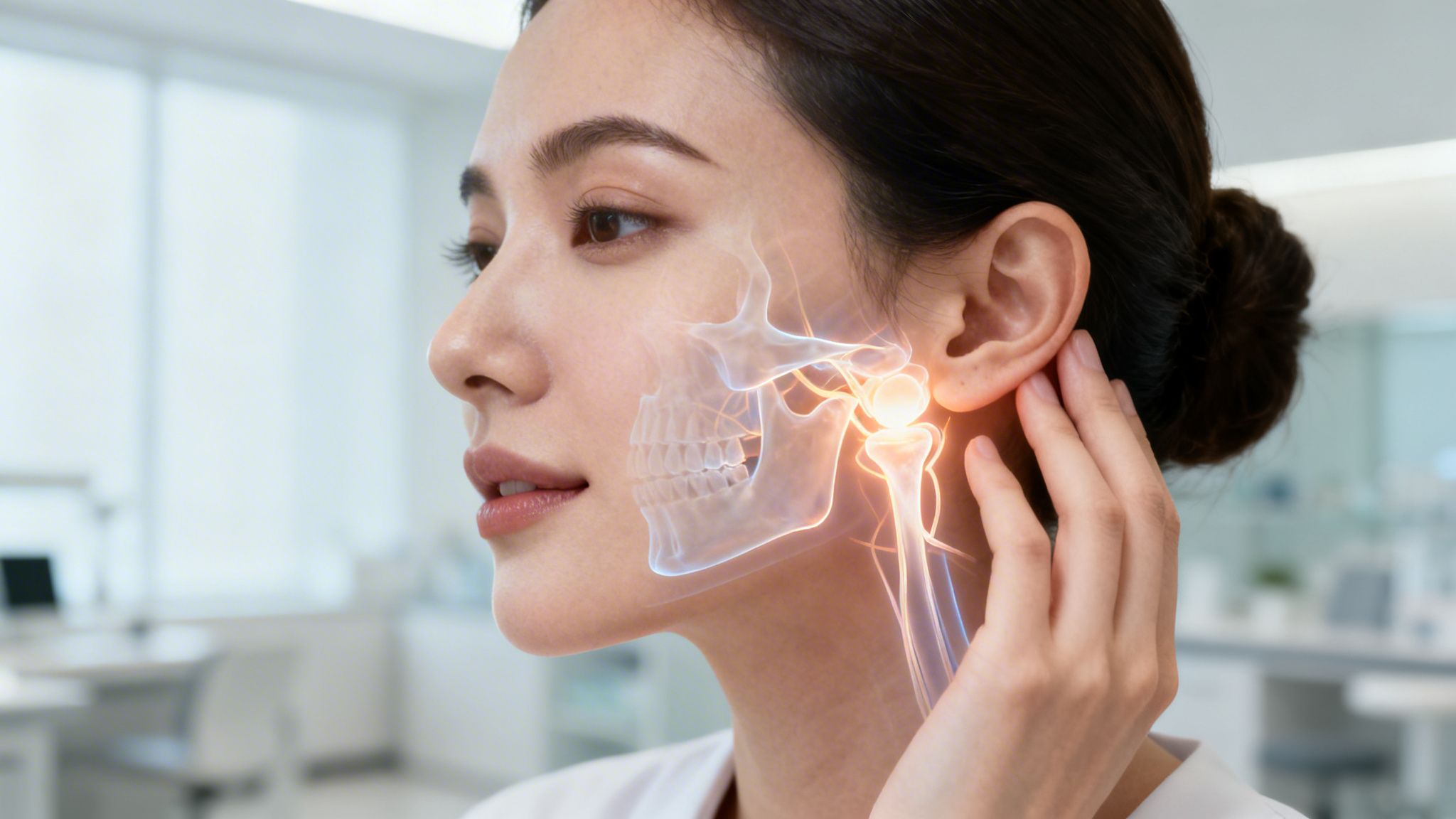
If you’re caught in a frustrating cycle of debilitating migraines and persistent jaw pain, you’re not just imagining the connection. The short answer is yes, TMJ disorders can absolutely trigger or worsen migraines. For residents of Bellaire, West University, and the greater Houston area, understanding this complex relationship is the first step toward finding a trusted local dentist who can provide real relief. At the dental practice of Dr. Charles E. Boren, we are dedicated to helping our community find clear answers and effective treatment.
Your Guide to Solving Migraines and Jaw Pain in Bellaire
For many people in Bellaire, TX, the link between jaw pain and severe headaches is a source of daily frustration. You might feel a dull, aching pain around your jaw that seems to build until it explodes into a full-blown migraine. This isn’t a coincidence; it’s a recognized medical connection that Dr. Charles E. Boren has been helping Houston-area patients solve for over 30 years. As your trusted "dentist near me," our goal is to address your pain at its source.
The temporomandibular joint (TMJ) is the complex hinge connecting your jawbone to your skull. When this joint and the muscles surrounding it become inflamed or misaligned—a condition known as a temporomandibular disorder (TMD)—the effects can ripple throughout your head and neck, often leading to intense head pain.
How Jaw Problems Trigger Headaches
The trigeminal nerve is the main culprit here. It’s a massive neural pathway responsible for sensation in your face, including your jaw, and it’s also deeply involved in the mechanism of migraines.
Think of it as a shared electrical circuit. When TMD causes inflammation or muscle tension in the jaw, it sends a flood of pain signals up this nerve. This overstimulation can irritate the same parts of the brain that trigger a migraine, essentially flipping the switch for a headache. This is why a problem that seems isolated to your jaw can cause such widespread pain.
This isn't just a theory; the numbers back it up. A landmark study revealed that individuals with TMD have a 2.76 times higher risk for migraines, with a staggering 85.5% of TMD sufferers also reporting headaches. You can explore the full research on this TMJ and migraine link yourself.
TMJ and Migraine Symptom Overlap
One of the biggest challenges is that the symptoms of TMD and migraines often masquerade as one another. This makes it incredibly difficult to pinpoint the true source of your pain without a professional diagnosis from a dentist in Bellaire, TX. You might assume your recurring temple headaches are just from stress when they are actually coming from tense jaw muscles.
This table highlights the common symptoms shared between TMJ disorders and migraines, helping you identify potential connections in your own experience.
| Symptom | Common in TMJ Disorder | Common in Migraines |
|---|---|---|
| Pain in the temples, forehead, or behind the eyes | ✅ | ✅ |
| Sharp, throbbing, or pulsating head pain | ✅ | ✅ |
| Dull, constant pressure in the head | ✅ | ✅ |
| Pain that worsens with jaw movement (chewing, talking) | ✅ | ❌ |
| Neck and shoulder muscle tightness | ✅ | ✅ |
| A feeling of fullness or ringing in the ears (tinnitus) | ✅ | ✅ |
| Dizziness or vertigo | ✅ | ✅ |
| Sensitivity to light and sound | ❌ | ✅ |
| Nausea or vomiting | ❌ | ✅ |
| Clicking, popping, or grating sounds in the jaw | ✅ | ❌ |
Seeing how these symptoms intersect helps explain why a dental-focused approach might be the key to unlocking lasting relief from chronic pain.
An accurate diagnosis from an experienced local dentist is the first critical step. It’s not about just treating a symptom; it's about finding the root cause and restoring your quality of life.
At our Bellaire practice, Dr. Boren uses a detailed diagnostic process, including a thorough bite analysis and digital X-rays, to get to the bottom of your pain. We are committed to helping patients in our community find clear answers and finally move past the chronic pain cycle.
How TMJ Triggers Chronic Headaches and Migraines
To understand the frustrating link between a sore jaw and a splitting migraine, it helps to think of your head and face as a complex network. The nerves and muscles are all interconnected, and a problem in one area can easily cause chaos in another. When you have a TMJ disorder, the constant muscle strain, clenching, and joint inflammation can seriously overload this delicate system. The main culprit in this process is the trigeminal nerve, one of the most critical nerves in your face.
This nerve is a bit like a major data cable with three main lines, providing sensation to your forehead, cheeks, and lower jaw. Because it serves both the powerful jaw muscles and the areas of the head where migraines are typically felt, it becomes a shared "superhighway" for pain signals. When your TMJ is dysfunctional, it constantly irritates this nerve, which can cause its sensitivity threshold to drop. This makes you far more susceptible to migraine attacks from triggers that might not have bothered you before.
The Myofascial Pain Referral Pathway
One of the most common ways TMJ leads to migraines is through a process known as myofascial pain referral. All that chronic jaw clenching and grinding creates tiny, hyper-irritable knots in your jaw muscles. We call these trigger points. These knots don't just cause pain right where they are; they are notorious for referring pain to other, seemingly unrelated areas of your head.
For instance, a trigger point in your masseter muscle—the main muscle you use for chewing—can shoot pain signals straight to your temple, eyebrow, and even your ear. Your brain receives these signals and interprets them as a headache or migraine, even though the real source of the problem is in your jaw. This is why we so often see patients in our Bellaire dental office who are stunned to learn their persistent "sinus headaches" are actually coming from TMJ issues.
Key Insight: The pain you feel in your head might not be starting there at all. Referred pain from tense jaw muscles is a frequent and often-missed cause of chronic headaches and migraines for many people.
Nerve Convergence and Central Sensitization
Another critical piece of the puzzle is something called nerve convergence. As we mentioned, pain signals from your jaw and head travel along that same trigeminal nerve pathway to your brainstem. When your brain gets bombarded with pain signals from both areas at once, it can get confused and struggle to pinpoint the true source.
This constant flood of pain signals from the jaw can eventually lead to a much more serious condition: central sensitization.
- The "High Alert" State: Think of central sensitization as your central nervous system getting stuck in a state of high reactivity, or "high alert."
- Lowered Pain Threshold: Your brain and nerves become so used to hearing pain signals that it takes less and less stimulus to set off a pain response.
- Amplified Pain: This reaction makes you more sensitive not just to jaw pain, but to other common migraine triggers like bright lights, loud sounds, or stress.
It’s a vicious cycle. The jaw pain makes your nervous system hypersensitive, and that sensitivity, in turn, makes you more prone to migraines.
This diagram helps visualize how TMJ disorders and migraines are directly linked through these shared pain pathways.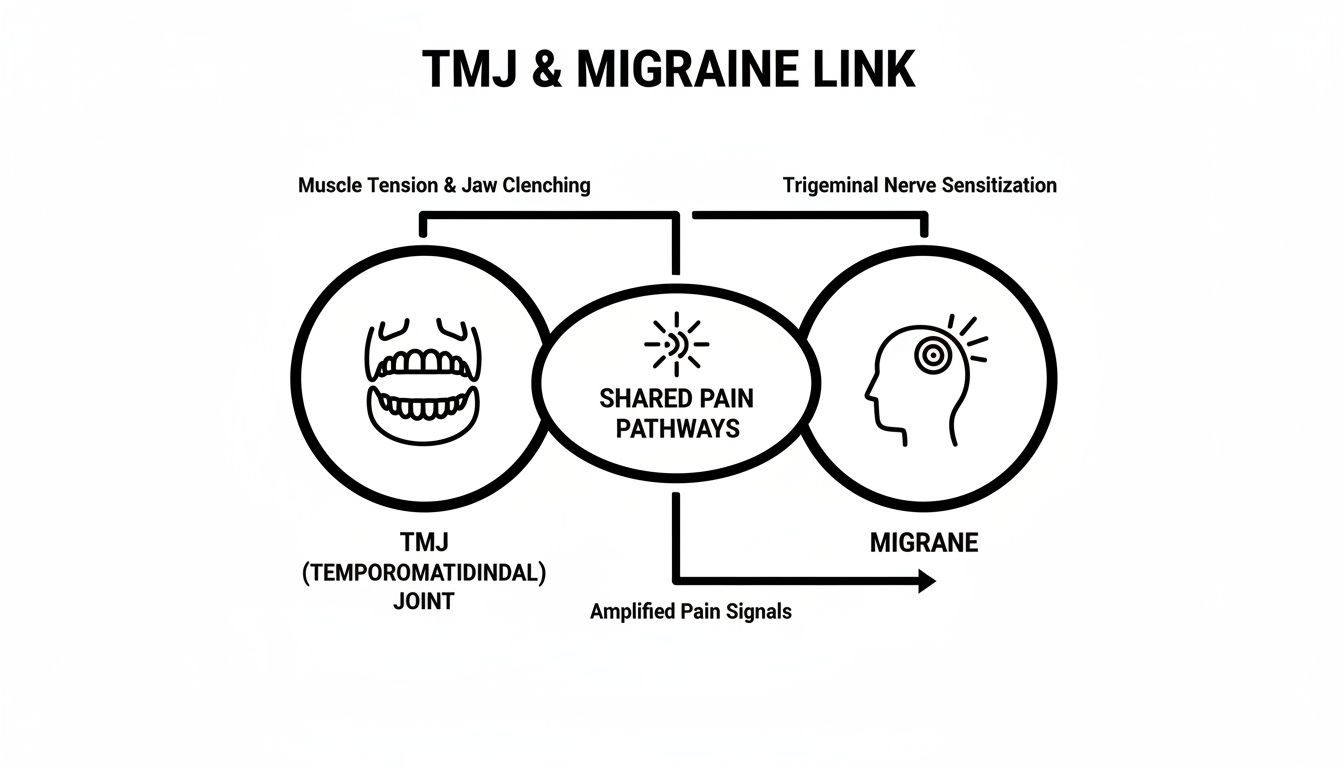
As you can see, while TMJ and migraines are distinct conditions, they have a huge area of overlap rooted in these shared nerve and muscle systems. Understanding the mechanics of jaw pain is a key part of untangling this connection. For a deeper look, this guide on Temporomandibular Disorder (TMD) provides excellent context.
By addressing the root mechanical problems in the jaw—like a misaligned bite or chronic muscle tension—we can help calm this overactive system. Here at our dental practice in Bellaire, TX, we focus on treatments that reduce strain on the jaw joint and muscles. This helps break the cycle of central sensitization and provides lasting relief from the migraines it causes. You can also learn more about the underlying issues by exploring our guide on the topic.
Getting an Accurate Diagnosis for Your Headaches
Is your recurring head pain a primary migraine, a stubborn tension headache, or is a TMJ disorder the true culprit? Untangling the source of your pain is the single most important step toward finding effective, lasting relief. A guess just isn't good enough when your quality of life is on the line.
At our Bellaire dental practice, Dr. Charles E. Boren conducts a meticulous diagnostic process to pinpoint the exact origin of your discomfort. This isn’t a quick glance or a one-size-fits-all approach. It's a deep dive into the mechanics of your jaw system to understand precisely how it might be contributing to your headaches and migraines.
Your Comprehensive Diagnostic Exam in Bellaire
Your initial consultation is a detailed fact-finding mission. We always start by listening. We want to understand your complete history of headaches and jaw pain, the frequency and intensity of your symptoms, and what you’ve already tried for relief.
From there, we move into a hands-on examination, which typically includes:
- A Detailed Bite Analysis: We carefully evaluate how your teeth come together. Even a minor misalignment can force your jaw muscles into a state of constant strain, directly contributing to tension and referred pain.
- Physical Palpation: Dr. Boren will gently palpate the muscles of your jaw, face, head, and neck. This helps us identify specific trigger points, inflammation, and areas of tenderness that signal muscle dysfunction.
- Jaw Function Assessment: We will check your jaw’s range of motion, listening for any clicking, popping, or grating sounds (crepitus) that signal joint issues. Pain that intensifies with chewing or yawning is a major clue.
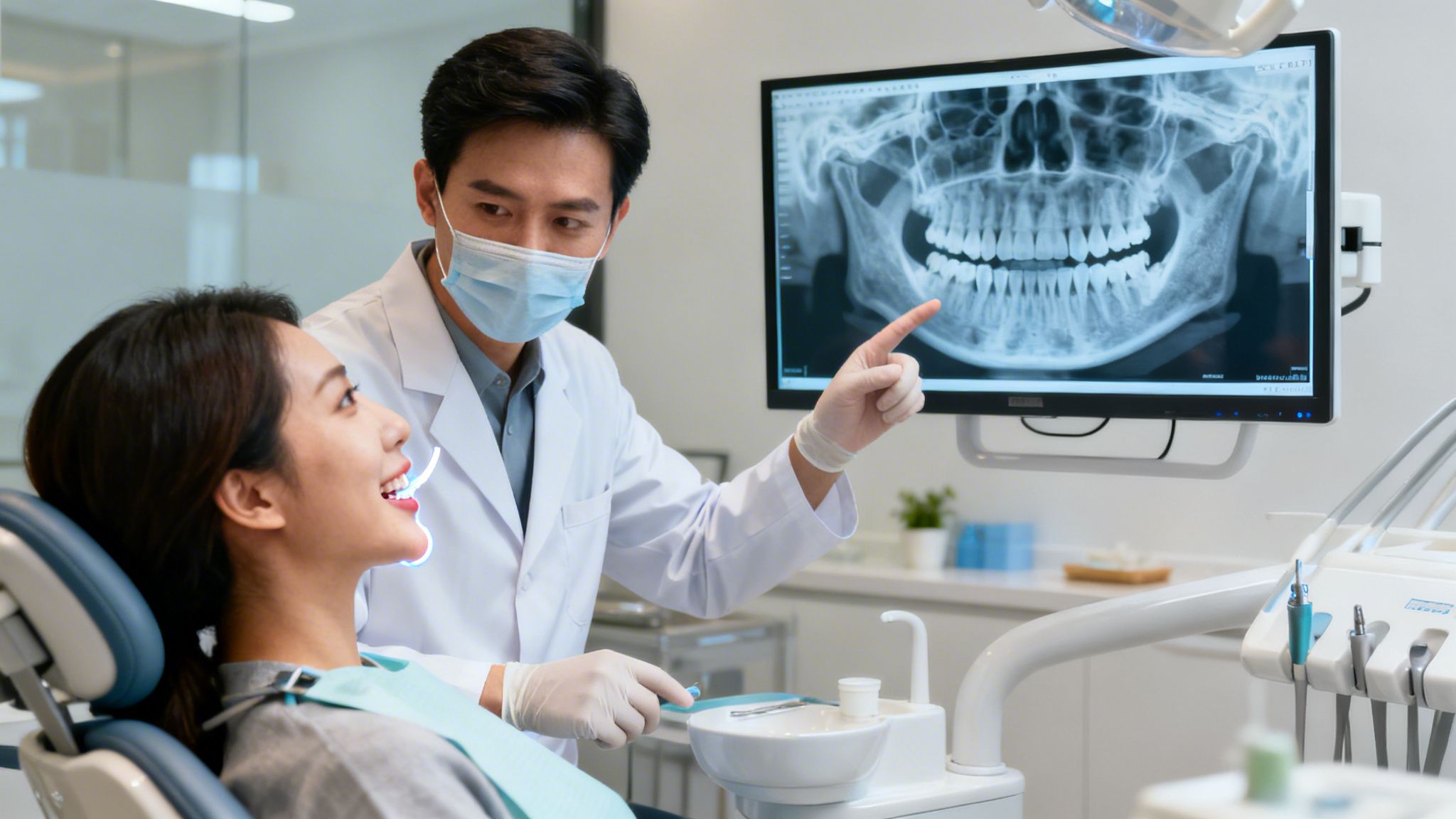
- Advanced Digital X-ray Imaging: To see the full picture, we use advanced dental X-rays. This allows us to clearly visualize the structures of your temporomandibular joint, your jawbone, and the positioning of your teeth, revealing underlying structural issues that can’t be seen with a visual exam alone.
This thorough approach ensures we’re not just guessing. We are gathering concrete evidence to build an accurate diagnosis tailored specifically to you.
Uncovering the Clues to TMJ-Related Migraines
During your evaluation, we look for key patterns that often connect jaw dysfunction to head pain. If you experience these symptoms, it’s a strong indicator that TMJ could be a major factor in your migraines.
A study highlighted in the European Journal of Pain found that among young adults with painful TMD, a staggering 80.5% also reported monthly headaches. The research revealed that while migraine prevalence was 20% before TMD symptoms began, it surged to 54% afterward, showing how TMD can directly provoke or intensify migraines. You can discover more about these important findings on TMD and headaches.
Some of the most common signs we look for include:
- Morning Headaches: Waking up with a dull headache or a sore jaw is a telltale sign of nighttime clenching or grinding (bruxism), a primary driver of TMJ-related pain.
- Pain Location: Headaches that are concentrated in the temples, behind the eyes, or at the base of the skull often originate from strained jaw and neck muscles.
- Ear-Related Symptoms: A feeling of fullness, ringing in the ears (tinnitus), or unexplained earaches without any sign of infection frequently points to the nearby TMJ.
By combining your reported symptoms with our clinical findings, we can confidently determine if your migraines are linked to a TMJ disorder. This precise diagnosis is what empowers us to create a treatment plan that addresses the root cause, rather than just chasing symptoms. For patients in Bellaire and the West University community, this means you can finally get clear answers and a direct path toward feeling better.
Personalized TMJ and Migraine Treatment in Bellaire
Once we’ve pinpointed the connection between your jaw dysfunction and migraines, we can get to work on your path to relief. Here in our Bellaire practice, Dr. Charles E. Boren focuses on real, effective solutions that target the root cause of your pain. We’re not interested in temporary fixes that just mask the symptoms; we want to restore your quality of life through careful, proven dental care.
Our approach is built on a simple truth: every patient is unique. There's no one-size-fits-all "cure" for TMJ-related migraines, which is why we design a treatment plan specifically for your bite, your muscle patterns, and your life. For our patients across Houston, this finally means getting the targeted care they need to break the cycle of chronic pain.
Custom Oral Appliances: A First Line of Defense
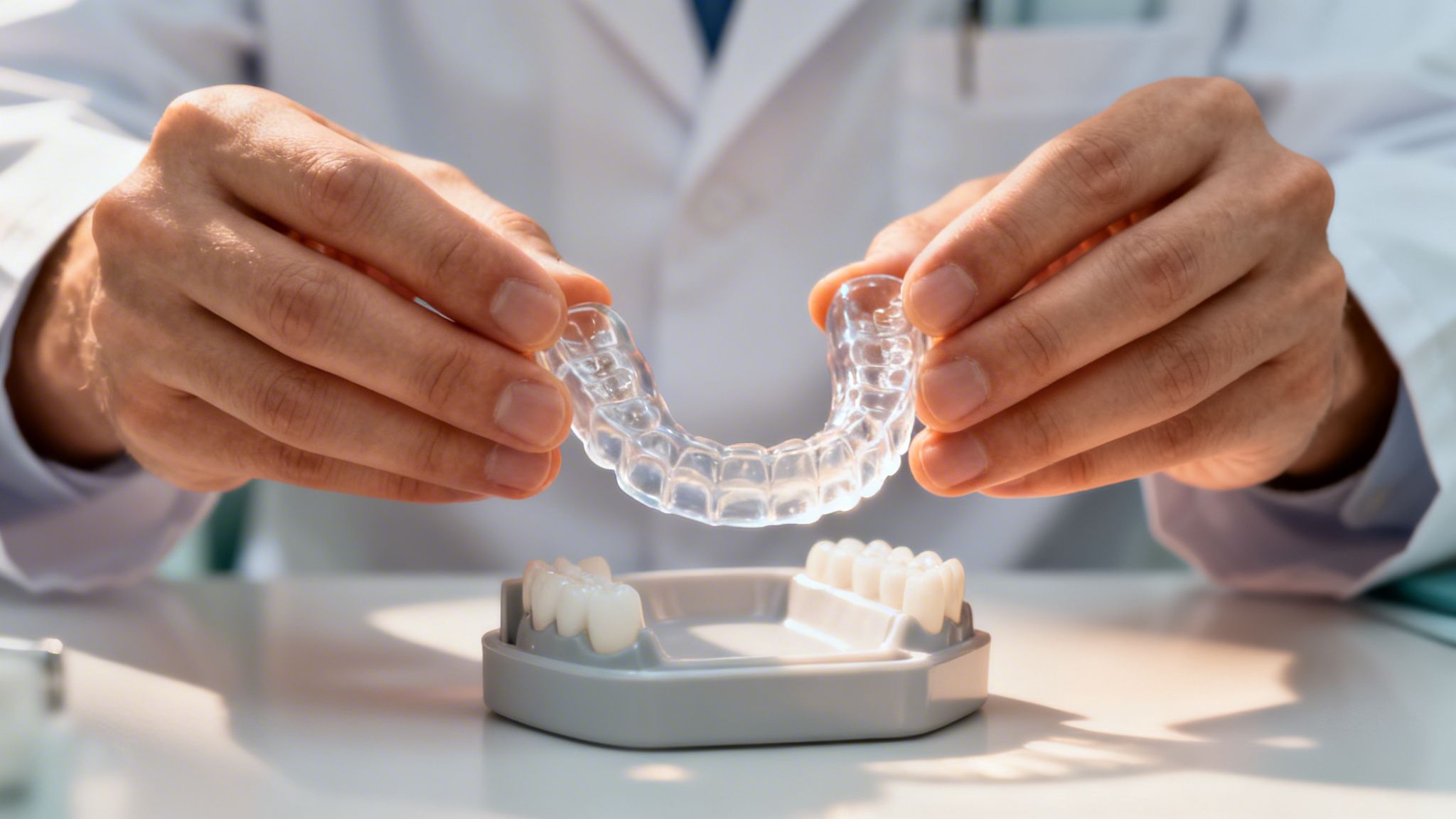
For many people, the most immediate and profound relief comes from a custom-fit oral appliance. These are nothing like the generic, over-the-counter mouthguards you might find at a drugstore, which can sometimes make TMJ issues worse by forcing your jaw into an unnatural position. Our appliances are meticulously designed from a detailed analysis of your specific bite.
One of the most effective devices we use is the NTI-tss (Nociceptive Trigeminal Inhibition Tension Suppression System). This is a small, comfortable device you wear while sleeping, and it works by:
- Preventing clenching: It keeps your back molars from making contact, which dramatically dials down the intense muscle contractions of nighttime grinding (bruxism).
- Reducing muscle strain: By allowing the powerful jaw muscles to relax, it calms the overstimulated trigeminal nerve—the main pathway for TMJ-related migraine pain.
- Protecting your teeth: It shields your enamel from the destructive wear and tear caused by chronic grinding.
Patients often tell us they notice a huge decrease in morning headaches and jaw soreness within just a few weeks of consistent use. You can learn more about how a custom oral appliance for TMJ works by exploring our detailed guide.
Correcting Your Bite for Long-Term Stability
While an oral appliance provides immediate relief from muscle strain, true, long-term stability often means we need to correct the underlying bite misalignment that caused the problem in the first place. Think of it this way: if your bite is off, your jaw muscles are forced to work overtime just to bring your teeth together, creating constant tension.
As a leading cosmetic dentist in Bellaire, Dr. Boren offers ClearCorrect aligners, a modern and discreet alternative to traditional braces. These clear, removable trays gently shift your teeth into their ideal position over time. By creating a stable, harmonious bite, we can eliminate the source of chronic muscle strain and provide a lasting solution to TMJ-related headaches. This is a key part of both our restorative and cosmetic dentistry services.
The connection between TMD and severe headaches is powerful. Population-level data shows a five-fold higher prevalence of TMD symptoms in individuals with severe headaches. This reinforces that targeted TMJ treatment is a critical intervention for breaking the migraine cycle. You can read more about the research linking TMD and headache frequency.
A Comprehensive and Collaborative Approach
True healing sometimes requires a team effort. Dr. Boren's comprehensive philosophy means we look at the whole picture of your health. If we identify contributing factors that fall outside the scope of dentistry, we’ll coordinate with other trusted specialists in the Houston area, like physical therapists, chiropractors, or sleep specialists.
For instance, your TMJ pain might involve muscular issues in your neck and shoulders that are best addressed by a different kind of expert. To ensure you get the most effective care, it can be helpful to understand the difference between a chiropractor and a physical therapist and what each can bring to your recovery.
We are also deeply committed to your comfort. For patients who feel anxious about dental care, we offer minimally invasive techniques and sedation options to ensure your experience is as calm and stress-free as possible. Our goal is to make your journey to a pain-free life a positive one.
What to Expect at Your TMJ Consultation
Taking that first step toward finding relief from jaw pain and migraines can feel overwhelming. We get it. The goal of your first TMJ consultation at our Bellaire office is to replace that uncertainty with clarity and a solid plan.
Knowing exactly what to expect helps ease any nerves you might have. From the moment you walk into our office, conveniently located for patients near The Galleria and West University, our team is focused on making you feel comfortable and heard.
Your Conversation with Dr. Boren
Your visit won’t start in a dental chair under a bright light. Instead, it begins with a simple, one-on-one conversation with Dr. Charles E. Boren. This is easily the most important part of your appointment because it's where we get to understand your story.
We'll talk about:
- Your Symptoms: We want to hear about the headaches, the jaw clicking, the facial pain—everything you've been experiencing.
- Your Pain History: When did this all start? What makes it better or worse? What have you tried in the past that didn't work?
- Your Goals: What does relief look like for you? Our entire approach is built around helping you get back to a life without constant pain.
This isn’t an interrogation; it's a partnership. Every detail you share helps us connect the dots between how your jaw is functioning and the migraines you’re suffering from.
The Comprehensive Examination
After our talk, Dr. Boren will conduct a gentle but incredibly thorough examination using some of the most precise diagnostic tools in dentistry. This isn't just a quick check-up. Think of it as a deep dive into the mechanics of your entire jaw system.
The exam includes a hands-on assessment of your jaw muscles and joints to pinpoint any tenderness or inflammation. We’ll also perform a meticulous bite analysis to see exactly how your teeth meet and a series of advanced digital X-rays. These images give us a crystal-clear picture of your jaw joint, revealing underlying structural issues that are often the root cause of the pain.
We believe that when you understand the "why" behind your pain, you become an active partner in your own healing. Our patient-first approach is all about clear communication and education at every single step.
Developing Your Personalized Treatment Plan
The final part of your consultation is where we put all the pieces together. Dr. Boren will sit down with you and explain his findings, using your X-rays and models to show you exactly what’s going on with your jaw.
We’ll talk about whether a TMJ disorder is the answer to the question, "can TMJ cause migraines?" in your specific case. If we identify a direct link, we'll map out a personalized treatment plan just for you. This might involve a custom oral appliance, ClearCorrect aligners to fix your bite, or other targeted restorative dentistry.
You’ll leave our Bellaire office with a clear diagnosis, a complete understanding of your treatment options, and a direct path toward relief. This honest, educational approach is why so many patients throughout the Houston area trust us to guide them back to health.
Frequently Asked Questions About TMJ and Migraines
Even after you understand the link between your jaw and your headaches, it's natural to have more questions. In our Bellaire and West University practice, we find that patients often have similar concerns, and getting clear answers is the first step toward feeling confident about treatment.
Our goal here is to tackle those common questions head-on. We believe that an informed patient is an empowered patient, and we want you to see that a life with less pain is absolutely achievable.
How Long Does TMJ Treatment Take to Reduce My Migraines?
While everyone’s healing journey is a little different, many of our patients start to feel a real difference in their headache frequency and intensity within just a few weeks. This is especially true once they start wearing a custom-made oral appliance, like an NTI-tss device. The immediate goal is to give your jaw muscles a break and decompress the joint.
Think of it like calming down an alarm that's been ringing nonstop. That alarm is your trigeminal nerve, a key player in migraine attacks, and relaxing the jaw helps quiet the constant pain signals it’s sending to your brain.
More profound, stable relief often sets in over two to three months. This is the timeframe where your bite finds its new, stable position, and we effectively break the cycle of muscle tension and nerve irritation. Dr. Boren will see you for follow-up visits at our Bellaire office to track your progress and make any small adjustments needed to get you the best possible outcome.
Will My Dental Insurance Cover TMJ Migraine Therapy?
Navigating insurance can be a headache in itself, but our experienced team is here to manage it for you. Coverage for TMJ therapy aimed at reducing migraines varies a lot between dental and medical plans, and the key often lies in how the treatment is classified.
Some medical insurance plans will recognize TMJ treatment as a medical necessity, especially when it’s tied to a diagnosed condition like chronic migraines or documented sleep apnea. In these cases, your medical benefits might cover a portion of the cost. Dental insurance, on the other hand, usually covers things like your dental X-rays or a new patient exam but might not cover the specialized appliance itself.
Our administrative team is fantastic at this. We’ll take care of the entire process by:
- Verifying Your Benefits: We will personally contact both your medical and dental insurance carriers to get a clear picture of your specific coverage for TMD treatment.
- Submitting All Documentation: We handle submitting the diagnostic codes, X-rays, and letters of medical necessity needed to build the strongest possible case for your claim.
- Providing Full Transparency: Before you commit to anything, we will give you a clear, detailed estimate of your out-of-pocket costs.
We are committed to making sure care is accessible. We’ll walk you through all your financial options, including flexible payment plans, so you can make a decision that feels right for you, without the financial stress.
Is an Over-the-Counter Mouthguard a Good Option?
The low price tag on an over-the-counter (OTC) mouthguard is tempting, but we generally advise against them for treating TMJ disorders. In fact, they can often make your symptoms much worse. These "boil-and-bite" guards are one-size-fits-all, and that’s precisely the problem.
A generic guard can’t account for your specific bite or the unique pattern of your muscle strain. It can easily force your jaw into an awkward, unstable position, which only increases muscle tension and puts more stress on your jaw joints. This can trigger more intense jaw pain, more frequent headaches, and even cause damage to your teeth.
A professionally fabricated oral appliance is a precision medical device. Dr. Boren designs it based on a detailed analysis of your bite, ensuring it guides your jaw into its ideal, most relaxed position. This precision is what actually treats the root cause of TMJ migraines—it’s not just a cushion for your teeth.
Investing in a custom appliance from your dentist in Bellaire is the safest and most effective path to getting real, lasting relief.
What Other Signs Suggest My Migraines Are From TMJ?
Beyond the headache itself, there are several other clues that strongly suggest your migraines and a TMJ disorder are connected. If your headaches show up with any of these other symptoms, it’s a very good idea to get a TMJ evaluation.
Keep an eye out for these tell-tale signs:
- Jaw Sounds: A distinct clicking, popping, or grating noise in your jaw joint when you open your mouth, chew, or yawn is a classic red flag for joint dysfunction.
- Ear-Related Symptoms: Many patients complain about unexplained earaches, a feeling of fullness in the ears, or ringing sounds (tinnitus) that aren't from an infection. Your TMJ is right next to your ear canal, so inflammation there easily affects your ears.
- Referred Pain: If you also have pain and stiffness in your neck, shoulders, or upper back, it's often a sign of TMJ muscle tension radiating outward.
- Morning Soreness: Waking up with a stiff, achy jaw or a dull headache is a hallmark of nighttime clenching or grinding (bruxism), a primary driver of TMJ pain.
- Difficulty with Jaw Movement: If you struggle to open your mouth wide or feel like your jaw "locks" or gets stuck, it points directly to a mechanical problem in the joint.
If you're in the Houston area and this list sounds all too familiar, don't just brush it off. Recognizing these signs is the first step toward getting the right diagnosis and treatment at our Bellaire dental practice.
You don't have to live with the debilitating cycle of jaw pain and migraines. At Charles E. Boren, DDS, we are dedicated to helping our neighbors in Bellaire and West University find lasting relief. If you are ready to get answers and explore a treatment plan designed just for you, schedule your consultation today. Visit us online at https://charlesborendds.com to take the first step toward a pain-free life.